


 中文简体
中文简体 Français
 русский
 Español
 عربى
عربى Deutsch



High-Voltage Lithium-Ion Forklifts for Demanding Industrial Operations
Admin 2026-08-12Introduction
Modern material-handling operations require more than a forklift that can simply lift and move a load. Warehouses, manufacturing plants, logistics centers, construction supply yards, distribution hubs, and industrial production lines increasingly need equipment that combines the strength of an internal combustion forklift with the cleanliness, controllability, and energy efficiency of electric power. The FH Series high-voltage lithium-ion battery forklift is designed to meet this requirement.
Available in 3.0-ton and 3.5-ton configurations, the FH Series is engineered around a heavy-duty forklift platform. Its mast, drive axle, and steering axle are based on the structural principles of internal combustion forklifts, giving the machine the durability and load-handling confidence expected in demanding applications. At the same time, it adopts high-voltage lithium-ion technology derived from the electric vehicle sector.
This combination gives operators a practical alternative to conventional diesel, LPG, and low-voltage electric forklifts. The machine offers high travel performance, strong gradeability, fast lifting, reduced energy consumption, rapid charging, low routine maintenance requirements, and a comprehensive set of safety systems. It is particularly suitable for businesses that want to reduce emissions without compromising productivity.
Behind the product is a manufacturer with extensive experience in forklift research, development, production, sales, and service. Established in 1978, the company operates a large manufacturing facility in Hangzhou, Zhejiang, and maintains an international sales and service network. Its product development experience covers internal combustion forklifts, electric forklifts, reach trucks, very-narrow-aisle equipment, lithium-ion forklifts, and other material-handling solutions.
The FH Series reflects this accumulated engineering experience. Rather than treating electrification as a completely separate product concept, it integrates electric power into a proven industrial forklift architecture. The result is a high-voltage battery forklift intended for operators who need both environmental performance and heavy-duty capability.
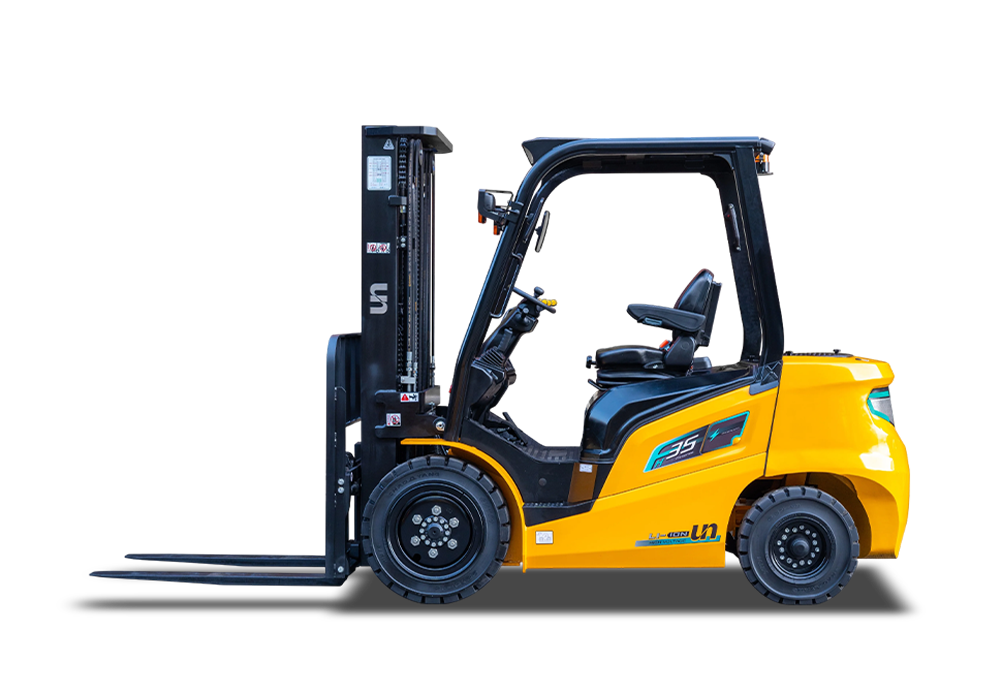
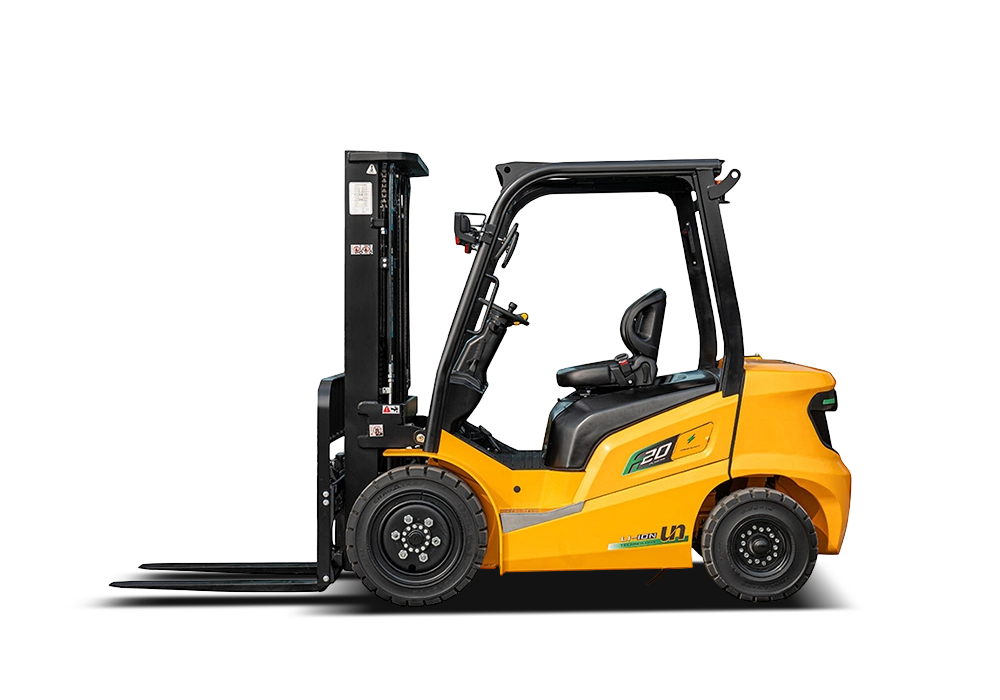
FH Series 3.0T-3.5T High Voltage Li-ion Battery Forklift
Product Positioning and Operating Concept
The FH Series is positioned as a heavy-duty electric forklift that bridges the gap between conventional internal combustion equipment and ordinary electric counterbalance forklifts. Traditional internal combustion forklifts are widely recognized for their long operating range, rapid refueling, strong performance on ramps, and ability to work in demanding industrial environments. Conventional electric forklifts, meanwhile, are valued for low noise, zero tailpipe emissions, and efficient operation but may be limited by battery capacity, charging time, or performance under continuous heavy-duty use.
The FH Series addresses these differences through a high-voltage lithium-ion power system. High voltage allows the forklift to deliver the required power with lower current for a comparable output. This can support more efficient power transmission, improved thermal management, and responsive motor performance. The system is paired with an automotive-grade permanent magnet synchronous motor, an integrated motor-controller arrangement, and intelligent vehicle control.
The machine is not designed only for light indoor duty. Its structure and performance characteristics make it suitable for intensive applications where the forklift may need to operate for long periods, transport heavy loads, climb ramps, travel across large sites, or work in changing temperatures. The battery system is specified for operation from approximately minus 20 degrees Celsius to plus 60 degrees Celsius, subject to the selected configuration and operating conditions.
For fleet managers, the most important advantage is operational continuity. The forklift can be used in production environments where exhaust emissions are undesirable, while still providing the performance expected from a larger industrial truck. It can also work in mixed indoor and outdoor environments, including loading docks, covered yards, factories, warehouses, and logistics terminals.
The FH Series concept is therefore based on four principles: heavy-duty structural strength, high-voltage electric performance, intelligent safety control, and simplified ownership. Each principle contributes to a lower total cost of operation and more predictable daily productivity.
Heavy-Duty Construction Based on Industrial Forklift Engineering
A forklift’s performance depends on more than the battery and motor. The mast, axles, counterweight, frame, steering system, tires, hydraulics, and braking components all influence stability, service life, and operator confidence. The FH Series uses major structural elements associated with internal combustion forklift design, including the mast, drive axle, and steering axle.
This design approach provides a significant advantage over electric forklifts developed solely around light-duty warehouse applications. The machine is built to handle the mechanical stress associated with heavy loads, frequent direction changes, uneven surfaces, and intensive cycles. The structure is intended to remain stable while lifting, traveling, and positioning loads in demanding work areas.
The wide-view mast contributes to improved visibility around the load and through the lifting assembly. Better visibility can help operators position forks more accurately, reduce unnecessary adjustments, and improve awareness of pedestrians, racking, pallets, and adjacent equipment. Visibility is particularly important in busy warehouses and production sites where the operator must work close to people and infrastructure.
The machine is available with a rated load capacity of 3,000 kilograms or 3,500 kilograms, with a standard load center of 500 millimeters. These capacity classes cover a broad range of industrial handling requirements, including palletized raw materials, finished products, metal components, construction materials, packaged goods, and production tooling.
The forklift’s dimensional layout is designed to balance capacity and maneuverability. Depending on the selected model, overall width is approximately 1,220 millimeters, wheelbase is approximately 1,700 millimeters, and outside turning radius ranges from approximately 2,450 to 2,500 millimeters. The minimum aisle width for pallets is approximately 4,120 to 4,170 millimeters in the listed configurations.
These dimensions allow the FH Series to operate in many standard industrial aisles while retaining the robust chassis required for heavier loads. Fleet planners should always confirm the exact truck configuration, pallet dimensions, attachment type, rack layout, and local operating conditions before finalizing an aisle plan.
High-Voltage Lithium-Ion Power System
The central differentiator of the FH Series is its high-voltage lithium-ion battery system. The high-voltage configuration for the FH high-performance models is listed at 309.12 volts and 96 ampere-hours. Other lithium-ion configurations in the broader platform use battery systems such as 76.8 volts with different ampere-hour capacities. These specifications indicate that the platform can be configured for different application requirements, while the FH high-voltage models are intended for higher-performance operation.
The battery pack is supplied with IP67 protection. This rating indicates a high level of protection against dust ingress and temporary water immersion under defined test conditions. For industrial users, this protection supports more reliable operation in environments where dust, moisture, cleaning procedures, or changing weather conditions may be present. It does not eliminate the need for correct operating procedures, inspection, and maintenance.
The battery system is designed to operate across a broad temperature range, from approximately minus 20 degrees Celsius to plus 60 degrees Celsius. This helps expand the possible application range beyond climate-controlled indoor warehouses. Optional water cooling and heating functions can further support battery temperature management, particularly in cold environments or under prolonged high-intensity operation.
Compared with a conventional internal combustion forklift, the lithium-ion system eliminates routine fuel handling, engine oil changes, exhaust after-treatment, and many engine-related service tasks. Compared with lead-acid battery systems, lithium-ion technology can reduce charging-related interruptions, avoid regular watering, and provide more consistent voltage during operation.
The manufacturer states that high-voltage lithium-ion technology can reduce energy consumption by approximately 10 to 15 percent. Actual savings depend on load profile, operating hours, travel distance, ambient temperature, driving behavior, charging strategy, tire condition, hydraulic use, and electricity or fuel prices. Even so, the potential reduction is valuable for fleets operating multiple shifts or handling heavy loads throughout the day.
The battery is also specified with a six-year or 10,000-hour warranty and support for up to 7,000 charge cycles, subject to applicable warranty terms and operating conditions. This long service expectation can improve investment planning and reduce uncertainty for fleet owners evaluating the transition from combustion equipment to electric power.
Motor and Control Technology
The FH Series uses an automotive-grade permanent magnet synchronous motor. PMSM technology is known for high efficiency, strong torque characteristics, and precise controllability. In a forklift application, these characteristics support smooth acceleration, reliable hill climbing, responsive direction changes, and efficient energy use during travel.
The motor is matched with an integrated motor-controller system rated for IP67 protection. Integrating the motor and controller can help reduce wiring complexity, improve packaging, and simplify system communication. The sealed design also supports operation in environments where dust and moisture may affect exposed electrical components.
A vehicle control unit supplied by Bosch of Germany is used for vehicle-level coordination. The VCU manages communication between the battery, drive system, hydraulic system, safety functions, and other major vehicle components. The VCU is also specified with IP67 protection.
Intelligent control is particularly important in high-voltage equipment. The control unit can coordinate power delivery, cooling, monitoring, fault detection, and safety interlocks. By managing these functions as an integrated system, the forklift can respond more consistently to changes in load, speed, temperature, and operating conditions.
The FH Series also uses VCU-controlled water pumps and cooling fans. These systems regulate heat dissipation for long-duration and high-intensity work. Effective thermal management is important because excessive heat can affect battery life, motor efficiency, controller reliability, and charging performance.
For operators, intelligent control is experienced as smoother and more predictable machine behavior. For maintenance teams, it provides a more structured approach to troubleshooting because major electrical and thermal functions are monitored within a unified vehicle control architecture.
Performance for Heavy-Duty Applications
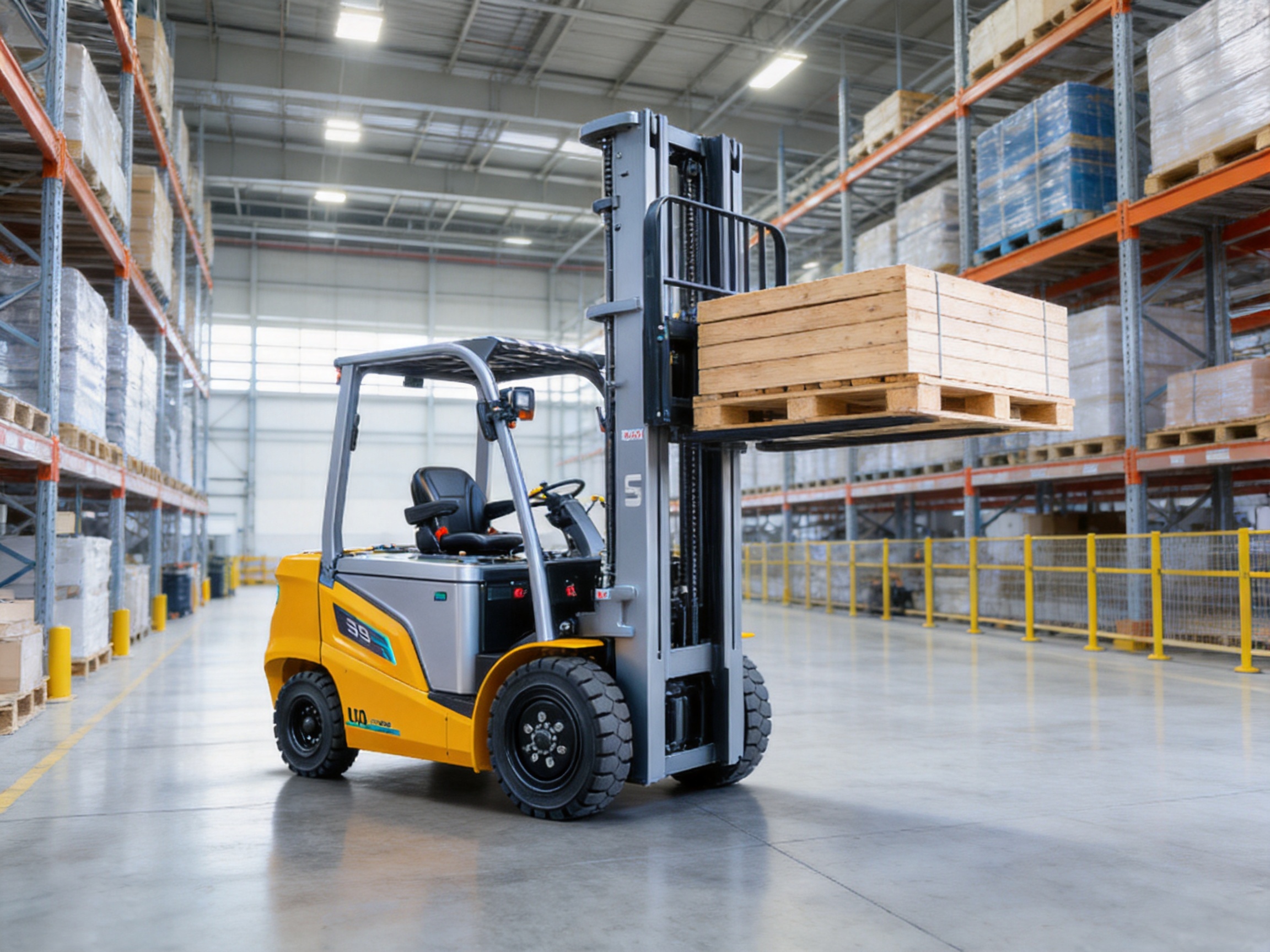
The high-performance FH configurations are designed to deliver a travel speed of approximately 20 kilometers per hour with and without a load, according to the listed 3.0-ton and 3.5-ton specifications. This level of speed allows the forklift to move materials efficiently across large plants, distribution yards, loading areas, and warehouse networks.
Maximum gradeability with a full load is listed at approximately 20 percent for the high-voltage FH models. Gradeability is important for facilities with ramps, dock approaches, sloped yards, or changes in floor level. Actual performance will depend on the surface condition, tire selection, load position, battery state of charge, ramp length, and applicable safety rules.
The lifting system is designed for fast and controlled load positioning. The broader platform specifications list lifting speeds that vary by configuration, while the FH Series product information identifies a loaded lifting speed of approximately 400 to 420 millimeters per second. This supports productive pallet handling without sacrificing the controlled movement required for accurate placement.
High performance does not mean that the forklift should be operated aggressively. The most productive operation is usually achieved through smooth acceleration, correct load placement, appropriate travel speeds, and careful coordination between travel and lifting functions. Intelligent control helps the truck respond consistently, but operator training remains essential.
The FH Series is also suitable for applications where a forklift must alternate between travel and hydraulic work. The electric drive motor and lift motor are designed to deliver power when required, while the battery and cooling systems support repeated operating cycles. This is useful in production feeding, cross-docking, container loading, finished-goods movement, and high-volume pallet transfer.
Compared with many standard electric forklifts, the FH Series offers a performance profile closer to that of an internal combustion truck. Compared with a combustion forklift, it offers quieter operation, no tailpipe emissions, and more precise electric control. This balance is one of the product’s strongest competitive advantages.
Fast Charging and Fleet Productivity
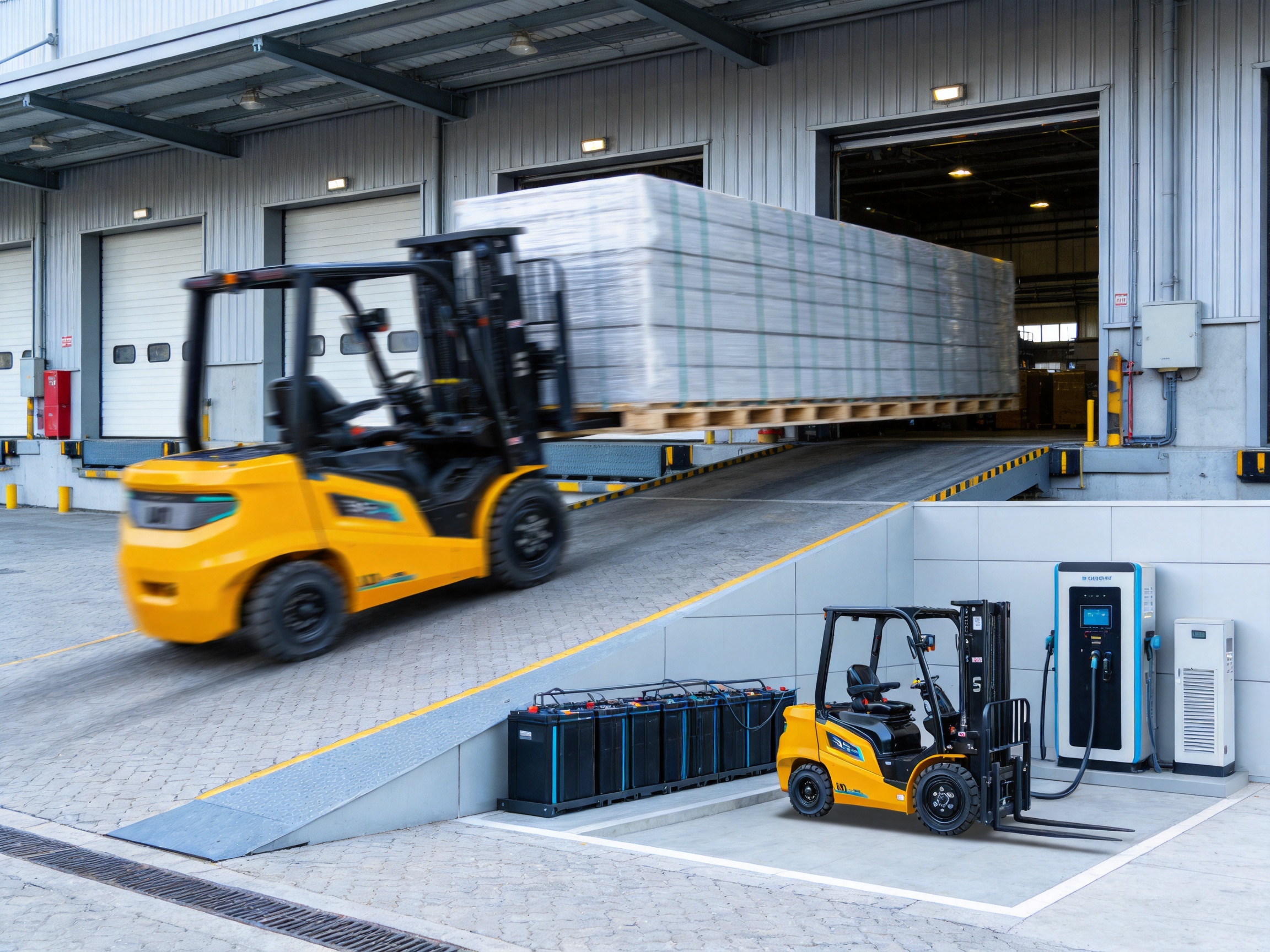
Charging time is one of the most important factors in electric forklift deployment. A forklift that spends long periods waiting for a battery can reduce productivity, create congestion, and require additional spare batteries. The FH Series is designed to support rapid charging, with the product information indicating that a full charge can be completed in approximately one hour with a compatible super-fast charger.
The forklift is also compatible with electric vehicle charging stations. This can make infrastructure planning more flexible for businesses that already operate electric vehicles or have access to industrial charging equipment. Charging infrastructure must still be selected and installed according to the battery voltage, charger rating, site electrical capacity, local regulations, and manufacturer requirements.
Fast charging makes opportunity charging more practical. During scheduled breaks, shift changes, loading pauses, or other planned idle periods, the forklift can receive additional energy without removing the battery from the vehicle. This approach can support multi-shift operations while reducing the need for battery swapping.
The exact operating time from one charge depends on the battery configuration and working conditions. The product information indicates up to eight hours of continuous operation under applicable conditions. Factors such as load weight, travel distance, lifting frequency, attachment use, ambient temperature, tire pressure, floor condition, and operator behavior all influence actual runtime.
Fleet managers should evaluate charging as part of a complete operating system. A successful charging plan should define charging locations, access control, ventilation and electrical requirements, shift schedules, emergency procedures, and battery monitoring. When these elements are planned correctly, high-voltage lithium-ion forklifts can reduce downtime and simplify fleet coordination.
Rapid charging also supports seasonal flexibility. During periods of high demand, equipment can remain in service for longer working windows. During lower-demand periods, the same forklift can be charged more slowly or according to an energy-management schedule, helping the business balance productivity and electricity costs.
Safety and Reliability Features
Safety is a core requirement in any forklift application, particularly when heavy loads and high-voltage electrical systems are involved. The FH Series incorporates several safety and reliability features intended to protect operators, service personnel, loads, and surrounding infrastructure.
The wide-view mast improves forward visibility and helps the operator see the load, fork tips, rack beams, and nearby traffic. A multifunctional color-screen instrument provides operating information in a clear format. Depending on the system configuration, the display can support monitoring of battery status, vehicle condition, warnings, and operating parameters.
An MSD switch provides one-touch interruption of the 309-volt high-voltage power system. This is an important isolation feature for emergency response, inspection, and maintenance procedures. A separate one-touch 12-volt auxiliary power cutoff is also provided. Operators and service personnel should receive formal training on when and how to use these switches.
Cornering speed reduction improves stability during turns. Speed management is especially important when carrying elevated loads, traveling on uneven surfaces, or operating in narrow aisles. Automatic or controlled speed reduction can help reduce the risk of sudden lateral movement and improve handling consistency.
Battery water cooling and heating are available as an option. Temperature regulation can help maintain battery performance in cold or hot operating environments. Thermal management also contributes to reliability by helping prevent excessive temperature changes during charging and intensive work.
IP67 protection for the battery pack, integrated motor-controller system, and vehicle control unit contributes to electrical reliability. However, protection ratings are not a substitute for inspections. Operators should check for visible damage, loose connections, unusual warning signals, tire problems, hydraulic leaks, and other conditions before use.
As with every forklift, safe operation depends on the complete system. Correct capacity selection, approved attachments, trained operators, suitable floor conditions, proper load securing, regular inspections, and compliance with local regulations are all necessary.
Maintenance and Service Advantages
Maintenance requirements are reduced when a forklift moves from an internal combustion powertrain to lithium-ion electric power. The FH Series does not require engine oil replacement, fuel-system servicing, exhaust-system maintenance, or many of the mechanical adjustments associated with diesel and LPG trucks. This can reduce planned service time and improve equipment availability.
The chassis is designed with detachable side panels, a removable front plate, and chassis side covers. These access points allow technicians to reach the lithium battery and related components more easily. Simplified access is valuable when a battery inspection, replacement, cable check, or electrical diagnostic procedure is required.
Although electric forklifts have fewer engine-related service tasks, they still require professional maintenance. Battery connectors, charging equipment, cooling circuits, brakes, steering, mast chains, hydraulic hoses, tires, forks, and safety controls must be inspected according to a scheduled maintenance program.
High-voltage systems require specific training and personal protective equipment. Only authorized technicians should open, isolate, test, or repair high-voltage components. A clear lockout and tagout procedure should be established for every operating site.
The VCU, motor controller, and battery management functions can support systematic fault diagnosis. Digital monitoring helps service teams identify warning conditions earlier and distinguish between electrical, thermal, hydraulic, and mechanical issues. This can shorten troubleshooting time and help prevent small problems from developing into major failures.
From a total cost perspective, reduced maintenance is only one benefit. Other potential advantages include lower energy cost, fewer consumables, less downtime, reduced workplace noise, and improved suitability for indoor operations. A full lifecycle comparison should include purchase price, charging infrastructure, electricity cost, service labor, battery warranty, residual value, and expected operating hours.
Manufacturing Experience and Engineering Strengths
The manufacturer behind the FH Series integrates research and development, production, sales, and service. Founded in 1978, it has developed material-handling equipment for decades and has built experience across both internal combustion and electric forklift technologies.
The company’s manufacturing site occupies approximately 53,400 square meters and has an annual production capacity of approximately 15,000 units. This production scale supports standardized manufacturing, coordinated component sourcing, quality-control procedures, and the ability to serve different international markets.
The manufacturer offers a broad product portfolio that includes approximately 17 varieties, 96 series, and more than 200 specifications. Such product diversity provides a valuable engineering base for developing specialized machines. Lessons from combustion forklifts can be applied to electric chassis design, while experience with electric systems can improve control, battery integration, and energy management.
The company’s history includes the development of China’s first reach forklift and very-narrow-aisle truck. It also holds national patents related to electric forklift technologies and has participated in the development of Chinese electric forklift industry standards. These accomplishments indicate a long-term commitment to product development rather than reliance solely on external technology.
Manufacturing strength is particularly important for high-voltage forklifts because the product requires coordination between mechanical and electrical disciplines. Frame strength, axle design, battery protection, motor control, hydraulic performance, thermal management, software logic, and safety isolation must work together. An established forklift manufacturer can use its existing knowledge of load dynamics, stability, durability, and serviceability to support this integration.
The company also operates a worldwide sales and service network through partners in Europe, South America, North America, Africa, and Asia. International support is important for fleet operators that need spare parts, technical assistance, training, warranty response, and service continuity after equipment delivery.
In addition to developing its own products, the manufacturer has acted as an original equipment supplier for well-known domestic and overseas companies. Experience as an OEM supplier requires consistent production, documentation, delivery coordination, and quality management. These capabilities can benefit customers purchasing equipment for larger fleet programs.
Comparison with Conventional Forklifts
Compared with diesel forklifts, the FH Series provides a cleaner operating environment because it produces no tailpipe exhaust during operation. This is valuable in indoor facilities, food and beverage logistics, pharmaceutical production, enclosed loading areas, and other workplaces where exhaust emissions are undesirable. Electric drive also reduces noise, which can improve communication and working comfort.
Compared with LPG forklifts, the lithium-ion forklift removes the need to store and replace gas cylinders. This simplifies fuel logistics and eliminates the handling risks associated with cylinder exchange. Electric energy can also be more predictable to budget when charging is managed effectively.
Compared with lead-acid electric forklifts, lithium-ion technology offers faster charging, no routine battery watering, and more flexible opportunity charging. Lithium-ion batteries also tend to maintain more consistent voltage during operation, supporting predictable performance across the working cycle.
Compared with lighter electric counterbalance forklifts, the FH Series offers a heavier-duty chassis concept and a performance profile designed for demanding load handling. Its use of industrial mast and axle structures supports applications where impact resistance, stability, and long-term durability are important.
Compared with some competing high-voltage electric forklifts, the FH Series combines high-voltage power with established forklift engineering, automotive-grade drive technology, integrated control, protected electrical components, and a global service foundation. The product is not based solely on a large battery; it is an integrated machine designed around the complete material-handling task.
| Evaluation Area | FH Series High-Voltage Lithium-Ion Forklift | Traditional Internal Combustion Forklift | Conventional Lead-Acid Electric Forklift |
|---|---|---|---|
| Rated capacity range highlighted | 3,000 to 3,500 kg | Commonly available in comparable industrial classes | Available, but configuration-dependent |
| Power source | High-voltage lithium-ion battery | Diesel, LPG, or other combustion fuel | Lead-acid battery |
| Tailpipe emissions | None during operation | Present during operation | None during operation |
| Charging or refueling | Rapid charging and opportunity charging | Fast refueling, with fuel storage requirements | Longer charging and battery management requirements |
| Routine engine maintenance | Not required | Required | Not required |
| Battery watering | Not required under normal lithium-ion operation | Not applicable | Typically required for flooded lead-acid batteries |
| Heavy-duty performance | Designed for demanding industrial operation | Well established for heavy-duty work | Depends strongly on battery and truck configuration |
| Noise level | Lower than combustion equipment | Higher than electric equipment | Low |
| Thermal management | VCU-controlled cooling, with optional battery heating and cooling | Engine and cooling-system management | Battery temperature management varies by design |
Application Areas
The FH Series can serve a wide range of applications where a 3.0-ton or 3.5-ton forklift is required. In manufacturing plants, it can move raw materials from receiving areas to production lines and transport finished products to staging zones. Its quiet electric power is useful in facilities where noise reduction supports communication or worker comfort.
In warehouses and distribution centers, the forklift can handle palletized products, loading and unloading, cross-docking, and trailer operations. The high travel speed can support long internal routes, while the turning radius and aisle dimensions allow it to work in many standard industrial layouts.
In metalworking and machinery production, the machine can handle heavy components, fabricated assemblies, dies, molds, and steel products. These applications demand accurate fork positioning and stable operation, particularly when loads are dense or have unusual centers of gravity.
In building-materials logistics, the forklift can move packaged panels, blocks, pipes, tiles, and other heavy products. Outdoor or semi-outdoor operating conditions make battery protection, robust axles, durable tires, and gradeability important considerations.
In paper, packaging, and printing operations, the absence of exhaust emissions can help protect indoor air quality. The forklift can support roll handling, pallet movement, finished-goods staging, and loading operations when equipped with suitable forks or attachments.
In ports, logistics terminals, and large distribution yards, the machine’s high-voltage power system can reduce local emissions while maintaining the travel performance necessary for larger sites. Before deployment, fleet managers should assess charging locations, exposure to rain or washdown, operating temperatures, ground conditions, and the expected duty cycle.
Attachments can expand the forklift’s usefulness. The listed operating pressure for attachments is approximately 19.5 to 20.5 megapascals, depending on the specification set. Attachment selection must consider residual capacity, hydraulic flow, load center, visibility, and manufacturer approval.
Key Technical Specifications
The following table summarizes selected specifications for the high-voltage FH configurations. Values may vary by model, mast, tire, battery, attachment, and final production specification. Customers should confirm the applicable data sheet before purchase.
| Item | FB30-FHNLF | FB35-FHNLF |
|---|---|---|
| Rated load capacity | 3,000 kg | 3,500 kg |
| Load center | 500 mm | 500 mm |
| Length to fork face without fork | 2,700 mm | 2,770 mm |
| Overall width | 1,220 mm | 1,220 mm |
| Overhead guard height | 2,235 mm | 2,235 mm |
| Outside turning radius | 2,450 mm | 2,500 mm |
| Travel speed, no load | 20/20 km/h | 20/20 km/h |
| Maximum gradeability, full load | 20% | 20% |
| Wheelbase | 1,700 mm | 1,700 mm |
| Total weight | Approximately 4,207 kg | Approximately 4,567 kg |
| Battery | 309.12 V/96 Ah | 309.12 V/96 Ah |
Additional platform data includes a 3,000-millimeter rated lift height, mast tilt of approximately 6 degrees forward and 12 degrees backward, front tread of approximately 1,000 millimeters, rear tread of approximately 980 millimeters, and a 1,700-millimeter wheelbase for the 3.0-ton and 3.5-ton high-voltage models.
Specifications may differ between early and updated product tables. For example, battery capacities, lifting speeds, tire specifications, mast dimensions, and weight distributions can vary among standard lithium-ion and high-voltage configurations. This is normal when a product platform is offered with multiple power systems and equipment packages.
Manufacturing Processes and Quality Approach
A high-voltage forklift requires manufacturing processes that control both structural quality and electrical integration. The frame and mast must be produced with accurate dimensions and consistent weld quality. Axle alignment, steering geometry, and counterweight placement must support stability and predictable handling. Battery compartments must provide protection while allowing service access.
Industrial forklift manufacturing typically involves material preparation, component machining, welding, surface treatment, painting, mechanical assembly, electrical installation, software integration, and final performance inspection. Each stage influences the reliability of the finished vehicle. Dimensional accuracy is important because small variations in mast alignment, fork positioning, or axle installation can affect wear and operator control.
Electrical integration adds another layer of quality requirements. High-voltage cables must be routed and protected correctly. Connectors must be secured and sealed. Battery communication, motor control, charging functions, emergency isolation, and thermal management must be checked as an integrated system rather than as unrelated components.
The manufacturer’s experience with multiple forklift categories supports the use of standardized engineering practices across different models. Shared design knowledge can improve component compatibility, service training, spare-parts planning, and production efficiency. At the same time, each high-voltage model requires application-specific validation because the battery, motor, controller, frame, and hydraulic system operate as a complete unit.
Quality control should continue after assembly. Functional testing may include travel, braking, steering, lifting, lowering, tilt, warning systems, battery communication, charging, emergency cutoff, and thermal-management checks. Load testing and stability verification are also essential for equipment in the 3.0-ton and 3.5-ton classes.
For customers, advanced manufacturing is ultimately reflected in consistent performance. A well-manufactured forklift should provide repeatable acceleration, controlled lifting, reliable braking, accurate steering, stable load handling, and dependable operation throughout its service life.
Environmental and Financial Benefits
The environmental advantages of the FH Series begin with the absence of tailpipe emissions during operation. This can help companies reduce local air pollution and improve workplace conditions. When electricity is generated from lower-carbon sources, the overall carbon footprint may also be reduced, although the full environmental impact depends on the electricity mix, battery production, transport, and end-of-life recycling.
Lower noise is another benefit. Electric motors operate more quietly than combustion engines, making it easier for operators and nearby workers to communicate. Reduced noise can be particularly valuable in enclosed warehouses, nighttime operations, and facilities located near offices or residential areas.
Energy efficiency can reduce operating expenses. The stated potential energy-consumption reduction of 10 to 15 percent compared with certain alternatives can be meaningful in a large fleet. Savings may also come from lower maintenance requirements, fewer consumables, less downtime, and reduced fuel-handling infrastructure.
Financial evaluation should include the complete cost of ownership rather than purchase price alone. Important factors include operating hours per year, energy price, maintenance labor, spare parts, charging infrastructure, battery warranty, replacement planning, operator training, residual value, and fleet utilization. High-voltage lithium-ion forklifts often become more attractive as annual operating hours and indoor-use requirements increase.
Businesses can also benefit from predictable charging schedules. Fuel delivery and storage can be replaced by electrical energy management, allowing companies to coordinate charging with shifts, production schedules, and energy tariffs. The transition is most successful when the forklift, charger, facility electrical system, and operating procedures are planned together.
Implementation Considerations for Fleet Managers
Before purchasing the FH Series, fleet managers should establish the truck’s duty cycle. This includes the average and maximum load, number of operating hours, travel distance, lift frequency, ramp use, attachment requirements, indoor and outdoor exposure, ambient temperature, and number of shifts.
Facility layout should also be reviewed. The listed minimum aisle widths are reference values, but actual requirements depend on pallet size, rack design, turning method, load overhang, attachment geometry, and local safety clearances. A site survey can prevent problems after delivery.
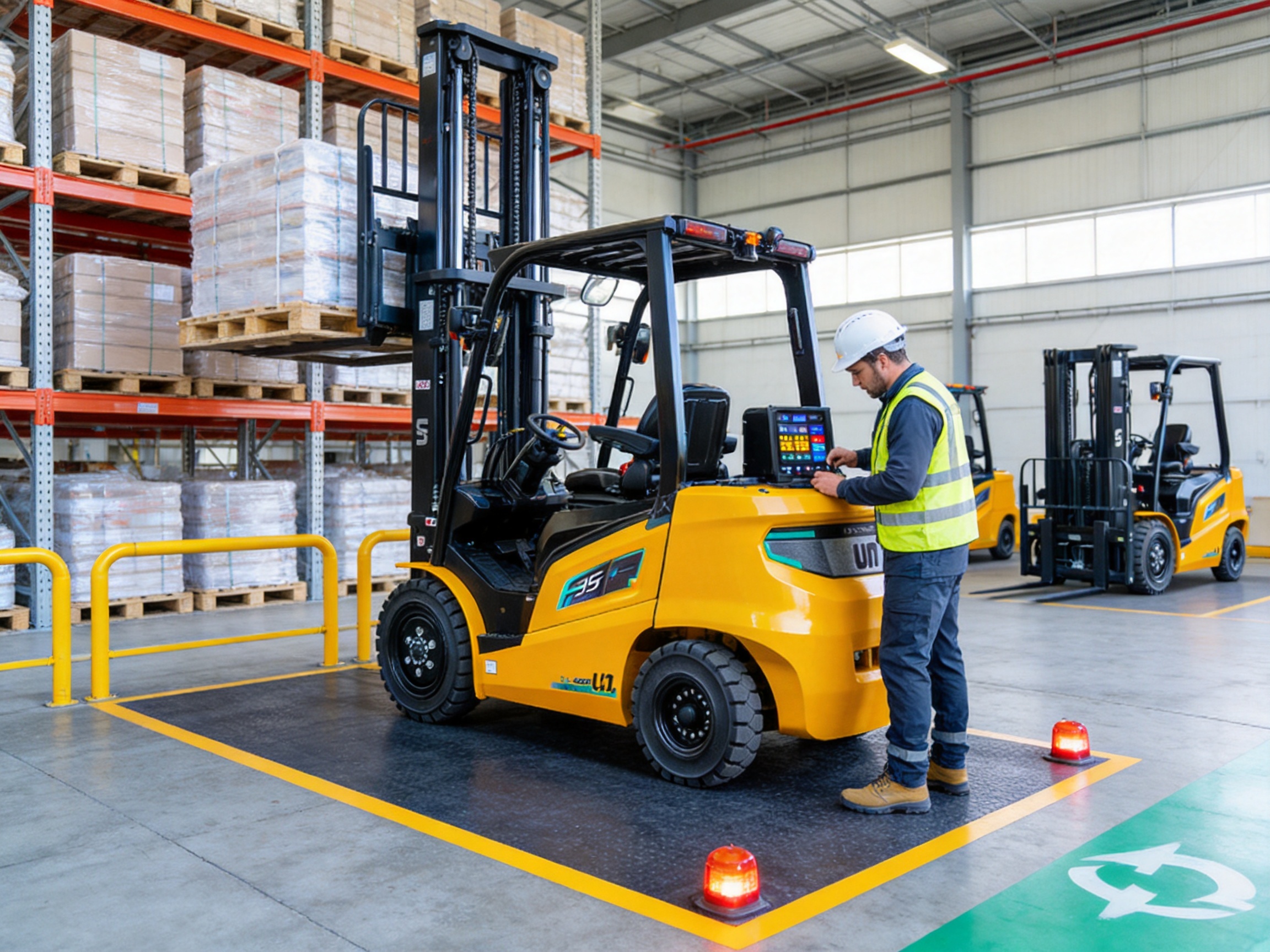
Charging infrastructure should be designed before the forklifts arrive. The fleet operator should identify charger locations, electrical capacity, cable management, pedestrian separation, ventilation, fire protection, emergency access, and maintenance procedures. Charging areas should be clearly marked and protected from impact.
Operator training should cover high-voltage awareness, startup and shutdown procedures, charging, opportunity charging, warning displays, emergency isolation, load handling, cornering, ramp operation, and daily inspections. Drivers familiar with internal combustion forklifts may need additional instruction because electric acceleration, regenerative behavior, display information, and charging routines are different.
Service personnel should be trained to distinguish low-voltage and high-voltage systems. High-voltage maintenance should be performed only by qualified technicians using approved procedures. Battery damage, unusual heat, warning messages, charging faults, or high-voltage isolation errors should be treated seriously and reported immediately.
Fleet software or maintenance records can be used to track operating hours, charging behavior, inspections, repairs, and battery performance. This information helps identify underused equipment, excessive idle time, abnormal energy consumption, and maintenance trends.
By treating electrification as a complete operational project rather than simply replacing one forklift with another, companies can obtain greater productivity and a more reliable return on investment.
Why the FH Series Offers a Competitive Advantage
The main competitive advantage of the FH Series is the combination of heavy-duty forklift construction and high-voltage electric performance. Many products emphasize either structural strength or environmental efficiency. The FH Series is designed to provide both.
Its use of internal combustion forklift-derived structural elements gives customers confidence that the machine is intended for industrial work rather than occasional light handling. The high-voltage lithium-ion battery, PMSM drive motor, integrated controller, Bosch vehicle control unit, and thermal-management system provide an advanced electric powertrain.
Fast charging supports high utilization. IP67 protection supports operation in difficult industrial environments. The long battery warranty and high cycle-life specification support long-term ownership planning. The safety package addresses visibility, high-voltage isolation, auxiliary power cutoff, cornering stability, and battery temperature management.
The manufacturer’s long history and broad product range provide additional advantages. Customers can work with a supplier experienced in internal combustion equipment, standard electric forklifts, reach trucks, very-narrow-aisle trucks, lithium-ion technology, OEM production, and international service. This breadth can simplify fleet standardization and technical support.
For companies seeking to reduce emissions while maintaining productivity, the FH Series presents a credible alternative to conventional fuel-powered forklifts. It is especially well suited to operations that need high capacity, rapid charging, long working hours, quiet operation, and reduced maintenance.
Q&A
What capacity range does the FH Series cover?
The high-voltage FH Series highlighted here is available in 3.0-ton and 3.5-ton configurations. The broader lithium-ion platform also includes 2.0-ton and 2.5-ton models, but customers should confirm the exact product designation and specification before ordering.
What type of battery does the forklift use?
The high-performance FH configurations use a high-voltage lithium-ion battery listed at 309.12 volts and 96 ampere-hours. Other platform versions may use different lithium-ion voltage and capacity combinations.
How quickly can the battery be charged?
The product information states that a compatible super-fast charger can fully charge the battery in approximately one hour. Actual charging time depends on charger output, battery state, temperature, charging settings, and site electrical conditions.
How long can the forklift operate on one charge?
The product information indicates up to eight hours of continuous operation under applicable conditions. Actual runtime depends on load, travel distance, lift frequency, temperature, attachment use, floor condition, and operator behavior.
Can the forklift be used outdoors?
Yes, the heavy-duty chassis, protected electrical components, and broad operating-temperature range make the forklift suitable for many outdoor and semi-outdoor applications. Site conditions, weather exposure, ground quality, tire selection, and local safety requirements must be evaluated first.
What are the main benefits over a diesel forklift?
The FH Series produces no tailpipe emissions during operation, operates more quietly, requires no engine oil or fuel-system maintenance, and can reduce energy consumption. It also provides fast charging and high-voltage electric performance while retaining a heavy-duty forklift design.
Does the forklift require battery watering?
No routine watering is required for the lithium-ion battery system. The battery still requires inspection, correct charging, thermal management, and professional service according to the manufacturer’s procedures.
Is high-voltage maintenance different from normal forklift maintenance?
Yes. High-voltage systems require specially trained technicians, approved isolation procedures, suitable protective equipment, and careful handling of battery, cable, controller, and charging components. Unauthorized personnel should not service high-voltage equipment.
What safety systems are included?
Key features include a wide-view mast, multifunctional color-screen instruments, a high-voltage MSD cutoff, a 12-volt auxiliary power cutoff, cornering speed reduction, protected electrical components, and optional battery water cooling and heating.
Can the forklift use an attachment?
Yes, the listed specifications include hydraulic operating pressure for attachments. However, every attachment must be approved for the truck, and the resulting load center, residual capacity, visibility, hydraulic demand, and stability must be verified before use.
What should customers confirm before ordering?
Customers should confirm the rated capacity, load center, mast type, lift height, fork dimensions, tire configuration, battery capacity, charger, attachment requirements, aisle dimensions, operating temperature, warranty terms, delivery configuration, and local compliance requirements.
Conclusion
The FH Series high-voltage lithium-ion forklift is designed for businesses that need a cleaner and quieter alternative to combustion equipment without giving up industrial strength. Its 3.0-ton and 3.5-ton models combine a heavy-duty forklift structure with high-voltage lithium-ion power, automotive-grade PMSM technology, integrated motor control, intelligent vehicle management, and advanced thermal protection.
Fast charging, opportunity-charging capability, IP67-rated electrical components, reduced maintenance, long battery warranty coverage, and comprehensive safety functions make the forklift suitable for demanding multi-shift operations. Its performance profile, including approximately 20 kilometers per hour of travel speed and 20 percent full-load gradeability in the high-voltage configurations, allows it to compete more directly with traditional internal combustion forklifts.
The product’s advantages are reinforced by the manufacturer’s long history, broad material-handling portfolio, production capacity, electric forklift patents, OEM experience, and international service network. Together, these capabilities support a product strategy focused on energy saving, environmental protection, operational efficiency, and safety.
For fleet operators planning electrification, the FH Series offers a balanced solution: the structural confidence of an industrial forklift, the efficiency of a modern electric powertrain, and the practical charging and maintenance benefits of lithium-ion technology. With appropriate application analysis, charging planning, operator training, and professional service, it can become a productive foundation for a lower-emission material-handling fleet.
References
1. Product technical information for the FH Series high-voltage lithium-ion battery forklift.
2. Product technical information for lithium-ion counterbalance forklift platform models.
3. Manufacturer-provided specifications for FB30-FHNLF and FB35-FHNLF configurations.
4. General industrial guidance on forklift capacity, load centers, stability, and aisle planning.
5. General technical literature on permanent magnet synchronous motors and electric vehicle power systems.
6. General technical literature on lithium-ion battery charging, thermal management, and service life.
7. General industrial safety guidance for high-voltage mobile equipment and material-handling vehicles.
Product: FH Series 3.0T-3.5T High Voltage Li-ion Battery Forklift
For exclusive deals and latest offers, sign up by entering your email address below.
Stay In Touch
ADDRESS : NO.1 ROAD ONE, XINDENG NEW DISTRICT, FUYANG, HANGZHOU, ZHEJIANG, CHINA 311404.
PHONE : +86-571-8688 8355 (AMERICA)
PHONE : +86-571-8886 9363 (EUROPE)
PHONE : +86-571-8688 8377 (ASIA, AFRICA, OCEANIA)
EMAIL : [email protected]
EMAIL : [email protected](PARTS INQUIRY)

