


 中文简体
中文简体 Français
 русский
 Español
 عربى
عربى Deutsch



F Series 3.0T–3.5T LPG and Gasoline Forklifts: Efficient Power, Confident Handling, and Heavy-Duty Productivity
Admin 2026-08-18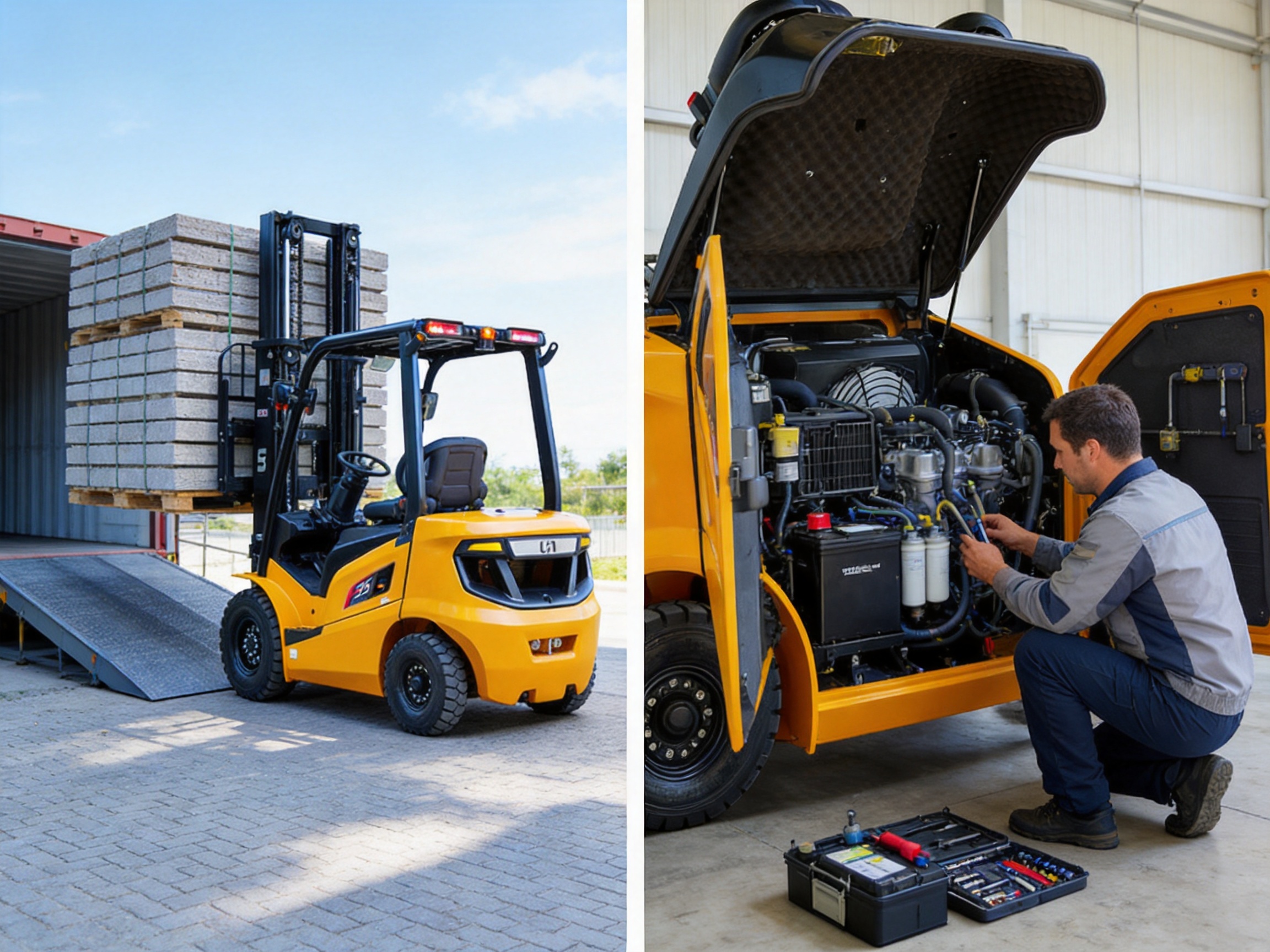
In demanding material-handling environments, a forklift must do much more than lift a specified load. It must deliver dependable performance throughout long operating shifts, move safely through restricted spaces, withstand repeated impacts and vibration, and remain easy to maintain over many years. The F Series 3.0T–3.5T LPG and gasoline forklifts are designed around these practical requirements. They combine a robust counterbalanced configuration with responsive hydraulic control, efficient power options, enhanced visibility, operator-focused ergonomics, and a structure engineered for daily industrial use.
With rated capacities of 3,000 and 3,500 kilograms and a 500-millimeter load center, the series is suited to warehouses, manufacturing facilities, logistics yards, construction-material operations, beverage and food distribution, retail supply chains, and other applications requiring frequent pallet movement. Its gasoline/LPG and LPG configurations provide a flexible alternative to purely diesel-powered equipment, particularly where reduced exhaust odor, indoor usability, and quick refueling are important.
The series represents the result of years of product optimization and market feedback. Its design reflects the needs of operators, fleet managers, maintenance personnel, and purchasing teams rather than focusing only on headline lifting capacity. Every major system—including the mast, steering, hydraulic circuit, overhead guard, dashboard, lighting, engine compartment, and operator station—contributes to overall productivity.
Designed for the Real Conditions of Industrial Work
Forklifts operating in real facilities encounter uneven surfaces, frequent starts and stops, narrow aisles, changing loads, long working hours, and varying weather conditions. A machine that performs well only under ideal test conditions may create delays and additional costs in daily service. The F Series addresses these challenges with a conventional counterbalanced layout, a stable chassis, a high-strength overhead guard, dependable powertrain options, and a hydraulic system developed for regular heavy-duty use.
The 3.0-ton and 3.5-ton models provide a practical balance between lifting capacity and maneuverability. Both models use a 500-millimeter load center, making them suitable for common industrial pallets and standardized handling tasks. The 3.0-ton model has a compact overall length and turning radius, while the 3.5-ton version delivers additional capacity without requiring a major increase in operating width. This makes the series suitable for facilities that need substantial lifting strength but cannot dedicate excessive floor space to large equipment.
A key advantage of a counterbalanced LPG or gasoline forklift is its versatility. Unlike electric forklifts that may require battery charging or battery exchange infrastructure, internal-combustion models can return to service quickly after refueling. This can be valuable in multi-shift operations, outdoor yards, loading docks, and applications where equipment utilization is a high priority.
LPG operation can also be advantageous in environments where lower visible exhaust and reduced diesel odor are preferred. Gasoline/LPG models provide fuel flexibility, while LPG-only models offer a focused configuration for businesses that have standardized their fuel supply and want consistent operating characteristics across a fleet.
Powertrain Choices for Flexible Fleet Planning
The F Series powertrain range is designed to support different market requirements, emissions standards, operating preferences, and service conditions. The available engine information includes the GK25 gasoline/LPG engine for the FGL30T and FGL35T models, while the FL30T and FL35T LPG models may be equipped with the GK25 or HMC 2.4-liter engine, depending on the required emissions configuration and market specification.
Engine availability can vary according to destination, regulatory requirements, and customer configuration. This flexibility is important for international users because forklift fleets may operate under different fuel-quality standards, emissions rules, and service-support conditions. A supplier capable of offering multiple engine configurations can help customers choose a machine that aligns with local regulations and existing maintenance resources.
The gasoline/LPG configuration is particularly useful for operations that need fuel flexibility. Gasoline may be convenient in certain markets or service situations, while LPG can be selected when cleaner combustion characteristics and reduced odor are priorities. The LPG-only configuration simplifies fuel standardization and can support facilities that already maintain LPG storage, cylinder-exchange, or refueling systems.
Engine power is transferred through a hydraulic transmission with one forward and one reverse stage. This arrangement is straightforward for operators, supports smooth direction changes, and is well suited to repetitive warehouse and yard movements. Hydraulic transmission systems are widely used in industrial forklifts because they help deliver controlled acceleration, convenient inching, and practical maneuverability around racks, trucks, and production lines.
The power system also includes a 12-volt, 90-ampere-hour battery and a 60-liter fuel tank in the corresponding specification data. These components support routine industrial operation, while the exact configuration may depend on the selected model and regional specification. Fleet buyers should confirm the final engine, fuel, transmission, and emissions package before placing an order.
Performance That Supports Daily Productivity
Productivity depends on more than maximum lift capacity. Travel speed, lifting speed, gradeability, steering response, visibility, and ease of control all influence how many loads can be moved during a shift. The main specifications list a no-load travel speed of approximately 20 kilometers per hour for the gasoline/LPG models and 20 or 19 kilometers per hour for the LPG models, depending on configuration.
These speeds allow the forklift to move efficiently between storage locations, loading docks, production areas, and outdoor staging zones. Actual operating speed should always be selected according to site conditions, load characteristics, pedestrian traffic, floor quality, and local safety rules. A forklift’s ability to travel quickly is useful only when it can do so under controlled conditions.
The rated lifting capacity is 3,000 kilograms for the FGL30T and FL30T and 3,500 kilograms for the FGL35T and FL35T. The 3.5-ton models are appropriate for heavier pallets, dense industrial materials, fabricated components, paper products, building materials, and other loads that exceed the practical range of lighter forklifts. The 3.0-ton models provide a slightly more compact capacity class for businesses that want high performance while maintaining efficient space utilization.
Full-load gradeability is listed at approximately 26 percent for the 3.0-ton gasoline/LPG and LPG configurations and approximately 23 percent for the 3.5-ton versions. Gradeability is particularly relevant in outdoor yards, loading ramps, transfer areas, and facilities with sloped approaches. Operators must still follow the rated capacity plate and site procedures because gradeability can change with the load, surface condition, tire type, and travel direction.
The lifting system is supported by a rated operating pressure of up to 20.5 megapascals on the 3.5-ton configuration and 18.5 megapascals on the other listed variants. Adequate hydraulic pressure enables the forklift to raise heavy loads with confidence and operate compatible attachments when properly specified. Attachment selection must always be matched to the hydraulic flow, pressure, residual capacity, and stability limits of the individual truck.
Stable Load Handling and Structural Confidence
Stability is one of the most important characteristics of a counterbalanced forklift. A stable truck helps operators position loads accurately and reduces unnecessary movement during lifting, traveling, and stacking. The F Series uses a counterbalanced chassis designed to provide a firm operating platform for 3.0-ton and 3.5-ton handling tasks.
The listed wheelbase is 1,700 millimeters for the four main LPG and gasoline models. This wheelbase supports a useful compromise between longitudinal stability and maneuverability. A longer wheelbase may provide confidence under load but can increase turning requirements, while a shorter wheelbase can improve agility but may influence stability. The F Series configuration is intended to work effectively in industrial spaces where both load control and maneuverability are essential.
The load center is 500 millimeters across the main specifications. This is a common reference point for pallet handling and allows purchasers to compare capacity with standard warehouse loads. However, rated capacity may be reduced when the load center increases, the mast is raised, an attachment is installed, or the load is irregular. Operators should consult the capacity plate and never assume that the nominal rating applies to every load position.
The counterweight uses bold contours and a substantial visual profile. In addition to creating a distinctive appearance, the counterweight contributes to the balance of the forklift during load handling. Its design is integrated with the overall chassis so that the machine maintains a purposeful industrial stance without unnecessary bulk.
The overhead guard is manufactured as a stamped structure. Stamped steel construction can provide strength, consistency, and durability when properly engineered and produced. The overhead guard protects the operator from falling objects within the limits of the applicable safety standard and the truck’s approved design. It also contributes to the structural integrity and perceived solidity of the operator station.
Critical connectors and joints are fully sealed to improve water resistance. This feature is valuable in environments exposed to dust, humidity, wash-down procedures, changing weather, or occasional splashing. Sealing helps protect electrical and connection points from contamination, although it does not eliminate the need for regular inspection, cleaning, and preventive maintenance.
Visibility as a Productivity and Safety Advantage
Forward visibility has a direct influence on handling accuracy and operator confidence. Poor visibility can force operators to stop more often, lean around the mast, reposition the truck, or depend on another person for guidance. The F Series uses a newly designed slim-profile steel mast intended to reduce visual obstruction and improve the operator’s forward view.
The wide-view mast design provides an expanded field of vision through the lift zone. This can help operators align forks with pallets, observe load edges, and position materials more accurately. Better visibility is especially valuable when entering pallets, stacking at height, working close to rack beams, or navigating around other equipment.
Visibility is not limited to the mast. The open operator area, overhead guard arrangement, counterweight shape, lighting system, and seat position also influence what the operator can see. The F Series combines these elements into a cohesive layout intended to provide a clearer view of the work area while preserving structural protection.
LED lighting further supports visibility during low-light operation. LED lamps provide bright illumination with efficient energy consumption and long service life compared with many conventional lighting technologies. The next-generation LED lighting system and advanced LED taillights also make the forklift more noticeable to other workers and vehicle operators.
Lighting cannot replace safe operating procedures. Facilities should still provide adequate ambient illumination, separate pedestrian routes where possible, apply speed controls, and use audible or visual warning systems according to site risk assessments. Nevertheless, effective forklift lighting is a valuable part of a comprehensive safety strategy.
The interactive dashboard gives operators real-time information about machine performance. A clear dashboard can help users monitor operating conditions, identify warnings, and respond to maintenance indicators before minor issues become major interruptions. For fleet managers, the dashboard can also support consistent operating practices and better communication between operators and service teams.
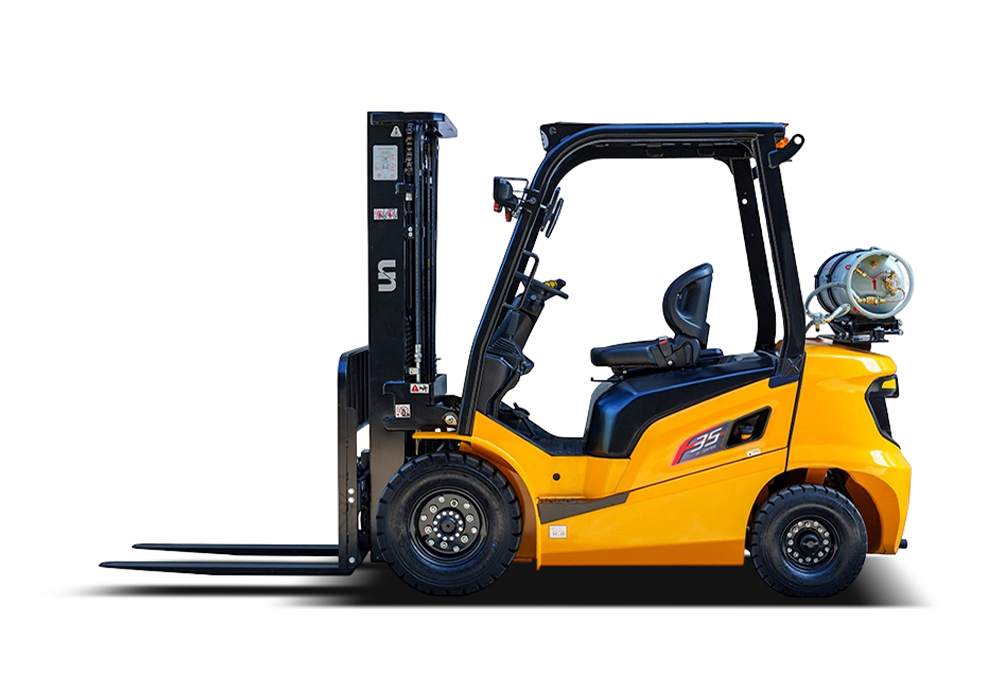
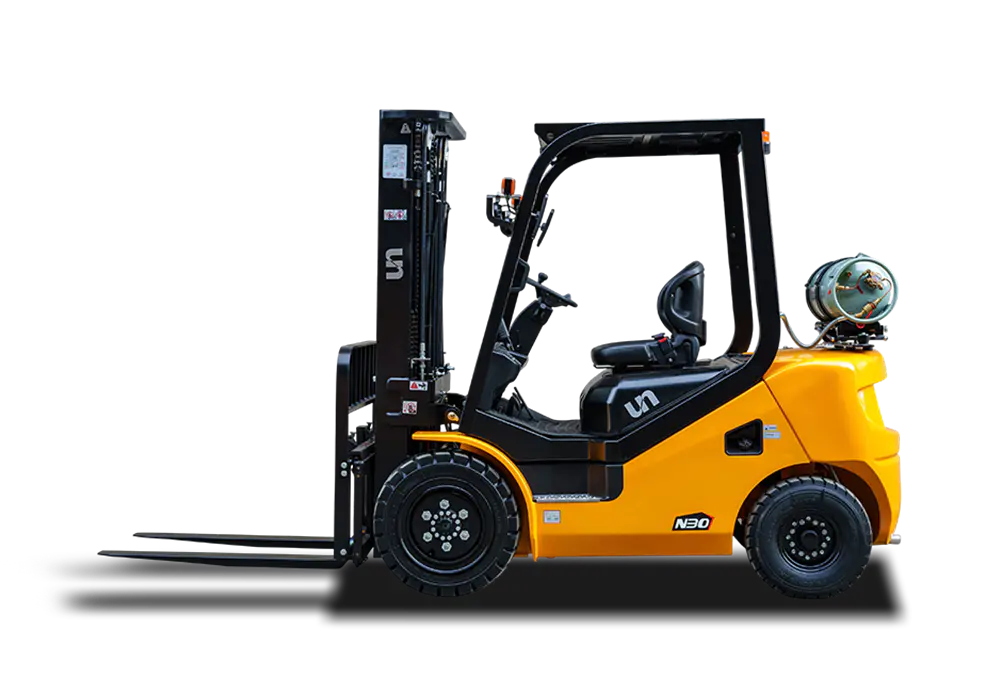
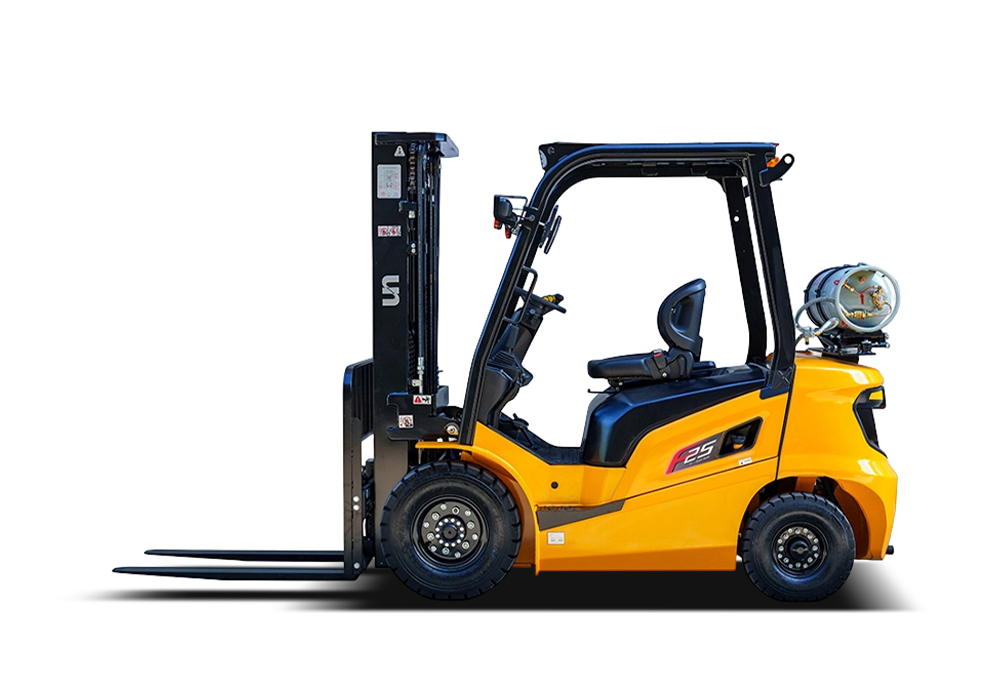
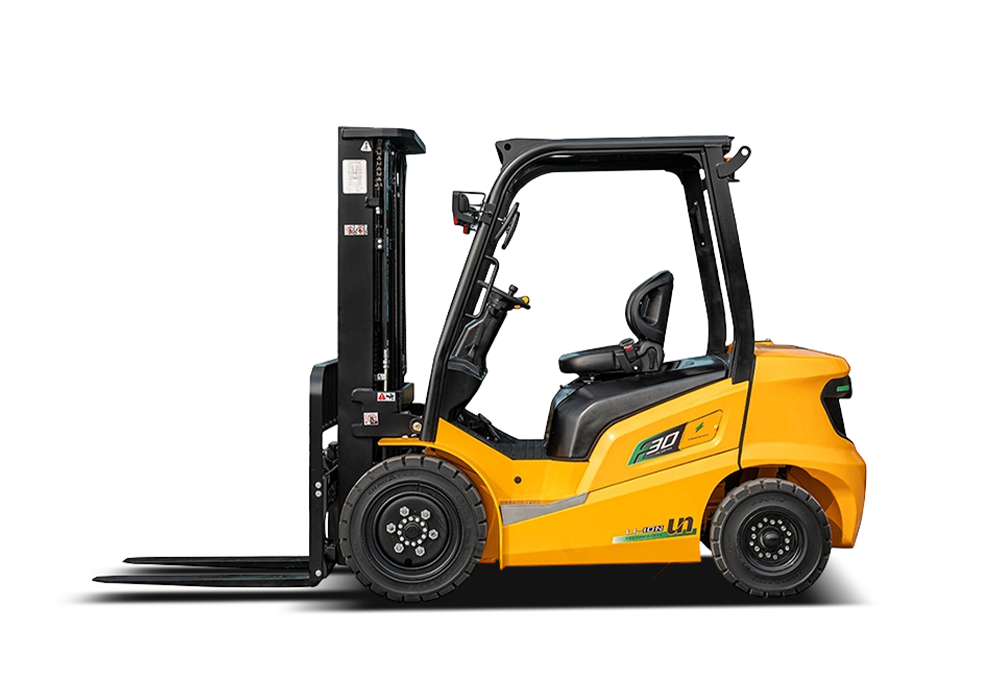
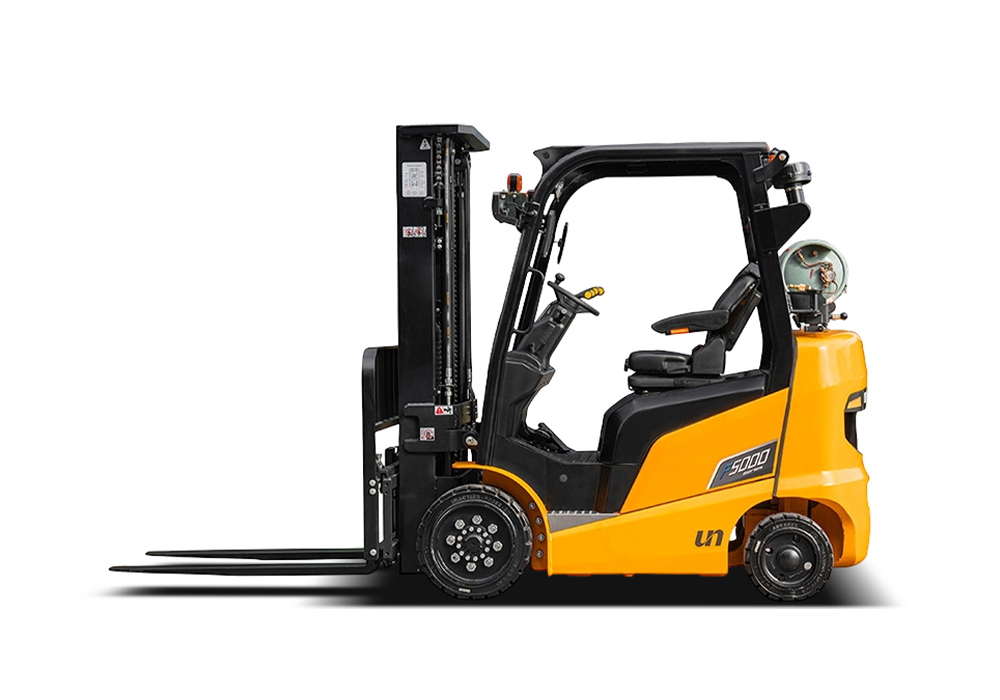
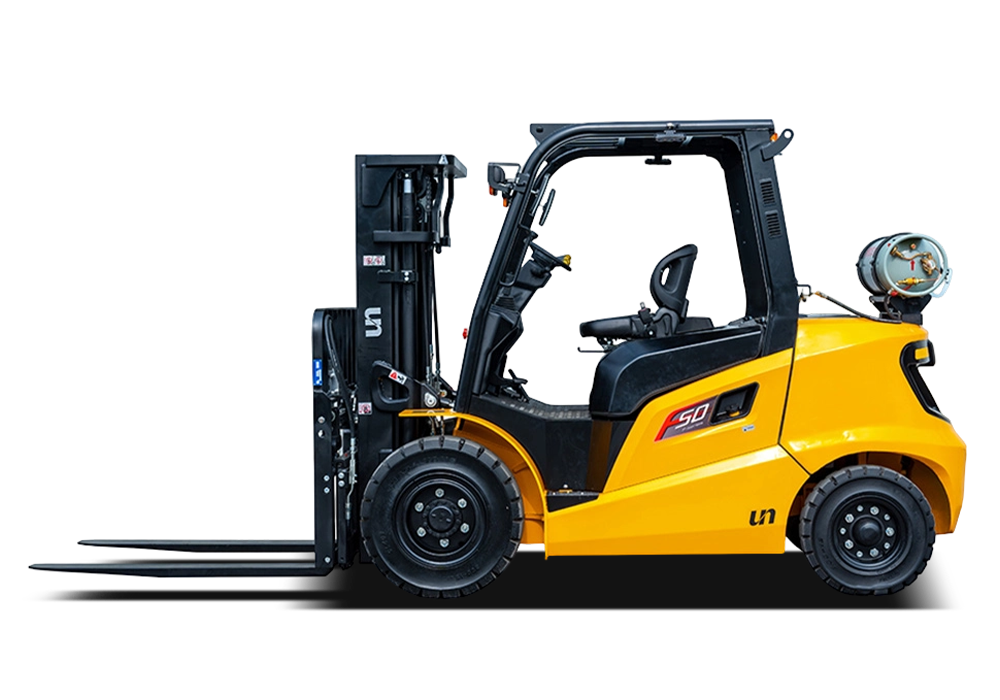
F Series 3.0T-3.5T LPG&Gasoline Forklift
Responsive Steering and Maneuverability
Forklifts spend much of their working time turning, aligning, reversing, and making small directional corrections. Steering performance therefore has a significant effect on productivity and safety. The F Series incorporates an advanced load-sensing steering system designed to provide responsive and precise maneuverability.
Load-sensing steering can help deliver hydraulic assistance according to steering demand. This supports smoother control and may reduce unnecessary hydraulic energy use when steering input is low. For operators, the practical benefit is a steering response that feels controlled during both slow positioning and faster travel within an approved operating area.
The listed outside turning radius is approximately 2,425 millimeters for the 3.0-ton models and approximately 2,500 millimeters for the 3.5-ton models. These dimensions support maneuverability in warehouses, loading areas, and industrial yards. The minimum aisle width for pallets is listed at approximately 4,120 millimeters for the 3.0-ton configuration and approximately 4,255 millimeters for the 3.5-ton configuration, although the exact requirement depends on pallet dimensions, mast type, load length, and operating technique.
Compact dimensions can provide a competitive advantage over larger heavy-duty forklifts that require wider travel lanes. When a 3.0-ton or 3.5-ton truck can work effectively within existing aisles, the customer may avoid costly facility modifications. More efficient use of floor space can also increase storage density and shorten travel distances between operating points.
The overall width is 1,220 millimeters across the listed FGL30T, FGL35T, FL30T, and FL35T models. A controlled width supports access through industrial doors and between common pallet positions. Buyers should compare this dimension with the narrowest route in the facility, including door clearances, rack spacing, dock edges, and turning areas.
Operator Comfort for Long Shifts
Operator comfort is not a luxury. It influences concentration, fatigue, handling consistency, and the likelihood of avoidable errors. The F Series includes several features intended to create a more comfortable and controllable working environment during extended shifts.
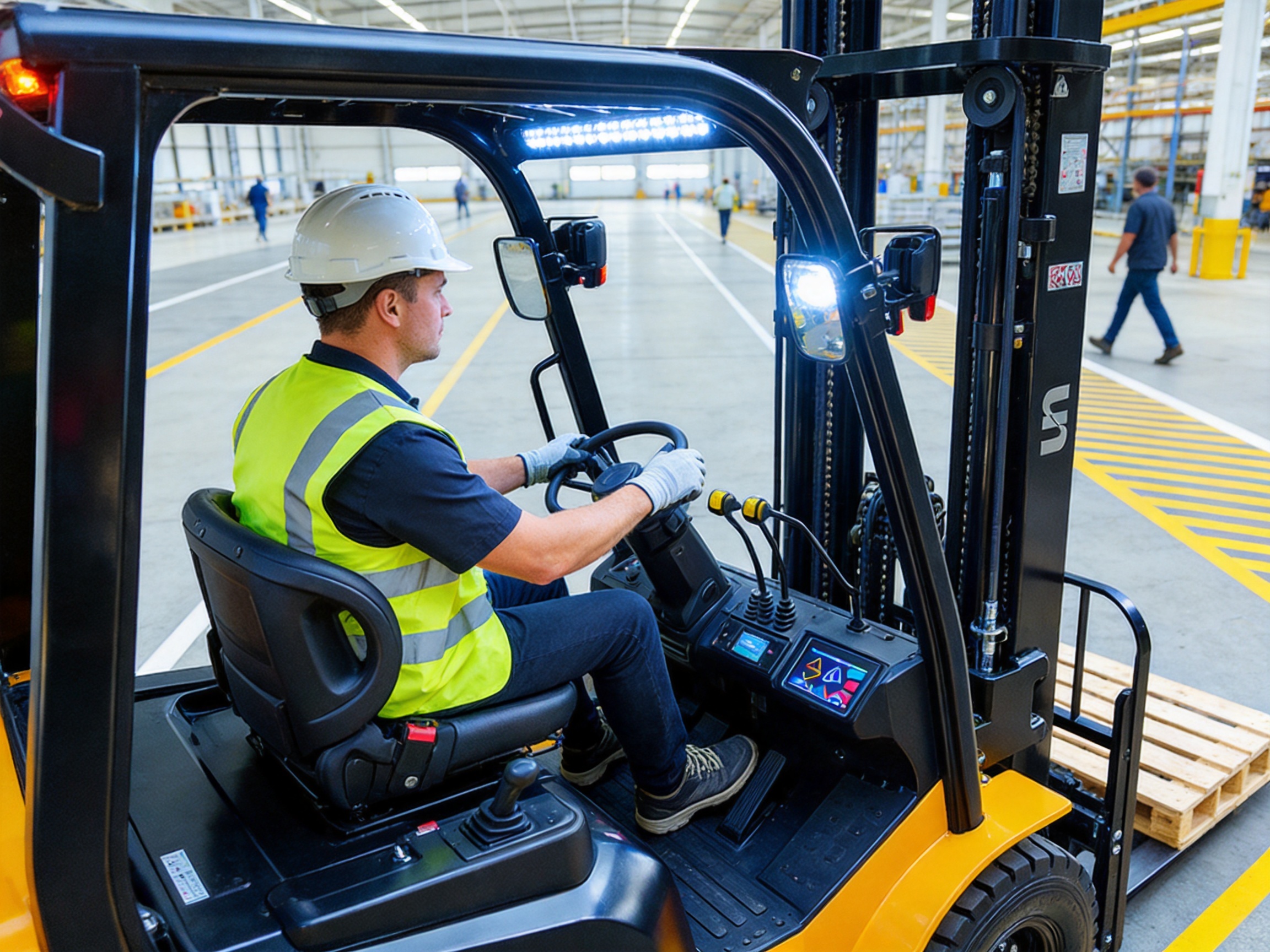
A suspension seat helps reduce the transmission of vibration from the chassis to the operator. This can be particularly beneficial when the truck travels across outdoor paving, loading ramps, expansion joints, or uneven industrial floors. Seat adjustment should be set according to the operator’s weight and preferred position so that the suspension system can work effectively.
The spacious footwell provides room for comfortable leg positioning and easier entry and exit. Generous access space is important for operators who mount and dismount frequently during inspections, pallet checks, document handling, or changing work assignments. Easy access also reduces awkward movement around the pedals and steering column.
The compact steering wheel is paired with an adjustable steering column. This arrangement allows different operators to establish a more natural driving position. A suitable steering-wheel size can also reduce unnecessary arm movement during repeated turns, while column adjustment helps accommodate operators of different heights and body proportions.
The newly designed ratchet handbrake requires less operating force. A handbrake that is easy to apply and release can improve convenience during frequent parking and staging activities. It should always be fully engaged whenever the forklift is parked, especially on a slope or near a loading area.
Ergonomics also extend to the dashboard, control placement, mast visibility, pedal arrangement, and entry steps. When these elements work together, operators can perform repetitive tasks with fewer unnecessary movements. Reduced physical strain can support steadier performance and help preserve attention during the later stages of a long shift.
Safety Systems Built into the Operating Experience
The F Series includes an Operator Presence System designed to help prevent accidental or unintentional startup of the forklift. Operator-presence technology can monitor whether the operator is correctly positioned and can restrict certain machine functions when the seat or operating position is not occupied as required by the system.
This type of safeguard is most effective when combined with operator training and sound workplace procedures. Operators must still apply the parking brake, lower the forks, place the controls in the correct position, shut down the engine when required, and remove the key or otherwise secure the truck according to company policy.
The stamped overhead guard is another important safety feature. It helps protect the operator from falling objects within its rated scope. Loads must be stable, pallets must be in good condition, and operators must avoid traveling with elevated loads. The guard should not be modified, drilled, or used to carry unauthorized equipment.
Sealed connectors and joints improve resistance to water and contamination, helping the electrical system remain reliable under demanding conditions. Electrical reliability is closely connected to safety because lighting, warning devices, dashboard alerts, and control systems depend on properly functioning connections.
The mast, forks, carriage, chains, hydraulic lines, tires, steering system, brakes, and overhead guard should be inspected before each shift. A well-designed forklift still requires disciplined maintenance and daily checks. Product design and safe operation are complementary, not interchangeable.
Maintenance Efficiency and Service Access
Maintenance time directly affects fleet availability. A forklift that is difficult to inspect or service may spend more time in a workshop and require more labor for routine tasks. The F Series uses removable side panels to provide quicker access to service points, making regular inspection, cleaning, and minor maintenance more straightforward.
The wide-opening engine hood provides improved access to internal components. Technicians can reach the engine, filters, belts, hoses, battery, and related systems more easily when the hood opens sufficiently for practical service work. Better access can reduce the time required for routine procedures and encourage maintenance teams to complete inspections more consistently.
Maintenance planning should include engine oil and filter replacement, cooling-system inspection, hydraulic-fluid checks, transmission servicing, fuel-system inspection, battery checks, tire inspection, brake testing, mast lubrication, chain examination, and inspection of forks and attachments. Service intervals should follow the official maintenance schedule and be adapted to operating conditions such as dust, high temperatures, continuous use, and heavy loads.
LPG equipment requires special attention to fuel cylinders, regulators, hoses, valves, mounting brackets, and connection points. LPG systems should be inspected by qualified personnel, and cylinders should be handled and stored according to local regulations. Any odor, suspected leak, damaged hose, or abnormal engine behavior requires immediate attention.
Easy access does not mean that untrained personnel should perform every repair. Engine, hydraulic, electrical, and LPG-related work must be assigned to competent technicians. Correct parts, correct fluids, and approved procedures are essential for maintaining reliability and protecting the warranty.
From a fleet-management perspective, maintainability contributes to total cost of ownership. Shorter service times can improve truck availability, reduce labor costs, and make preventive maintenance more practical. A service-friendly design is therefore a competitive advantage that may not be visible in a showroom but becomes significant over years of operation.
Manufacturing Strength and Product Development Capability
The manufacturer behind the series is an established material-handling equipment producer with roots extending back to 1978. Its operations integrate research and development, production, sales, and service. The company occupies approximately 53,400 square meters and has an annual production capacity of about 15,000 units.
This scale provides several advantages. A broad manufacturing base can support specialized production processes, quality-control systems, supplier coordination, product testing, and parts availability. It also enables the manufacturer to serve different market segments, from compact warehouse trucks to heavier internal-combustion forklifts and new-energy equipment.
The company offers a wide product portfolio comprising numerous forklift types, series, and specifications. Such breadth gives its engineering teams experience across different chassis layouts, lifting systems, drive technologies, battery platforms, powertrains, and applications. Knowledge developed in one product category can contribute to improvements in another, particularly in areas such as ergonomics, controls, structural design, and electrical integration.
Its manufacturing strengths are also reflected in the use of stamped structural components, slim-profile mast construction, sealed electrical connections, integrated LED systems, and load-sensing steering technology. These features require coordination among design engineering, tooling, welding, machining, painting, assembly, electrical integration, and final inspection.
Advanced manufacturing is not limited to automation. It includes the ability to maintain consistent dimensions, control welding quality, verify component fit, manage supplier quality, document production procedures, and test completed machines under representative conditions. A reliable forklift depends on repeatable production rather than a single excellent prototype.
The company has also contributed to the development of forklift technology in its domestic market and has participated in the formulation of industry standards for electric forklifts. It has developed patented technologies related to electric forklift systems and has experience supplying equipment to international markets. This background demonstrates a commitment to product development beyond basic assembly.
International production and service experience can be especially valuable for LPG and gasoline forklifts because these products must often satisfy different emissions rules, safety requirements, fuel systems, and documentation expectations. Multiple engine options and regional configurations allow the product platform to be adapted for different markets while preserving a common core design.
Quality Control from Design to Delivery
A competitive forklift manufacturer must control quality across the entire product life cycle. The process begins during product planning, when engineers define capacity, dimensions, visibility, stability, service access, and operating requirements. Computer-aided design and engineering analysis can help evaluate mast loads, chassis strength, counterweight balance, component packaging, and operator visibility before physical production begins.
Prototype testing and field evaluation are important next steps. A forklift may behave differently under repeated load cycles than it does during a short demonstration. Long-term testing can reveal issues related to vibration, heat, hydraulic response, steering wear, mast alignment, cable routing, and operator fatigue. Feedback from users and service teams can then be incorporated into product improvements.
During production, structural components must be manufactured with consistent dimensions. Welding quality influences chassis durability and mast alignment, while machining quality affects fit and movement in assemblies. Surface treatment and painting help protect the body from corrosion and contribute to a consistent appearance.
Assembly quality is equally important. Hydraulic hoses must be routed and secured properly, electrical connectors must be protected, fasteners must be tightened according to specifications, and moving parts must receive the correct lubrication. Final inspection should verify lifting, lowering, steering, braking, travel, warning devices, lighting, controls, and basic safety functions.
Documentation supports quality after delivery. Serial-number records, parts information, maintenance manuals, load charts, service schedules, and operator instructions help customers manage their equipment correctly. An international service network and regional partners can further improve support when customers require technical assistance or replacement components.
Applications Across Multiple Industries
The 3.0-ton and 3.5-ton capacity classes are widely used because they address common industrial handling requirements without becoming excessively large. In manufacturing, the forklifts can move raw materials, steel components, finished products, dies, crates, and production-line supplies.
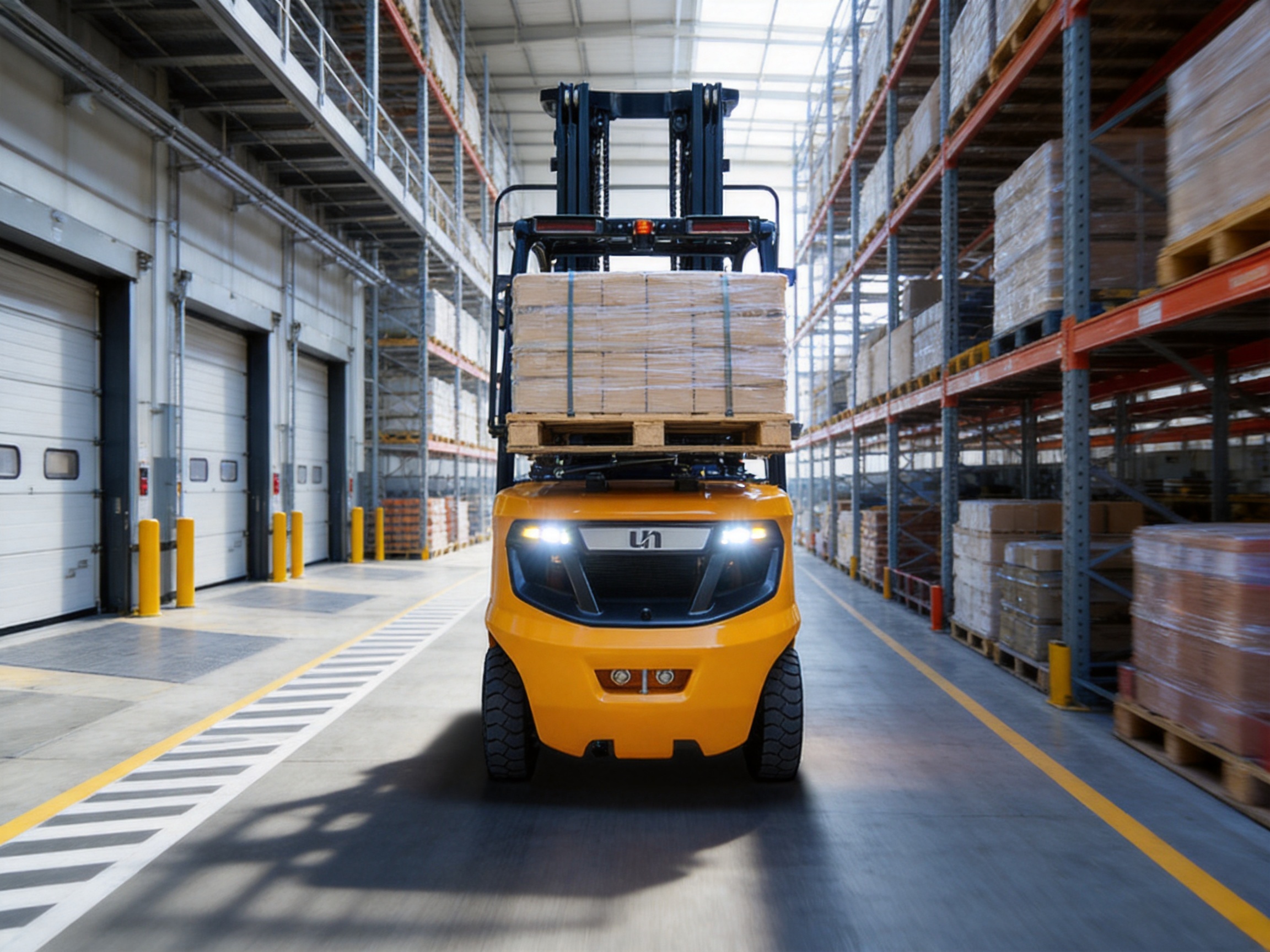
In warehousing and distribution, they can load and unload trailers, transfer pallets between receiving and dispatch areas, and place materials into storage locations. Their visibility and maneuverability features are useful when operators must work near racks, dock doors, and pedestrian routes.
In construction-material handling, the heavy-duty chassis and substantial capacity can support the movement of tiles, timber, cement products, pipes, fabricated assemblies, and other dense materials. Outdoor use requires careful attention to surface conditions, weather, tire selection, and corrosion protection.
In beverage and food distribution, LPG operation may be selected where lower odor and reduced visible exhaust are valued. The appropriate truck configuration depends on the facility’s ventilation, hygiene requirements, fuel policy, and local regulations. LPG forklifts should not be used in restricted environments unless the application has been assessed and approved.
In logistics yards, the ability to refuel quickly can help sustain multi-shift activity. The forklifts can support container staging, pallet transfer, trailer loading, and cross-docking operations. Fleet managers should match the capacity, mast height, tire type, attachments, and fuel system to the actual workload rather than selecting solely by nominal tonnage.
Specification Overview
The following table summarizes the principal specifications of the main F Series LPG and gasoline variants. Values may differ according to engine choice, mast configuration, tire selection, emissions package, attachments, and destination market. The final technical data sheet and capacity plate should be treated as the controlling documents for a purchased truck.
| Specification | FGL30T | FGL35T | FL30T | FL35T |
|---|---|---|---|---|
| Power type | Gasoline/LPG | Gasoline/LPG | LPG | LPG |
| Rated load capacity | 3,000 kg | 3,500 kg | 3,000 kg | 3,500 kg |
| Load center | 500 mm | 500 mm | 500 mm | 500 mm |
| Length to fork face without fork | 2,697 mm | 2,772 mm | 2,697 mm | 2,772 mm |
| Overall width | 1,220 mm | 1,220 mm | 1,220 mm | 1,220 mm |
| Overhead guard height | 2,235 mm | 2,235 mm | 2,235 mm | 2,235 mm |
| Outside turning radius | 2,425 mm | 2,500 mm | 2,425 mm | 2,500 mm |
| No-load travel speed | 20 km/h | 20 km/h | 20/19 km/h | 20/19 km/h |
| Full-load gradeability | 26% | 23% | 26/25% | 23/22% |
| Wheelbase | 1,700 mm | 1,700 mm | 1,700 mm | 1,700 mm |
| Engine option | GK25 | GK25 | GK25 or HMC 2.4-liter | GK25 or HMC 2.4-liter |
| Transmission | Hydraulic | Hydraulic | Hydraulic | Hydraulic |
How the Series Compares with Alternative Forklift Types
Compared with smaller internal-combustion forklifts, the F Series offers greater lifting capacity and a stronger platform for heavier industrial loads. Users that regularly handle loads near or above 2.5 tons may benefit from choosing a 3.0-ton or 3.5-ton truck rather than operating a smaller model at its upper limit.
Compared with larger heavy-duty forklifts, the series can offer better maneuverability and lower space requirements while still handling substantial loads. A smaller turning radius and controlled overall width may make it easier to integrate into existing facilities. This can reduce the need for aisle expansion or major layout changes.
Compared with diesel forklifts, LPG and gasoline models may provide lower odor and reduced visible exhaust in suitable applications. They can also offer quick refueling and convenient multi-shift utilization. Diesel may remain preferable for certain outdoor, high-traction, or continuous heavy-load applications, so the correct choice depends on the work environment and local emissions requirements.
Compared with electric forklifts, LPG and gasoline models generally avoid long battery charging periods and battery-room requirements. They may be advantageous where high utilization, outdoor work, or heavy continuous operation makes battery logistics difficult. Electric forklifts may be preferable in quiet, indoor, emission-sensitive, or low-maintenance applications. The F Series is therefore best viewed as a flexible solution within a broader fleet strategy rather than a universal replacement for every forklift type.
Total Cost of Ownership Considerations
Purchase price is only one part of forklift economics. Fleet owners should consider fuel consumption, operator productivity, maintenance labor, spare parts, tire wear, downtime, resale value, infrastructure, and expected service life. The F Series can contribute to lower operating risk through its service-access features, dependable hydraulic system, practical powertrain design, and established manufacturing base.
Quick refueling can increase available operating time in comparison with equipment that must remain idle for extended charging periods. This is especially important when a forklift is assigned to loading docks or production support, where delays can affect multiple departments.
Maintenance access can reduce the time required for inspections and scheduled service. Removable side panels and a wide-opening engine hood allow technicians to reach key components more efficiently. Regular preventive maintenance remains essential because neglected equipment typically incurs higher repair costs and creates greater safety risks.
Operator ergonomics can also influence ownership cost indirectly. A comfortable operator station may help reduce fatigue, improve handling consistency, and support productivity over long shifts. Better visibility can reduce pallet damage, rack contact, product loss, and unnecessary repositioning. These benefits are difficult to express in a single specification but can have a meaningful operational effect.
Recommended Selection Process
Before selecting a model, customers should identify the heaviest regular load, the load center, the required lift height, the pallet dimensions, the narrowest aisle, the steepest slope, the floor condition, and the expected operating hours per day. These factors determine whether the 3.0-ton or 3.5-ton version is the better fit.
Fuel availability should be reviewed carefully. A gasoline/LPG model may be suitable for operations that want flexibility, while an LPG-only model may be preferable where LPG supply is already standardized. Buyers should verify cylinder storage, ventilation, refueling procedures, fire protection, and local legal requirements.
Mast selection is also important. A standard mast may be suitable for low and medium stacking, while a higher or multi-stage mast may be necessary for tall racking. The mast configuration affects overall height, visibility, residual capacity, and aisle requirements. The selected truck should be evaluated in the actual facility whenever possible.
Attachments can increase versatility but may reduce residual capacity and alter the load center. Side shifters, clamps, rotators, fork positioners, and specialized tools should be specified during the purchasing process. The supplier should provide a revised capacity rating where required.
Tire selection must match the surface. Cushion or solid tires may be practical for smooth indoor floors, while pneumatic or other industrial tire options may be better for uneven outdoor surfaces. Tire choice influences ride comfort, traction, ground clearance, turning behavior, and maintenance cost.
Q&A
What loads can the F Series handle?
The main models are rated for 3,000 or 3,500 kilograms at a 500-millimeter load center. The actual permitted load depends on the capacity plate, mast height, attachment, load shape, load center, and operating conditions.
What is the difference between the FGL and FL models?
The FGL models are gasoline/LPG forklifts, providing fuel flexibility. The FL models are LPG forklifts. The exact engine and emissions configuration may vary by market and customer requirement.
Are these forklifts suitable for indoor operation?
They may be suitable for properly ventilated indoor applications when the fuel system, emissions configuration, facility rules, and local regulations permit their use. Indoor operation requires adequate ventilation and an appropriate risk assessment.
What are the main benefits of LPG operation?
LPG can provide quick refueling, lower visible exhaust, and reduced diesel odor in suitable applications. It can be useful for multi-shift work and facilities that need an internal-combustion forklift but prefer an alternative to diesel.
Can the forklift operate outdoors?
Yes, the series can support many outdoor industrial applications, provided the surface, weather, tire configuration, load, and operating conditions are appropriate. Outdoor users should consider slopes, water, dust, uneven pavement, and low-temperature operation.
How does the forklift support operator visibility?
The series uses a slim-profile steel mast, a wide-view mast design, an open operator layout, and LED lighting. These features are intended to improve forward visibility and illumination during handling operations.
Does the forklift include an operator-presence safety system?
Yes. The Operator Presence System is designed to help prevent accidental or unintentional startup when the operator is not correctly positioned. It must be used together with training, parking-brake procedures, daily inspections, and safe operating practices.
What makes the forklift comfortable for long shifts?
Comfort-related features include a suspension seat, spacious footwell, adjustable steering column, compact steering wheel, accessible controls, and a lower-force ratchet handbrake. These features help reduce unnecessary physical effort and improve control.
How easy is routine maintenance?
Removable side panels and a wide-opening engine hood provide quicker access to internal components. These features support routine inspection, cleaning, and servicing, although all maintenance must follow the approved service schedule and be performed by qualified personnel where necessary.
Can attachments be installed?
The hydraulic system can support compatible attachments when they are correctly specified. An attachment changes the load center and may reduce residual capacity, so the supplier must confirm compatibility and provide the appropriate capacity information.
What should a buyer confirm before ordering?
The buyer should confirm the exact model, engine, fuel system, emissions standard, mast type, lift height, tire type, attachment requirements, dimensions, capacity rating, regional certification, warranty terms, spare-parts support, and service arrangements.
How does the series compare with an electric forklift?
The LPG and gasoline models can provide rapid refueling and strong suitability for outdoor or high-utilization applications. Electric forklifts may be more appropriate for quiet indoor work or locations with strict emission controls. The best choice depends on the operating environment and fleet strategy.
Conclusion
The F Series 3.0T–3.5T LPG and gasoline forklifts are designed for organizations that require substantial lifting capacity, practical maneuverability, dependable power, and efficient daily operation. Their principal strengths include 3,000- and 3,500-kilogram rated capacities, flexible fuel configurations, hydraulic transmission, strong gradeability, compact dimensions, responsive steering, wide-view mast design, LED lighting, operator-presence protection, and service-friendly access.
The series also benefits from the manufacturing experience of an established material-handling equipment producer with integrated research, production, sales, and service capabilities. Its broad product portfolio, international market experience, engineering development, industry participation, and focus on energy efficiency and safety provide a strong foundation for continued product improvement.
For fleet owners, the most important advantage is the balance between performance and practicality. The forklifts are powerful enough for demanding loads, compact enough for many existing facilities, comfortable enough for extended shifts, and accessible enough to support regular maintenance. When matched correctly to the application and operated according to approved procedures, they can provide dependable productivity across manufacturing, warehousing, logistics, construction, and distribution operations.
References
1. Product technical specifications for the F Series 3.0T–3.5T LPG and gasoline forklift range.
2. Manufacturer product information covering forklift design, performance, safety, ergonomics, and maintenance features.
3. Industrial forklift operator training principles and safe load-handling practices.
4. General guidance on internal-combustion forklift selection, fuel systems, and workplace ventilation.
5. General engineering principles for forklift stability, load centers, mast capacity, and attachment selection.
6. Manufacturer information concerning material-handling equipment development, production capacity, international service, and product portfolio.
Product: F Series 3.0T-3.5T LPG&Gasoline Forklift

For exclusive deals and latest offers, sign up by entering your email address below.
Stay In Touch
ADDRESS : NO.1 ROAD ONE, XINDENG NEW DISTRICT, FUYANG, HANGZHOU, ZHEJIANG, CHINA 311404.
PHONE : +86-571-8688 8355 (AMERICA)
PHONE : +86-571-8886 9363 (EUROPE)
PHONE : +86-571-8688 8377 (ASIA, AFRICA, OCEANIA)
EMAIL : [email protected]
EMAIL : [email protected](PARTS INQUIRY)

