


 中文简体
中文简体 Français
 русский
 Español
 عربى
عربى Deutsch



Compact Cushion-Tire Lithium-Ion Forklift for Efficient Indoor Material Handling
Admin 2026-09-01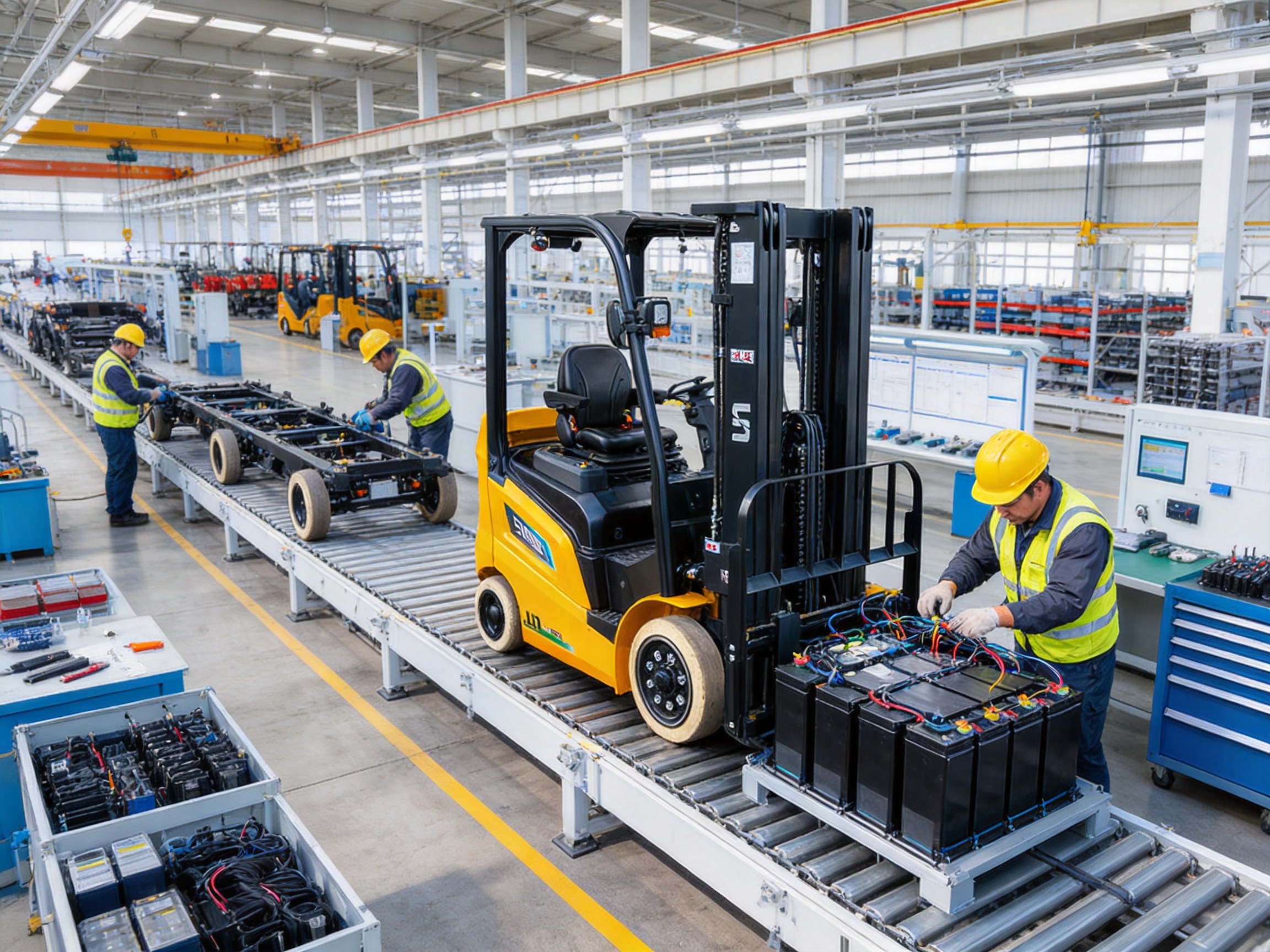
Modern warehouses and industrial facilities are under continuous pressure to move more goods in less space, reduce operating costs, improve workplace safety, and meet increasingly strict environmental expectations. These requirements have encouraged a significant transition from conventional internal-combustion forklifts to electrically powered material-handling equipment. Within this transition, lithium-ion battery technology has become especially important because it combines high energy efficiency, reduced maintenance requirements, rapid charging capability, and clean operation.
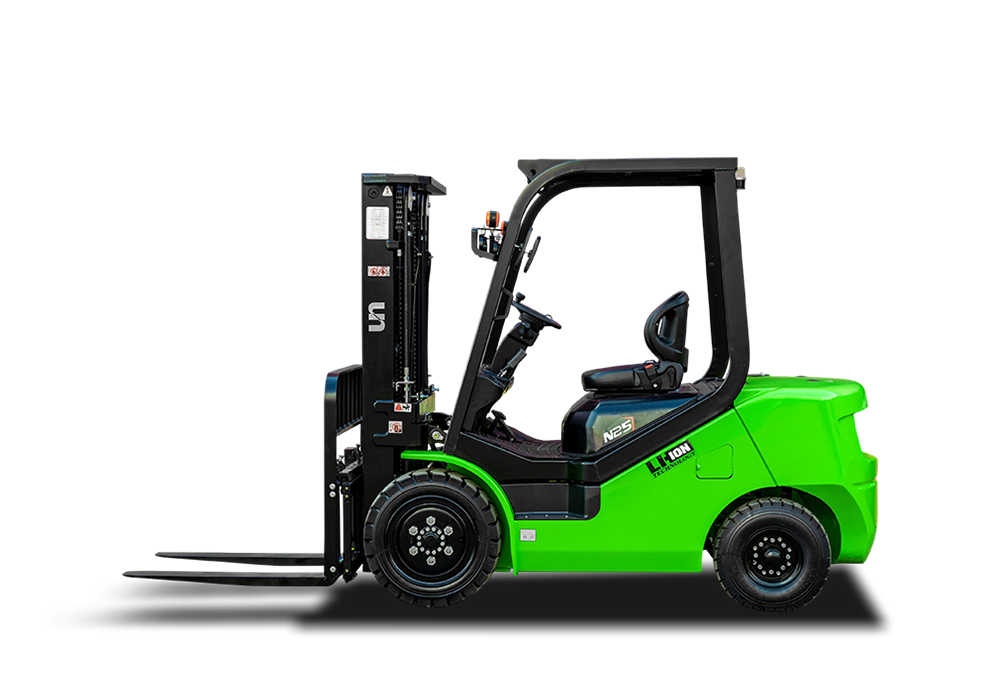
The FC Series 2.0T–3.2T lithium-ion battery forklift with cushion tires is designed for applications where maneuverability, reliability, and productive use of indoor space are essential. It combines a compact four-wheel configuration with electric drive performance and a cushion-tire chassis. The result is a forklift suited to warehousing, distribution, manufacturing, retail logistics, and light-to-medium industrial handling environments.
With a rated capacity range of approximately 2.0 to 3.2 tonnes, the series addresses a broad group of everyday material-handling tasks. The available specifications include a representative FB25 model rated at 5,000 lb, or 2,270 kg, with an 80 V/350 Ah battery system. Its compact dimensions, 42.5-inch overall width, and 76.8-inch outside turning radius help operators work efficiently in restricted aisles, loading areas, production lines, and storage zones.
Why Cushion-Tire Lithium-Ion Forklifts Matter
Forklift selection is closely connected to the surface conditions, operating environment, load profile, and working patterns of a facility. Pneumatic tires are useful for rough outdoor surfaces and uneven yards, while cushion tires are particularly suitable for smooth concrete floors and paved indoor areas. A cushion-tire forklift typically has a lower profile and a tighter turning capability, making it an effective choice for facilities where every inch of operating space matters.
The FC Series combines this compact chassis concept with lithium-ion battery power. Unlike an internal-combustion forklift, it produces no tailpipe emissions during operation. This makes it appropriate for enclosed environments where air quality, noise control, and cleanliness are important. It is also suitable for operations that handle products sensitive to exhaust contamination, including food packaging, consumer goods, pharmaceuticals, electronics, and finished industrial components.
Electric drive also supports smoother operation. The forklift can start, stop, accelerate, and reverse without the vibration and engine noise associated with many combustion-powered alternatives. This can contribute to a more comfortable work environment and may make communication between operators and nearby personnel easier.
Lithium-ion batteries provide additional operational advantages over many traditional lead-acid battery systems. They generally support opportunity charging during breaks or shift changes, do not require routine watering, and avoid the need for a dedicated battery changing area in many applications. Their stable voltage output can help maintain consistent performance through a working cycle, while reduced battery-related servicing can simplify fleet management.
Product Overview
The FC Series 2.0T–3.2T lithium-ion battery forklift is a four-wheel cushion-tire truck created for compact and efficient material handling. Its product concept is based on four main priorities: usable lifting capacity, maneuverability, clean electric performance, and dependable daily operation.
The series is positioned within the 2.0T–10.0T lithium-ion electric forklift category, while the FC Series itself focuses on the 2.0T–3.2T segment. This capacity range covers many common applications, including pallet movement, truck loading and unloading, production feeding, warehouse replenishment, order preparation, and short-distance transport between workstations.
The representative FB25 configuration has a rated load capacity of 5,000 lb, equivalent to 2,270 kg. The stated load center is 24 inches, or 600 mm. This means that the rated capacity is associated with a load whose center of gravity is positioned at that reference distance from the fork face. As with any forklift, actual capacity depends on factors such as lift height, mast configuration, attachment weight, load dimensions, and load distribution. Operators should always follow the official capacity plate and operating instructions supplied with the specific truck.
The 80 V/350 Ah battery specification provides a substantial electrical platform for demanding warehouse and industrial duty. The battery system is matched with an electric drivetrain intended to deliver practical travel performance while maintaining the low-emission advantages expected from lithium-ion equipment.
| Specification | Representative Value | Imperial Equivalent |
|---|---|---|
| Model | FB25 | — |
| Rated load capacity | 2,270 kg | 5,000 lb |
| Load center | 600 mm | 24 in |
| Wheelbase | 1,400 mm | 55.1 in |
| Total weight | 4,200 kg | 9,240 lb |
| Overhead guard height | 2,210 mm | 87 in |
| Length to fork face without fork | 2,224 mm | 87.6 in |
| Overall width | 1,080 mm | 42.5 in |
| Outside turning radius | 1,950 mm | 76.8 in |
| Travel speed without load | 14 km/h | 8.7 mph |
| Maximum gradeability at full load | 15% | 15% |
| Battery | 80 V/350 Ah | 80 V/350 Ah |
Compact Dimensions for Space-Constrained Facilities
One of the most important advantages of the FC Series is its compact operating footprint. Many warehouses are designed around fixed rack layouts, narrow transfer lanes, loading docks, and production work cells. In such environments, a forklift with excessive width or a large turning radius can reduce usable storage capacity and increase the risk of contact with racks, pallets, doors, and equipment.
The representative truck has an overall width of 42.5 inches, or 1,080 mm. This dimension can help it work effectively in facilities where aisle planning and maneuvering clearance are closely controlled. The outside turning radius is listed at 76.8 inches, or 1,950 mm. A tighter turning radius allows the operator to position the truck more easily around pallet corners, staging areas, and dock approaches.
The 55.1-inch wheelbase provides a balance between stability and maneuverability. A longer wheelbase can support stability but may increase the space required to turn. A shorter wheelbase can improve agility but must still provide an appropriate foundation for load control. The FC Series is designed around a balanced configuration for routine indoor handling.
Cushion tires further support compact operation. Because they are designed for smooth surfaces, cushion tires can enable a lower overall chassis profile than many pneumatic-tire alternatives. This can be beneficial in indoor facilities with height restrictions, low doorways, mezzanine access, or limited overhead clearance. The listed overhead guard height for the representative model is 87 inches, or 2,210 mm, although the final dimension may vary according to equipment configuration.
Compact dimensions do not eliminate the need for professional site planning. A facility should consider rack clearance, pallet dimensions, floor condition, turning intersections, pedestrian routes, fire exits, dock plates, and overhead obstructions before selecting a forklift. When properly matched to the facility, however, the compact format of the FC Series can help improve traffic flow and reduce unnecessary travel movements.
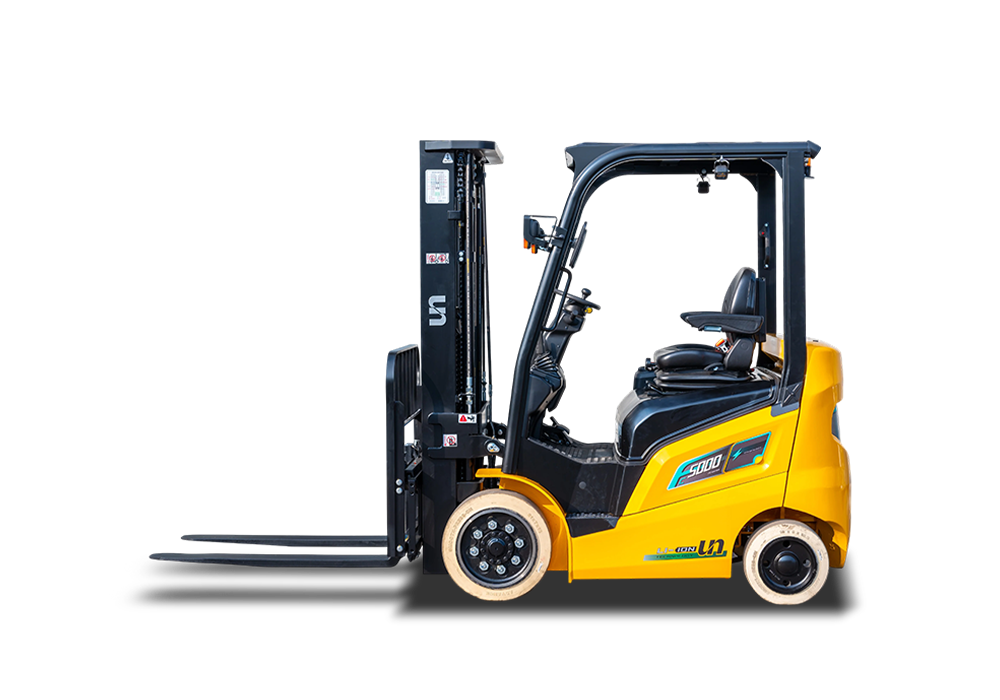
FC Series 2.0T-3.2T Li-ion Battery Forklift (Cushion Tire)
Electric Performance and Lithium-Ion Efficiency
The electric power system is central to the FC Series value proposition. Battery-powered forklifts convert stored electrical energy into traction and hydraulic work without the combustion process required by diesel, gasoline, or liquefied petroleum gas equipment. This supports cleaner operation and can reduce the number of ventilation measures required in enclosed work areas.
The 80 V/350 Ah battery specification provides a high-voltage electrical architecture appropriate for a forklift in this capacity range. A higher-voltage system can support efficient power delivery and help manage current levels during traction and lifting operations. The actual operating time depends on load weight, travel distance, lift frequency, acceleration settings, ambient temperature, operator behavior, tire condition, and the charging strategy used by the facility.
Lithium-ion batteries are particularly suitable for operations with frequent starts and stops. They can often accept short charging sessions during planned pauses, allowing facilities to maintain availability without relying exclusively on long overnight charging periods. This is especially useful for multi-shift operations, provided that the battery, charger, electrical installation, and operating schedule are properly matched.
Unlike conventional lead-acid battery systems, lithium-ion batteries typically do not require regular electrolyte watering. They also reduce the handling risks associated with removing, transporting, and exchanging heavy battery packs. A facility may therefore be able to use more of its floor space for production, storage, or employee access instead of allocating a separate battery service room.
The battery system should be managed according to the manufacturer’s charging and safety procedures. Charging areas should be properly ventilated and protected from impact, moisture, unauthorized access, and incompatible equipment. Operators and maintenance personnel should receive training covering charging connections, warning indicators, inspection routines, emergency procedures, and battery damage reporting.
Productivity in Warehouse and Distribution Operations
Warehousing productivity is determined not only by maximum speed but also by how consistently a forklift completes repetitive tasks. Acceleration, braking, steering response, visibility, load control, charging availability, and ease of maintenance all affect the number of productive movements completed during a shift.
The FC Series has a listed no-load travel speed of 8.7 mph, or 14 km/h. This provides efficient movement between storage locations, staging areas, docks, and production zones. Actual travel speed should always be adapted to the environment. Congested aisles, pedestrian crossings, uneven floor joints, wet surfaces, and blind intersections require lower speeds and increased caution.
Its rated gradeability at full load is listed at 15 percent. This supports movement across suitable ramps and changes in floor elevation, although the allowable grade depends on site conditions, ramp length, load height, surface traction, and local safety procedures. Operators should approach slopes with the load positioned correctly and should avoid turning on steep ramps.
For distribution centers, the forklift can support pallet unloading, staging, replenishment, and outbound loading. In manufacturing, it can transport raw materials to production lines and move finished products to storage. In retail and wholesale environments, it can support receiving, backroom handling, and palletized inventory management. Its clean and relatively quiet electric operation is valuable wherever forklifts work near employees or customers.
The 2.0T–3.2T capacity range is also practical for mixed fleets. A company may use smaller electric forklifts for narrow-aisle work, FC Series trucks for general pallet handling, and larger models for heavy industrial loads. Fleet standardization around a common electric platform can simplify operator training, spare-parts planning, battery management, and service procedures.
Operator Comfort and Control
Operator comfort is directly connected to productivity and safety. Forklift drivers often repeat the same steering, reversing, lifting, and positioning actions hundreds of times per shift. A design that reduces unnecessary vibration, noise, awkward movement, or visual obstruction can support more consistent performance.
The electric drivetrain of the FC Series eliminates engine vibration and reduces operating noise compared with many combustion-powered forklifts. This can improve the working atmosphere and may reduce fatigue during extended indoor operation. Lower noise can also make audible alarms, instructions, and communication easier to recognize, although facilities should continue using suitable warning systems and pedestrian-control procedures.
A compact four-wheel chassis provides a stable operating platform for routine pallet movement. The overhead guard protects the operator from falling objects within the limits of its design, while the mast and fork arrangement support controlled load positioning. The exact mast height, free lift, fork dimensions, and visibility characteristics depend on the selected configuration and should be evaluated against the application.
Good visibility remains essential. Operators need a clear view of the fork tips, pallet openings, rack beams, travel path, and surrounding pedestrians. Load height should be kept as low as practical during travel, and operators should use reverse travel or approved viewing methods when the load obstructs the forward path.
Comfort features should be considered together with training and workplace design. An ergonomic seat and accessible controls are beneficial, but safe productivity also depends on appropriate aisle widths, floor maintenance, lighting, traffic separation, and operator discipline.
Safety-Oriented Design and Responsible Operation
Forklift safety is a system rather than a single component. The truck, load, operator, facility, maintenance program, and traffic rules must work together. The FC Series contributes through its stable four-wheel format, controlled electric drive, overhead guard, compact but balanced chassis, and predictable handling characteristics.
The rated capacity of 5,000 lb for the representative FB25 model must not be treated as a universal capacity under every condition. Capacity decreases when the load center increases, when an attachment is installed, when the load is lifted to greater heights, or when the load is unevenly distributed. The official data plate must be consulted before handling a specific load.
Operators should inspect the forklift before each shift. The inspection should include tires, forks, mast chains, hydraulic hoses, battery condition, charging connector, warning devices, steering, brakes, seat belt, overhead guard, lights, and visible damage. Any abnormal noise, fluid leak, warning message, or structural concern should be reported and addressed before the truck returns to service.
Cushion tires perform best on clean, smooth, and adequately maintained surfaces. Metal fragments, broken pallets, oil, standing water, debris, and severe floor damage can reduce traction or accelerate tire wear. Facility managers should establish cleaning and floor-maintenance routines that match the operating intensity of the fleet.
Pedestrian safety requires physical separation wherever possible. Marked walkways, barriers, mirrors, speed controls, crossing procedures, and audible or visual warning devices can reduce interaction risks. Operators should maintain safe distances, sound warnings at blind corners, and never carry passengers unless the truck is specifically designed and approved for that purpose.
Advantages Compared with Conventional Combustion Forklifts
The FC Series offers several practical advantages over conventional internal-combustion forklifts when used in appropriate indoor applications.
First, it produces no direct exhaust emissions during operation. This can improve indoor air quality and reduce exposure to combustion by-products. Facilities may also benefit from lower ventilation demand, although ventilation requirements should always be assessed according to the complete workplace environment.
Second, electric operation can reduce noise. A quieter truck is particularly useful in warehouses attached to offices, retail facilities, hospitals, food-handling areas, and production environments where excessive noise interferes with communication or customer experience.
Third, the lithium-ion battery can simplify daily routines. There is no engine oil change, fuel handling, spark-plug replacement, or exhaust-system maintenance. Battery opportunity charging can also reduce downtime when compared with equipment that must be refueled or fitted with a replacement lead-acid battery.
Fourth, the compact cushion-tire configuration is often more suitable for indoor maneuvering than a larger pneumatic-tire forklift. Its narrow body and tight turning radius can help reduce aisle requirements and support better use of storage space.
Fifth, electric torque is available immediately through the drive system, supporting smooth starts and responsive low-speed control. This can be valuable when positioning loads precisely near racks, trucks, conveyors, and production equipment.
These advantages do not mean that a lithium-ion cushion-tire forklift is suitable for every site. Outdoor yards with rough terrain, loose surfaces, deep potholes, or frequent exposure to severe weather may require a different tire and chassis configuration. Product selection should always be based on the complete application.
Advantages Compared with Lead-Acid Electric Forklifts
Compared with traditional lead-acid electric forklifts, lithium-ion equipment can provide a different operating model. Lead-acid batteries may require scheduled watering, equalization charging, cooling time, and battery changes during multi-shift use. Lithium-ion batteries can reduce or eliminate several of these tasks when used with compatible charging equipment and an appropriate battery-management system.
Opportunity charging is one of the most important distinctions. A truck can be connected during planned breaks instead of waiting for a complete discharge before charging. This can improve fleet availability and reduce the need for spare battery packs. However, the charging plan must be designed carefully to prevent excessive heat, connector damage, or insufficient energy availability during peak periods.
Lithium-ion batteries also tend to maintain more stable voltage during discharge. Stable power can support consistent travel and lifting behavior across the work cycle. The exact performance depends on battery chemistry, battery-management software, temperature, age, load, and charger compatibility.
Reduced maintenance is another benefit. Eliminating watering tasks can save labor and reduce the risk of electrolyte exposure. It also helps facilities maintain cleaner battery areas. Even so, lithium-ion batteries are not maintenance-free. Periodic inspections, electrical checks, software diagnostics, thermal monitoring, and professional service remain important.
Organizations comparing lithium-ion and lead-acid equipment should evaluate the total cost of ownership rather than only the purchase price. Relevant factors include energy costs, labor, spare batteries, chargers, downtime, service intervals, facility space, shift pattern, utilization, and expected battery life.
Manufacturing Strength and Engineering Background
The product is manufactured by Zhejiang UN Forklift Co., Ltd., a material-handling equipment producer with a history dating back to 1978. The company integrates research and development, production, sales, and service. This integrated structure is important because forklift performance depends on the coordination of mechanical design, electrical systems, hydraulics, software, assembly quality, testing, parts support, and after-sales service.
The company’s stated production facility occupies approximately 53,400 square meters and has an annual production capacity of 15,000 units. Such a production scale can support systematic manufacturing, standardized processes, dedicated assembly areas, quality-control procedures, and supply-chain coordination. It also provides a foundation for serving customers that require repeat orders, fleet consistency, and long-term product support.
The manufacturer offers a broad portfolio covering 17 varieties, 96 series, and more than 200 specifications. This product breadth helps the company understand different application requirements, from compact warehouse trucks to larger internal-combustion forklifts and specialized electric equipment. It also allows customers to work with one supplier when their operations require several capacity classes or truck types.
The company reports a history of developing reach forklifts and very-narrow-aisle trucks, as well as holding national patents related to electric forklift technologies. Experience in these areas is relevant to the FC Series because compact electric forklifts require careful coordination between chassis dimensions, steering geometry, battery placement, lift performance, visibility, and stability.
The manufacturer has also participated in the formulation of Chinese electric forklift industry standards. Participation in industry-standard development can contribute to a deeper understanding of safety, performance, testing, terminology, and technical requirements. It does not replace compliance with the regulations applicable in the customer’s market, but it demonstrates engagement with the wider development of electric material-handling technology.
Advanced Manufacturing Processes
A modern forklift manufacturing process typically begins with engineering design and application analysis. Product teams define the target capacity, load center, wheelbase, mast options, battery system, drive performance, stability, dimensions, and service requirements. Computer-aided design and engineering analysis can then be used to evaluate component relationships before production tooling and assembly are finalized.
Frame and chassis manufacturing must provide the structural foundation for the complete truck. Steel components require accurate cutting, forming, welding, and dimensional inspection. The quality of these operations affects mast alignment, axle installation, steering geometry, stability, vibration, and long-term durability. A controlled manufacturing environment helps reduce variation between units.
Welding quality is particularly important in a forklift because the frame and protective structures experience repeated dynamic loads. Consistent welding procedures, suitable material preparation, trained personnel, and inspection practices help ensure that structural assemblies meet design requirements. Critical weld areas should be checked according to the manufacturer’s quality system and applicable standards.
Surface treatment protects components from corrosion and supports a consistent appearance. Preparation, cleaning, coating, curing, and inspection all influence the durability of painted surfaces. This is relevant even for indoor forklifts because warehouses may contain moisture, cleaning chemicals, condensation, and temperature changes.
Mechanical assembly involves the installation of axles, wheels, steering components, mast sections, hydraulic equipment, counterweight, overhead guard, forks, operator compartment, and related systems. Assembly sequence and torque control are important because incorrect fastening or alignment can affect safety and performance.
The electrical assembly process requires careful routing and protection of high-voltage cables, connectors, sensors, controllers, battery interfaces, and charging components. Cable protection is essential in a working environment where vibration, dust, impact, and repeated movement are present. Correct connector engagement, insulation integrity, polarity, and grounding should be verified during production testing.
Battery integration is more than simply installing a battery pack. The battery-management system, charger communication, thermal protection, electrical protection, and vehicle controller must work together. A properly integrated system can monitor operating conditions, identify faults, control charging behavior, and help protect the battery from harmful use conditions.
Hydraulic assembly and testing are also important. The lift system must provide controlled raising, lowering, tilting, and load positioning. Hydraulic hoses and fittings must be installed correctly, with appropriate routing and protection against abrasion. Functional testing under controlled conditions helps verify that the system responds as intended.
End-of-line testing provides a final opportunity to identify issues before shipment. A comprehensive process may include checks of steering, braking, travel speed, lifting and lowering, tilt operation, warning devices, charging, fault indicators, battery communication, dimensions, and visible finish quality. Load testing and stability evaluation should be conducted according to applicable procedures and the specific truck configuration.
Quality Control and Product Consistency
For fleet customers, consistency is as important as the performance of an individual truck. Operators need controls, dimensions, charging systems, and service procedures to remain familiar across units. A structured manufacturing and quality program helps reduce variation and supports predictable fleet operation.
Quality control can include incoming inspection of steel, batteries, motors, controllers, hydraulic components, tires, and electronic parts. In-process inspection can verify welding dimensions, assembly torque, cable routing, hydraulic connections, and component identification. Final inspection can confirm that the completed truck matches the approved configuration and customer requirements.
Traceability is another important manufacturing strength. Recording component batches, assembly information, inspection results, and test data can help manufacturers investigate field issues and improve future production. It can also support warranty analysis and parts identification throughout the product life cycle.
Reliable quality is especially important for lithium-ion forklifts because the power system combines mechanical, electrical, and software functions. A fault may involve the battery, charger, controller, sensor, communication network, or operating parameter. Manufacturers with experience across the complete vehicle system are better positioned to diagnose interactions between these components.
Service Network and Lifecycle Support
A forklift is a long-term productivity asset rather than a one-time purchase. Service availability, parts supply, technical documentation, warranty response, and operator training all influence the total value of the equipment.
The manufacturer reports a worldwide sales and service network with partners in Europe, South America, North America, Africa, and Asia. International support is important for companies operating multiple sites or purchasing equipment for export markets. Local service capability can reduce downtime and make it easier to obtain inspections, repairs, consumables, and replacement parts.
The company also supplies equipment as an original-equipment manufacturer for recognized industrial businesses. OEM experience generally requires attention to documentation, configuration control, quality consistency, delivery coordination, and customer-specific requirements. These capabilities are relevant to fleet buyers seeking dependable manufacturing and support relationships.
Service planning for the FC Series should include daily operator inspections, periodic mechanical checks, battery and charger diagnostics, tire inspections, hydraulic-system checks, brake and steering checks, mast lubrication where applicable, and software or control-system review. Maintenance intervals should follow the official manual and should be adjusted for operating intensity and environmental conditions.
Replacement parts should be selected according to the approved specification. Using unsuitable battery chargers, connectors, tires, hydraulic components, or electrical parts can affect performance and create safety risks. A professional service network can help ensure that parts are correctly identified and installed.
Environmental and Business Benefits
The environmental value of the FC Series begins with its zero tailpipe emissions during operation. This is especially significant in enclosed workplaces. Cleaner operation can support corporate sustainability objectives and may help companies meet internal targets for reducing fuel consumption and direct emissions.
Energy efficiency can also produce economic benefits. Electricity prices, charging schedules, utilization, and local energy sources all affect operating costs, but electric forklifts often offer lower energy expenditure than combustion-powered alternatives in comparable indoor applications. Regenerative functions, if included in the specific configuration, may further improve efficiency during deceleration and lowering operations.
Reduced routine maintenance can lower labor requirements and decrease consumable use. There is no engine oil or fuel filter associated with the electric drivetrain, and lithium-ion batteries avoid many watering-related tasks. These savings should be evaluated over the expected service life of the truck rather than only during the first year.
A quieter, cleaner forklift may also improve workplace quality. Employees can work closer to the truck with less exposure to fumes and less background noise. In customer-facing facilities, electric operation can present a more modern and environmentally responsible image.
Sustainability does not end when the battery reaches the end of its service life. Fleet owners should maintain records of battery condition, arrange professional inspection, and use approved recycling or recovery channels. Responsible lifecycle management helps reduce environmental risk and supports the broader sustainability goals of electrification.
Application Guide
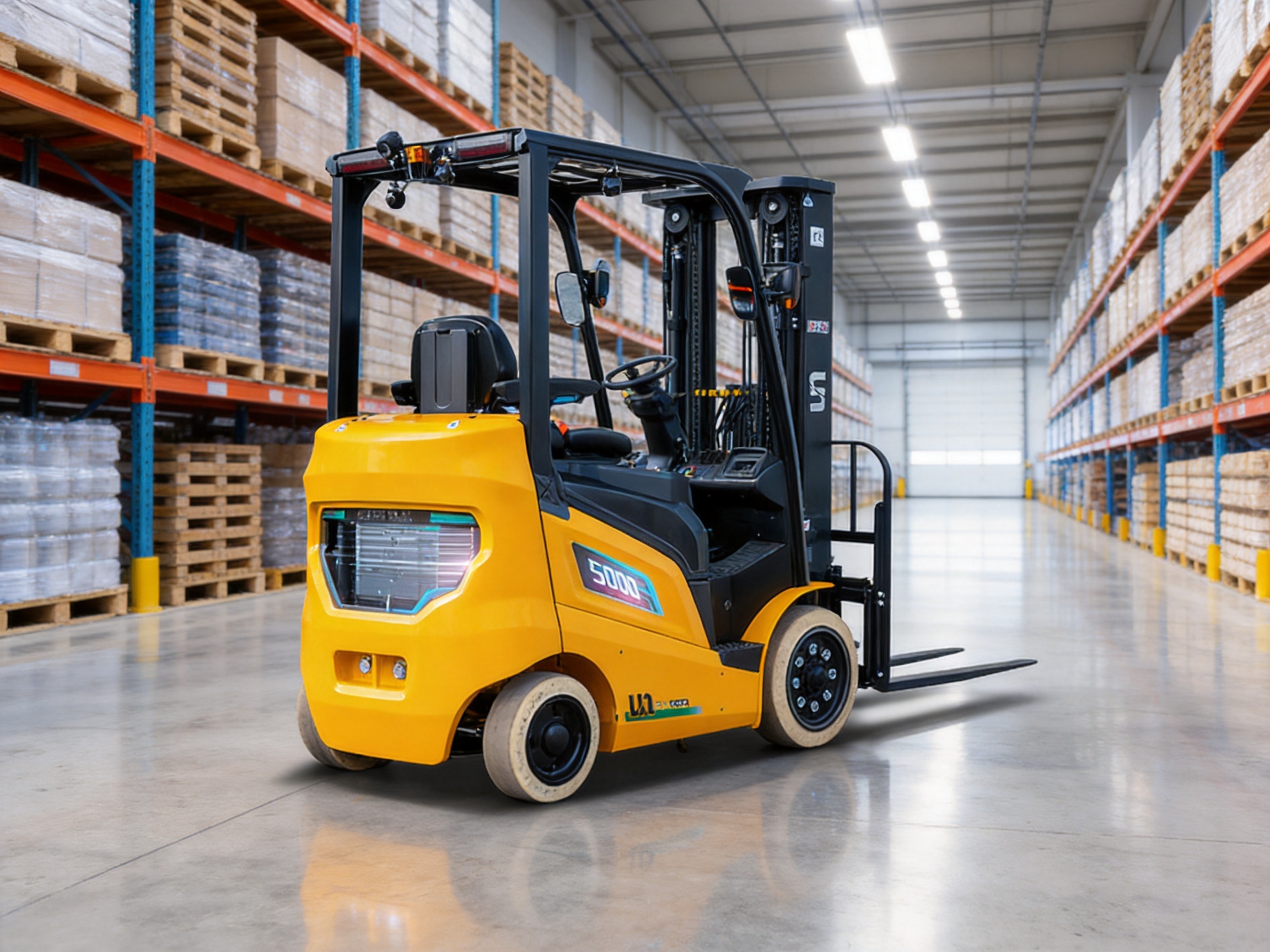
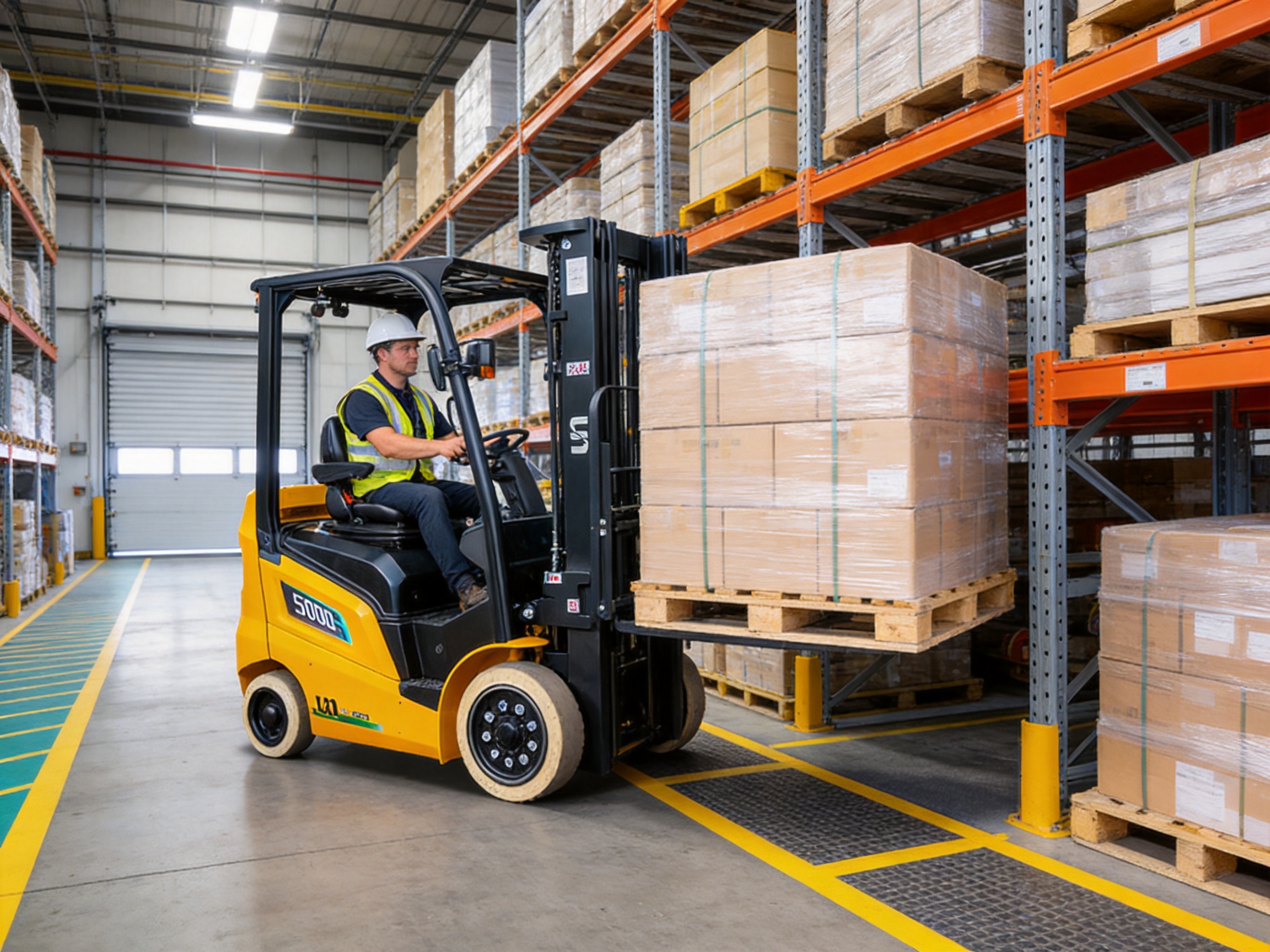
The FC Series is well suited to indoor warehouses with smooth concrete floors and regular palletized loads. It can support receiving, put-away, replenishment, order staging, cross-docking, and shipping operations. Its compact size is advantageous where aisles, doors, and storage lanes are carefully planned.
Distribution centers can use the forklift for repeated loading and unloading cycles. The electric powertrain is beneficial where trucks operate near dock personnel, packaging areas, and enclosed staging zones. Cushion tires are appropriate when the dock approach and yard surfaces are smooth and maintained.
Manufacturing plants can use the forklift to transport raw materials, work-in-progress, finished products, dies, containers, and pallets. The absence of exhaust emissions is valuable near assembly, packaging, and inspection areas. The turning radius can help the truck move between production cells and warehouse zones.
Retail distribution and wholesale facilities can benefit from the forklift’s low-noise operation and compact footprint. It can work in backrooms, stockrooms, and loading areas, provided that floor surfaces and clearance conditions are suitable.
Applications requiring rough-terrain travel, long-distance outdoor hauling, frequent operation on damaged pavement, or exposure to loose gravel may require a pneumatic-tire or rough-terrain forklift instead. The FC Series should be selected for the conditions it was designed to handle, not simply for its nominal capacity.
How the FC Series Compares with Competitors
Competitive comparison should consider the full operating package rather than a single specification. A forklift may have a similar rated capacity but differ significantly in width, turning radius, battery voltage, charging flexibility, service availability, noise level, standard equipment, and lifecycle cost.
The FC Series has a strong position where compact indoor performance is the priority. Its 42.5-inch width and 76.8-inch turning radius are useful reference points for facility planners comparing trucks for restricted spaces. Its cushion tires further reinforce its suitability for smooth indoor floors.
The lithium-ion battery system distinguishes it from many entry-level electric forklifts that rely on lead-acid batteries. Opportunity charging, reduced watering requirements, and stable electric performance can improve fleet availability, particularly in operations with multiple short duty cycles.
The product also benefits from being part of a wider forklift portfolio. Customers that require different capacity ranges or different power types may be able to source multiple machines from one experienced manufacturer. This can simplify supplier management and create opportunities for common training, parts, and service arrangements.
Manufacturing experience is another competitive consideration. A company with decades of forklift production, a broad product range, electric-technology development, patent activity, and international service relationships can offer more than a basic machine. It can provide engineering knowledge, configuration support, documentation, and lifecycle assistance.
Buyers should still request application-specific information before making a final decision. Important questions include available mast heights, residual capacities, attachment options, charging times, battery warranty, operating temperature range, safety equipment, tire specifications, local compliance, spare-parts availability, and service response times.
Procurement Considerations
Before ordering an FC Series forklift, the purchaser should document the actual operating profile. This includes average and maximum load weight, load dimensions, load center, lifting height, travel distance, shifts per day, peak utilization, floor conditions, aisle width, door height, ramp gradients, indoor temperature, cleaning chemicals, and pedestrian density.
Battery sizing should be based on real energy demand rather than a simple shift label. A truck handling light loads over short distances will have a different requirement from one performing continuous loading and unloading at maximum capacity. Charging infrastructure should be reviewed at the same time as the truck purchase to ensure that electrical capacity and connector arrangements are appropriate.
The facility should also determine whether opportunity charging is practical. Chargers should be located where operators can connect safely without blocking traffic. Charging instructions should be visible, and unauthorized modifications to chargers or battery connections should be prohibited.
Residual capacity at the required lift height must be verified. The nominal 2,270 kg rating applies to a specified reference condition, including a 600 mm load center. If the load is longer, higher, or handled with an attachment, the capacity may be lower. The supplier should provide the correct capacity chart for the selected mast, fork, attachment, and configuration.
Regulatory compliance is another essential factor. The truck should meet the safety, electromagnetic compatibility, battery, charger, and workplace requirements applicable in the country or region of operation. Importers and fleet operators should retain technical documentation and ensure that operators receive local-compliance training.
Recommended Fleet Management Practices
A productive forklift fleet requires organized management. Each unit should have an identification record containing its model, serial number, battery information, charger assignment, service history, inspection results, and operator authorization status.
Daily inspections should be documented, especially in multi-shift operations. Repeated reports of tire wear, steering difficulty, battery warnings, mast noise, or reduced travel performance should trigger a planned maintenance review rather than being treated as normal wear.
Operators should be trained in lithium-ion charging behavior. They should know when to charge, how to connect the charger, how to respond to warning indicators, and how to report battery damage or overheating. Charging equipment should not be used as a substitute for proper diagnosis when a battery fault is indicated.
Fleet managers can monitor energy use, operating hours, idle time, impact events, battery status, and service costs where suitable monitoring systems are available. These data can reveal inefficient routes, excessive idling, underused trucks, poor charging practices, or sites where a different capacity class would be more appropriate.
Preventive maintenance is generally less expensive than unplanned downtime. Planned inspections can identify worn tires, loose fasteners, damaged forks, hydraulic leaks, and battery or charger issues before they become major failures. A maintenance schedule should reflect operating hours and environmental severity rather than relying only on calendar dates.
Q&A
What type of forklift is the FC Series?
The FC Series is a four-wheel cushion-tire forklift powered by a lithium-ion battery. It is designed primarily for indoor and smooth-surface material handling in the 2.0T–3.2T capacity range.
What is the representative capacity of the FB25 model?
The representative FB25 model has a rated load capacity of 5,000 lb, or 2,270 kg, at a 24-inch, or 600 mm, load center. The exact capacity must be confirmed from the official data plate for the selected configuration.
What battery does the representative model use?
The listed battery specification is 80 V/350 Ah. Battery performance and charging requirements depend on the selected battery package, charger, operating conditions, and duty cycle.
Why are cushion tires useful indoors?
Cushion tires are designed for smooth concrete and paved surfaces. They can support a compact chassis, tight turning, and efficient maneuvering in warehouses, production plants, and distribution facilities.
Can the forklift be used outdoors?
It may be used outdoors on suitable smooth, paved surfaces, such as maintained loading areas. Rough terrain, loose gravel, potholes, mud, and severe outdoor conditions may require a pneumatic-tire or rough-terrain model.
Does lithium-ion charging eliminate all battery maintenance?
No. Lithium-ion batteries generally reduce watering and battery-change requirements, but they still require correct charging, inspection, fault monitoring, electrical safety procedures, and professional service when necessary.
How fast can the representative forklift travel?
The listed no-load travel speed is 14 km/h, or 8.7 mph. Safe operating speed must be adjusted according to load, floor condition, aisle congestion, visibility, pedestrian activity, and local rules.
What is the maximum gradeability?
The representative specification lists a maximum gradeability of 15 percent at full load. The actual safe ramp capability depends on surface traction, load position, ramp length, operating procedure, and the official technical documentation.
How does the FC Series improve indoor air quality?
Because it uses battery-electric power, it produces no direct tailpipe emissions during operation. This makes it suitable for enclosed facilities where exhaust emissions from combustion forklifts would be undesirable.
Is the forklift suitable for narrow aisles?
Its compact width and outside turning radius support maneuverability in space-constrained facilities. However, aisle suitability must be calculated using the actual pallet size, mast, fork length, turning method, rack design, and required clearance.
What should be checked before purchasing?
Buyers should confirm capacity at the required lift height and load center, mast options, attachment compatibility, battery and charger specifications, floor and tire suitability, dimensions, local regulatory compliance, warranty terms, spare-parts support, and service availability.
What makes the manufacturer suitable for international customers?
The manufacturer has operated since 1978, integrates research and development with production and service, reports a substantial manufacturing facility and annual capacity, offers a broad forklift portfolio, and maintains sales and service relationships across multiple global regions.
Conclusion
The FC Series 2.0T–3.2T lithium-ion battery forklift with cushion tires is designed for companies seeking a clean, compact, and productive solution for indoor material handling. Its combination of electric drive, 80 V/350 Ah battery technology, four-wheel stability, narrow overall width, tight turning radius, and practical lifting capacity makes it a strong candidate for warehouses, distribution centers, factories, and other smooth-surface facilities.
Compared with combustion forklifts, it offers zero tailpipe emissions, lower operating noise, and reduced engine-related maintenance. Compared with traditional lead-acid electric forklifts, its lithium-ion battery can support opportunity charging and reduce watering and battery-exchange requirements. Compared with larger or less compact trucks, its cushion-tire format can improve maneuverability in restricted indoor spaces.
The product’s value is strengthened by the manufacturer’s long history in forklift development, integrated research and production capabilities, broad product portfolio, electric-technology experience, manufacturing scale, OEM background, and international service network. These strengths support not only the initial purchase but also the long-term requirements of fleet consistency, maintenance, parts availability, and technical support.
For the best results, the forklift should be matched carefully to the facility. Load center, lift height, aisle geometry, floor quality, duty cycle, battery demand, charging infrastructure, and local safety requirements must all be evaluated. When correctly configured and responsibly operated, the FC Series can help businesses improve material flow, reduce emissions, use indoor space more effectively, and build a more efficient electric handling fleet.
References
1. Manufacturer-provided FC Series 2.0T–3.2T lithium-ion battery forklift product specifications and technical description.
2. Manufacturer-provided FB25 main specification table, including capacity, load center, dimensions, travel speed, gradeability, and battery rating.
3. Manufacturer-provided corporate profile describing research and development, production capacity, product portfolio, patents, standards participation, OEM experience, and international service coverage.
4. General principles of industrial truck capacity calculation, load-center management, stability, and operator safety.
5. General technical guidance for lithium-ion battery charging, inspection, maintenance, and workplace integration.
6. General warehouse planning principles concerning aisle width, turning radius, pedestrian separation, floor suitability, and material-handling efficiency.
Product: FC Series 2.0T-3.2T Li-ion Battery Forklift (Cushion Tire)

For exclusive deals and latest offers, sign up by entering your email address below.
Stay In Touch
ADDRESS : NO.1 ROAD ONE, XINDENG NEW DISTRICT, FUYANG, HANGZHOU, ZHEJIANG, CHINA 311404.
PHONE : +86-571-8688 8355 (AMERICA)
PHONE : +86-571-8886 9363 (EUROPE)
PHONE : +86-571-8688 8377 (ASIA, AFRICA, OCEANIA)
EMAIL : [email protected]
EMAIL : [email protected](PARTS INQUIRY)

