


 中文简体
中文简体 Français
 русский
 Español
 عربى
عربى Deutsch



Electric Pallet Stacker CL20GA: A Practical Guide to Heavy-Duty Warehouse Performance
Admin 2026-07-23Modern warehouses require material-handling equipment that can combine lifting strength, operating precision, compact maneuverability, and dependable energy performance. The electric pallet stacker CL20GA is designed for this exact environment. With a rated load capacity of 2.0 tonnes, a 24-volt battery system, polyurethane wheels, AC drive technology, and a compact turning radius, it is intended for demanding warehouse, distribution, manufacturing, and logistics applications.
Unlike basic walk-behind pallet stackers that are mainly designed for short-distance movement and occasional lifting, the CL20GA is configured as a more substantial platform stacker. Its construction supports regular industrial use, while its electric drive system reduces the need for manual effort and helps create a cleaner working environment than internal-combustion equipment. The model range includes several mast configurations, allowing users to select a lifting height suited to low-level storage, medium-height racking, or more intensive stacking operations.
The equipment is manufactured by Zhejiang UN Forklift Co., Ltd., a Chinese material-handling equipment producer with experience in forklift research, production, sales, and service. The company has developed a broad portfolio covering electric forklifts, internal-combustion forklifts, reach trucks, warehouse equipment, and other specialized products. This manufacturing background is important because a pallet stacker is not simply a motor and a mast. Its performance depends on the integration of structural engineering, battery design, electronic control, braking, steering, wheels, hydraulics, ergonomics, and quality control.
This article examines the CL20GA in detail. It explains its operating concept, key specifications, structural advantages, electronic systems, safety features, manufacturing strengths, competitive position, application suitability, maintenance requirements, and purchasing considerations.
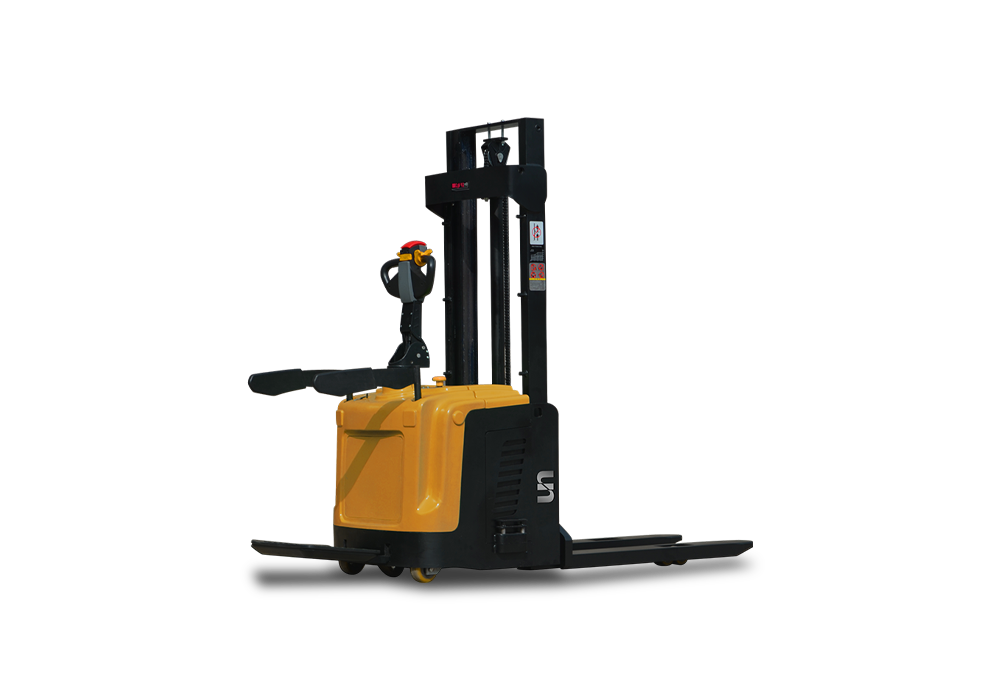
Electric Pallet Stacker CL20GA
1. Product Overview
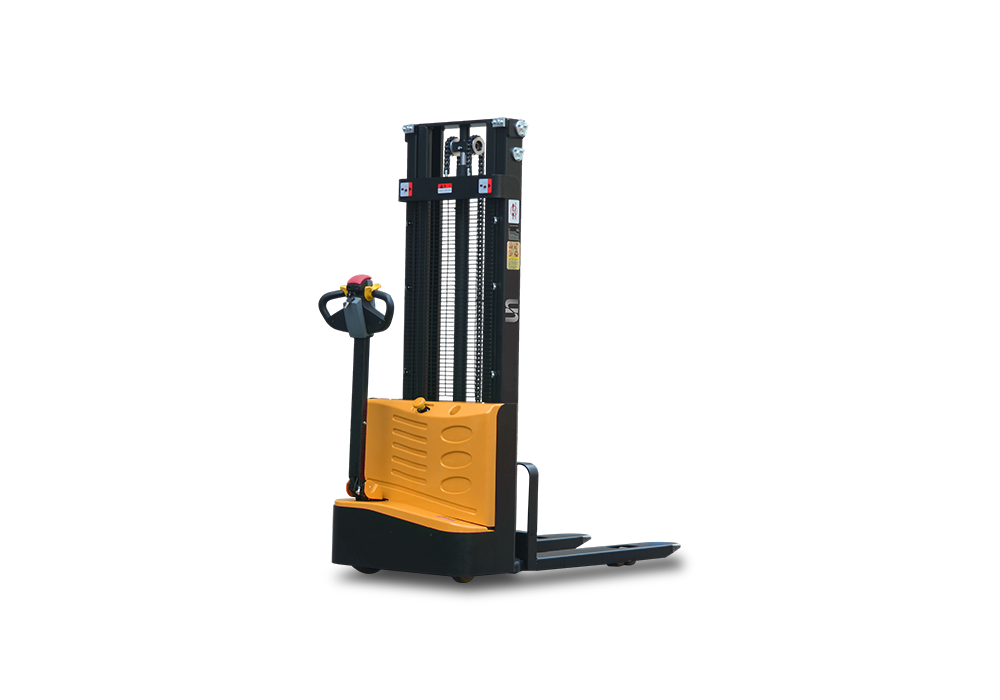
The CL20GA is an electric pallet stacker designed for pedestrian or platform-assisted warehouse operations. It is intended to lift and transport palletized loads while reducing the physical effort required from operators. The principal models listed in the product specifications are CL2016GA, CL2025GA, CL2030GA, CL2033GA, and CL2036GA. Each model has the same nominal load capacity of 2.0 tonnes, while the main difference is the mast lifting height.
The model naming structure indicates a family of machines rather than a single fixed configuration. Depending on the selected model, the lifting height ranges from approximately 1,600 millimeters to 3,600 millimeters. This gives warehouse planners the flexibility to choose equipment according to the height of their storage system. A lower mast may be suitable for low-level pallet transfer and production-line feeding, while a taller mast can support multi-level racking and vertical space utilization.
The stacker has an overall length of 2,040 millimeters and an overall width of 808 millimeters across the listed configurations. Its minimum turning radius is 1,570 millimeters. These dimensions allow it to work in areas where a conventional counterbalanced forklift may be too large or inefficient. At the same time, the 2.0-tonne rated capacity makes it more capable than many light-duty pedestrian stackers.
The CL20GA uses a 24-volt, 210-Ah battery configuration. This electrical system provides the energy needed for travel, lifting, steering, and control functions. The equipment uses AC speed control and an electromagnetic service brake. Together, these systems are intended to deliver controlled movement, reliable stopping, and manageable operating costs in regular warehouse service.
Specification |
CL2016GA |
CL2025GA |
CL2030GA |
CL2033GA |
CL2036GA |
Rated load capacity |
2.0 t |
2.0 t |
2.0 t |
2.0 t |
2.0 t |
Load centre |
600 mm |
600 mm |
600 mm |
600 mm |
600 mm |
Wheelbase |
1,332 mm |
1,332 mm |
1,332 mm |
1,332 mm |
1,332 mm |
Total weight with battery |
960 kg |
1,035 kg |
1,090 kg |
1,115 kg |
1,135 kg |
Lowered mast height |
1,990 mm |
1,741 mm |
1,991 mm |
2,141 mm |
2,291 mm |
Overall length |
2,040 mm |
2,040 mm |
2,040 mm |
2,040 mm |
2,040 mm |
Overall width |
808 mm |
808 mm |
808 mm |
808 mm |
808 mm |
Travel speed, loaded/unloaded |
5.2/5.5 km/h |
5.2/5.5 km/h |
5.2/5.5 km/h |
5.2/5.5 km/h |
5.2/5.5 km/h |
Battery |
24 V/210 Ah |
24 V/210 Ah |
24 V/210 Ah |
24 V/210 Ah |
24 V/210 Ah |
2. Load Capacity and Lifting Options
The most important feature of the CL20GA family is its 2.0-tonne rated load capacity. This rating positions the stacker above many entry-level electric stackers, which frequently have capacities closer to 1.0 or 1.5 tonnes. A 2.0-tonne capacity can be particularly useful in manufacturing warehouses, beverage storage, spare-parts distribution, food logistics, and industrial component handling.
Rated capacity must always be considered together with the load centre and lifting height. The CL20GA specifications identify a 600-millimeter load centre. This means the stated capacity is based on a load whose centre of gravity is positioned 600 millimeters from the fork face under the applicable operating conditions. As the load centre increases, the effective lifting capacity may decrease. Operators should therefore follow the capacity plate and the manufacturer’s instructions for each mast configuration.
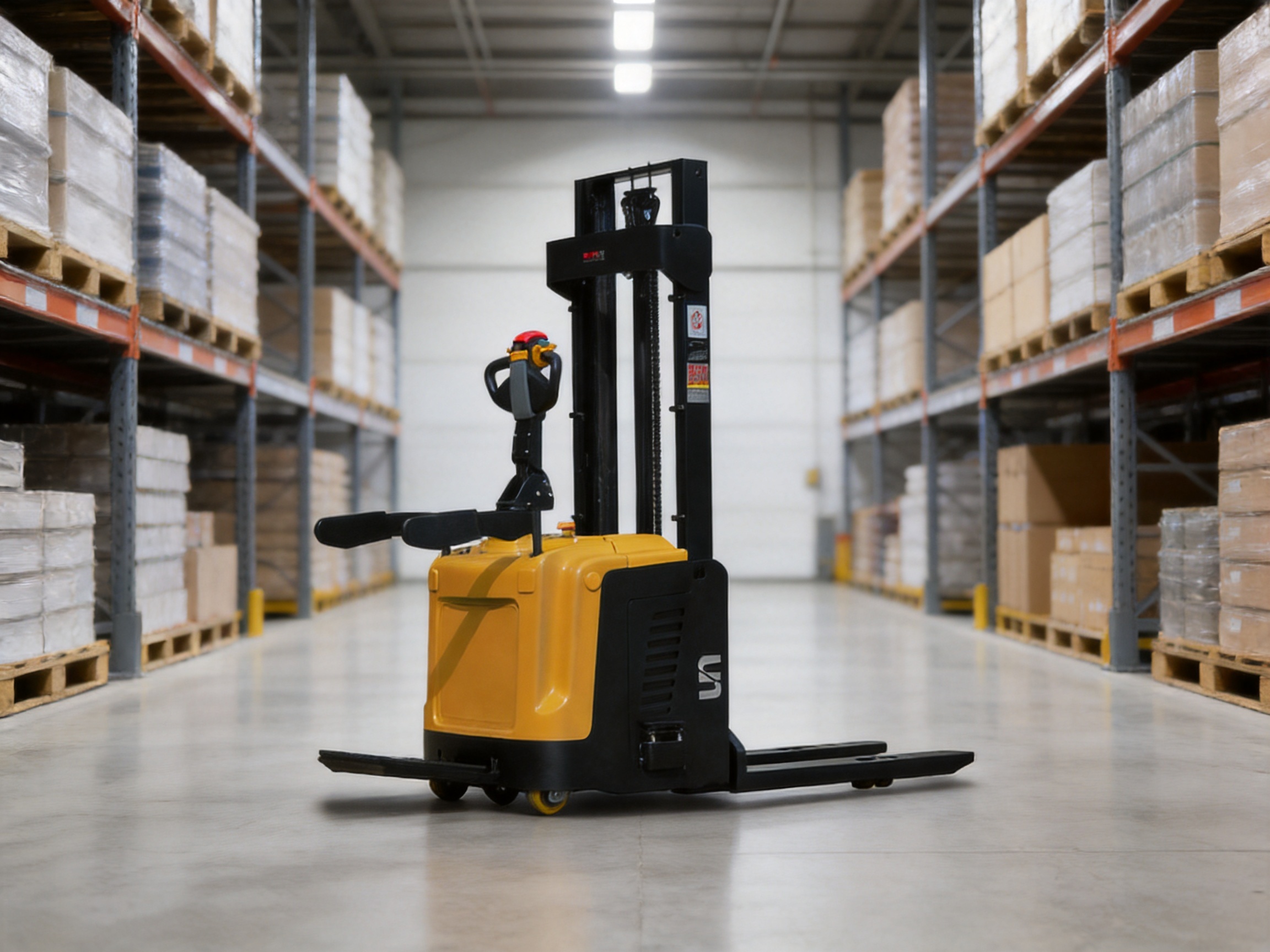
The available lifting heights include approximately 1,600, 2,500, 3,000, 3,300, and 3,600 millimeters, according to the model designations. This range covers a wide selection of warehouse requirements. The lower configuration can help with pallet movement and low-level stacking, whereas the taller versions can support vertical storage systems without requiring a larger counterbalanced forklift.
A key benefit of offering multiple mast options is that customers do not need to purchase an oversized machine for a relatively simple task. Selecting a mast that matches the building’s ceiling height, racking structure, and pallet workflow can improve visibility, reduce unnecessary weight, and support more efficient operation. It can also help avoid the extra cost and energy consumption associated with equipment that is larger than necessary.
The mast system must be operated on level, suitable surfaces and within the rated load limits. Pallets should be in good condition, loads should be stable, and the forks should be fully inserted whenever possible. These basic practices are essential for maintaining stability, especially when loads are raised.
Lift Height Selection
The CL2016GA is appropriate for applications that require a relatively low lifting height. It may be used for production-line supply, low-level pallet placement, and short-distance warehouse tasks where overhead clearance is limited.
The CL2025GA and CL2030GA offer greater vertical reach for standard warehouse racking and intermediate storage. These models can provide a practical balance between lifting performance, overall height, and maneuverability.
The CL2033GA and CL2036GA are intended for users who need higher stacking capability. Before selecting one of these models, the buyer should verify the lowered mast height, extended mast height, ceiling clearance, rack beam height, and any sprinkler or lighting restrictions in the facility.
3. Electric Drive and Control Performance
The CL20GA uses an AC drive system with electronic speed control. AC drive technology is widely used in modern electric material-handling equipment because it can provide smooth acceleration, controlled deceleration, and efficient operation across changing loads and floor conditions. Compared with a simple fixed-speed arrangement, electronic control allows the machine to respond more progressively to the operator’s commands.
The listed travel speed is 5.2 kilometers per hour with a full load and 5.5 kilometers per hour without a load. These speeds are appropriate for warehouse work, where controlled movement is generally more valuable than maximum road speed. Excessive speed can increase stopping distance, collision risk, pallet damage, and operator fatigue. The CL20GA’s operating speed is therefore oriented toward productive but controlled indoor handling.
The product information also identifies a powerful AC drive unit, a ZF gearbox, and an electromagnetic brake. The drive motor and gearbox work together to deliver traction to the drive wheel. A quality gearbox can contribute to smooth power transmission and reduce mechanical stress during repeated starts, stops, and direction changes.
The equipment is also described as using high-quality drive wheels from European manufacturers. Polyurethane tires are well suited to indoor warehouse floors because they provide low rolling resistance, good wear resistance, and a relatively clean operating surface. PU wheels are not intended for every outdoor environment, but on finished concrete, epoxy, and similar industrial floors they can offer a useful combination of traction and durability.
The controls are based on Zapi driving and steering control technology according to the supplied product information. Zapi is a well-known European controls provider for electric vehicles and material-handling equipment. The integration of established electronic components can help manufacturers achieve predictable control behavior and simplify service diagnosis when supported by trained technicians.
Steering and Optional Electric Power Steering
The CL20GA product range can be equipped with electric power steering. EPS can reduce the physical effort required to turn the steering wheel, particularly during repeated maneuvers or long operating shifts. It can also help provide more precise steering inputs in narrow aisles and around racks, loading bays, and production equipment.
Electric power steering eliminates the need for a conventional hydraulic steering circuit in the steering function. This can reduce hydraulic complexity and may improve energy efficiency because the steering motor operates according to demand. The exact benefit depends on operating conditions, programming, maintenance, and configuration.
Steering precision is especially important for a stacker with a relatively compact footprint. Operators often need to approach pallets at a precise angle, align forks with pallet openings, and turn within confined spaces. A responsive steering system can make these tasks easier while reducing repeated corrections and unnecessary contact with racks.
4. Structural Design and Durability
A pallet stacker used in a busy warehouse may encounter impacts from pallets, rack legs, dock edges, and other equipment. For this reason, the CL20GA emphasizes structural protection. The product information specifies an apron thickness of 8 millimeters, intended to strengthen the chassis and improve resistance to collision-related stress.
The steel battery cover is another structural feature. Battery compartments are exposed to vibration, pallet contact, maintenance activity, and repeated opening and closing. A strong cover protects the battery area and contributes to the overall rigidity of the machine. It also provides a durable working surface for service access while helping shield electrical components from accidental damage.
The chassis must carry the battery, drive system, mast assembly, forks, and payload while maintaining stable geometry. The listed service weights range from 960 kilograms to 1,135 kilograms across the CL20GA models. The higher weights of taller-mast versions can contribute to stability, although safe operation still depends on load height, load centre, floor conditions, and correct handling technique.
Durability is not determined by one component alone. It results from the combined quality of the frame, welds, fasteners, wheel assemblies, mast channels, hydraulic components, electrical connections, and protective covers. A manufacturer with experience across multiple forklift categories can apply lessons from larger machines to compact warehouse equipment. This type of cross-product engineering knowledge is valuable when designing a stacker for industrial service.
Mast and Fork Construction
The mast is responsible for guiding the forks vertically and supporting the load during lifting. It must resist bending, twisting, and vibration. A properly designed mast allows the forks to rise smoothly while maintaining alignment. Regular lubrication, inspection of rollers, and checking for abnormal wear are important to preserve this performance.
The listed fork dimensions are 60 millimeters by 180 millimeters by 1,150 millimeters in the earlier technical data. Fork dimensions should be matched to pallet openings, pallet length, load shape, and the required support area. Operators must not use damaged or bent forks, and loads should be positioned evenly across both forks.
Because the CL20GA is available in several lift-height versions, the mast design must balance vertical reach with lowered height and visibility. Taller masts can increase storage capability but may affect overhead clearance and the machine’s centre of gravity when the load is raised. The product selection process should therefore consider the entire warehouse layout rather than focusing only on maximum lift height.
5. Operator Comfort and Ergonomics
Operator comfort affects productivity, safety, and consistency. Even when a machine is technically capable of handling a task, poor ergonomics can lead to fatigue, slower work, and operating errors. The CL20GA includes a platform and guard-arm suspension system intended to improve comfort for platform-assisted operation.
Suspension helps reduce the transfer of vibration from the floor to the operator. This is useful in facilities with expansion joints, uneven concrete, ramps, or frequent travel over loading areas. The exact comfort benefit depends on floor quality, speed, tire condition, load weight, and the operator’s driving habits.
The control system is designed around accessible travel, steering, lifting, and lowering functions. The product information refers to non-contact rocker switches for the raising and lowering function. Non-contact switches can reduce mechanical wear because they do not depend on repeated physical contact between internal switching elements. Long-term reliability still depends on correct sealing, wiring protection, inspection, and professional servicing.
The tiller or control handle should allow the operator to make steering and travel adjustments without awkward wrist movements. Clear control differentiation is important because travel, lift, lower, horn, and emergency functions must be easy to identify. Before placing the equipment into service, each operator should receive training on the control layout, emergency stop procedure, parking brake behavior, battery charging, and safe load handling.
Pedestrian and Platform-Assisted Operation
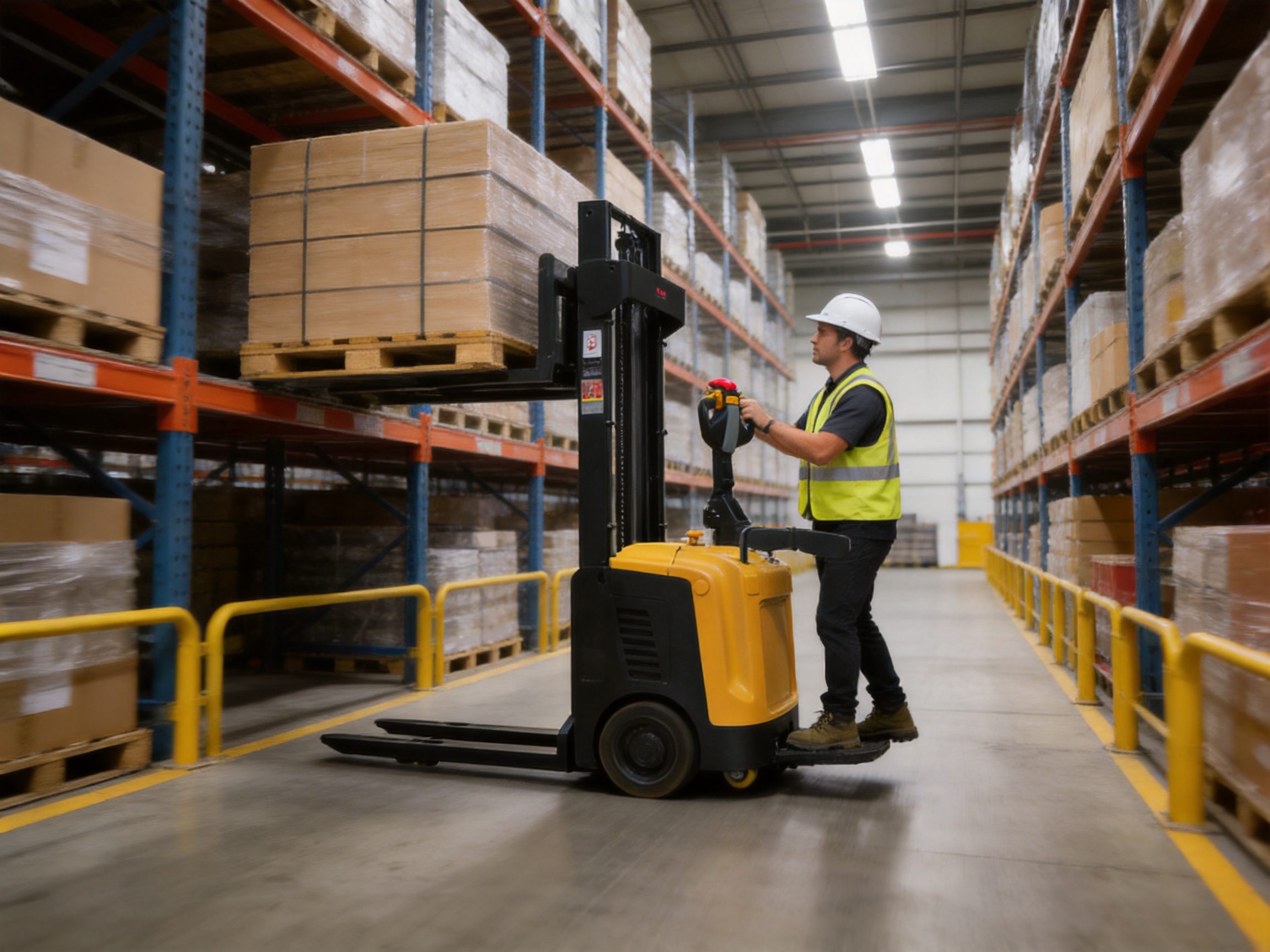
The CL20GA is described as a pedestrian-type machine in the supplied technical information, while its platform and guard-arm features indicate a platform-assisted configuration. This combination is useful for facilities where operators sometimes walk behind or beside the machine and at other times use the platform for longer travel distances.
A platform can improve productivity across larger warehouses because it reduces walking time between pallet locations. Guard arms can provide an additional protective boundary around the operator during platform travel. However, the platform should never be used to carry unauthorized passengers, and the operator should remain within the designated area while traveling.
Every facility should establish rules for pedestrian separation, aisle traffic, intersections, ramps, loading docks, and visibility-limited locations. A compact stacker is easier to maneuver than a large forklift, but it still carries heavy loads and requires the same disciplined approach to workplace safety.
6. Safety Features and Operating Stability
Safety is a combination of machine design, operator training, workplace layout, maintenance, and operating procedures. The CL20GA includes several features that support safe handling, including an electromagnetic service brake, controlled travel speed, a reinforced chassis, guard arms, and electronically managed drive functions.
The electromagnetic brake is designed to bring the machine to a stop when the travel control is released or when the braking function is activated, depending on the programmed system behavior. Electromagnetic braking can provide consistent stopping performance and can help hold the machine when parked. Operators should understand the difference between normal service braking, emergency stopping, and parking procedures.
Travel speeds of 5.2 kilometers per hour under full load and 5.5 kilometers per hour without a load are moderate enough for indoor control. Operators should still reduce speed when carrying a raised load, turning, approaching pedestrians, traveling through doorways, or operating on ramps. Loads should generally be kept as low as practical during travel.
Stability depends on the relationship between the load centre, wheelbase, mast height, load weight, and floor conditions. The CL20GA has a 600-millimeter load centre and a 1,332-millimeter wheelbase across the listed models. These figures provide a basis for engineering evaluation, but they do not replace the official capacity plate or site-specific risk assessment.
Warehouse supervisors should inspect the operating surface for potholes, loose materials, water, oil, debris, and floor transitions. Polyurethane tires perform well on many indoor floors, but contamination or damaged surfaces can reduce traction. The operator should avoid sharp turns at speed and should not exceed the rated capacity.
Daily Safety Checks
A daily inspection should include the forks, mast chains or lifting components, hydraulic lines, battery condition, emergency stop, steering, brakes, horn, warning devices, wheels, guard arms, platform, and visible fasteners. Any unusual noise, fluid leakage, steering looseness, or braking change should be reported immediately.
The battery area should be checked for damage, loose connections, corrosion, and signs of overheating. Charging must be performed in an approved location with suitable ventilation and the correct charger. Battery covers should be closed and secured before operation.
Operators should verify that the load is stable and that the pallet is suitable for the task. Broken pallets, overhanging goods, unsecured containers, and poorly distributed loads can create hazards even when the equipment is functioning correctly.
7. Battery and Energy Performance
The CL20GA uses a 24-volt, 210-Ah battery. Electric power offers several operational advantages in indoor environments. It produces no direct exhaust emissions at the point of use, helps reduce workplace noise compared with many internal-combustion forklifts, and can be suitable for warehouses handling packaged goods, food-related products, pharmaceuticals, and other areas where clean operation is important.
The battery capacity provides a practical foundation for shift-based warehouse work. Actual operating time will depend on load weight, travel distance, lift frequency, floor conditions, operator behavior, ambient temperature, battery age, and charging practices. A machine that travels short distances but performs frequent lifting may have a different energy profile from one that travels long distances with moderate lifting.
Energy efficiency is affected by the drive motor, gearbox, electronic controller, hydraulic pump, steering system, tire condition, and battery maintenance. AC speed control can help match motor output to demand, avoiding unnecessary power use during low-load operation. Smooth acceleration also reduces energy losses caused by abrupt starts and wheel slip.
Warehouse managers should analyze the complete duty cycle before selecting a charging strategy. Important questions include the number of operating hours per shift, average travel distance, average load weight, lift frequency, available charging time, and whether opportunity charging is permitted by the battery manufacturer. A properly planned charging schedule can reduce downtime and extend battery service life.
Battery charging areas should be kept clean, dry, and free from combustible materials. Only compatible chargers and approved procedures should be used. Battery work should be performed by trained personnel, particularly when inspecting connections or addressing faults.
8. Manufacturing Strengths and Engineering Capability
The manufacturer’s history is an important part of the CL20GA’s value proposition. Zhejiang UN Forklift Co., Ltd. was founded in 1978 and is described as an integrated manufacturer covering research and development, production, sales, and service. The company occupies approximately 53,400 square meters and has an annual production capacity of about 15,000 units.
A production system of this scale can support specialized engineering teams, standardized assembly procedures, component sourcing, quality management, and after-sales service development. It also gives the manufacturer experience across a broad range of operating conditions and customer requirements.
The company’s portfolio includes 17 varieties, 96 series, and more than 200 specifications, according to the supplied company information. This breadth allows the manufacturer to serve different industries, from warehouse handling and electric forklifts to internal-combustion and specialized equipment. Such product diversity can strengthen design knowledge in areas including chassis engineering, lifting systems, powertrains, electronic control, and operator ergonomics.
The company also reports experience with reach forklifts and very-narrow-aisle equipment, as well as electric forklift technology. This is relevant to the CL20GA because narrow-aisle equipment requires careful attention to dimensions, steering behavior, visibility, lift control, and stability. Knowledge gained from specialized warehouse machines can be applied to the design of a compact pallet stacker.
Integrated Production Approach
An integrated production approach can improve coordination between design and manufacturing. When engineering, assembly, testing, sales, and service functions communicate effectively, product improvements can be based on actual field feedback. This may help identify recurring issues involving wheel wear, control programming, battery access, mast maintenance, or operator usability.
Manufacturing quality is also influenced by process consistency. Frame fabrication, welding, painting, electrical installation, hydraulic assembly, and final inspection should follow documented procedures. Dimensional checks are important for mast alignment, fork positioning, wheel installation, and chassis geometry. Electrical testing is essential for controllers, switches, braking circuits, battery connections, and emergency functions.
The use of recognized component suppliers for key systems can further support reliability. The supplied materials identify AC drive components, a ZF gearbox, Zapi controls, electromagnetic braking, and European drive wheels. These components are not a substitute for complete-machine quality control, but their integration into a properly designed machine can contribute to predictable service performance.
The company’s worldwide sales and service network, with partners in Europe, South America, North America, Africa, and Asia, is another potential advantage for international buyers. Local service capability can reduce response time, improve access to spare parts, and help customers receive training and technical support. Buyers should confirm the availability of local technicians, maintenance contracts, batteries, chargers, and replacement components before placing an order.
9. Advantages Compared with Competing Equipment
The CL20GA competes with several types of material-handling equipment, including basic walk-behind stackers, smaller pedestrian pallet trucks, platform stackers from other manufacturers, and compact counterbalanced forklifts. Its advantages depend on the application, but several points are notable.
Higher Capacity Than Entry-Level Stackers
With a 2.0-tonne rated capacity, the CL20GA can handle heavier pallets than many entry-level electric stackers. This may allow one machine to cover both pallet transport and stacking tasks, reducing the need to use separate equipment for heavier loads.
More Compact Than a Counterbalanced Forklift
Compared with a conventional counterbalanced forklift, the CL20GA has a compact 808-millimeter width and a 1,570-millimeter minimum turning radius. It may therefore be more suitable for indoor aisles, production areas, and storage zones where a larger forklift would require additional clearance.
Cleaner Indoor Operation
As an electric machine, the CL20GA avoids direct exhaust emissions during operation. This is an important advantage over diesel, gasoline, or liquefied-gas forklifts when used inside buildings. Lower noise can also improve communication and workplace comfort, although the machine still produces sound from tires, gears, hydraulics, and warning devices.
Multiple Mast Configurations
The range of lifting heights allows customers to match the stacker to their storage system. A choice of mast options is generally preferable to a one-size-fits-all design because it can support better overhead clearance and more appropriate equipment sizing.
Platform Comfort and Optional EPS
The platform suspension system and optional electric power steering distinguish the CL20GA from very basic pedestrian stackers. These features may be especially valuable in facilities with longer travel distances or frequent steering corrections.
Industrial-Grade Construction
The reinforced apron, steel battery cover, AC drive unit, electromagnetic brake, and polyurethane drive wheels indicate a design intended for regular industrial service rather than occasional light-duty use. The equipment should still be selected and maintained according to the actual duty cycle, but its specification is positioned toward demanding warehouse operations.
10. Applications
The CL20GA can serve a broad range of indoor applications. In distribution centers, it can move pallets from receiving areas to storage locations and retrieve them for order preparation. In manufacturing facilities, it can supply raw materials, components, packaging, and finished goods to production lines.
In retail distribution, the stacker can assist with backroom storage and pallet replenishment. In food and beverage logistics, its electric operation can be useful in indoor storage areas where exhaust emissions are undesirable. In spare-parts warehouses, the compact dimensions can help operators work around shelving and narrow travel paths.
The machine may also be used in third-party logistics operations where a single fleet must support different customers and load types. The availability of several mast heights makes it easier to configure equipment for different storage layouts. However, the buyer should assess the average pallet weight, pallet dimensions, floor condition, aisle width, daily operating hours, and charging facilities before selecting the model.
Application |
Relevant CL20GA benefit |
Important selection consideration |
Manufacturing line supply |
Compact size, electric operation, 2.0-tonne capacity |
Floor condition and travel frequency |
Distribution warehouse |
Platform operation, multiple lift heights, controlled speed |
Shift duration and charging schedule |
Retail backroom |
Low noise, clean indoor operation, narrow footprint |
Doorway and ceiling clearance |
Industrial parts storage |
High rated capacity, durable chassis, polyurethane tires |
Pallet condition and load stability |
Third-party logistics |
Flexible mast range and broad operating capability |
Different customer loads and duty cycles |
11. Maintenance and Total Cost of Ownership
The purchase price of a pallet stacker is only one part of its total cost of ownership. Battery life, tire replacement, scheduled service, downtime, operator training, spare parts, and energy consumption all affect the long-term economic result.
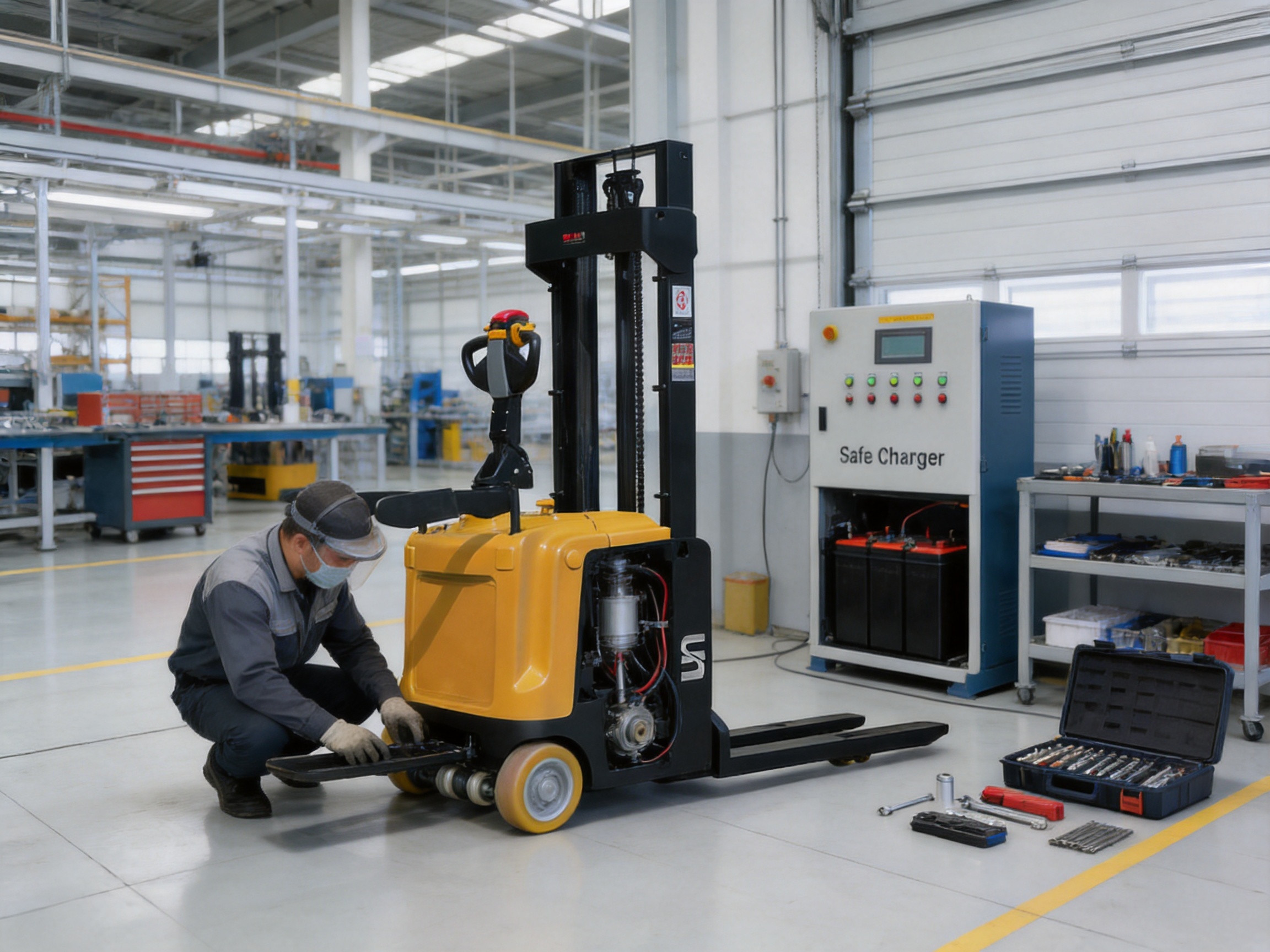
Preventive maintenance should follow the manufacturer’s recommended intervals. Daily checks should be combined with periodic inspections of the mast, chains, rollers, forks, hydraulic system, drive unit, gearbox, brakes, steering, wheels, electrical connections, and battery. Service records should identify operating hours, repairs, component replacements, and recurring faults.
Polyurethane wheels should be checked for flat spots, cuts, uneven wear, and reduced diameter. Wheel wear can affect ground clearance, steering response, vibration, and braking. Replacing wheels before severe wear develops can help protect other drive and steering components.
The mast should be inspected for unusual noise, jerky movement, leakage, damaged rollers, loose fasteners, chain wear, and visible deformation. The forks should be examined for cracks, bending, heel wear, and correct locking. Hydraulic oil levels and leakage should be checked according to the maintenance instructions.
Electrical maintenance includes inspection of battery cables, terminals, fuses, controller connections, emergency stop circuits, switches, sensors, and charger connections. Water, dust, impact, and loose wiring can cause intermittent faults. Technicians should use appropriate diagnostic procedures and should not bypass safety circuits.
Good operator behavior can significantly reduce maintenance costs. Smooth acceleration, controlled braking, avoiding unnecessary impacts, keeping loads stable, and reporting faults early can extend the life of the drive system, tires, mast, and battery. Training is therefore an investment in equipment reliability as well as workplace safety.
12. Buying Considerations
Before ordering a CL20GA, a buyer should identify the exact model and configuration. The required lift height is the first consideration, but it is not the only one. The lowered mast height must fit below doorways, sprinklers, beams, and transport entrances. The extended height must fit within the building’s ceiling clearance.
The buyer should also confirm whether the machine will operate as a pedestrian unit, a platform-assisted stacker, or a configuration with specific guard-arm and steering options. If the facility includes long travel routes, ramps, or frequent direction changes, optional electric power steering and platform suspension may provide additional value.
Battery and charger compatibility should be confirmed before delivery. The customer should establish where charging will occur, who will perform battery inspections, and how the machine will be used during multiple shifts. A second battery or an alternative charging arrangement may be required for high-utilization operations.
Load dimensions are equally important. The listed load centre is 600 millimeters, but the customer should compare this with the actual pallet and product geometry. Long, irregular, liquid, or unstable loads may require a different attachment or a higher-capacity machine.
Service support should be evaluated in the customer’s region. Questions should cover spare-parts availability, technician response time, warranty terms, operator training, preventive maintenance, charger service, and battery replacement. A technically capable machine delivers the best results when supported throughout its service life.
13. Frequently Asked Questions
What type of equipment is the CL20GA?
The CL20GA is an electric pallet stacker designed for transporting and stacking palletized loads in warehouses, factories, distribution centers, and other industrial facilities. The range includes pedestrian and platform-assisted operating features, depending on configuration.
What is the rated load capacity?
The listed CL20GA models have a rated load capacity of 2.0 tonnes at a 600-millimeter load centre, subject to the applicable capacity plate, mast configuration, and operating conditions.
What lifting heights are available?
The model family includes configurations identified as CL2016GA, CL2025GA, CL2030GA, CL2033GA, and CL2036GA. These designations correspond broadly to lifting heights of approximately 1,600 to 3,600 millimeters. Exact specifications should be confirmed for the selected machine.
What battery does the stacker use?
The supplied specifications identify a 24-volt, 210-Ah battery. Actual battery performance depends on load, travel distance, lifting frequency, operating temperature, battery condition, and charging practices.
Is electric power steering available?
Yes. The product range can be equipped with optional electric power steering. EPS can reduce steering effort and improve maneuverability, particularly in narrow aisles and during repeated pallet alignment tasks.
What is the travel speed?
The listed travel speed is 5.2 kilometers per hour with a full load and 5.5 kilometers per hour without a load. Operators should reduce speed in turns, at intersections, near pedestrians, and whenever visibility or floor conditions are limited.
What type of wheels are used?
The CL20GA uses polyurethane wheels. PU wheels are commonly selected for indoor warehouse applications because they provide good wear resistance, low rolling resistance, and a clean operating surface on suitable industrial floors.
How does the CL20GA compare with a counterbalanced forklift?
The CL20GA is generally more compact and better suited to indoor warehouse aisles than a conventional counterbalanced forklift. It also produces no direct exhaust emissions during operation. A counterbalanced forklift may be preferable for heavier outdoor work, rough surfaces, high attachments, or applications requiring greater ground clearance.
Can the stacker operate outdoors?
The CL20GA is primarily suited to indoor and smooth-surface industrial applications. Limited outdoor use may be possible on suitable paved surfaces, but buyers should confirm the conditions with the manufacturer. Rain, rough terrain, steep grades, debris, and uneven surfaces can affect safety and component life.
What maintenance is required?
Maintenance includes daily inspections, battery checks, wheel inspection, mast and fork examination, brake and steering testing, hydraulic inspection, electrical connection checks, lubrication, and scheduled service by qualified technicians. The recommended maintenance schedule should be followed for the exact configuration.
Who should operate the equipment?
Only trained and authorized operators should use the stacker. Training should cover controls, load capacity, stability, travel routes, charging, emergency procedures, pedestrian awareness, and daily inspection requirements.
14. Conclusion
The electric pallet stacker CL20GA is designed to occupy an important position between light-duty pedestrian equipment and larger counterbalanced forklifts. Its 2.0-tonne load capacity, compact dimensions, multiple mast heights, electric drive, AC speed control, electromagnetic braking, polyurethane wheels, and optional electric power steering make it a practical choice for a wide range of warehouse and industrial applications.
Its competitive value comes from combining substantial lifting performance with a relatively compact operating footprint. Compared with basic stackers, it offers greater capacity and a more industrial specification. Compared with counterbalanced forklifts, it can provide cleaner indoor operation, lower space requirements, and easier maneuverability in many warehouse environments.
The equipment’s value is also supported by the manufacturer’s long experience in forklift production, broad product portfolio, integrated research and manufacturing capabilities, and international service network. The use of established drive, gearbox, control, braking, and wheel technologies further supports the product’s intended reliability.
As with any lifting machine, the best results depend on correct model selection, safe operating procedures, preventive maintenance, battery management, and local service support. When these factors are properly managed, the CL20GA can help improve pallet movement, maximize vertical storage, reduce manual handling effort, and support efficient material flow across demanding industrial operations.
References
1. Zhejiang UN Forklift Co., Ltd. Product information for the CL20GA electric pallet stacker family.
2. Zhejiang UN Forklift Co., Ltd. Technical specifications for CL2016GA, CL2025GA, CL2030GA, CL2033GA, and CL2036GA models.
3. Internal-combustion and electric forklift design principles for industrial material handling.
4. General guidance on powered industrial truck operation, inspection, training, and workplace safety.
5. Manufacturer data concerning AC drive systems, polyurethane wheels, electromagnetic braking, battery systems, and warehouse equipment ergonomics.
Product: Electric Pallet Stacker CL20GA
For exclusive deals and latest offers, sign up by entering your email address below.
Stay In Touch
ADDRESS : NO.1 ROAD ONE, XINDENG NEW DISTRICT, FUYANG, HANGZHOU, ZHEJIANG, CHINA 311404.
PHONE : +86-571-8688 8355 (AMERICA)
PHONE : +86-571-8886 9363 (EUROPE)
PHONE : +86-571-8688 8377 (ASIA, AFRICA, OCEANIA)
EMAIL : [email protected]
EMAIL : [email protected](PARTS INQUIRY)

