


 中文简体
中文简体 Français
 русский
 Español
 عربى
عربى Deutsch



1.6T–2.0T 3-Wheel Electric Forklift for High-Efficiency Narrow-Aisle Handling
Admin 2026-07-11Modern material handling operations demand equipment that can move quickly, turn confidently, protect operators, reduce energy consumption, and support consistent productivity in increasingly compact facilities. The 1.6T–2.0T 3-wheel electric forklift is designed for exactly these conditions. With a compact chassis, dual AC drive motors, full AC control technology, energy regeneration, side battery extraction, and an operator-focused layout, this forklift offers a highly practical solution for warehouses, distribution centers, production plants, cold-chain logistics areas, and indoor handling environments where space efficiency and clean operation are essential.
This article introduces the key strengths of the 1.6T–2.0T 3-wheel electric forklift, explains how its design improves daily handling performance, compares its advantages with typical competing models, and highlights the manufacturing capability behind the product. It also includes a specification table, application guidance, maintenance considerations, and a Q&A section for buyers, fleet managers, warehouse planners, and equipment dealers.
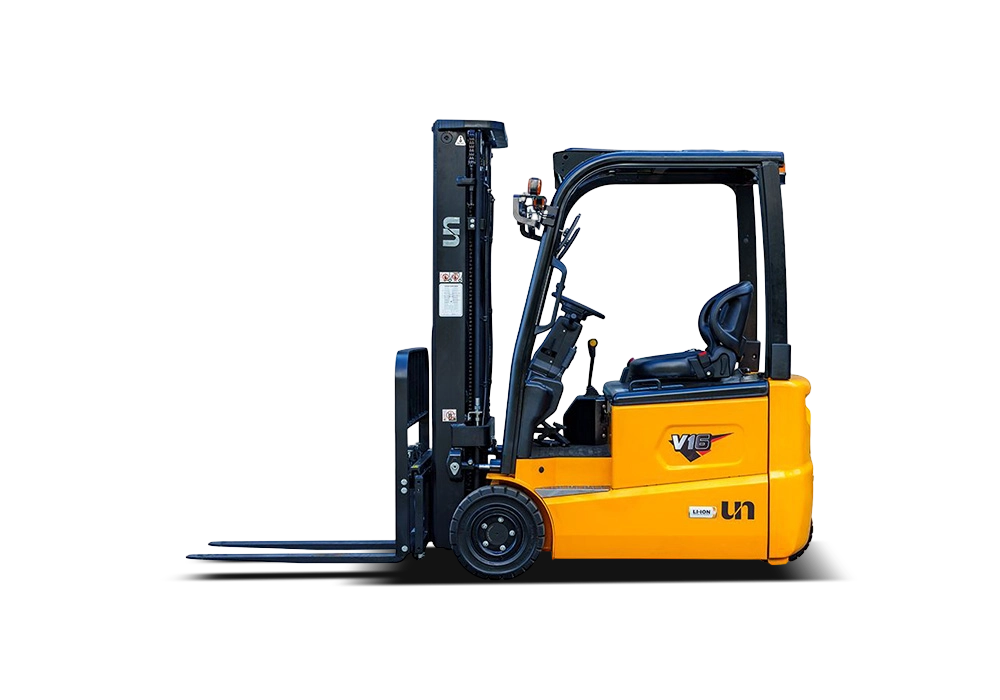
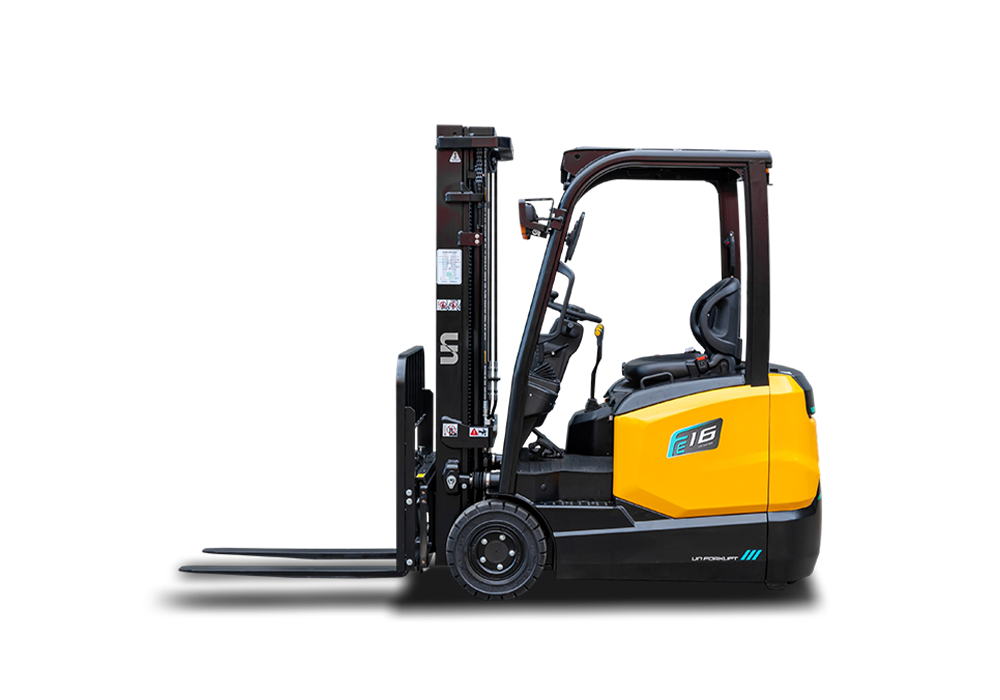
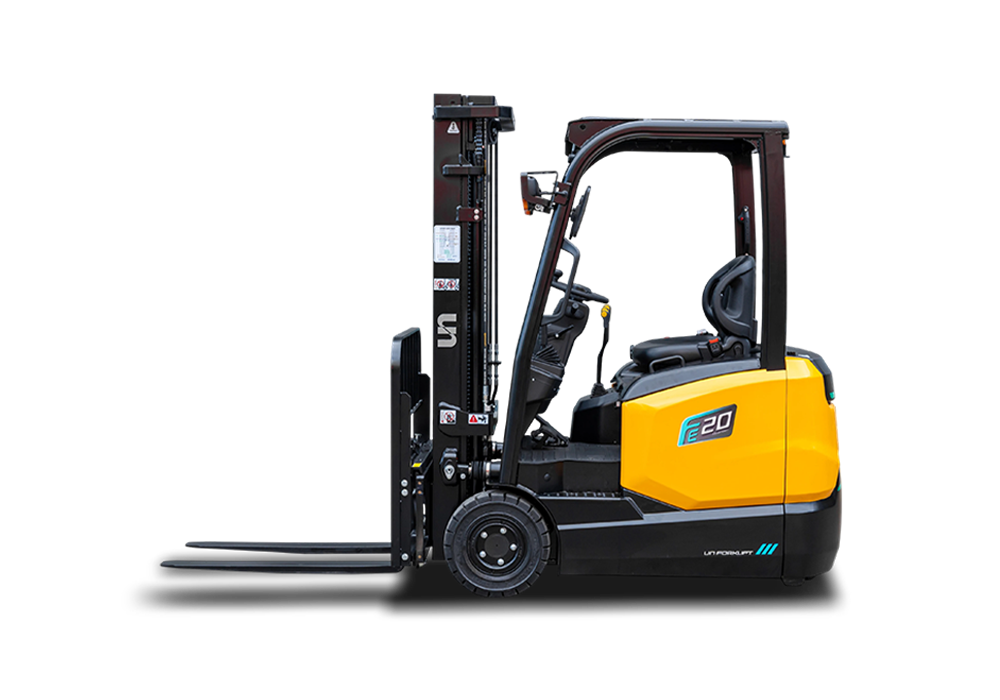
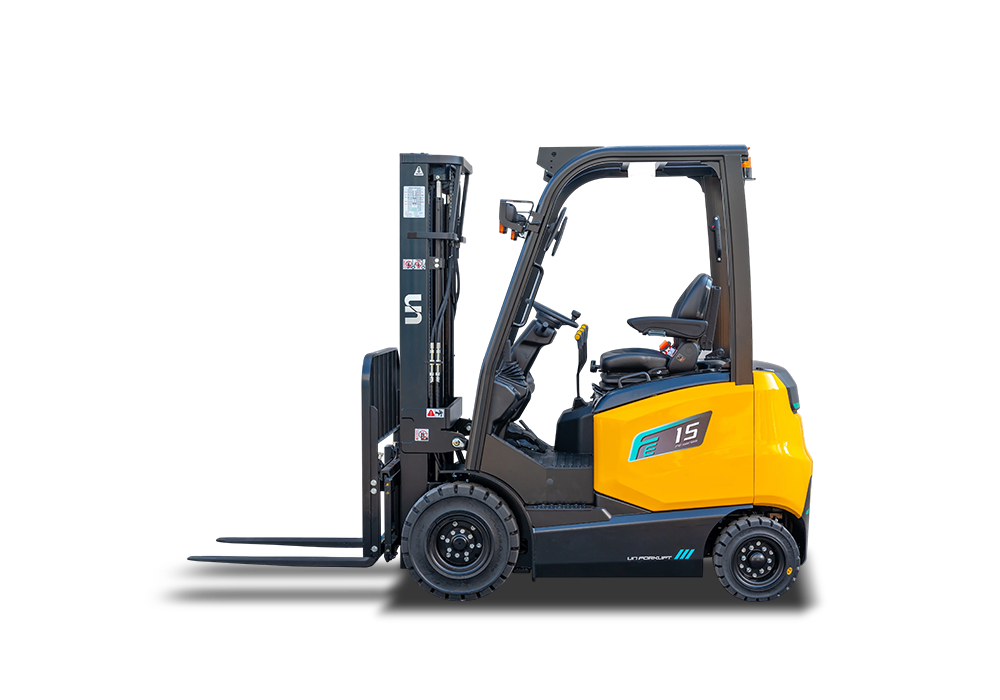
V Series 1.6T-2.0T 3-Wheel Electric Forklift
Product Overview
The 1.6T–2.0T 3-wheel electric forklift is available in three rated capacity models: FBT16, FBT18, and FBT20. These models cover rated load capacities of 1,600 kg, 1,800 kg, and 2,000 kg respectively, with a standard load center of 500 mm and a standard lift height of 3,000 mm. This range makes the forklift suitable for many daily material handling tasks, including pallet movement, loading and unloading, production line feeding, container-adjacent handling, and storage rack operations.
The forklift belongs to a new generation of compact electric forklifts developed for narrow workspaces. Its three-wheel structure and pivot turning capability are particularly valuable in areas where turning space is limited. Compared with conventional four-wheel counterbalance forklifts, a 3-wheel electric forklift can offer a smaller turning radius and more agile control. This is especially useful in warehouses where aisle width, rack layout, and traffic flow directly affect productivity.
The machine uses a full AC system, including AC drive technology and an AC controller. The use of dual AC drive motors contributes to smooth acceleration, responsive steering behavior, and reduced maintenance compared with traditional DC motor designs. AC motors generally have fewer wear parts, generate less heat under efficient control, and provide better performance consistency over long operating periods.
The forklift is also designed for zero-emission operation. As an electric model, it produces no exhaust emissions during use, making it suitable for indoor applications where air quality, operator comfort, and environmental standards matter. In industries such as food and beverage, pharmaceuticals, electronics, paper goods, retail distribution, and packaging, electric forklifts are often preferred because they reduce fumes, noise, and vibration compared with internal combustion machines.
Core Design Philosophy
The design philosophy of this forklift can be summarized in five key ideas: compactness, efficiency, reliability, operator safety, and easy maintenance. Each of these points directly addresses the challenges faced by modern warehouse and industrial operators.
Compactness is achieved through the three-wheel layout, optimized chassis dimensions, and approximately 90-degree turning behavior. In crowded sites, every centimeter saved in turning radius and aisle width can increase storage density or improve traffic efficiency. The FBT16 and FBT18 models have a turning radius of 1,615 mm, while the FBT20 has a turning radius of 1,702 mm. These figures support maneuverability in tighter work areas.
Efficiency is achieved through AC drive technology, energy regeneration, optimized hydraulic performance, and smart electronic control. The forklift offers travel speed of 13 km/h under full load and 14 km/h without load, supporting efficient movement between work zones. Lifting speed reaches 290 mm/s with full load and 340 mm/s without load, helping operators complete lifting cycles quickly.
Reliability is supported by quality components, integrated control systems, and durable structural design. The forklift combines advanced electronic control with a strong transmission system and hydraulic components selected for industrial use. A reliable forklift reduces downtime, protects production schedules, and lowers total operating cost.
Operator safety is built into the forklift through features such as double rear tires, automatic turning speed control, operator presence protection, a strong overhead guard, and wide-view mast design. These features help reduce risk during travel, lifting, turning, and load positioning.
Easy maintenance is another major strength. Maintenance-free AC motors reduce service requirements, while the nearly 90-degree battery hood and side battery extraction system make battery checking and changing easier. For fleet managers, easier maintenance means shorter service time, better equipment availability, and more predictable operating costs.
Key Technical Highlights
The forklift is equipped with a full AC system that improves power delivery and efficiency compared with many older electric forklifts using DC drive systems. AC motors are known for strong torque response, lower maintenance demand, and better energy use. In daily applications, this means the forklift can accelerate smoothly, handle frequent starts and stops, and maintain stable performance in warehouse traffic.
The dual AC drive motor configuration is one of the machine’s most important features. Each drive motor contributes to maneuverability and control, especially during turning. In narrow aisles, responsive drive control helps operators position the truck more accurately. This reduces unnecessary corrections, saves time, and lowers the chance of product, rack, or facility damage.
The forklift uses an advanced electric controller from a globally recognized control technology supplier. This controller manages drive behavior, energy use, safety logic, and communication between systems. When combined with CANbus communication, the forklift gives technicians and operators a clearer understanding of operating conditions and diagnostic information. This can simplify troubleshooting and improve preventive maintenance planning.
The hydraulic system is designed to support smooth lifting and lowering. A dependable hydraulic system is essential because warehouse forklifts often perform hundreds of lift cycles per shift. Smooth hydraulic response helps operators position loads accurately, protect goods, and reduce physical strain.
The transmission system is selected to support durable and efficient power transfer. For electric forklifts, the integration between motor, controller, transmission, braking, and steering systems determines how natural and controllable the truck feels. A well-integrated drive system gives operators confidence, especially when handling valuable goods in confined spaces.
Energy regeneration extends working time by recovering energy during deceleration and braking. This feature is especially useful in environments with frequent start-stop movement, such as loading docks, production lines, and distribution aisles. Instead of wasting braking energy as heat, the system captures a portion of it and returns it to the battery, supporting longer working hours and better energy efficiency.
Advantages Over Typical Competing Models
Many electric forklifts can move pallets, but not all are equally efficient in tight, high-cycle environments. The 1.6T–2.0T 3-wheel electric forklift has several advantages over many conventional competitors in its class.
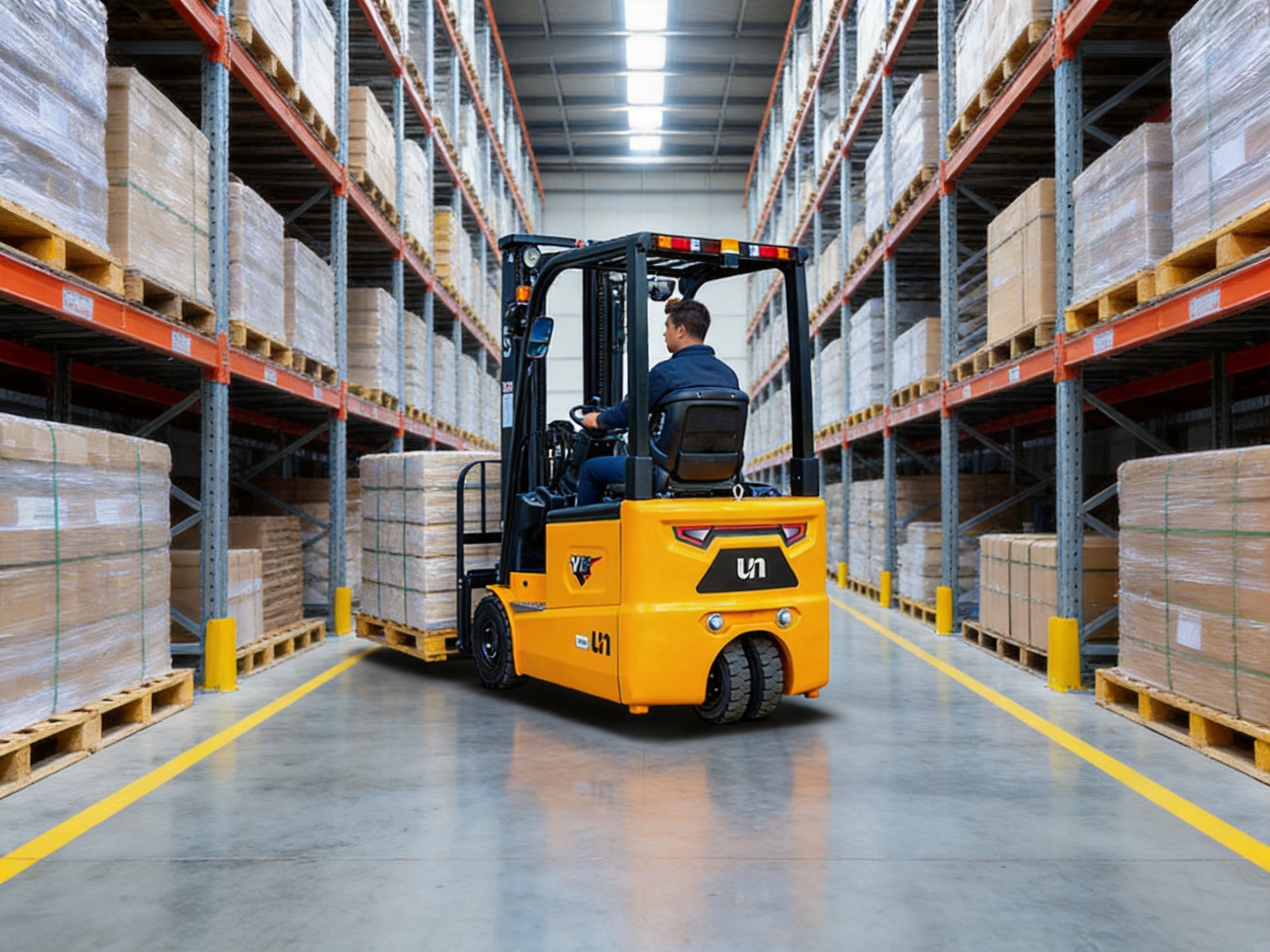
First, its compact body design provides better maneuverability in narrow worksites. A conventional four-wheel forklift may require wider aisles and more turning space. In contrast, this three-wheel model supports pivot-style turning and a smaller turning radius. This helps companies improve storage density, reduce travel complexity, and increase operational flexibility.
Second, the dual AC motor drive system provides responsive control. Some older or lower-cost electric forklifts may still rely on less advanced motor systems or simpler controller logic. The full AC layout provides better efficiency, less maintenance, and smoother power delivery. The result is a forklift that can perform frequent turning, reversing, and load handling with confidence.
Third, the forklift offers strong safety engineering for narrow-aisle work. Double rear tires improve stability during traveling and turning. Automatic turning speed control can adjust travel behavior according to turning angle, helping operators maintain safer control. This is an important advantage because tight-space operation often involves more frequent steering input and more risk of side impact or load instability.
Fourth, the operator environment is designed for comfort and visibility. A wide-view mast helps operators see the load and surroundings more clearly. A small steering wheel, wide foot space, and optimized pedal position reduce operator fatigue. In a busy warehouse, comfort is not a luxury; it directly affects productivity, accuracy, and safety over a full shift.
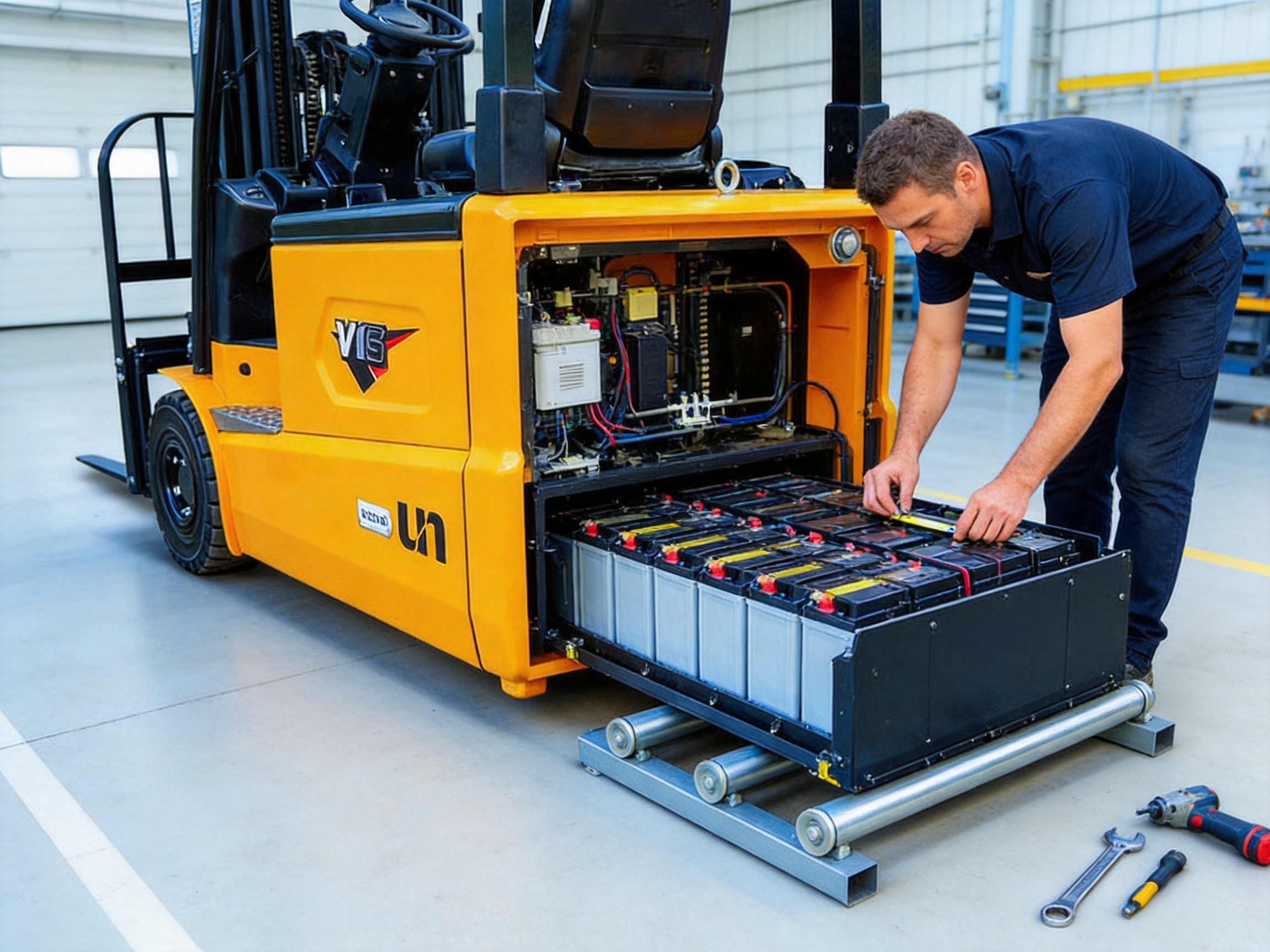
Fifth, maintenance access is practical. The nearly 90-degree battery hood and side battery extraction design allow easier battery inspection and replacement. Some competing machines require more complicated access procedures, which can slow down service work. Easy access improves uptime and helps companies manage multi-shift operations more effectively.
Sixth, the forklift supports both lead-acid and lithium-ion battery configurations. This flexibility gives buyers more options according to their budget, charging strategy, operating hours, and maintenance preferences. Lead-acid batteries remain a cost-effective choice for many applications, while lithium-ion batteries can offer opportunity charging, reduced maintenance, and improved energy convenience for intensive operations.
Seventh, the product is backed by a manufacturer with long experience in material handling equipment, significant production capacity, established engineering capability, and international market experience. For buyers, the quality of the manufacturer is as important as the specification sheet. Strong manufacturing systems, quality control, parts support, and product development capability contribute to long-term value.
Main Specifications
The following table summarizes key specifications for the three models in the range. Actual configurations may vary according to market requirements, optional batteries, mast selection, tire configuration, and application needs.
| Item | FBT16 | FBT18 | FBT20 |
| Rated Load Capacity | 1,600 kg | 1,800 kg | 2,000 kg |
| Load Center | 500 mm | 500 mm | 500 mm |
| Standard Lift Height | 3,000 mm | 3,000 mm | 3,000 mm |
| Fork Size | 920 x 100 x 35 mm | 920 x 100 x 35 mm | 1,070 x 100 x 40 mm |
| Length to Fork Face | 2,036 mm | 2,036 mm | 2,136 mm |
| Width | Approximately 1,045–1,145 mm | Approximately 1,045–1,145 mm | 1,160 mm |
| Turning Radius | 1,615 mm | 1,615 mm | 1,702 mm |
| Travel Speed with Full Load | 13 km/h | 13 km/h | 13 km/h |
| Travel Speed without Load | 14 km/h | 14 km/h | 14 km/h |
| Lifting Speed with Full Load | 290 mm/s | 290 mm/s | 290 mm/s |
| Maximum Gradeability with Full Load | 15% | 15% | 15% |
| Total Weight Including Battery | 3,345 kg | 3,525 kg | 3,675 kg |
| Drive Motor | 4.8 kW x 2 | 4.8 kW x 2 | 4.8 kW x 2 |
| Pump Motor | 10 kW | 10 kW | 10 kW |
| Standard Lead-Acid Battery | 48 V / 460 Ah | 48 V / 460 Ah | 48 V / 540 Ah |
| Standard Lithium-Ion Battery | 48 V / 300 Ah | 48 V / 300 Ah | 48 V / 300 Ah |
| Controller Type | AC | AC | AC |
| Operating Pressure | 19.5 MPa | 19.5 MPa | 19.5 MPa |
Reliability and Performance
Reliability begins with the power system. The forklift’s AC motors are designed to work with high efficiency and reduced heat generation. Because AC motors have fewer wearing components than traditional DC motors, they reduce maintenance work and support long service life. For companies operating multiple shifts, the ability to minimize motor-related service can produce meaningful cost savings.
The controller coordinates the forklift’s electric power delivery and system behavior. High-quality controller logic helps the truck respond smoothly during acceleration, deceleration, turning, and lifting. This is especially important for operators who handle fragile products or work in busy pedestrian areas. Smooth control reduces sudden movement and supports precise load placement.
The energy regeneration system improves operating time. Every warehouse has repeated braking and deceleration events. Without regeneration, energy is lost during those events. With regeneration, a portion of the energy can be recovered and returned to the battery. Over many work cycles, this contributes to improved efficiency and supports longer operation between charges.
CANbus communication helps integrate key systems and provide better diagnostic capability. When electronic systems communicate effectively, service technicians can identify issues more quickly and operators can benefit from more consistent system performance. This technology also supports modern fleet management practices where maintenance planning and data-based decisions are increasingly important.
Mechanical reliability is supported by careful component selection and stable structural engineering. The forklift is built for industrial work rather than occasional light-duty use. A strong frame, reliable mast design, durable overhead guard, and controlled hydraulic system all contribute to daily dependability.
Safety and Ergonomics
Safety is a central concern in any forklift operation. The 1.6T–2.0T 3-wheel electric forklift includes several safety-focused features intended to protect operators, pedestrians, goods, and facilities.
Double rear tires improve stability during traveling and turning. In narrow-aisle operation, forklifts often turn frequently while carrying loads. Stability is critical because sudden steering, uneven surfaces, and load height can influence truck behavior. The double rear tire structure improves ground contact and supports more confident turning.
Automatic speed control according to turning angle is another important feature. When a forklift turns sharply, excessive speed can increase risk. By adjusting turn speed automatically, the machine helps reduce unsafe handling behavior and supports more predictable operation.
The operator presence system and seat switch help ensure that the truck is operated only when the operator is correctly positioned. Such safety interlocks reduce the risk of unintended movement and encourage proper operating habits.
The overhead guard protects the operator from falling objects. In storage operations, goods may be stacked on racks or pallets above the operator’s head. A strong overhead guard is an essential protective structure. The forklift also uses a wide-view mast to improve visibility through the mast area. Better visibility helps operators align forks with pallets more accurately and reduces the risk of collision.
Ergonomic design improves both comfort and performance. The small steering wheel reduces steering effort and allows easier control in tight spaces. Wide foot space gives the operator a more comfortable position, and optimized pedal placement supports natural movement. Over long shifts, these features reduce fatigue, improve concentration, and help maintain productivity.
Battery Choices and Energy Strategy
Battery selection has a major effect on forklift performance, operating cost, and maintenance planning. This forklift supports standard lead-acid batteries and standard lithium-ion batteries, giving companies flexibility.
Lead-acid batteries are familiar, proven, and cost-effective. They are suitable for operations that have established charging rooms, planned charging schedules, and moderate operating intensity. For many single-shift or standard warehouse operations, lead-acid technology remains practical and economical.
Lithium-ion batteries are attractive for companies that value opportunity charging, reduced maintenance, cleaner battery rooms, and improved energy convenience. Lithium-ion batteries do not require watering like traditional lead-acid batteries, and they can often be charged during breaks without the same memory concerns associated with some older battery technologies. For multi-shift operations, this can reduce the need for battery changes and simplify energy management.
The side battery extraction system is particularly valuable for lead-acid battery users and high-use fleets. The battery comes with rollers and can be pulled out manually from the right side. This design reduces the time and effort required for battery replacement. A nearly 90-degree battery hood also makes inspection and checking easier. When maintenance access is straightforward, workers are more likely to perform routine checks correctly and on schedule.
Energy efficiency is not only about battery size. It is also about how the forklift uses energy. The AC drive system, controller logic, energy regeneration, and efficient hydraulic design all contribute to practical runtime. A forklift that uses energy wisely can help reduce charging frequency and electricity costs while supporting stable productivity.
Application Scenarios
The 1.6T–2.0T 3-wheel electric forklift is well suited for indoor and semi-indoor applications where maneuverability, low emissions, and precise handling are important. Typical application environments include warehouses, logistics centers, manufacturing plants, packaging facilities, retail distribution centers, printing plants, food and beverage warehouses, and component assembly areas.
In narrow-aisle warehouses, the forklift’s compact body and turning radius allow operators to move through tight spaces more easily. This can help companies increase rack density or operate comfortably in older facilities where aisle widths cannot be expanded.
In manufacturing plants, the forklift can feed production lines, transport raw materials, move work-in-progress goods, and remove finished products. Electric operation is advantageous because it reduces exhaust and noise in areas where workers are present throughout the day.
In logistics and distribution centers, fast travel speed, smooth lifting, and efficient turning improve cycle times. The forklift can handle common palletized goods and support loading dock operations, staging areas, and short-distance transport.
In clean indoor environments, zero-emission operation is a significant benefit. Industries such as food processing, pharmaceuticals, electronics, and packaging often prefer electric forklifts to protect product quality and maintain cleaner air.
In high-traffic facilities, the forklift’s safety systems, visibility, and ergonomic design help operators maintain control. While training and site management remain essential, equipment design plays a key role in reducing risk and supporting safe habits.
Manufacturing Strength Behind the Product
A forklift is not only a collection of specifications. Its real value depends on engineering design, manufacturing quality, production consistency, testing, supply chain management, and after-sales support. Zhejiang UN Forklift Co., Ltd. has built its reputation as a professional material handling equipment manufacturer integrating research and development, production, sales, and service.
The company was founded in 1978 and has decades of experience in the forklift industry. Long-term manufacturing experience is important because forklift design requires knowledge of structure, hydraulics, electronics, ergonomics, safety, and field service. A manufacturer that has worked through multiple generations of forklift technology is better positioned to understand real customer needs and practical operating conditions.
The company occupies 53,400 square meters and has an annual production capacity of 15,000 units. This production scale supports consistent supply, standardized manufacturing processes, and the ability to serve international markets. For dealers and fleet buyers, production capacity matters because it affects delivery reliability, parts availability, and long-term cooperation.
The manufacturer offers a complete range of material handling products, including multiple varieties, series, and specifications. This product diversity indicates strong engineering capability and broad application knowledge. A company that produces electric forklifts, internal combustion forklifts, warehouse equipment, and specialized handling machines can apply experience from different product categories to improve overall design quality.
The company has participated in the development of electric forklift technology and industry standards. It also holds national patents related to electric forklift technologies. These achievements demonstrate that the manufacturer is not only assembling products but also investing in engineering development and technical improvement.
The company has supplied equipment to both domestic and overseas markets and has served as an OEM supplier for well-known companies. OEM cooperation requires reliable quality control, process discipline, and manufacturing consistency. Such experience strengthens the manufacturer’s ability to meet diverse customer expectations in international markets.
In recent years, the company has actively developed new energy forklifts, including diesel-to-lithium-ion models and standard lithium-ion battery forklifts. This direction aligns with global trends toward lower emissions, improved energy efficiency, and smarter industrial equipment. The 1.6T–2.0T 3-wheel electric forklift reflects this development path by combining electric drive, efficient control, and practical battery options.
Advanced Manufacturing Processes
Advanced manufacturing begins with design validation. Before a forklift enters mass production, engineers must evaluate structure, stability, component integration, mast behavior, hydraulic performance, electrical safety, braking, steering, and operator interface. Digital design tools, prototype testing, and field feedback are typically used to refine performance.
Frame production requires precision and strength. The forklift frame must carry dynamic loads, resist twisting, support the counterweight structure, and maintain alignment over long service life. High-quality steel processing, accurate welding, fixture control, and inspection help ensure frame durability.
Mast manufacturing is especially important. The mast must lift loads smoothly and safely while maintaining visibility and structural stability. Precision machining, controlled welding, high-quality rollers, hydraulic cylinder alignment, and mast testing all affect lifting performance. A wide-view mast requires careful engineering so visibility improves without sacrificing strength.
Hydraulic assembly requires cleanliness and accuracy. Contaminants in hydraulic systems can cause wear, leakage, or control problems. Good manufacturing practice includes clean assembly processes, pressure testing, seal inspection, and controlled installation of hoses and fittings. The forklift’s operating pressure of 19.5 MPa requires reliable hydraulic components and careful quality control.
Electrical system assembly is equally important in modern electric forklifts. Wiring harnesses, connectors, controllers, sensors, motors, and display systems must be installed according to strict standards. Proper routing prevents abrasion and interference. Secure connectors reduce fault risk. Controller calibration ensures smooth driving and lifting behavior.
Battery installation and energy system integration require careful attention to safety, ventilation, access, and balance. Whether the forklift uses lead-acid or lithium-ion batteries, the battery must be properly secured and integrated into the machine’s power and control systems. The side extraction system must be manufactured with smooth roller movement, strong locking mechanisms, and convenient access.
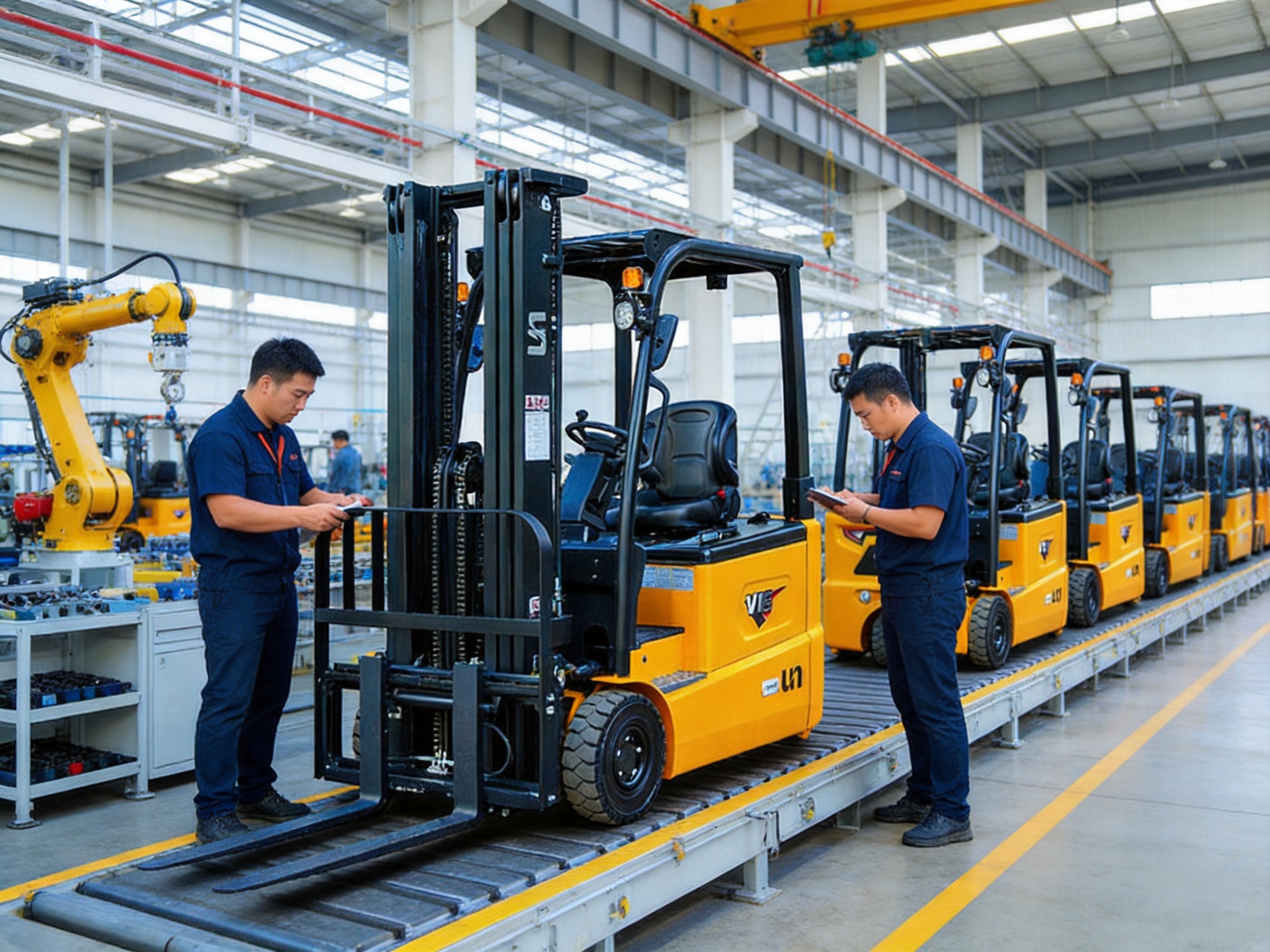
Final assembly includes alignment, torque control, fluid filling, electrical testing, function testing, and visual inspection. A reliable forklift requires every detail to be checked, from steering response to brake performance, from lift control to safety interlock function. Manufacturing strength is reflected not only in major components but also in the consistency of small assembly details.
Quality control continues through performance testing. Travel speed, lifting speed, gradeability, braking, turning, hydraulic pressure, noise, vibration, and safety functions can be verified before delivery. This helps ensure that each forklift meets design expectations and customer requirements.
Total Cost of Ownership
Purchase price is only one part of forklift cost. Total cost of ownership includes energy consumption, maintenance, downtime, spare parts, operator productivity, battery management, service support, and equipment life. The 1.6T–2.0T 3-wheel electric forklift is designed to support favorable total cost of ownership through efficient technology and practical maintenance access.
Energy savings come from the electric drive system, AC control, and regeneration. Compared with internal combustion forklifts, electric forklifts can reduce fuel expenses and eliminate engine-related consumables such as engine oil, filters, and exhaust system components. For indoor operations, electric forklifts can also reduce ventilation requirements associated with exhaust gases.
Maintenance savings come from AC motors and simplified electric systems. Maintenance-free AC motors reduce brush-related service work. The side battery access design saves time during inspection and replacement. Good diagnostic communication helps technicians identify problems faster.
Downtime reduction is one of the most valuable economic benefits. A forklift that is unavailable during a busy shift can disrupt loading schedules, delay production, and create labor inefficiency. Reliable components, easy access, and strong manufacturer support help keep the machine working.
Operator productivity also affects ownership cost. A comfortable, responsive forklift allows operators to complete more handling cycles with less fatigue. Better visibility reduces errors and damage. Smooth control reduces product loss. In many warehouses, these productivity gains are more valuable than small differences in purchase price.
How to Select the Right Model
Choosing between the FBT16, FBT18, and FBT20 depends on load weight, pallet type, aisle layout, lift height, duty cycle, and battery strategy. The FBT16 is suitable for lighter palletized goods and facilities prioritizing compact handling. The FBT18 provides a balanced capacity for general warehouse tasks. The FBT20 offers the highest capacity in the range and is appropriate for heavier goods while still maintaining compact three-wheel maneuverability.
Buyers should consider maximum load weight, not only average load weight. A forklift should have enough rated capacity for the heaviest regular loads, taking into account load center and attachment use. If loads are long, uneven, or handled with attachments, capacity should be reviewed carefully.
Aisle width should also be checked. The working aisle width depends on pallet size and travel direction. For a 1,000 x 1,200 mm pallet positioned lengthways, the working aisle width is approximately 3,290 mm for FBT16 and FBT18, and 3,325 mm for FBT20. For an 800 x 1,200 mm pallet positioned lengthways, the working aisle width is approximately 3,410 mm for FBT16 and FBT18, and 3,525 mm for FBT20.
Battery choice should match shift pattern. For standard daily use, lead-acid may be economical. For intensive use with short charging windows, lithium-ion may be preferable. Charging infrastructure, battery maintenance habits, electricity cost, and operator discipline should all be reviewed.
Lift height and mast configuration should be matched to rack height, doorway clearance, truck loading needs, and overhead obstructions. The standard lift height is 3,000 mm, while mast lowered height and extended height must be considered for site compatibility.
Operator Experience
A forklift’s performance is only fully realized when the operator can use it comfortably and confidently. The 1.6T–2.0T 3-wheel electric forklift is designed to reduce strain and support intuitive operation.
The compact steering wheel makes frequent turning easier. In narrow aisles, operators may turn the wheel many times per hour. Lower steering effort reduces fatigue and improves precision. The optimized pedal layout supports natural foot movement, reducing awkward posture and improving response.
Wide foot space improves comfort, especially for operators who spend long hours in the cab. Poor foot space can cause fatigue and reduce concentration. A better operator position helps maintain alertness and reduces the likelihood of operational mistakes.
Visibility is another critical part of operator experience. The wide-view mast helps operators see forks, loads, racks, and pedestrians more clearly. Better visibility shortens pallet engagement time and reduces the chance of fork impact, pallet damage, or rack contact.
Low vibration and low noise contribute to a better work environment. Electric forklifts are generally quieter than internal combustion models, which improves communication in the workplace and reduces operator stress. In facilities where multiple forklifts operate simultaneously, lower noise can be a meaningful safety and comfort advantage.
Environmental and Workplace Benefits
Zero-emission operation is one of the most important reasons companies choose electric forklifts. Since this forklift produces no exhaust emissions during operation, it supports cleaner indoor air and helps companies meet environmental and workplace health goals.
Electric forklifts can reduce carbon-related concerns when paired with cleaner electricity sources. As more companies pursue sustainability targets, replacing internal combustion equipment with electric alternatives can be part of a broader emissions reduction strategy.
Lower noise and vibration improve the working environment. Operators, pedestrians, warehouse staff, and production workers all benefit from quieter equipment. Reduced vibration can also help protect sensitive goods and reduce operator fatigue.
Energy efficiency supports cost control and sustainability. Regenerative braking, AC motors, and intelligent control help reduce wasted energy. In large fleets, energy efficiency improvements can become significant over time.
Maintenance Recommendations
Although the forklift is designed for easy maintenance, proper service practices remain essential. Operators should perform daily checks before use, including tires, forks, mast chains, hydraulic hoses, warning devices, brakes, steering, battery condition, and visible damage.
Battery maintenance depends on battery type. Lead-acid batteries require proper charging, water level checks, ventilation, cleaning, and safe handling. Lithium-ion batteries require correct charging procedures, battery management system monitoring, and protection from improper use.
The side battery extraction system should be kept clean and functional. Rollers, locking mechanisms, and access areas should be inspected regularly. Smooth battery movement reduces service effort and improves safety during battery changes.
Hydraulic components should be inspected for leaks, wear, and hose condition. Mast chains and rollers should be checked and lubricated according to service recommendations. Proper mast maintenance supports safe lifting and extends component life.
Electrical systems should be inspected by qualified technicians. Connectors, wiring, controllers, motors, and sensors should remain clean, secure, and protected from damage. Diagnostic information from the communication system can help identify problems early.
Routine preventive maintenance is more cost-effective than emergency repair. Fleet managers should maintain service records, schedule inspections, train operators, and use genuine or approved replacement parts to protect equipment reliability.
Why This Forklift Is a Strong Choice
The 1.6T–2.0T 3-wheel electric forklift is a strong choice because it combines compact maneuverability, efficient electric performance, safety features, operator comfort, and practical maintenance. It is not designed merely to lift loads; it is designed to improve the complete handling process in space-limited environments.
For warehouse operators, the compact design can improve aisle efficiency and support better use of floor space. For production facilities, zero-emission operation and smooth control improve indoor working conditions. For fleet managers, AC technology and easy battery access reduce maintenance complexity. For operators, visibility, comfort, and responsive steering support better daily performance.
Compared with many competing models, the forklift’s combination of dual AC motors, advanced controller technology, turning stability, energy regeneration, and maintenance-friendly battery access creates a well-rounded value proposition. It is especially suitable for buyers who need more than a basic electric forklift and want equipment that can support long-term productivity.
The manufacturing background adds another layer of confidence. A company with decades of experience, broad product development capability, significant production capacity, international market presence, and ongoing new energy development is better positioned to support customers through product quality, parts supply, technical improvement, and after-sales service.
Q&A Section
Q1: What load capacities are available for this 3-wheel electric forklift?
The forklift is available in 1.6T, 1.8T, and 2.0T models. The corresponding model designations are FBT16, FBT18, and FBT20, with rated load capacities of 1,600 kg, 1,800 kg, and 2,000 kg.
Q2: What type of work environment is this forklift best suited for?
It is best suited for indoor and narrow-aisle environments such as warehouses, distribution centers, production plants, packaging facilities, food and beverage storage areas, and logistics operations where clean operation and compact turning are important.
Q3: Why choose a 3-wheel electric forklift instead of a 4-wheel model?
A 3-wheel electric forklift usually offers better maneuverability and a smaller turning radius than a conventional 4-wheel counterbalance forklift. This makes it ideal for facilities with limited aisle space and frequent turning requirements.
Q4: Does the forklift use AC or DC technology?
The forklift uses full AC technology, including AC drive motors and an AC controller. This supports efficient performance, reduced maintenance, smooth acceleration, and reliable control.
Q5: What are the benefits of dual AC drive motors?
Dual AC drive motors improve turning control, traction response, and maneuverability. They help the forklift operate smoothly in narrow spaces and support precise positioning during pallet handling.
Q6: Is this forklift suitable for indoor use?
Yes. Because it is electric and produces zero exhaust emissions during operation, it is highly suitable for indoor use. It also offers lower noise and vibration compared with internal combustion forklifts.
Q7: What battery options are available?
The forklift supports standard lead-acid batteries and standard lithium-ion batteries. Lead-acid batteries are economical and widely used, while lithium-ion batteries are convenient for opportunity charging and reduced maintenance.
Q8: How does the side battery extraction system help users?
The side battery extraction system allows the battery to be pulled out from the right side with the help of rollers. This makes inspection and battery replacement easier, reducing downtime and service effort.
Q9: What safety features does the forklift include?
Safety features include double rear tires, automatic turning speed control, an operator presence system, a seat switch, a strong overhead guard, and a wide-view mast for improved visibility.
Q10: What is the standard lift height?
The standard lift height is 3,000 mm. Buyers should confirm mast options and site requirements before purchase, especially if they need higher lifting or must pass through low doorways.
Q11: What is the travel speed?
The forklift has a travel speed of 13 km/h with full load and 14 km/h without load, supporting efficient movement in warehouse and industrial applications.
Q12: How does energy regeneration improve performance?
Energy regeneration recovers part of the energy generated during braking or deceleration and returns it to the battery. This helps extend working time and improve energy efficiency in frequent start-stop operations.
Q13: What makes this forklift easier to maintain than some competitors?
Maintenance-free AC motors, a nearly 90-degree battery hood, side battery extraction, and CANbus communication all support easier maintenance. These features help reduce service time and improve equipment availability.
Q14: Is the forklift appropriate for multi-shift operations?
Yes, especially when configured with the right battery strategy. Lithium-ion batteries may be preferred for multi-shift operations because they can support opportunity charging and reduce battery maintenance requirements.
Q15: Why is manufacturer strength important when choosing a forklift?
Manufacturer strength affects product quality, parts availability, technical support, delivery consistency, and long-term reliability. A manufacturer with decades of experience, strong production capacity, and international service capability can provide better long-term value.
Conclusion
The 1.6T–2.0T 3-wheel electric forklift is a modern, efficient, and practical handling solution for operations that require compact maneuverability, clean power, safety, and reliable productivity. Its full AC system, dual AC drive motors, energy regeneration, advanced controller technology, double rear tires, ergonomic design, and easy battery access make it highly competitive in its class.
For facilities facing limited aisle space, rising energy expectations, stricter indoor air quality requirements, and pressure to improve productivity, this forklift offers a strong balance of performance and cost efficiency. It is suitable for both traditional warehouse operations and modern high-efficiency logistics environments.
Beyond the product itself, the manufacturing capability behind it strengthens its value. Decades of industry experience, advanced production processes, broad product development, technical patents, international market knowledge, and new energy innovation all contribute to a forklift that is designed not only for today’s handling needs but also for the future of cleaner, smarter, and more efficient material handling.
References
1. Industrial Truck Association. General Principles of Forklift Safety and Operation.
2. International Organization for Standardization. Industrial Trucks: Safety Requirements and Verification.
3. Material Handling Industry. Best Practices for Warehouse Equipment Selection and Fleet Productivity.
4. Battery Council International. Technical Guidance on Industrial Lead-Acid Battery Use and Maintenance.
5. International Energy Agency. Electric Mobility and Energy Efficiency in Industrial Applications.
6. Occupational Safety and Health Training Materials. Powered Industrial Truck Operation and Workplace Safety.
7. Engineering Handbook for Electric Industrial Vehicles. AC Drive Systems, Energy Regeneration, and Control Technology.
Product: V Series 1.6T-2.0T 3-Wheel Electric Forklift
For exclusive deals and latest offers, sign up by entering your email address below.
Stay In Touch
ADDRESS : NO.1 ROAD ONE, XINDENG NEW DISTRICT, FUYANG, HANGZHOU, ZHEJIANG, CHINA 311404.
PHONE : +86-571-8688 8355 (AMERICA)
PHONE : +86-571-8886 9363 (EUROPE)
PHONE : +86-571-8688 8377 (ASIA, AFRICA, OCEANIA)
EMAIL : [email protected]
EMAIL : [email protected](PARTS INQUIRY)

