


 中文简体
中文简体 Français
 русский
 Español
 عربى
عربى Deutsch



Electric Stand-On Reach Trucks for High-Performance Warehouse Operations
Admin 2026-08-08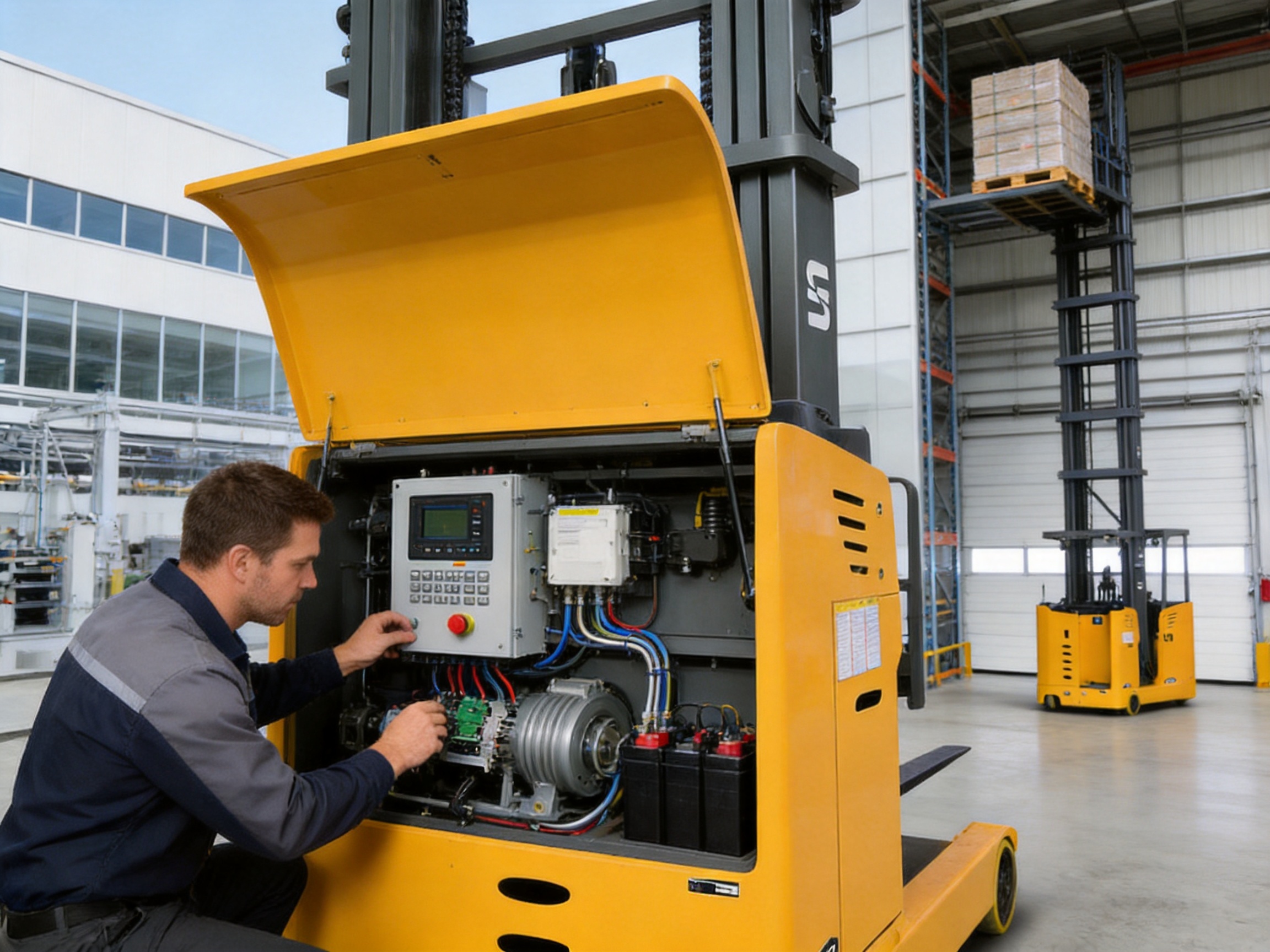
Modern warehouses are under continuous pressure to store more goods in less space, move pallets faster, and maintain safe, predictable operations throughout long working shifts. As inventory becomes more diverse and customer expectations become more demanding, material handling equipment must deliver much more than basic lifting capability. It must combine compact dimensions, accurate load handling, dependable electronics, efficient energy use, operator comfort, and straightforward maintenance.
The stand-on reach truck is designed specifically for these requirements. By allowing the operator to work from a standing position while using a reach mechanism to place pallets into deep storage positions, this type of truck provides an effective solution for high-density warehouse applications. It is particularly suitable for distribution centers, manufacturing warehouses, cold-chain logistics, retail storage, and other facilities where aisle space and vertical storage capacity are important considerations.
The FBR-NQC3 stand-on reach truck range is available in 1.5-ton, 1.8-ton, 2.0-ton, and 2.5-ton versions. These models combine a battery-electric power system with AC drive technology, electronic power steering, automatic deceleration, electromagnetic braking, a wide-view mast, and a comprehensive CAN bus communications network. The result is a warehouse truck engineered to support efficient pallet movement while reducing unnecessary operating and maintenance costs.
Beyond the machine itself, the product benefits from the experience of Zhejiang UN Forklift Co., Ltd., a long-established Chinese material handling equipment manufacturer. The company has developed reach trucks, double deep reach trucks, and very narrow aisle trucks, and has built its manufacturing capabilities around research and development, production, sales, and after-sales service. This combination of product specialization and manufacturing depth gives the reach truck a strong foundation for demanding warehouse work.
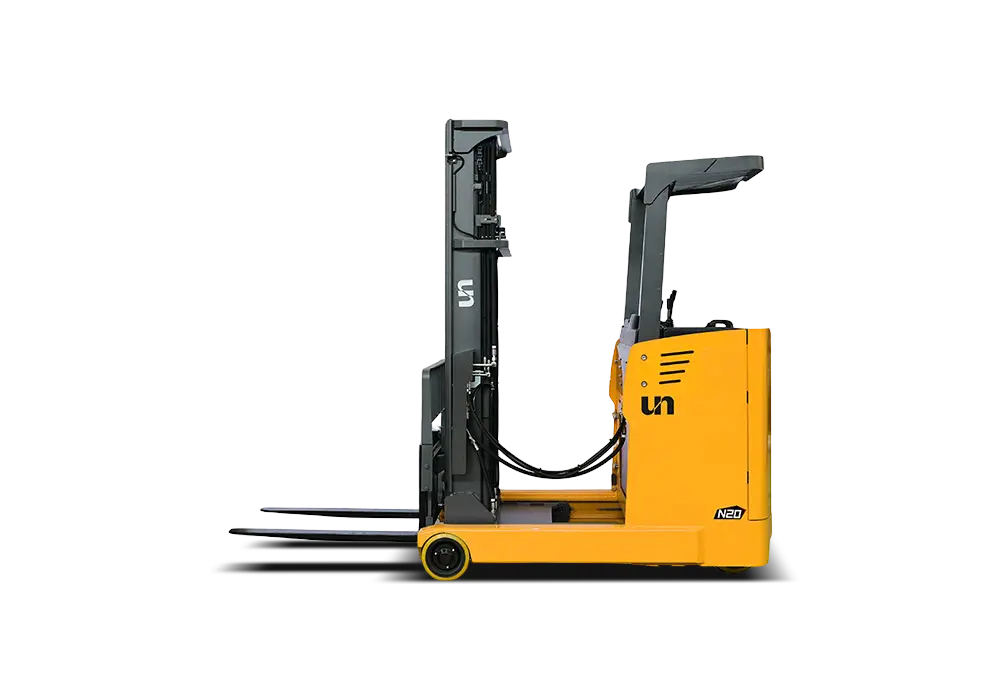
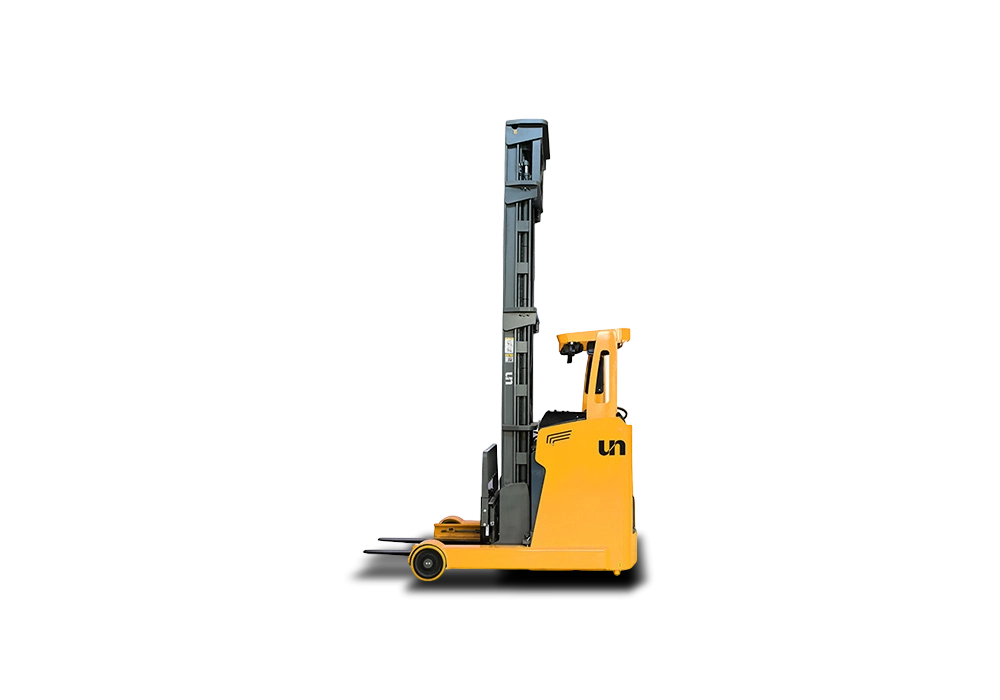
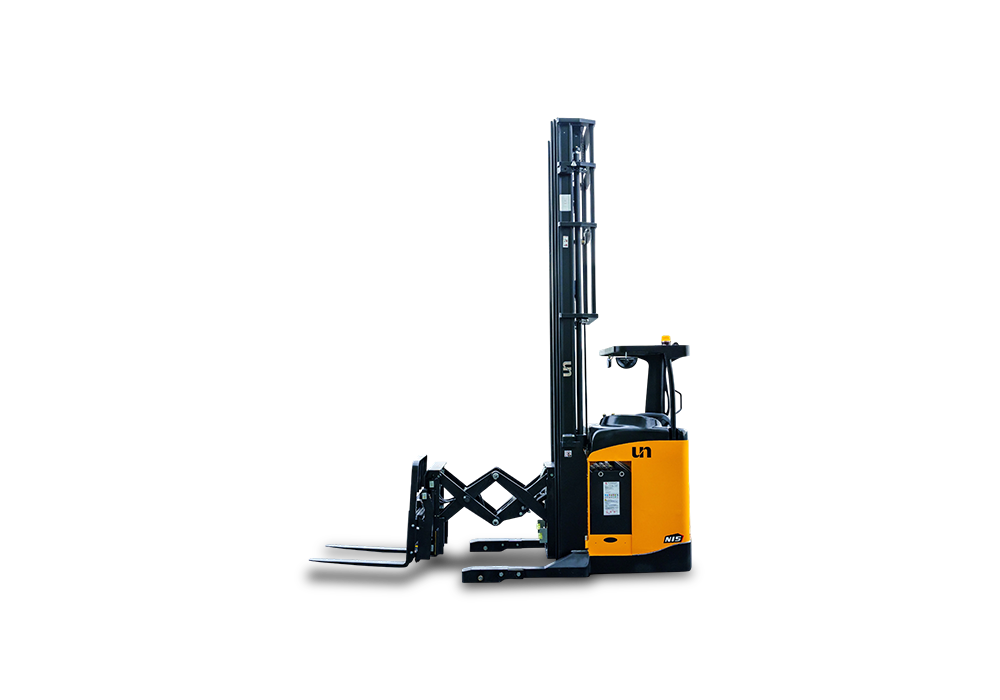
Reach Truck(Stand in)
1. The Role of a Stand-On Reach Truck in Modern Warehousing
A reach truck is designed to operate in storage environments where pallets must be lifted high and placed beyond the normal front position of the truck. The reach mechanism allows the mast and forks to extend toward the rack, helping the operator use the available storage depth more effectively. Compared with a conventional counterbalanced forklift, a reach truck can generally work in narrower aisles and is better adapted to indoor racking systems.
The stand-on configuration provides an additional operational benefit. The operator can enter and leave the driving position quickly, maintain a clear view of the working area, and control the truck from a compact compartment. In applications involving repeated pallet collection and placement, these characteristics can support efficient work cycles.
The FBR-NQC3 series is designed for warehouses that require a balance between capacity, maneuverability, and vertical performance. Rated capacities range from 1,500 kilograms to 2,500 kilograms, with a standard load center of 500 millimeters. Standard specifications include a 4,000-millimeter lift height for the principal models, while the mast range supports multiple lifting configurations extending from conventional warehouse heights to high-level storage applications.
Because warehouse layouts vary considerably, a reach truck must be selected according to more than rated capacity. A suitable model must also match the pallet dimensions, rack design, aisle width, lift height, floor conditions, battery requirements, and operating pattern. The range of models and mast options allows users to select equipment more closely aligned with their specific warehouse environment.
2. Main Product Advantages
2.1 Efficient Use of Warehouse Space
One of the most important advantages of a reach truck is its ability to support high-density storage. The compact truck body, reach distance, and small turning radius help operators position loads in restricted warehouse areas. Depending on the selected model and pallet arrangement, the listed working aisle width can be approximately 2,715 to 2,855 millimeters.
These dimensions can provide a meaningful advantage over larger conventional forklifts. When aisle widths are reduced without compromising safe operating clearance, a warehouse may be able to add storage positions or improve the utilization of existing rack space. The actual result depends on the rack layout, pallet dimensions, floor condition, and operating procedures, but the truck’s design is clearly oriented toward space-efficient warehousing.
The reach distance varies by model. The listed values are 560 millimeters for the 1.5-ton and 1.8-ton models, 640 millimeters for the 2.0-ton model, and 670 millimeters for the 2.5-ton model. This reach capability helps the operator position pallets more effectively while maintaining a practical truck footprint.
2.2 Capacity Options for Different Applications
The four primary models provide a capacity range suitable for many warehouse operations. The FBR15-NQC3 offers a rated capacity of 1,500 kilograms, the FBR18-NQC3 provides 1,800 kilograms, the FBR20-NQC3 handles 2,000 kilograms, and the FBR25-NQC3 is rated for 2,500 kilograms.
This range gives fleet planners more flexibility than a single-capacity product. Light and medium-duty warehouse operations may benefit from the compact 1.5-ton and 1.8-ton models, while heavier pallet loads can be assigned to the 2.0-ton and 2.5-ton versions. Selecting the correct capacity can help avoid the unnecessary cost, energy consumption, and floor loading associated with using an oversized truck for lighter work.
All principal models use a 500-millimeter load center in the stated specifications. Users should always confirm the relationship between pallet size, load distribution, fork length, lift height, and rated capacity before operation. Load capacity may be affected by the mast configuration and the height at which the load is handled.
2.3 Battery-Electric Operation
The reach truck uses a battery-electric power system, making it well suited to indoor warehouse environments. Electric operation avoids direct exhaust emissions at the point of use and can reduce noise compared with internal combustion equipment. This is especially valuable in enclosed facilities, food-related storage, retail distribution, and workplaces where air quality and noise control are important.
Standard battery configurations include 48-volt systems. The listed battery capacities are 375 Ah for the FBR15-NQC3 and FBR18-NQC3, and 425 Ah for the FBR20-NQC3 and FBR25-NQC3. A supplementary specification table also lists a 48/450 configuration for certain models. Because battery capacity can vary according to the selected configuration, users should confirm the final battery specification, charging equipment, and operating cycle when ordering.
The battery system is supported by a regeneration function. During deceleration or parking, the truck can automatically withdraw electricity and return energy to the battery system. Regenerative operation can help reduce energy waste during repeated stop-and-go movements. It may also contribute to more controlled deceleration and improved efficiency over the course of a working shift.
2.4 AC Drive and Lift Technology
The truck uses AC technology for its drive and lift control systems. The product information identifies an American Curtis controller and KDS motor. Brushless AC motors offer several practical advantages over brushed motor designs, including reduced brush wear, lower routine maintenance requirements, and improved energy efficiency.
AC technology also supports smooth and precise control. In a warehouse, the operator frequently needs to accelerate gradually, stop accurately, approach a rack, and position a pallet at height. Infinite-variable drive and lift control can make these movements easier to manage than systems with limited fixed speed settings.
The listed drive motor power is 4.5 kilowatts, while the pump motor power is 12.5 kilowatts. Travel speed under full load is listed as 9.5 kilometers per hour for the primary specification set, with a no-load travel speed of 10 kilometers per hour. The supplementary specifications list reduced speeds for some higher-capacity configurations. These figures reflect a design that prioritizes controlled warehouse performance rather than excessive speed.
In practical terms, controlled acceleration, predictable stopping, and accurate lifting are often more valuable than maximum speed. Excessive speed can increase braking distance, load movement, and workplace risk. The reach truck’s electronic control system is therefore designed to support productive operation while maintaining control in narrow aisles.
3. Safety and Operator Ergonomics
3.1 Automatic Turning Deceleration
Turning in a loaded reach truck requires careful management because the truck’s center of gravity changes as the load is raised and extended. The product includes an automatic turning deceleration function. When the truck enters a turn, the control system reduces speed to help prevent unstable operating conditions.
This feature supports safer handling by reducing the possibility of entering a turn too quickly. It does not replace operator training, proper load placement, or compliance with site safety rules. Instead, it works as an additional electronic safeguard that helps the machine respond to a common warehouse risk.
3.2 Automatic Parking Function
The automatic parking function is designed to help keep the truck stationary when the operator stops. This is useful during pallet positioning, temporary stops, and operator transitions. The system can reduce the risk of unintended movement, particularly in busy warehouse environments where the operator must frequently stop and start.
Automatic parking works together with the electromagnetic service brake. Electromagnetic braking can provide consistent stopping performance without depending on conventional friction components in the same way as a mechanical brake system. The result is a braking arrangement intended for reliable indoor operation and reduced routine maintenance.
3.3 Electronic Power Steering
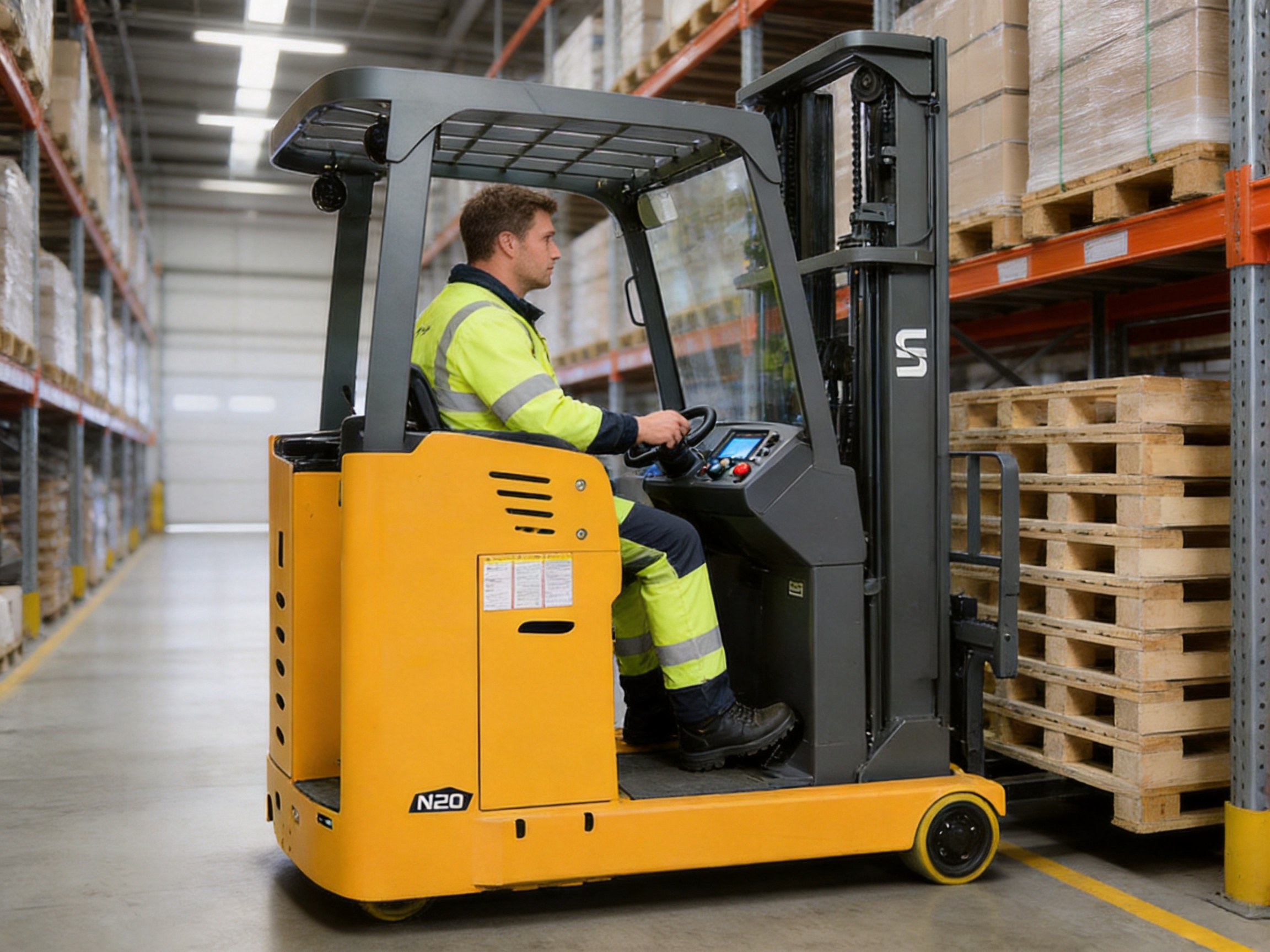
The electronic power steering system is another important ergonomic feature. It is designed to provide light steering effort, display the driving wheel position in real time, and automatically center the wheel when the truck starts. These functions can help the operator control the truck more confidently in confined spaces.
Reduced steering effort is especially valuable during extended shifts. A responsive steering system can lower physical strain and make it easier to maintain accurate travel paths. Real-time wheel position information also helps the operator understand the truck’s orientation when entering or leaving an aisle.
3.4 Wide-View Mast and Overhead Protection
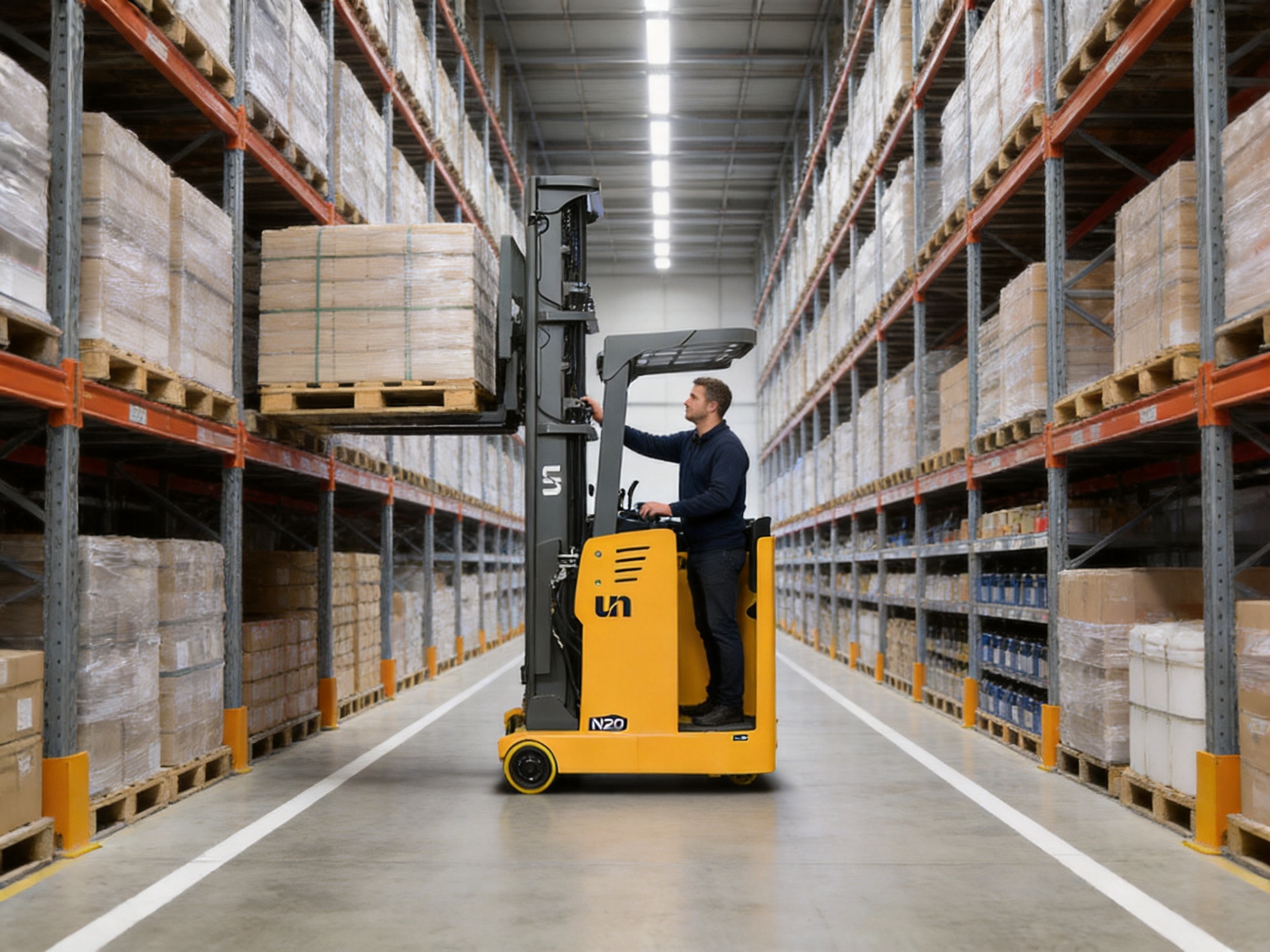
Visibility is essential when lifting pallets into storage racks. The product uses a wide-view mast designed to give the operator a clearer view of the forks and load. Improved visibility can assist with pallet alignment, rack entry, and load placement, reducing the need for repeated adjustments.
The reach truck also includes a strong overhead guard. The overhead guard provides protection for the operator while maintaining the structural support required in warehouse applications. The listed overhead guard height is approximately 2,310 or 2,255 millimeters in the primary specifications, while another configuration lists a height to safeguard of 2,250 millimeters.
Users must verify the actual overall height before deploying the truck in areas with low doorways, sprinkler systems, lighting fixtures, mezzanines, or other overhead obstructions. The mast-lowered height is listed from approximately 1,875 to 1,975 millimeters depending on the model, while mast extended height can exceed 5,400 millimeters in the standard 4,000-millimeter lift configuration.
3.5 Imported High-Strength Mast Steel
The mast uses German imported steel, described as offering high strength and high wear resistance. Mast durability is important because the mast assembly is exposed to repeated lifting cycles, load movement, vibration, and changing forces during reach operations.
A strong mast contributes to long-term structural reliability and helps maintain stable fork movement. However, mast performance also depends on proper lubrication, inspection, load handling, and adherence to the rated capacity. Routine checks should include mast rollers, chains, hydraulic components, fork locking mechanisms, and visible signs of deformation or wear.
4. Hydraulic System Reliability
The hydraulic system is central to the reach truck’s lifting and reach functions. The product uses a Shimadzu pump and valve system, identified as a feature supporting hydraulic reliability and stability. Consistent hydraulic performance is necessary for smooth lifting, controlled lowering, and accurate load positioning.
Hydraulic stability is particularly important at elevated heights. A load must move predictably when the operator adjusts fork height or extends the reach mechanism. Sudden or irregular movement can affect pallet stability and make accurate placement more difficult. A well-matched pump, valve, cylinder, and control system helps provide smoother operation.
The stated full-load lifting speeds are 320 millimeters per second for the 1.5-ton and 1.8-ton models, 300 millimeters per second for the 2.0-ton model, and 280 millimeters per second for the 2.5-ton model. These values provide a useful balance between productivity and control. Heavier capacity models generally use more measured lifting speeds to support safe load handling.
Hydraulic efficiency also affects battery consumption. When the hydraulic system transfers energy effectively, less power is wasted as heat. This can support longer working periods between charges and reduce the thermal load on components. Proper hydraulic oil selection, scheduled inspection, and clean operating conditions remain essential for maintaining this performance.
5. Maintenance and Total Cost of Ownership
5.1 Brushless AC Motors
The use of maintenance-free AC motors is one of the main features supporting lower maintenance requirements. Unlike brushed motor designs, brushless motors do not require routine brush replacement. They also generate less heat during operation according to the product information, which can help improve efficiency and component life.
Lower maintenance does not mean maintenance-free ownership. Operators and maintenance personnel must still inspect electrical connections, cooling paths, drive wheels, brakes, steering components, hydraulic systems, and battery equipment. Nevertheless, eliminating brush servicing can reduce the number of periodic tasks and help simplify fleet maintenance planning.
5.2 Simple Structure and Accessible Components
The truck uses a simple structure and maintenance-free components in several important systems. A simpler design can make troubleshooting easier because technicians have fewer unnecessary mechanisms to inspect. It can also reduce the time required to access commonly serviced parts.
The removable maintenance cover provides easier access to the controller and other key components. Fast access can be valuable when a truck is used intensively and downtime directly affects warehouse throughput. Technicians can inspect electrical connections, controller areas, and related systems without dismantling large sections of the machine.
5.3 Electronic Diagnostics Through CAN Bus Communication
The CAN bus communications network provides a dependable method for communication between electronic control components. In a modern electric truck, the controller, motor systems, steering, display, and safety functions must exchange information continuously.
A structured communications network can support more consistent system coordination and facilitate troubleshooting. When electronic systems are properly integrated, technicians can identify operating conditions and potential faults more efficiently than with isolated control circuits. This contributes to a more systematic maintenance process.
5.4 Energy Efficiency and Operating Cost
Operating cost is influenced by electricity consumption, battery life, maintenance labor, replacement parts, tire wear, and equipment downtime. The reach truck addresses several of these areas through regenerative braking, AC motors, electronic controls, and a hydraulic system designed for stable performance.
Actual savings depend on the working environment and operating discipline. Travel distance, load weight, lift frequency, battery charging practices, ambient temperature, floor condition, and operator behavior all influence energy consumption. Even so, the combination of energy recovery and efficient AC technology gives the truck a strong foundation for controlling the cost of repeated warehouse cycles.
| Feature | Operational Benefit | Potential Ownership Benefit |
|---|---|---|
| Battery-electric power | Suitable for indoor warehouse work with no direct exhaust emissions at the point of operation | Lower routine engine-related service requirements |
| Regeneration function | Recovers energy during deceleration and parking | May reduce energy waste during repeated operating cycles |
| Brushless AC motors | Smooth, efficient drive and lift control | Reduced brush wear and lower maintenance demand |
| CAN bus network | Coordinated electronic control and communication | Supports systematic diagnosis and service |
| Electronic power steering | Light steering effort and accurate directional control | Reduced operator fatigue and consistent handling |
| Removable maintenance cover | Faster access to controllers and key components | Potentially shorter service and troubleshooting time |
| Shimadzu hydraulic components | Stable lifting and reach operation | Supports dependable hydraulic performance |
6. Performance Specifications
The following table summarizes the principal specifications supplied for the FBR-NQC3 stand-on reach truck models. Specifications may vary according to equipment configuration, mast selection, battery option, and regional requirements. The final purchase specification should be confirmed with the supplier.
| Specification | FBR15-NQC3 | FBR18-NQC3 | FBR20-NQC3 | FBR25-NQC3 |
|---|---|---|---|---|
| Rated load capacity | 1,500 kg | 1,800 kg | 2,000 kg | 2,500 kg |
| Load center | 500 mm | 500 mm | 500 mm | 500 mm |
| Standard lift height | 4,000 mm | 4,000 mm | 4,000 mm | 4,000 mm |
| Free lift | 1,010 mm | 1,010 mm | 1,010 mm | 910 mm |
| Fork size | 920 × 120 × 35 mm | 1,070 × 120 × 40 mm | 1,070 × 120 × 40 mm | 1,070 × 120 × 40 mm |
| Overall width | 1,090 mm | 1,200 mm | 1,200 mm | 1,200 mm |
| Turning radius | 1,660 mm | 1,660 mm | 1,750 mm | 1,920 mm |
| Reach distance | 560 mm | 560 mm | 640 mm | 670 mm |
| Wheelbase | 1,370 mm | 1,370 mm | 1,485 mm | 1,655 mm |
| Travel speed, full load | 9.5 km/h | 9.5 km/h | 9.5 km/h | 9.5 km/h |
| Travel speed, no load | 10 km/h | 10 km/h | 10 km/h | 10 km/h |
| Full-load lifting speed | 320 mm/s | 320 mm/s | 300 mm/s | 280 mm/s |
| Full-load gradeability | 12% | 10% | 10% | 10% |
| Total weight with battery | 2,440 kg | 2,440 kg | 2,510 kg | 2,625 kg |
| Standard battery | 48 V/375 Ah | 48 V/375 Ah | 48 V/425 Ah | 48 V/425 Ah |
7. Mast Options for High-Level Storage
Warehouse storage requirements differ significantly from one facility to another. Some operations need a 3,500-millimeter lift height, while others require access to rack positions above 7,000 millimeters. The mast specifications supplied for the product include multiple options, such as FBRN350, FBRN370, RTFM400, RTFM430, RTFM450, RTFM470, RTFM500, RTFM530, RTFM550, RTFM570, RTFM600, RTFM650, RTFM670, RTFM700, RTFM750, RTFM800, and other configurations.
The three-stage full-free wide-view mast options are particularly relevant to warehouses with high rack systems. A full-free design allows the forks to rise through the free-lift range without immediately increasing the overall mast height. This can be useful when the truck must handle pallets inside buildings with low ceilings or under mezzanines.
For example, the RTFM400 configuration lists a maximum fork height of 4,000 millimeters, a lowered overall height of approximately 1,975 millimeters, and an extended height with backrest of approximately 5,705 millimeters. Higher mast options provide greater storage access, although rated capacity decreases as lift height increases. This relationship is normal in forklift operation and must be considered when planning rack locations.
The supplied mast data shows maximum fork heights extending to approximately 8,000 millimeters in the RTFM800 configuration. The capacity available at a given height depends on the model, load center, mast type, and backrest configuration. Users should rely on the official capacity plate and approved load chart for every truck in service.
A wide-view mast can improve the operator’s ability to observe the forks and load during rack placement. This is an important advantage over mast designs that create greater visual obstruction. Better visibility can reduce positioning errors and help operators work more efficiently, particularly in narrow aisles and high-bay storage areas.
8. Manufacturing Strengths and Product Development Experience
The reach truck is supported by the manufacturing capabilities of Zhejiang UN Forklift Co., Ltd. The company was founded in 1978 and operates a facility covering approximately 53,400 square meters. Its stated annual production capacity is 15,000 units.
The company integrates research and development, production, sales, and service. This integrated structure is important for industrial equipment because product performance depends not only on design, but also on production consistency, component control, technical support, spare parts availability, and feedback from field applications.
The company identifies itself as one of the earliest manufacturers in China to develop and produce reach trucks, double deep reach trucks, and very narrow aisle trucks. It also states that China’s first reach forklift and VNA truck were developed at the company. This history reflects a long-term focus on specialized warehouse equipment rather than a product portfolio limited to conventional counterbalanced forklifts.
Experience in specialized truck development can provide practical advantages in areas such as mast design, visibility, reach mechanisms, stability, aisle calculations, steering control, and warehouse application engineering. These are not isolated features; they must work together as a complete vehicle system.
The company offers 17 varieties, 96 series, and more than 200 specifications across its product range. A broad product portfolio enables the manufacturer to address different capacities, energy systems, operating environments, and customer requirements. It also helps the company develop knowledge across related material handling categories.
The company holds national patents for electric forklift technologies and has participated in the formulation of Chinese electric forklift industry standards. These activities indicate ongoing involvement in technology development and industry advancement. They also support the company’s stated emphasis on energy saving, environmental protection, efficiency, and safety.
9. Manufacturing Process Considerations
9.1 Research and Development
Product development begins with understanding the operating conditions in which the truck will be used. A reach truck must be engineered around load capacity, lift height, stability, aisle dimensions, battery performance, operator visibility, braking, steering, and service access. A company with experience in multiple warehouse truck categories can use application feedback to refine these systems.
For the stand-on reach truck, research and development must coordinate the mast, reach mechanism, drive unit, hydraulic system, steering, electronic controls, chassis, and operator area. Each component influences the others. For example, increasing lift height can affect stability, mast visibility, residual capacity, overall height, and hydraulic performance.
9.2 Structural and Component Integration
High-strength mast steel, a reinforced overhead guard, dependable hydraulic components, and a stable chassis form the structural foundation of the truck. The AC motor, Curtis controller, CAN bus network, and electronic power steering form an integrated control platform.
Component integration is an important distinction between a complete industrial vehicle and a simple collection of purchased parts. The value of the design lies in how the systems communicate and operate together. Smooth performance depends on the correct matching of motor output, controller programming, hydraulic response, steering behavior, braking, and load stability.
9.3 Production Capacity and Consistency
A stated annual capacity of 15,000 units indicates an established manufacturing organization capable of producing equipment at an industrial scale. Production scale can support standardized processes, repeatable assembly methods, and a more stable supply chain for common components.
Consistency is particularly important for fleet customers. When several trucks are used in the same facility, similar control behavior and operating characteristics can simplify operator training, service procedures, and spare parts management. A broad manufacturing base can also support customers operating mixed fleets across different sites.
9.4 Global Sales and Service Support
The company has a worldwide sales and service network with partners in Europe, South America, North America, Africa, and Asia. International support is important for customers that require equipment to operate across multiple regions or need assistance with parts, maintenance, technical training, and product selection.
The company also identifies itself as an OEM supplier for well-known domestic and overseas companies, including Hyundai Heavy Industries and Xuzhou Construction Machinery Group. OEM experience generally requires attention to product consistency, technical specifications, manufacturing coordination, and customer-specific requirements.
In addition to electric forklifts, the company manufactures internal combustion forklifts and has developed products for markets with high emission requirements. It has also expanded into new-energy products, including diesel-to-lithium-ion forklift solutions and standard lithium-ion battery forklifts. This broader energy-system experience supports a balanced understanding of warehouse electrification and fleet transition.
10. Applications in Different Warehouse Environments
10.1 Distribution Centers
Distribution centers typically require frequent pallet movement, rapid replenishment, and accurate rack placement. A stand-on reach truck can support these duties through its compact dimensions, reach capability, electronic controls, and electric power system.
The automatic turning deceleration function can be useful in busy aisles where operators must change direction frequently. The regenerative function can also support efficient operation in facilities with repeated acceleration and braking cycles.
10.2 Manufacturing Warehouses
Manufacturing facilities often handle raw materials, components, work-in-progress goods, and finished products. Storage positions may be located near production lines, and aisle widths can be constrained by buildings, equipment, and pedestrian routes.
The stand-on configuration allows operators to enter and leave the truck efficiently when collecting individual pallets or responding to production requirements. The range of capacity and mast options makes it possible to match the truck to different materials and rack elevations.
10.3 Retail and E-Commerce Fulfillment
Retail and e-commerce warehouses require accurate inventory handling and high throughput. The ability to place pallets into elevated rack positions can help maximize available storage volume, while the compact turning radius can help the truck move through organized but demanding warehouse layouts.
Visibility is especially important when handling mixed inventory. A wide-view mast and electronic steering system can help operators align pallets more accurately and reduce unnecessary repositioning.
10.4 Cold and Temperature-Controlled Storage
Electric reach trucks are often suitable for enclosed temperature-controlled facilities because they do not produce direct internal combustion exhaust emissions during operation. However, battery performance, lubrication, condensation, floor conditions, and charging arrangements must be evaluated for the specific temperature range.
Customers operating in cold storage should confirm whether special battery, electrical, hydraulic, or corrosion-protection configurations are required. The standard specifications should not be assumed to cover every low-temperature application without technical review.
10.5 High-Bay Warehouses
High-bay warehouses benefit from mast options that provide increased fork heights. The supplied mast range includes configurations for storage heights from approximately 3,500 millimeters to 8,000 millimeters. This allows the truck to serve both medium-height and high-level racking applications.
High-level operation requires careful capacity management. As lift height increases, the available capacity may decrease. Rack beam strength, pallet condition, floor flatness, load center, and operator training are also critical. The truck should always be used according to its capacity plate and the manufacturer’s instructions.
11. How the Product Compares With Conventional Alternatives
Compared with internal combustion forklifts, the battery-electric reach truck offers clear advantages for indoor environments. It eliminates direct exhaust emissions at the point of operation, generally produces less operating noise, and uses an energy system aligned with warehouse electrification. It is also more naturally suited to narrow indoor aisles and high-level racking.
Compared with a traditional counterbalanced electric forklift, the reach truck is more specialized for rack access. Its reach function and compact operating dimensions allow it to place pallets deeper into storage positions. In facilities where storage density is a priority, this can provide a stronger space-utilization proposition.
Compared with older brushed-motor electric trucks, the AC-powered design can reduce brush-related maintenance and provide smooth variable control. The electronic steering system, automatic parking, turning deceleration, CAN bus network, and regeneration function also represent a more integrated approach to vehicle control.
Compared with basic reach trucks that offer limited mast choices, the broad mast selection provides greater flexibility for high-bay and low-ceiling applications. The full-free wide-view mast options can be especially valuable when the truck must raise loads without immediately increasing its overhead height.
These advantages should be considered as part of a complete fleet evaluation. Purchase price is only one factor. A fair comparison should include aisle requirements, storage density, energy cost, operator productivity, maintenance access, battery infrastructure, service support, residual capacity, and expected equipment life.
12. Recommended Selection Process
Before selecting a model, users should map the complete warehouse task. Begin by identifying the heaviest pallet that will be handled, the load center, the highest storage position, the required free lift, and the dimensions of the pallets.
Next, measure the narrowest aisle and turning area. The truck’s listed working aisle widths are based on specific pallet dimensions and travel orientations. Different pallet sizes or approach directions can change the required aisle width. A site trial or detailed application calculation is recommended when space is limited.
Ceiling height and overhead obstructions must also be reviewed. The lowered mast height, overhead guard height, and extended mast height all affect where the truck can operate. Sprinklers, doors, beams, lighting, and mezzanines should be included in the assessment.
Battery selection should be based on the shift pattern. Users should consider the number of operating hours, lifting frequency, charging time, opportunity charging, battery changing facilities, and ambient temperature. The listed 48-volt battery configurations provide a starting point, but the final choice should be based on actual energy demand.
Finally, the user should confirm service capability, spare parts supply, operator training, floor requirements, safety procedures, and warranty conditions. A technically suitable truck will deliver its full value only when supported by proper operation and maintenance.
13. Operator Training and Safe Use
Technology can support safe operation, but it cannot replace trained operators. Every operator should understand the rated capacity, load center, mast behavior, reach operation, turning limits, braking system, battery procedures, and site-specific traffic rules.
Loads should be centered and stable before travel. Operators should avoid sudden steering, sharp turns at speed, excessive elevation during travel, and handling damaged pallets. When operating at height, the load should be positioned carefully and the forks should be fully engaged according to the pallet design.
Daily inspections should include tires, forks, mast components, chains, hydraulic lines, battery condition, steering, brakes, warning devices, and visible structural damage. Any abnormal noise, leakage, error indication, or change in operating behavior should be reported and investigated before continued use.
Operators should also maintain safe separation from pedestrians. Warehouses should use clear traffic routes, appropriate speed limits, marked crossings, lighting, and communication procedures. The automatic safety functions of the truck are additional protections, not substitutes for a complete workplace safety program.
14. Q&A
Q1: What is a stand-on reach truck?
A stand-on reach truck is a battery-electric warehouse truck operated from a standing position. It uses a reach mechanism to extend the forks toward storage racks, making it suitable for narrow aisles and high-density pallet storage.
Q2: What capacities are available?
The primary FBR-NQC3 range includes rated capacities of 1,500 kilograms, 1,800 kilograms, 2,000 kilograms, and 2,500 kilograms. The correct model depends on load weight, load center, lift height, and application conditions.
Q3: What battery system does the truck use?
The truck uses a 48-volt battery system. The listed standard capacities include 375 Ah, 425 Ah, and, for certain configurations, 450 Ah. The final battery specification should be confirmed according to the required operating cycle.
Q4: What is the standard lift height?
The principal specification table lists a 4,000-millimeter lift height for the FBR15-NQC3, FBR18-NQC3, FBR20-NQC3, and FBR25-NQC3 models. Additional mast options support lift heights ranging from approximately 3,500 millimeters to 8,000 millimeters.
Q5: Can the reach truck operate in narrow aisles?
Yes. Its compact design, reach distance, small turning radius, electronic steering, and warehouse-oriented mast configuration are intended for narrow-aisle applications. The required aisle width must be calculated according to pallet dimensions and travel orientation.
Q6: How does regenerative braking help?
The regeneration function automatically withdraws electricity during deceleration or parking. This can recover energy that might otherwise be wasted and may improve efficiency during repeated stop-and-go operation.
Q7: What are the benefits of AC technology?
AC technology provides smooth variable drive and lift control. Brushless AC motors reduce brush wear, can improve efficiency, and generally require less routine maintenance than brushed motor systems.
Q8: Is the truck suitable for high-bay warehouses?
Yes. Multiple mast options are available for high-level storage, including three-stage full-free wide-view configurations. Users must verify the capacity available at the required lift height and follow the approved load chart.
Q9: What safety functions are included?
The product includes automatic turning deceleration, automatic parking, electronic power steering, electromagnetic braking, a wide-view mast, and a strong overhead guard. These features supplement, but do not replace, operator training and workplace safety procedures.
Q10: How is maintenance simplified?
Maintenance is supported by brushless AC motors, maintenance-free components, a CAN bus communications network, and a removable cover that provides easier access to the controller and other key parts.
Q11: Who manufactures the reach truck?
The product is manufactured by Zhejiang UN Forklift Co., Ltd., a Chinese material handling equipment manufacturer founded in 1978. The company integrates research and development, production, sales, and service.
Q12: What should customers confirm before purchasing?
Customers should confirm capacity, load center, mast type, maximum lift height, lowered height, aisle width, pallet dimensions, battery capacity, charging requirements, floor conditions, environmental temperature, service support, and local compliance requirements.
Conclusion
The stand-on reach truck is a practical solution for warehouses seeking higher storage density, dependable electric performance, and controlled pallet handling. The FBR-NQC3 series combines 1.5-ton to 2.5-ton capacity options with reach distances up to 670 millimeters, standard 4,000-millimeter lifting capability, narrow turning dimensions, AC drive technology, electronic power steering, and energy regeneration.
Its safety and ergonomic package includes automatic turning deceleration, automatic parking, electromagnetic braking, a wide-view mast, a strong overhead guard, and light electronic steering. Its maintenance concept is supported by brushless AC motors, a CAN bus communications network, a dependable hydraulic system, and convenient access to controllers and key service components.
The product’s strongest competitive advantage is the combination of specialized reach-truck design and manufacturing experience. The company’s long history, broad product range, research and development capability, industrial production scale, OEM experience, and international service network provide a solid basis for serving warehouse customers in different markets.
For operators, fleet managers, and warehouse planners, the machine offers a balanced approach to productivity, safety, energy efficiency, and long-term serviceability. When correctly matched to the warehouse layout, pallet profile, rack height, and working cycle, it can become an important part of a modern material handling fleet.
References
1. Product technical information for the FBR-NQC3 stand-on reach truck series.
2. Manufacturer-provided main specifications and mast capacity data.
3. Manufacturer-provided information on AC drive technology, electronic power steering, hydraulic components, and CAN bus communication.
4. Manufacturer-provided company profile and manufacturing capability statement.
5. General principles of industrial truck selection, warehouse layout planning, load-center management, and forklift operator safety.
Product: Reach Truck(Stand in)
For exclusive deals and latest offers, sign up by entering your email address below.
Stay In Touch
ADDRESS : NO.1 ROAD ONE, XINDENG NEW DISTRICT, FUYANG, HANGZHOU, ZHEJIANG, CHINA 311404.
PHONE : +86-571-8688 8355 (AMERICA)
PHONE : +86-571-8886 9363 (EUROPE)
PHONE : +86-571-8688 8377 (ASIA, AFRICA, OCEANIA)
EMAIL : [email protected]
EMAIL : [email protected](PARTS INQUIRY)

