


 中文简体
中文简体 Français
 русский
 Español
 عربى
عربى Deutsch



Heavy-Duty Diesel Forklift for 5.0–7.0 Ton Material Handling
Admin 2026-07-17The N Series 5.0T–7.0T Heavy-Duty Diesel Forklift is engineered for demanding material handling operations where strength, reliability, visibility, and continuous working efficiency are essential. Designed for medium and heavy-duty applications, it serves industries that require dependable lift trucks for large pallets, industrial components, empty container handling, building materials, metal products, logistics yards, ports, warehouses, and manufacturing plants.
In many industrial environments, a forklift is not simply a transportation tool. It is a core production asset that affects loading speed, labor efficiency, operational safety, and long-term cost control. The N Series heavy-duty diesel forklift responds to these requirements with a reinforced chassis, heavy-duty mast structure, high-performance diesel engine options, advanced cooling technology, premium hydraulic components, ergonomic operator design, and convenient maintenance access.
Compared with ordinary mid-capacity forklifts, this model is built with a stronger structural foundation and a more robust powertrain configuration. It is intended for users who need more than basic lifting capacity. It is suitable for operations that demand stable performance under frequent lifting cycles, outdoor operating conditions, high-temperature environments, rough yard surfaces, and long daily working hours.
The forklift covers rated load capacities of 5,000 kg, 6,000 kg, and 7,000 kg, with a 600 mm load center and a standard rated lift height of 3,000 mm. These specifications make it highly practical for mainstream heavy-duty material handling while still maintaining a controlled turning radius and efficient maneuverability for large industrial sites.
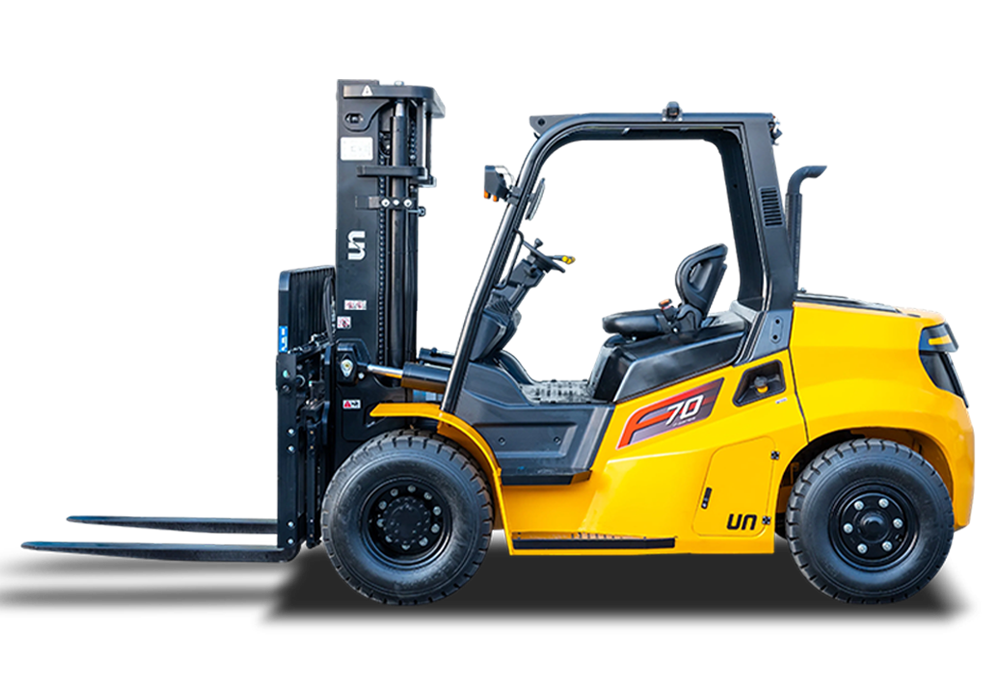
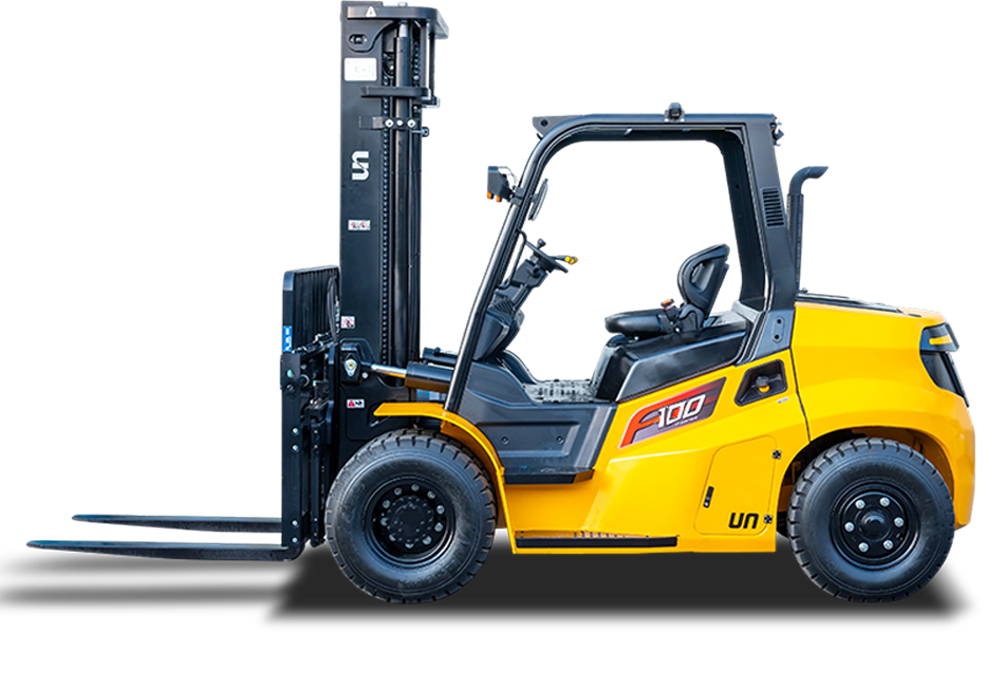
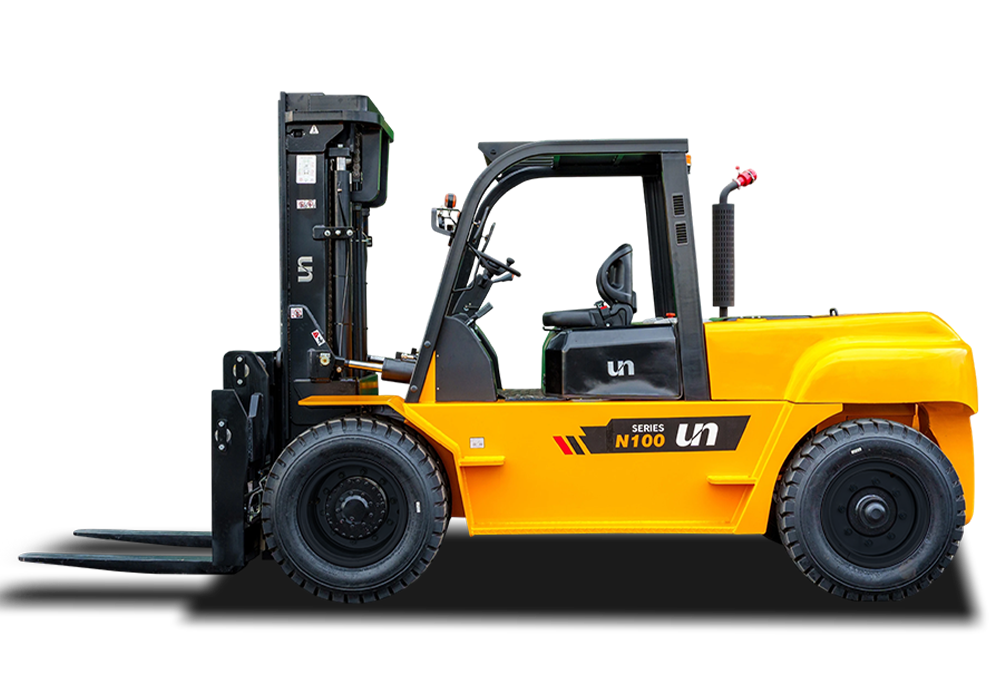
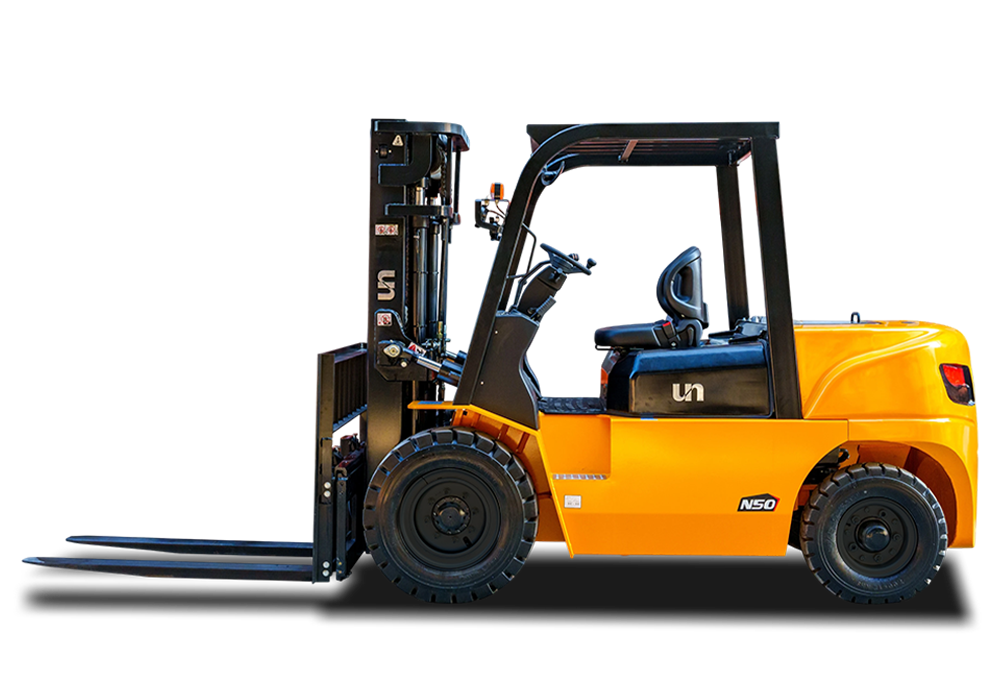
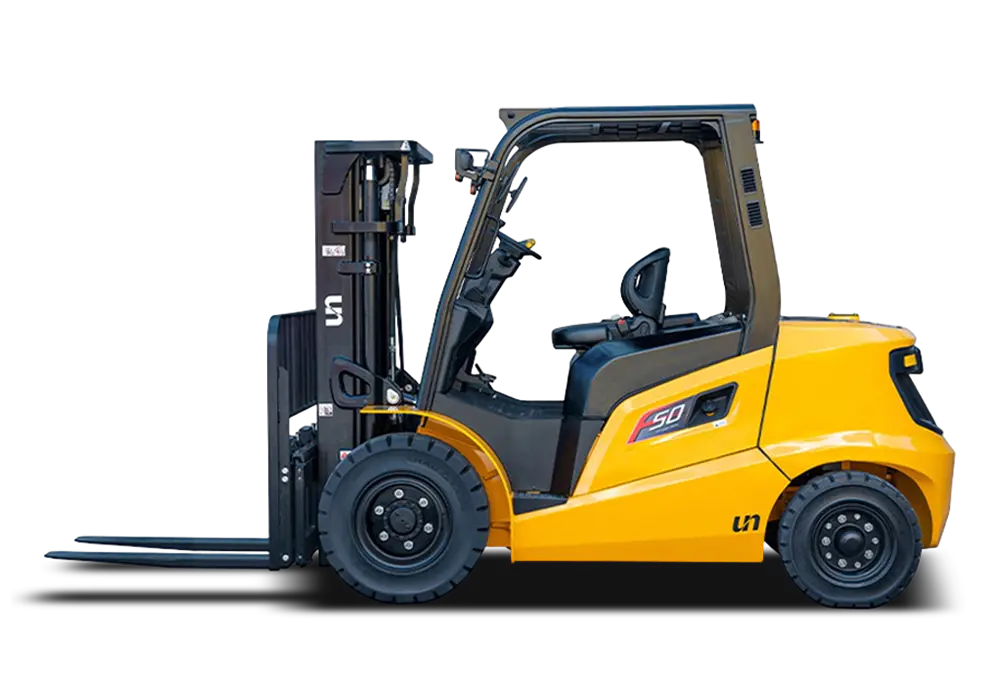
N Series 5.0T-7.0T Heavy Duty Diesel Forklift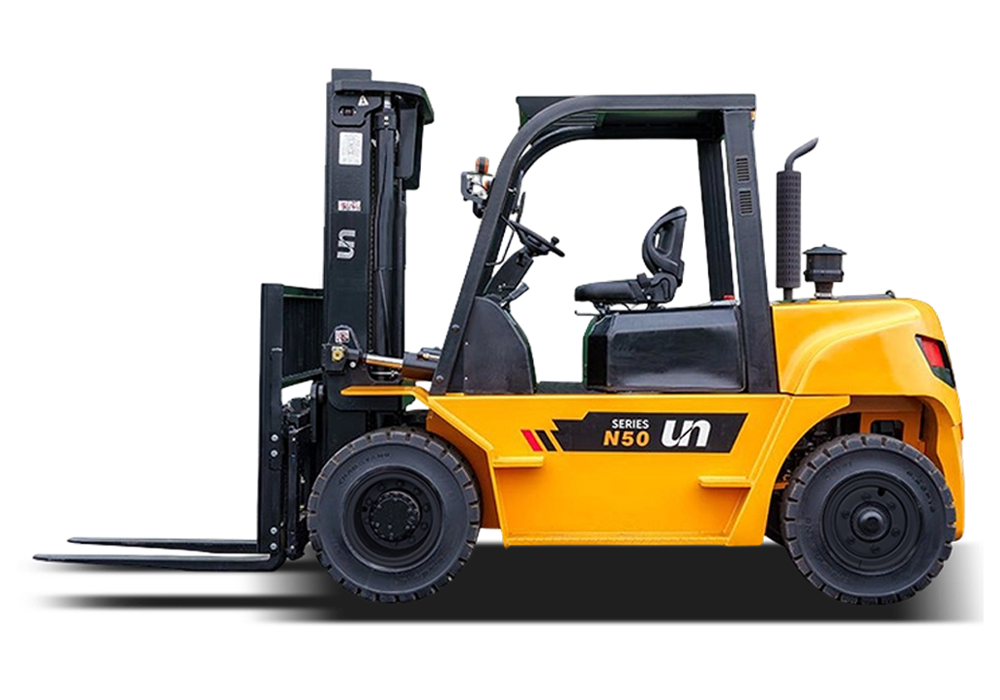
Product Positioning and Application Value
The N Series 5.0T–7.0T Heavy-Duty Diesel Forklift is positioned as a durable internal combustion lift truck for customers who require strong load handling capability and dependable outdoor performance. Diesel forklifts remain widely used in heavy industries because of their torque output, refueling convenience, long operating endurance, and suitability for outdoor environments. This product continues that tradition while improving operator comfort, safety, cooling performance, and service accessibility.
Typical application scenarios include steel processing plants, timber yards, stone yards, construction material warehouses, container yards, machinery factories, recycling facilities, logistics distribution centers, and port-side handling areas. In these workplaces, loads are often heavy, uneven, large in volume, or handled repeatedly throughout the day. A light-duty truck may be unable to maintain stable performance or may suffer from accelerated wear. The N Series is designed to address these concerns with reinforced components and carefully matched systems.
One of the product’s important values is its balance between power and control. Heavy-duty handling does not only require a strong engine. It also requires stable braking, smooth steering response, secure mast operation, wide visibility, and predictable lifting behavior. The N Series integrates these elements so operators can work with confidence even when handling large loads or operating in busy yards.
For fleet owners, the value of a heavy-duty forklift is measured across its full service life. Purchase price is only one factor. Fuel use, uptime, maintenance efficiency, component durability, operator productivity, and safety performance all influence total cost of ownership. By combining reliable engine choices, quality hydraulic components, a heavy-duty chassis, efficient cooling, and easy service access, this forklift is designed to help customers control long-term operating costs.
Heavy-Duty Chassis for Stable Performance
The chassis is the foundation of any industrial forklift, especially in the 5.0T–7.0T capacity class. The N Series uses a scientifically engineered and precisely manufactured chassis to provide strength, balance, and dependable handling. A strong chassis helps distribute load stress, support the mast assembly, protect core mechanical systems, and maintain stability during lifting, traveling, turning, and braking.
Compared with many general-purpose forklifts, this heavy-duty chassis is better suited to challenging environments. Industrial yards often include uneven surfaces, dust, temperature changes, and frequent start-stop movement. A robust frame reduces deformation risk and helps preserve the alignment of key components. This directly supports longer service life and more consistent operating performance.
The floating power system is another important design feature. A well-designed power mounting system can reduce vibration transmission from the engine and drivetrain to the frame and operator area. Lower vibration helps protect components, improves operator comfort, and reduces fatigue during long shifts. In practical use, reduced vibration can also contribute to better control when transporting heavy loads.
Competitor products in this class sometimes focus mainly on lifting capacity while overlooking the structural and ergonomic details that influence daily reliability. The N Series takes a more integrated approach by combining capacity, chassis strength, powertrain reliability, cooling ability, and service convenience. This makes it attractive for businesses that operate forklifts intensively rather than occasionally.
Powertrain Options for Demanding Work
A heavy-duty diesel forklift must deliver enough power and torque to lift, travel, climb grades, and operate hydraulic functions smoothly under load. The N Series is equipped with high-performance engine options from internationally recognized or proven manufacturers, including Isuzu, Cummins, Xichai, Chaochai, and Mitsubishi configurations depending on model specification and market requirement.
The availability of multiple engine options gives customers flexibility. Some markets prioritize emission compliance, some prioritize fuel economy, some require strong torque output, and others prefer engines with well-established service networks. By offering a range of engine configurations, the forklift can be matched to regional standards and customer operating conditions.
For example, the series includes engines such as 6102BG6, 6BG1, CA4DF3-12GCG3U, QSF3.8, and S6S-T. Rated outputs vary according to engine model, with options designed to provide strong working performance for 5.0T and 7.0T capacities. Torque characteristics are especially important in heavy-duty forklift operation because forklifts often need to start moving under load, travel on ramps, and perform repetitive lifting cycles.
The transmission system is designed to cooperate with the engine and hydraulic system. The product information includes powershift and hydraulic transmission configurations, with forward and reverse stage arrangements suitable for industrial use. Smooth power transfer helps operators control movement more precisely, reducing shock to the load and improving safety in crowded work areas.
Compared with competitors that use limited engine choices, the N Series gives buyers more room to select an engine based on local fuel quality, maintenance preference, emission expectations, and parts availability. This flexibility is a practical advantage for international customers managing fleets across different countries or operating conditions.
Cooling Technology for Continuous Operation
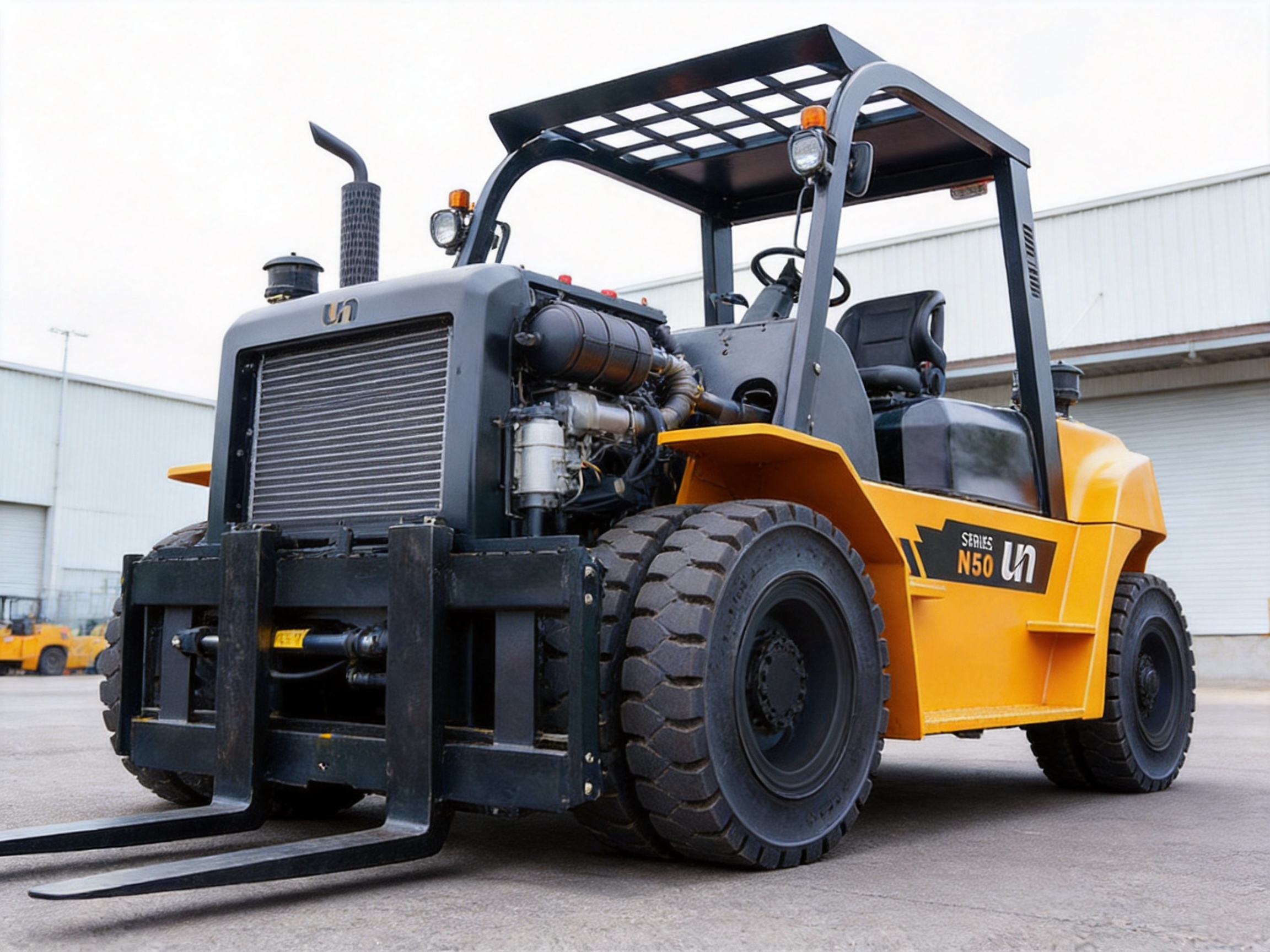
Cooling performance is critical for heavy-duty diesel forklifts, especially in high-temperature environments or applications involving continuous operation. The N Series uses advanced cooling technology with a large-capacity radiator and a multi-stage filtration cooling system. This design supports stable engine and hydraulic performance even when the forklift is used for long periods.
In real-world heavy-duty operations, forklifts often idle, lift, travel, reverse, brake, and repeat the cycle many times per hour. Heat builds up quickly in the engine compartment, transmission, hydraulic system, and radiator area. If cooling is inadequate, performance may decline, components may wear faster, and downtime may increase. A stronger cooling system helps prevent these problems.
The product’s cooling design is particularly valuable for outdoor environments such as container yards, port areas, construction material sites, and large manufacturing plants. Dust and debris can also affect cooling efficiency, making filtration and easy radiator inspection important. The optimized rear cover design allows convenient radiator checks, supporting preventive maintenance and helping operators identify issues before they become costly failures.
Compared with forklifts that use undersized cooling systems, the N Series offers better suitability for demanding workloads. Customers in hot climates or high-duty-cycle industries can benefit from improved thermal stability. This advantage becomes especially visible after several hours of continuous operation, when a lower-grade forklift may require rest periods or show signs of reduced performance.
Hydraulic System and Lifting Efficiency
The hydraulic system is one of the most important performance areas of a forklift. It controls lifting, lowering, mast tilt, steering assistance, and attachment operation. The N Series uses premium hydraulic components, including Shimadzu pumps and valves or equivalent brands, to support fast lifting response and precise steering behavior.
Fast hydraulic response can improve productivity by shortening each handling cycle. In a warehouse yard or loading zone, a few seconds saved per cycle can become a significant efficiency gain over a full shift. At the same time, the hydraulic system must remain smooth and controllable. Sudden or unstable movement can increase load risk and operator stress.
The forklift’s lifting speed varies according to model and configuration. For the FD50T, lifting speed can reach approximately 530/500 mm per second in no-load/full-load conditions in the listed specification, while the FD70T offers strong lifting performance suitable for its higher capacity. In another configuration table, full-load lifting speeds include values such as 400 mm per second and 330 mm per second depending on the engine and capacity selection.
Operating pressure for attachments is listed around 19.5 to 20 MPa depending on configuration. This supports compatibility with a range of attachments used in heavy-duty operations, such as clamps, rotators, fork positioners, or other specialized handling tools, subject to engineering confirmation. The ability to operate attachments effectively increases the forklift’s versatility and helps customers adapt one machine to multiple tasks.
Compared with competitors that use lower-grade hydraulic components, the N Series emphasizes speed, reliability, and response. High-quality hydraulic parts can reduce leakage risk, improve controllability, and support longer component life. For demanding users, this directly affects uptime and operator confidence.
Safety Design for Industrial Worksites
Safety is a central requirement in any forklift application, especially when lifting heavy loads. The N Series includes several features designed to support safer operation. OPS and seat interlock switches help ensure that the forklift is operated only when the operator is properly positioned. Such systems reduce the risk of unintended movement and support safer working habits.
The wide-view mast design improves forward visibility. Visibility is particularly important when handling large loads that may block the operator’s line of sight. A mast with improved sightlines helps operators position forks accurately, approach pallets more safely, and reduce the likelihood of collisions with racks, equipment, goods, or pedestrians.
The strong overhead guard protects the driver from falling objects. In heavy-duty material handling, loads may include irregular materials, stacked goods, or components that can shift during movement. A robust overhead guard is essential for operator protection and compliance with workplace safety expectations.
The accumulator-equipped braking system provides quicker and smoother braking response. Braking performance is vital when transporting heavy loads because stopping distance and load stability are affected by vehicle mass, speed, surface condition, and operator reaction. Smooth braking reduces shock to both the operator and the load while supporting safer control in busy areas.
Compared with ordinary lift trucks that may meet only basic requirements, the N Series provides a more complete safety package. Its structural strength, braking response, mast visibility, overhead protection, and interlock functions work together to reduce operational risk. This integrated approach is important for companies that operate in regulated environments or prioritize accident prevention.
Ergonomic Cabin and Operator Comfort
Operator comfort has a direct effect on productivity. A forklift may be used continuously for multiple shifts, and fatigue can reduce attention, slow response, and increase the chance of operating errors. The N Series includes an ergonomically designed cabin area with generous legroom and headroom, an adjustable steering wheel, and comfortable seating.
The seating position and control layout are designed to make daily work easier. When operators can sit comfortably, reach controls naturally, and maintain a clear view of the working area, they are better able to perform precise handling tasks. In heavy-duty operations, precision is just as important as strength because the cost of product damage or safety incidents can be high.
Reduced vibration from the floating power system also contributes to comfort. Diesel forklifts naturally create engine vibration and sound, but careful mounting and structural design can reduce the impact on the operator. Less vibration means less fatigue and better concentration during long operating periods.
Some competing forklifts in heavy-duty classes may focus heavily on mechanical power while treating the operator environment as secondary. The N Series recognizes that the operator is part of the performance system. A comfortable operator can work more consistently, respond faster, and handle materials with greater accuracy.
For fleet managers, ergonomic design can also help with driver satisfaction and staff retention. Skilled forklift operators often prefer machines that are stable, comfortable, responsive, and easy to control. Investing in better operator conditions can therefore support both productivity and workforce quality.
Maintenance Access and Service Efficiency
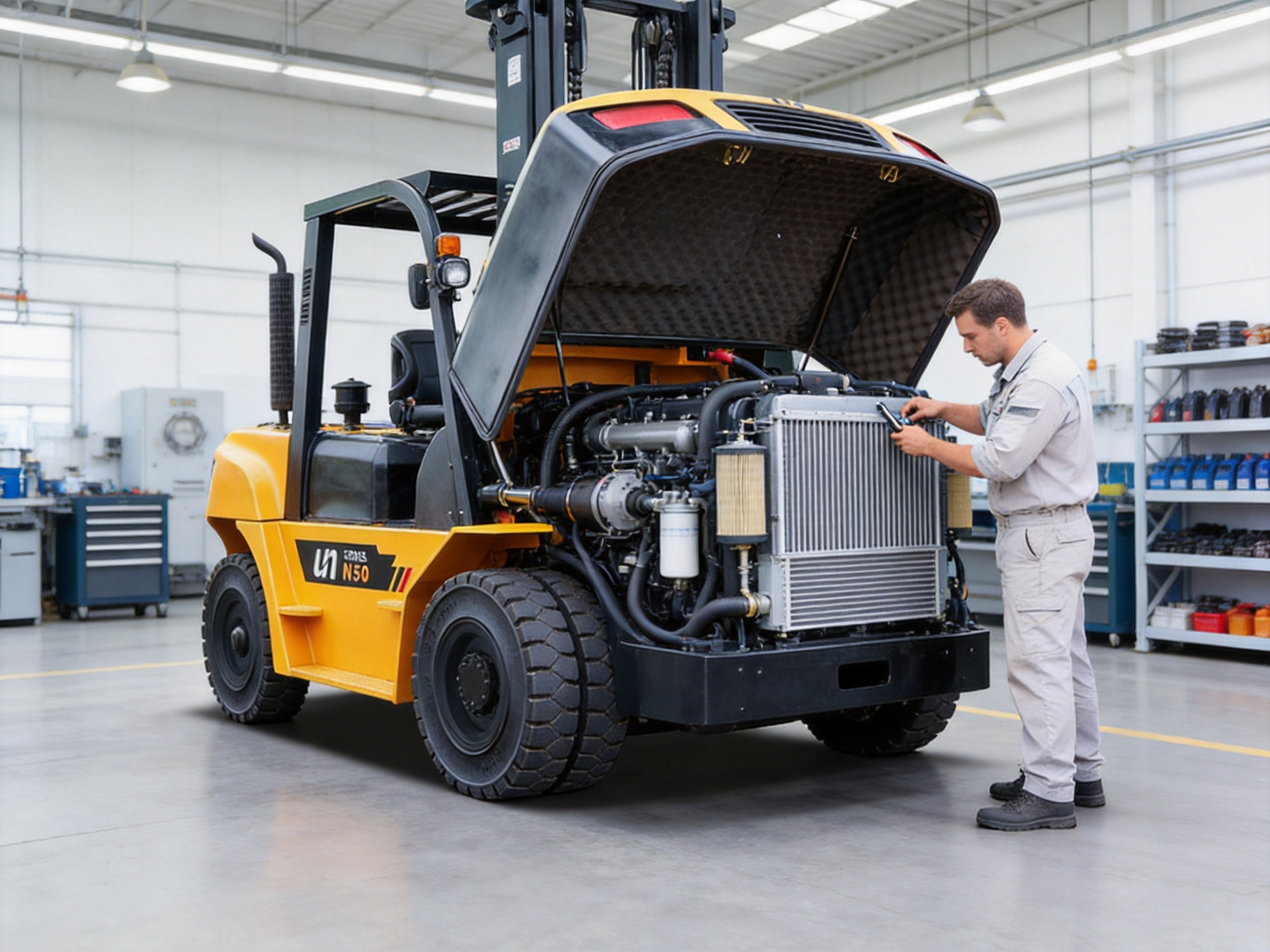
Maintenance convenience is a major advantage of the N Series. The engine hood opens nearly 90 degrees, allowing easy daily inspection and component replacement. This design saves time for operators and service technicians, especially when routine checks must be completed quickly before each shift.
The optimized rear cover design makes radiator inspection simple and convenient. Because cooling system performance is essential for heavy-duty operation, easy radiator access is especially valuable. Operators can check for dust accumulation, debris blockage, or coolant-related issues with less effort. This supports preventive maintenance and helps reduce unexpected downtime.
The internal layout is well organized to improve service efficiency. A clear layout helps technicians locate components faster, diagnose issues more accurately, and complete repairs with fewer complications. Over the life of the forklift, improved serviceability can reduce labor costs and shorten downtime.
In comparison, some competitors use crowded engine compartments or difficult access panels that make routine maintenance inconvenient. When maintenance is difficult, inspections may be delayed or skipped, increasing the risk of breakdowns. The N Series addresses this practical issue by making key areas more accessible.
Maintenance efficiency also supports fleet availability. In industries where forklifts are tied directly to production flow, downtime can delay shipments, loading schedules, or manufacturing output. A forklift that is easier to maintain helps businesses keep operations moving.
Key Specifications Overview
The following table summarizes selected specifications for representative 5.0T, 6.0T, and 7.0T models in the N Series heavy-duty diesel forklift range. Values may vary by configuration, engine option, market requirement, mast selection, tire selection, and attachment package.
| Specification | FD50T | FD60T | FD70T |
| Power Type | Diesel | Diesel | Diesel |
| Rated Load Capacity | 5,000 kg | 6,000 kg | 7,000 kg |
| Load Center | 600 mm | 600 mm | 600 mm |
| Rated Lift Height | 3,000 mm | 3,000 mm | 3,000 mm |
| Fork Size | 1220 x 150 x 60 mm | 1220 x 150 x 60 mm | 1220 x 150 x 65 mm |
| Mast Tilt Angle | 6 degrees forward / 12 degrees backward | 6 degrees forward / 12 degrees backward | 6 degrees forward / 12 degrees backward |
| Overall Width | Approximately 1996 mm | Approximately 1995 mm | Approximately 1996 mm |
| Turning Radius | Approximately 3260 mm | Approximately 3280 mm | Approximately 3340 mm |
| Travel Speed Without Load | 23 / 21 km/h | 23 / 21 km/h | 23 / 21 km/h |
| Maximum Gradeability With Full Load | 32% | 27% | 24% |
| Fuel Tank Capacity | 120 L | 120 L | 120 L |
| Transmission Type | Powershift or hydraulic configuration | Powershift or hydraulic configuration | Powershift or hydraulic configuration |
These specifications show that the forklift is designed to deliver a strong combination of lifting capacity, stability, gradeability, and operating endurance. The 600 mm load center is practical for larger industrial loads, while the 3,000 mm rated lift height covers many common loading, stacking, and transport tasks.
The turning radius remains controlled for a machine in this capacity class. This is important because heavy-duty forklifts often work in yards, storage areas, and production zones where space is limited. A balanced turning radius helps improve maneuverability without sacrificing structural stability.
Advantages Over Conventional Competitors
The N Series offers several competitive advantages in the heavy-duty diesel forklift market. First, its heavy-duty chassis and mast structure provide a strong foundation for stable operation. This is essential for customers who handle large or heavy goods daily and cannot afford instability, excessive vibration, or premature structural fatigue.
Second, the product offers flexible engine options from established manufacturers. This gives customers more freedom to select a configuration that matches local service support, fuel quality, performance expectations, and emission requirements. Many competitor products provide fewer engine choices, which can limit suitability for certain regions.
Third, the hydraulic system uses premium pumps and valves or equivalent high-quality components. This supports faster lifting and responsive steering, improving both productivity and control. In high-cycle applications, hydraulic performance can have a measurable effect on total daily output.
Fourth, the advanced cooling system supports continuous work in high-temperature environments. For businesses operating in hot climates, dusty yards, or long-shift schedules, cooling performance is not optional. It is a key factor in reliability. The N Series cooling package helps reduce overheating risk and supports consistent machine performance.
Fifth, the forklift is designed with service convenience in mind. Easy engine hood opening, radiator access, and organized internal layout help reduce maintenance time. This is a practical advantage over machines that may appear similar in specification but are harder to inspect and repair.
Sixth, the operator environment is more comfortable and safer. Features such as the wide-view mast, overhead guard, seat interlock, adjustable steering wheel, and generous cabin space improve everyday usability. A comfortable and secure operator can work more efficiently and make fewer mistakes.
Finally, the product benefits from the manufacturer’s experience in material handling equipment. Manufacturing knowledge, component selection, quality control, and production capacity all influence the final reliability of a forklift. A product is not only a list of specifications; it is also the result of engineering culture, process discipline, and service support.
Manufacturing Strength Behind the Product
The manufacturer of this forklift is a professional material handling equipment enterprise integrating research and development, production, sales, and service. Founded in 1978, the company has decades of experience in forklift design and manufacturing. This long history provides an important foundation for product reliability because heavy-duty industrial equipment requires accumulated engineering knowledge and field feedback.
The production base covers 53,400 square meters and has an annual production capacity of approximately 15,000 units. This scale supports consistent production, supply capability, and quality management. For global customers, manufacturing capacity matters because it affects delivery reliability, spare parts availability, and long-term cooperation stability.
The company has developed a broad product range that includes internal combustion forklifts, electric forklifts, warehouse equipment, cushion tire forklifts, rough terrain forklifts, and compact machinery. This wide product portfolio demonstrates comprehensive material handling expertise. Knowledge gained from different product lines can improve component design, electric and hydraulic integration, ergonomics, and manufacturing efficiency.
The company has also participated in the development of electric forklift industry standards and holds national patents related to forklift technologies. This indicates a commitment to research, innovation, and engineering development rather than simple assembly. For heavy-duty diesel forklifts, this background supports better system integration and continuous improvement.
Advanced manufacturing strength is reflected not only in factory size but also in process discipline. Forklift production requires frame fabrication, welding control, machining accuracy, hydraulic assembly, powertrain installation, electrical system integration, painting, testing, and final inspection. Each process affects the reliability of the finished truck.
Research, Development, and Product Innovation
Research and development are essential in the forklift industry because customer expectations continue to evolve. Businesses require better energy efficiency, lower emissions, improved safety, enhanced operator comfort, easier maintenance, and stronger digital or intelligent functions. The manufacturer has responded by developing both traditional internal combustion forklifts and new energy forklift solutions.
The company’s experience includes important industry milestones, including the development of specialized forklift types such as reach forklifts and VNA trucks in the Chinese market. This background shows an ability to respond to complex warehouse and industrial handling needs. Although the N Series is a diesel forklift, it benefits from the same engineering culture that supports specialized product development.
For the N Series, research and development are visible in the integration of chassis design, engine matching, hydraulic responsiveness, cooling performance, and ergonomic layout. A forklift must function as a complete system. If the engine is powerful but cooling is weak, reliability suffers. If the mast is strong but visibility is poor, safety declines. If maintenance access is difficult, uptime decreases. The product’s value comes from the balanced design of all major systems.
Innovation in heavy-duty diesel forklifts also involves adapting to regional demands. Some markets need high-emission-standard engines. Others need cost-effective configurations with strong basic performance. By providing different engine and transmission options, the manufacturer can deliver solutions that match customer needs more precisely.
Quality Control and Production Process Advantages
Quality control is one of the most important differences between a dependable heavy-duty forklift and a low-cost alternative. The manufacturing of the N Series requires careful control at every stage, from raw material selection to final performance testing. A heavy-duty forklift must withstand repeated stress, vibration, heat, and load cycles, so component consistency is essential.
Frame and chassis production require accurate welding and structural alignment. Poor welding quality can lead to fatigue cracks or dimensional errors. A precise manufacturing process helps ensure that the chassis supports the mast, axles, engine, transmission, and counterweight correctly. This contributes to stable handling and long service life.
Mast manufacturing also requires strict dimensional accuracy. The mast must lift smoothly, maintain alignment, and resist bending under load. Heavy-duty mast components must be produced and assembled with attention to material strength, roller fit, channel alignment, and hydraulic cylinder performance. A wide-view mast must balance visibility with structural strength.
Hydraulic assembly requires cleanliness and precision. Contamination in hydraulic circuits can damage pumps, valves, and cylinders. The use of quality hydraulic components must be supported by proper assembly procedures and inspection. This helps ensure responsive lifting and steering performance over time.
Powertrain installation requires careful matching between engine, transmission, cooling system, mounts, and control systems. The floating power system must reduce vibration while maintaining secure alignment. The cooling system must be installed to ensure airflow, heat exchange, and service access. These process details are critical for real-world reliability.
Final inspection and testing are equally important. A finished forklift should be checked for lifting function, steering performance, braking response, transmission operation, hydraulic leakage, cooling performance, electrical operation, and safety features. Strong factory testing reduces the risk of early field failures and supports customer confidence.
Global Service Network and Customer Support
For heavy-duty equipment buyers, after-sales support is nearly as important as the machine itself. A forklift may operate for many years, and customers need access to parts, technical support, maintenance guidance, and service expertise. The manufacturer has established a worldwide sales and service network with partners in Europe, South America, North America, Africa, and Asia.
This global network helps international customers operate with confidence. When equipment is exported to different regions, service responsiveness becomes essential. Customers need spare parts availability, documentation, troubleshooting support, and communication channels for technical issues. A company with international experience is better prepared to support these requirements.
The company also serves as an OEM supplier for well-known domestic and overseas companies. OEM cooperation requires consistent production quality, process reliability, delivery discipline, and engineering communication. This experience supports confidence in the company’s manufacturing standards and product stability.
For the N Series, global support is valuable because heavy-duty forklifts are often used in critical operations. If a forklift stops working in a port, logistics yard, steel plant, or production facility, the effect can spread across the workflow. Reliable service and parts support help reduce the business impact of maintenance or repair needs.
Performance in Heavy-Duty Material Handling
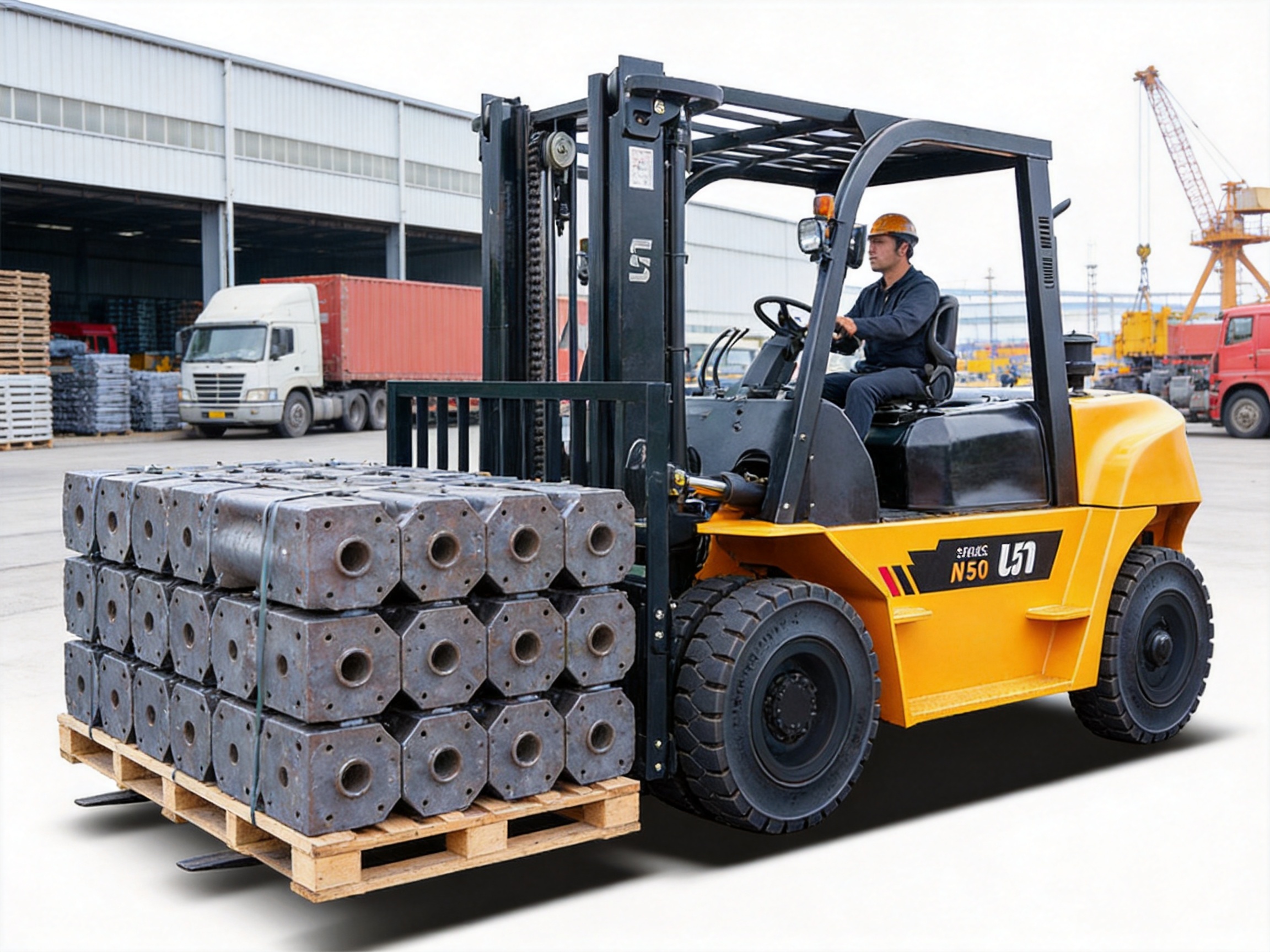
The N Series is especially suitable for medium and heavy-duty material handling. Its rated capacities of 5.0T, 6.0T, and 7.0T cover a wide range of industrial loads. The product description specifically notes suitability for transporting empty containers and similar demanding tasks. Such applications require not only lifting strength but also stable travel, strong braking, and durable components.
In heavy-duty operations, productivity depends on the complete handling cycle. The forklift must approach the load, position the forks, lift smoothly, reverse safely, travel with stability, place the load accurately, and return for the next cycle. Every part of this process benefits from the product’s design features.
The wide-view mast helps with fork positioning. The hydraulic system supports fast lifting and steering response. The diesel engine provides the power and torque needed for loaded travel. The cooling system supports long operating hours. The braking system helps manage heavy loads safely. The ergonomic cabin helps the operator remain focused throughout the shift.
Compared with using an undersized forklift for heavy loads, the correct heavy-duty model improves safety and equipment life. Overloading smaller forklifts can increase risk, damage components, and reduce stability. Selecting a forklift designed for the load class is a better long-term decision.
Fuel Capacity and Operating Endurance
The forklift includes a 120 L fuel tank capacity, supporting extended diesel operation between refueling intervals. In large industrial yards or multi-shift environments, fuel capacity is important because frequent refueling interrupts workflow. A larger fuel tank can improve operational continuity, especially during peak loading periods.
Diesel forklifts remain valuable where charging infrastructure is limited, outdoor work is common, or long continuous shifts are required. While electric forklifts are increasingly popular for indoor and low-emission environments, diesel forklifts continue to offer practical benefits in heavy outdoor applications. The N Series is designed for those customers who need the endurance and torque of diesel power.
Fuel efficiency depends on engine selection, operating habits, load weight, surface conditions, maintenance quality, and duty cycle. The availability of different engine options allows customers to choose a configuration that matches their priorities. Regular maintenance of filters, cooling systems, hydraulic systems, and tires can also improve operating economy.
Maneuverability and Site Adaptability
Although the N Series is a heavy-duty forklift, it is designed with practical maneuverability. Representative turning radius values are approximately 3260 mm for the FD50T, 3280 mm for the FD60T, and 3340 mm for the FD70T in one listed specification. This allows the forklift to work efficiently in industrial yards and large warehouses where space must be managed carefully.
The minimum aisle width for pallets is also listed in the product specifications, showing that the manufacturer considers real handling conditions rather than only maximum lifting capacity. Maneuverability is especially important when loading trucks, organizing storage rows, or working near production equipment.
Ground clearance at the bottom of the mast is listed at approximately 200 mm for the 5.0T–7.0T models in one specification table. This supports operation on industrial surfaces where minor irregularities may exist. For very rough terrain, specialized rough terrain forklifts may be more suitable, but the N Series is well matched to typical yards, paved surfaces, and industrial outdoor areas.
Load Stability and Mast Design
Load stability is a primary concern in heavy-duty forklift use. The mast must support the load securely while allowing controlled lifting and tilting. The N Series mast offers a rated lift height of 3,000 mm and a mast tilt angle of 6 degrees forward and 12 degrees backward. Backward tilt helps stabilize loads during travel, while forward tilt supports accurate placement.
The wide-view design improves visibility through the mast structure. Visibility is particularly valuable when handling wide or tall loads because the operator must align forks accurately. Poor visibility can slow operations and increase collision risk. A mast that combines strength and visibility gives the operator better control.
Fork dimensions are matched to the rated capacity. For example, the FD50T uses fork dimensions of approximately 1220 x 150 x 60 mm, while the FD70T uses approximately 1220 x 150 x 65 mm in the listed specification. Proper fork size supports load capacity and durability.
For special loads, customers may require longer forks, fork positioners, clamps, or other attachments. Attachment use should always be confirmed according to load center, residual capacity, and safety standards. The forklift’s hydraulic operating pressure supports attachment applications, but final configuration should be selected with professional guidance.
Environmental and Market Adaptability
The manufacturer follows concepts of energy saving, environmental protection, high efficiency, and safety. While the N Series is a diesel forklift, the company also develops new energy models such as diesel-to-lithium-ion forklifts and standard lithium-ion battery forklifts. This broader product strategy shows awareness of changing global carbon emission concerns.
For markets that continue to require diesel heavy-duty forklifts, emission standards and engine selection are important. The company provides models meeting high emission requirements in regions such as the European Union and North America. This capability is important for international customers who must comply with local regulations.
The N Series can therefore serve as part of a mixed fleet strategy. Companies may use electric forklifts indoors or in low-emission zones while using diesel forklifts outdoors for heavy-duty work. A manufacturer with both diesel and electric product capabilities can help customers choose the right equipment for each operating area.
Why This Forklift Is a Smart Investment
The N Series 5.0T–7.0T Heavy-Duty Diesel Forklift is a smart investment for businesses that value uptime, durability, operator confidence, and long-term cost control. Its strongest advantage is not one single feature, but the way multiple systems work together.
The heavy-duty chassis provides stability. The powertrain delivers diesel performance. The cooling system supports continuous operation. The hydraulic system improves lifting and steering response. The braking system supports safety. The wide-view mast improves visibility. The ergonomic cabin reduces operator fatigue. The maintenance design shortens inspection and service time.
When these benefits are considered together, the forklift offers strong value compared with lower-cost or less specialized competitors. A cheaper forklift may appear attractive at purchase, but if it suffers from frequent overheating, slow hydraulic response, difficult maintenance, poor visibility, or uncomfortable operation, the total cost can become much higher over time.
For customers in heavy industries, the correct forklift can improve material flow, reduce labor pressure, protect goods, support safety compliance, and keep production moving. The N Series is designed precisely for these needs.
Q&A Section
What load capacities are available for this heavy-duty diesel forklift?
The N Series product range discussed here covers 5.0T, 6.0T, and 7.0T rated load capacities, corresponding to 5,000 kg, 6,000 kg, and 7,000 kg. The listed load center is 600 mm, making the forklift suitable for many large industrial loads.
What industries can use this forklift?
It is suitable for steel plants, machinery factories, logistics yards, ports, construction material yards, timber yards, stone yards, recycling sites, manufacturing plants, and warehouses handling heavy goods. It is especially useful where diesel power, high torque, and outdoor endurance are required.
What makes the forklift more reliable than ordinary competitors?
Its reliability comes from a heavy-duty chassis, strong mast, proven engine options, premium hydraulic components, advanced cooling technology, accumulator-equipped braking, and convenient maintenance access. These features help the forklift perform consistently under demanding workloads.
Why is the cooling system important?
Heavy-duty forklifts generate significant heat during continuous operation. A large-capacity radiator and multi-stage filtration cooling system help maintain stable performance in high-temperature or dusty environments, reducing overheating risk and supporting longer operating periods.
Does the forklift support comfortable operation?
Yes. The operator area includes generous legroom and headroom, comfortable seating, an adjustable steering wheel, and improved visibility through the wide-view mast. These features help reduce fatigue and improve precision during long shifts.
Is the forklift easy to maintain?
Yes. The engine hood opens nearly 90 degrees for easier inspection and component replacement. The rear cover design allows convenient radiator checks, and the internal layout is organized to improve service efficiency.
What engine options are available?
Depending on configuration and market requirements, engine options include models from manufacturers such as Isuzu, Cummins, Xichai, Chaochai, and Mitsubishi. This allows customers to select suitable power, service support, and emission characteristics.
Can this forklift use attachments?
The forklift is designed with hydraulic operating pressure suitable for attachment use, depending on configuration. Attachments should be selected carefully according to load capacity, load center, residual capacity, and application requirements.
How does the manufacturer support global customers?
The manufacturer has an international sales and service network with partners in Europe, South America, North America, Africa, and Asia. This helps customers access product support, parts, and technical communication across different regions.
Why choose diesel power for heavy-duty applications?
Diesel power offers strong torque, fast refueling, long working endurance, and reliable outdoor performance. It remains a practical choice for heavy-duty yards, ports, manufacturing sites, and other applications where continuous operation and high load capacity are required.
Conclusion
The N Series 5.0T–7.0T Heavy-Duty Diesel Forklift is designed for customers who need dependable lifting strength, stable operation, and long-term value. It combines a reinforced chassis, heavy-duty mast, high-performance diesel engine options, advanced cooling, responsive hydraulics, reliable braking, ergonomic operator design, and easy maintenance access.
Its advantages over ordinary competitors are clear in demanding applications. It is built not only to lift heavy loads but also to maintain performance across long shifts, high temperatures, repetitive cycles, and industrial site conditions. The product’s flexible engine configurations, quality components, and practical service design make it a strong choice for companies seeking both productivity and durability.
Behind the product is a manufacturer with decades of experience, large-scale production capacity, research and development strength, a wide product portfolio, global service coverage, and proven OEM cooperation capability. These strengths add confidence for customers who need reliable equipment and long-term support.
For businesses in logistics, manufacturing, ports, material yards, and heavy industry, the N Series heavy-duty diesel forklift offers a balanced solution: strong capacity, stable control, operator comfort, easy maintenance, and dependable performance. It is a practical investment for operations where every load, every shift, and every hour of uptime matters.
References
Industrial Truck Association. General Guidelines for Powered Industrial Truck Design and Operation.
International Organization for Standardization. ISO 3691 Series: Industrial Trucks Safety Requirements and Verification.
Occupational Safety and Health Administration. Powered Industrial Truck Safety Principles and Operator Practices.
Diesel Engine Manufacturers Association. Technical Principles of Industrial Diesel Engine Performance and Maintenance.
Materials Handling Industry. Best Practices for Forklift Fleet Productivity, Maintenance, and Safety Management.
Forklift Engineering Handbook. Principles of Chassis Design, Mast Stability, Hydraulic Systems, and Heavy-Duty Lift Truck Applications.
Product: N Series 5.0T-7.0T Heavy Duty Diesel Forklift
For exclusive deals and latest offers, sign up by entering your email address below.
Stay In Touch
ADDRESS : NO.1 ROAD ONE, XINDENG NEW DISTRICT, FUYANG, HANGZHOU, ZHEJIANG, CHINA 311404.
PHONE : +86-571-8688 8355 (AMERICA)
PHONE : +86-571-8886 9363 (EUROPE)
PHONE : +86-571-8688 8377 (ASIA, AFRICA, OCEANIA)
EMAIL : [email protected]
EMAIL : [email protected](PARTS INQUIRY)

