


 中文简体
中文简体 Français
 русский
 Español
 عربى
عربى Deutsch



Double Deep Reach Trucks: High-Density Storage, Precision Handling, and Efficient Warehouse Performance
Admin 2026-08-24Modern warehouses are under constant pressure to store more goods in less space while maintaining fast, safe, and predictable operations. Land, construction, energy, and labor costs continue to influence warehouse design, making storage density and equipment productivity increasingly important. In this environment, a double deep reach truck offers a practical solution for facilities that need to place pallets farther into double-deep racking without investing in fully automated storage systems.
The double deep reach truck is designed around a simple but highly effective principle: the fork carriage extends forward so that pallets can be stored in positions located behind the front pallet of a double-deep rack. This additional reach allows warehouses to use deeper storage lanes and increase the number of pallet positions available within the same building footprint. For distribution centers, manufacturing warehouses, cold-chain facilities, and logistics operations, this can create a valuable balance between storage density and operational flexibility.
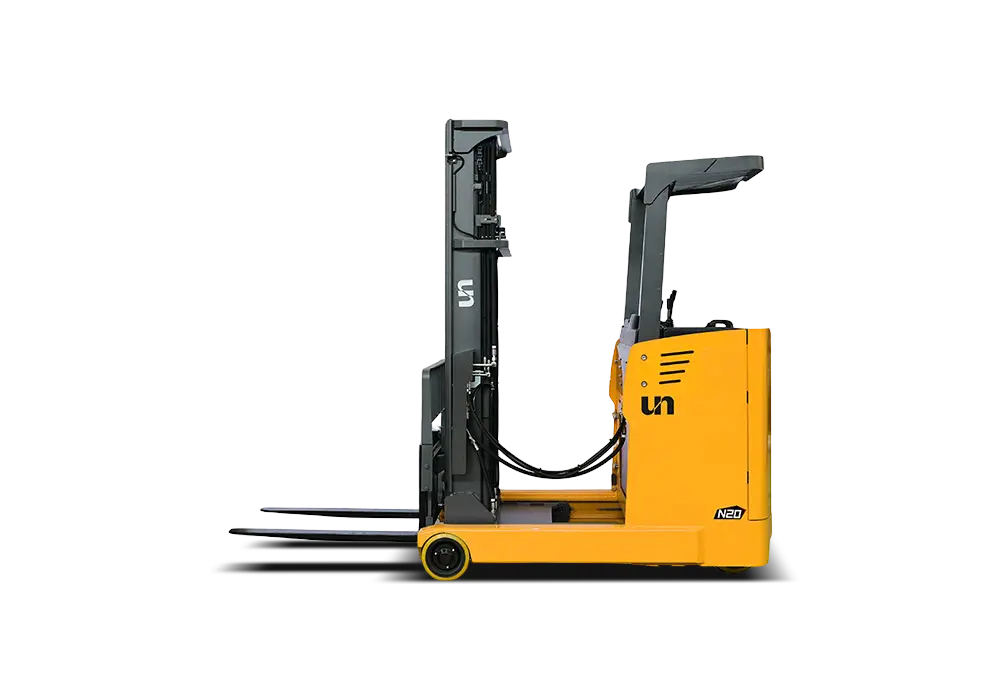
The FBRS15-KUQZ2 double deep reach truck combines a 1,500-kilogram rated capacity, a 920-millimeter fork carriage reach distance, electric drive technology, electronic steering, advanced control systems, and a sit-on operating position. Its design is intended for demanding warehouse environments where accurate pallet placement, smooth travel, stable lifting, and dependable daily operation are essential.
Why Double-Deep Storage Matters
Traditional selective racking provides direct access to every pallet, but it also requires a larger number of aisles. A considerable amount of floor space is therefore assigned to travel rather than storage. Double-deep racking reduces the number of aisles by placing two pallets in depth within a storage lane. The trade-off is that the rear pallet cannot be accessed until the front pallet is removed.
A double deep reach truck is developed specifically for this storage method. The reach mechanism moves the fork carriage and load forward into the rack, enabling the truck to position pallets in the second storage location. Compared with a conventional reach truck that is limited to the front rack position, this configuration can support higher pallet density and more efficient use of warehouse volume.
The 920-millimeter maximum reach distance of the FBRS15-KUQZ2 is a central part of its operating value. It provides the reach needed for double-rack applications while preserving the compact operating characteristics expected from an electric warehouse truck. The machine can work in structured aisles, approach racking accurately, and place loads at elevated heights without requiring a larger counterbalanced forklift for every storage task.
Storage density is not only a question of floor area. The available vertical height of a warehouse is also an important asset. With suitable mast configuration, this reach truck can support fork heights from 4,000 millimeters to 10,000 millimeters. The 5,000-millimeter configuration is listed with a 1,500-kilogram capacity, while capacity varies according to mast height and configuration. This relationship between lift height and rated capacity should always be reviewed during application planning.
Product Overview
The FBRS15-KUQZ2 is a battery-powered, sit-on double deep reach truck manufactured by Zhejiang UN Forklift Co., Ltd. It is rated for a 1,500-kilogram load at a 500-millimeter load center. Its main configuration includes a 48-volt battery system, a 6-kilowatt drive motor, an 11-kilowatt pump motor, polyurethane tires, electronic steering, electromagnetic service braking, and AC controller technology.
The truck has an overall length to the fork face of 2,752 millimeters and an overall width of 1,450 millimeters. Its 1,750-millimeter wheelbase and 2,070-millimeter turning radius help it maneuver within warehouse aisles while maintaining the stability required for high-level handling. The listed working aisle width is 3,250 millimeters for a 1,000-by-1,200-millimeter pallet with the 1,200-millimeter side positioned lengthways, and 3,325 millimeters for an 800-by-1,200-millimeter pallet with the 800-millimeter side positioned lengthways.
The standard fork size is 920 by 120 by 35 millimeters. The same 920-millimeter dimension corresponds to the maximum fork carriage reach distance in the principal specification. The truck has a 200-millimeter free lift in the listed configuration, a 2,950-millimeter lowered mast height, and a 7,045-millimeter mast-extended height with backrest. The overhead guard height is 2,205 millimeters.
| Item | Specification |
|---|---|
| Model | FBRS15-KUQZ2 |
| Power source | Battery electric |
| Operation | Sit-on |
| Rated load capacity | 1,500 kg |
| Load center | 500 mm |
| Maximum fork carriage reach | 920 mm |
| Lift height in principal configuration | 5,000 mm |
| Fork size | 920 × 120 × 35 mm |
| Overall length to fork face | 2,752 mm |
| Overall width | 1,450 mm |
| Wheelbase | 1,750 mm |
| Turning radius | 2,070 mm |
| Full-load travel speed | 9.0 km/h |
| No-load travel speed | 9.5 km/h |
| Full-load lifting speed | 240 mm/s |
| No-load lifting speed | 360 mm/s |
| Total weight including battery | 4,060 kg |
| Standard battery | 48 V / 420 Ah |
| Drive motor | 6 kW |
| Pump motor | 11 kW |
| Steering system | Electronic |
| Service brake | Electromagnetic |
| Controller type | AC |
Reach Performance for Double-Deep Racking
The primary advantage of this product over a standard reach truck is its ability to move the fork carriage forward into the storage structure. This additional movement changes the way pallets are handled. Rather than placing the load only at the front edge of the rack, the operator can reach beyond the first pallet position and place the load deeper into the lane.
For facilities using double-deep racking, this reduces the need for separate equipment or special handling methods. The same truck can transport a pallet from the receiving area, enter the storage aisle, extend the carriage, and position the load in the required rack location. When the operation is planned correctly, the reach mechanism improves storage utilization without the complexity associated with very narrow aisle systems or fully automated equipment.
The reach distance also supports better clearance management. The truck does not need to move its entire chassis as far into the rack as a conventional counterbalanced forklift would. Keeping the main body of the machine in the aisle while extending the carriage allows the operator to handle loads in deeper positions with less intrusion into the storage structure.
Accurate positioning is particularly important at elevated levels. A small error at floor level can become a significant risk when the pallet is lifted several meters above the ground. The reach function, electronic steering, smooth hydraulic control, and wide-view mast work together to help the operator approach the rack and position the load in a controlled manner.
It is important to recognize that double-deep systems are best suited to inventory arrangements that can tolerate reduced direct access. They are effective for products stored in batches, pallets with predictable rotation, or operations using a last-in, first-out storage strategy in selected areas. A warehouse should evaluate product turnover, pallet quality, rack design, and load sequencing before choosing this type of truck.
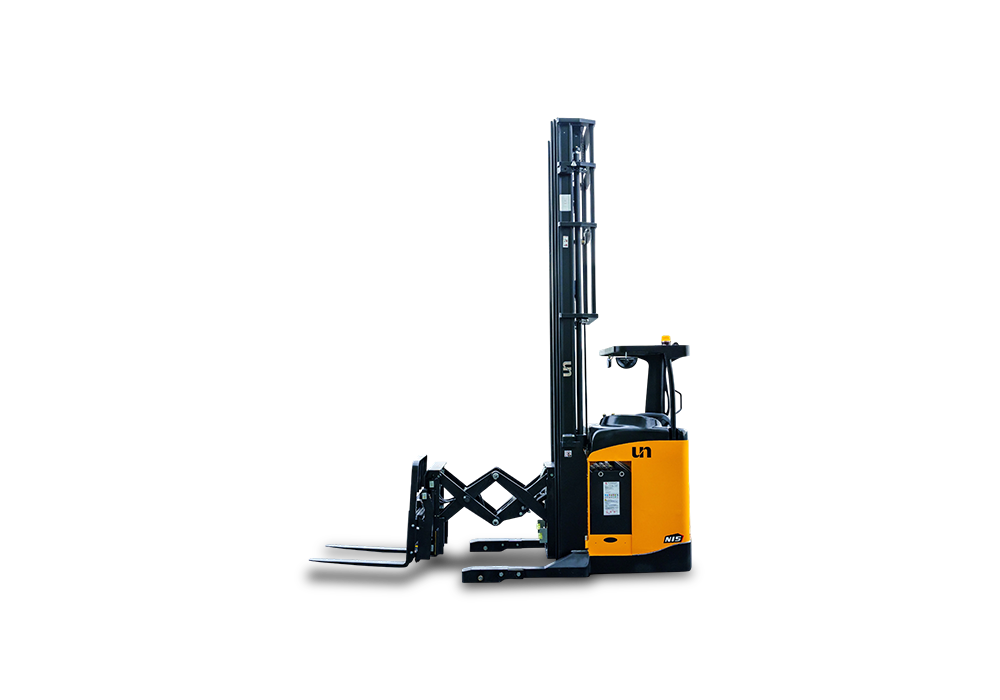
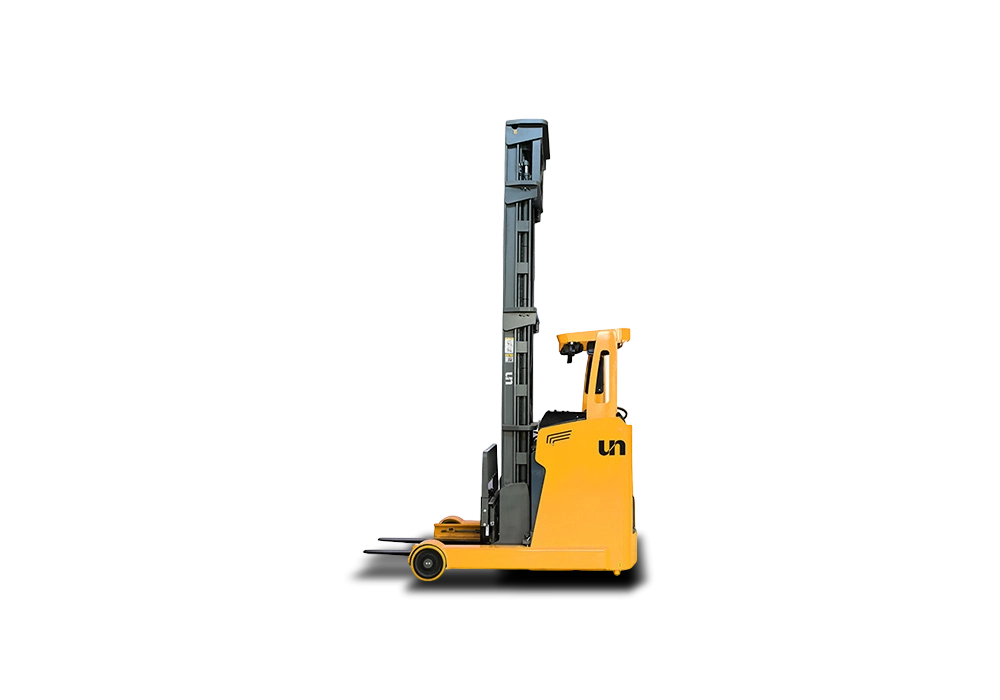
Double Deep Reach Truck
AC Drive Technology and Energy-Conscious Operation
The truck uses brushless AC motors and an AC control system. Compared with brushed motor designs, brushless AC motors eliminate brush wear and reduce the need for routine replacement of those components. The result is a cleaner maintenance profile, improved operating efficiency, and more consistent performance over the service life of the machine.
The listed drive motor has a rated output of 6 kilowatts, while the hydraulic pump motor is rated at 11 kilowatts. This combination separates traction performance from lifting performance, allowing each system to be matched to its operating requirements. The drive system provides controlled travel, while the pump motor supplies the hydraulic power needed for lifting and reach functions.
ZAPI controller technology is used for variable drive and lift control. Infinite variable control means that the operator can make gradual adjustments rather than relying only on abrupt, fixed-speed commands. This is valuable when approaching a rack, aligning forks with a pallet opening, or adjusting the carriage position at height.
Precise speed control can contribute to productivity in several ways. It helps reduce hesitation during pallet placement, limits unnecessary repositioning, and makes it easier to maintain a steady operating rhythm. At the same time, smooth acceleration and deceleration can reduce shock loads on the rack, pallet, mast, and load.
AC technology also supports lower maintenance demands. The product information identifies the AC motor as maintenance-free in normal use and notes that lower heat release contributes to efficiency. Lower heat generation can be beneficial in intensive operations because excess heat places additional stress on electrical components and can reduce system efficiency.
The 48-volt, 420-Ah standard battery provides the electrical supply for the truck. Battery selection should be matched to shift length, charging opportunities, load intensity, ambient temperature, and the number of lifting cycles. Proper charging procedures and battery maintenance remain important even when the truck is equipped with efficient AC technology.
Hydraulic Reliability and Smooth Load Control
Hydraulic performance directly affects the quality of pallet handling. Lifting, lowering, and reaching must be smooth enough to protect the load while remaining fast enough to support productive warehouse cycles. The truck uses a Shimadzu pump and valve arrangement designed to support hydraulic reliability and stability.
A stable hydraulic system helps the operator control the load at different heights. During rack entry, the forks must remain level and predictable. During lowering, the load should descend in a controlled manner without unnecessary movement. When the reach carriage is extended, the hydraulic system must maintain consistent motion and support the load according to the rated capacity and load center.
The listed lifting speed is 240 millimeters per second with a full load and 360 millimeters per second without a load. The difference reflects the higher power requirement and safety considerations associated with lifting a loaded pallet. These figures provide a useful balance between cycle speed and controlled operation.
The operating pressure is listed as 16 megapascals. Hydraulic pressure, load capacity, mast height, and reach position must be considered together. Rated capacity is not a constant value at every elevation and reach distance. Operators and fleet managers should use the applicable capacity plate and mast chart rather than assuming that the maximum rated load applies to every possible position.
Hydraulic component quality also influences service intervals and troubleshooting. A well-integrated pump and valve system makes it easier to maintain consistent performance across repeated operating cycles. For a warehouse handling hundreds of pallets per shift, this consistency can be more valuable than a short-term increase in peak speed.
Electronic Steering for Confined Warehouse Environments
The EPS electronic steering system is designed to make steering lighter and more responsive. In a sit-on reach truck, the operator may spend many hours making small directional corrections in narrow aisles. Reducing steering effort can help improve comfort and reduce fatigue during long shifts.
The steering system shows the driving wheel position in real time. This information helps the operator understand the orientation of the truck, especially after reversing, turning, or correcting the machine while approaching a rack. Better awareness of wheel position can reduce unnecessary steering movements and make aisle entry more predictable.
An automatic centering function operates when the truck starts. This feature supports consistent initial positioning and helps reduce the likelihood that the truck will begin a travel cycle with the drive wheel angled unexpectedly. In a high-density storage environment, predictable starting behavior is important because clearance margins may be limited.
Electronic steering also complements the truck’s automatic turning deceleration function. When the truck turns, the control system can reduce speed to help maintain stability. This is especially relevant when the machine is carrying a load, when the mast is elevated, or when the operator is working near the end of an aisle.
These steering and speed-control functions represent an advantage over simpler warehouse trucks that depend more heavily on operator judgment alone. The operator remains responsible for safe operation, but electronic assistance can make the machine more consistent and easier to control in repetitive tasks.
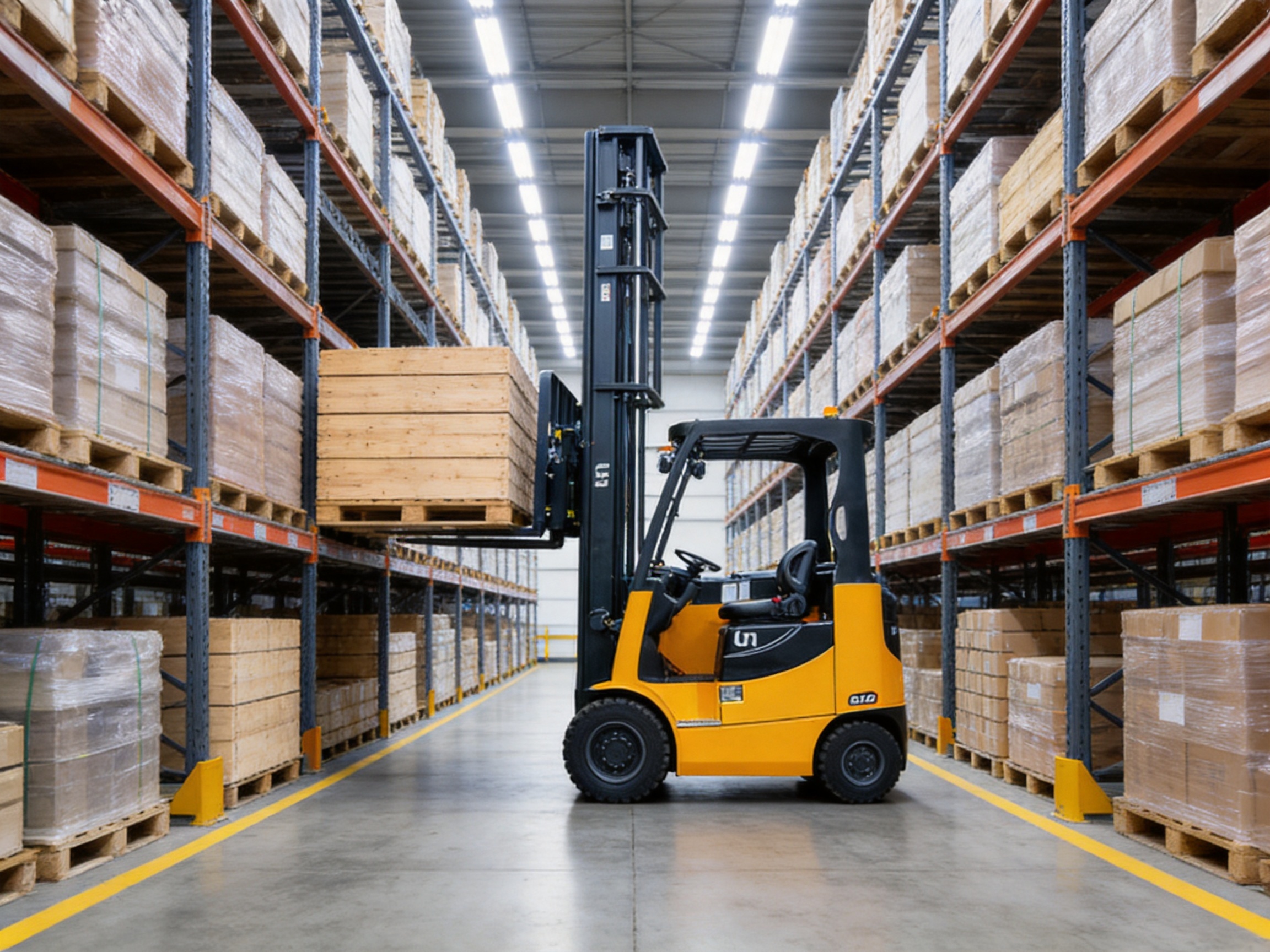
Safety Features and Operator Ergonomics
Safety is a central requirement for any equipment working around elevated loads, storage racks, pedestrians, and other vehicles. The double deep reach truck incorporates several features intended to support safe and ergonomic operation.
The automatic turning deceleration function helps prevent excessive speed during turns. A high center of gravity, a raised load, or an unevenly distributed pallet can increase the risk associated with turning too quickly. Automatic speed reduction provides an additional control layer while the operator negotiates corners and aisle ends.
An electromagnetic braking system provides controlled stopping performance. Electromagnetic braking can also support parking and holding functions, depending on the system configuration and operating conditions. The service brake, parking procedures, and emergency procedures should always be used according to the operating manual and workplace safety rules.
The large-arc overhead guard is designed to provide protection and a wide field of view during stacking operations. Visibility is especially important when placing pallets at height. The operator needs to see the fork tips, pallet openings, rack beams, and nearby structures as clearly as possible.
The overhead guard height is listed as 2,205 millimeters. This dimension should be compared with doorways, low beams, sprinkler systems, mezzanines, and other overhead obstacles before the truck is introduced into a facility. The mast-lowered height and extended height must also be considered when planning travel routes.
A standard seat OPS system is included. Operator presence sensing can help prevent travel or hydraulic functions when the operator is not correctly positioned in the seat. This is an important safeguard during mounting, dismounting, maintenance, and unexpected operator movement.
Ergonomics influences safety because tired operators are more likely to make mistakes. A comfortable sit-on layout, light electronic steering, predictable controls, and clear visibility can help reduce physical strain. Good ergonomics should be combined with training, scheduled breaks, appropriate work procedures, and a warehouse traffic-management plan.
Safety performance is also influenced by the condition of the pallet, rack, floor, and load. No control system can compensate for damaged pallets, overloaded racks, poor floor conditions, or loads that are not properly secured. The truck should therefore be considered part of a complete material-handling system rather than an isolated safety solution.
Wide-View Mast Design
The mast is one of the most important structural and visual components of a reach truck. The mast must provide lifting strength, dimensional stability, and visibility. A wide-view, full-free-lift, three-stage mast is available for the product range.
Full free lift allows the forks to rise within the lowered mast height before the mast begins to extend significantly. This can be helpful when the truck must place a load beneath a low ceiling or pass through an area where full mast extension is not possible. The exact free-lift value depends on the selected mast configuration.
The mast table provides multiple options from RTFM400 through RTFM1000. These configurations correspond to maximum fork heights from 4,000 millimeters to 10,000 millimeters. The table also identifies maximum reach, load capacity at a 500-millimeter load center, overall height, free lift, and tilt angle.
| Mast name | Maximum fork height | Maximum reach | Listed load capacity | Overall height with backrest | Free lift with backrest | Tilt angle |
|---|---|---|---|---|---|---|
| RTFM400 | 4,000 mm | 920 mm | 1,500 kg | 5,045 mm | 1,200 mm | 3–5 degrees |
| RTFM450 | 4,500 mm | 920 mm | 1,500 kg | 5,545 mm | 1,400 mm | 3–5 degrees |
| RTFM500 | 5,000 mm | 920 mm | 1,500 kg | 6,045 mm | 1,600 mm | 3–5 degrees |
| RTFM550 | 5,500 mm | 920 mm | 1,400 kg | 6,545 mm | 1,750 mm | 3–5 degrees |
| RTFM600 | 6,000 mm | 920 mm | 1,300 kg | 7,045 mm | 1,950 mm | 3–5 degrees |
| RTFM650 | 6,500 mm | 920 mm | 1,200 kg | 7,545 mm | 2,100 mm | 3–5 degrees |
| RTFM700 | 7,000 mm | 920 mm | 1,100 kg | 8,045 mm | 2,300 mm | 3–5 degrees |
| RTFM750 | 7,500 mm | 920 mm | 1,000 kg | 8,545 mm | 2,500 mm | 3–5 degrees |
| RTFM800 | 8,000 mm | 920 mm | 900 kg | 9,045 mm | 2,650 mm | 3–5 degrees |
| RTFM850 | 8,500 mm | 920 mm | 800 kg | 9,545 mm | 2,815 mm | 3–5 degrees |
| RTFM900 | 9,000 mm | 920 mm | 600 kg | 10,045 mm | 3,100 mm | 3–5 degrees |
| RTFM950 | 9,500 mm | 920 mm | 450 kg | 10,545 mm | 3,265 mm | 3–5 degrees |
| RTFM1000 | 10,000 mm | 920 mm | 300 kg | 11,045 mm | 3,450 mm | 3–5 degrees |
The capacity progression in the mast table illustrates an important engineering principle: as lift height and reach increase, the permissible load capacity may decrease. This is normal for high-lift equipment and reflects changes in load center, mast forces, stability, and structural loading. Buyers should specify the mast based on the highest practical requirement rather than selecting a height solely because it is available.
When a separated sideshifter is installed, the stated information indicates that load capacity is reduced by 100 kilograms. This reduction should be included in the equipment specification, operator training, and warehouse capacity planning.
Productivity in Daily Warehouse Cycles
Productivity is determined by the complete operating cycle rather than by travel speed alone. A typical cycle includes approaching the pallet, aligning the forks, inserting the forks, lifting the load, retracting or extending the carriage, traveling, positioning at the destination, and lowering the load. A truck that performs each step smoothly can deliver better total throughput than one with a higher peak speed but less precise control.
The FBRS15-KUQZ2 has a full-load travel speed of 9.0 kilometers per hour and a no-load travel speed of 9.5 kilometers per hour. These speeds are suitable for warehouse applications where controlled maneuvering and high-level stacking are more important than open-yard transport. The modest difference between loaded and unloaded speed supports a consistent operating rhythm.
The full-load lifting speed is 240 millimeters per second, and the no-load lifting speed is 360 millimeters per second. Faster no-load lifting helps reduce empty travel cycle time, while the lower loaded speed supports controlled handling. Together with the 920-millimeter reach function, these specifications can improve the efficiency of double-deep pallet placement.
Polyurethane tires are specified for both the two front wheels and the single rear wheel. Polyurethane tires are widely used in indoor warehouse applications because they provide low rolling resistance, good floor compatibility, and reliable performance on smooth concrete surfaces. They are particularly appropriate for facilities where tire cleanliness, low marking, and stable traction are important.
Warehouse managers should assess the actual floor condition before selecting the truck. Cracks, uneven joints, debris, moisture, and poor transitions can affect ride comfort, tire life, steering response, and load stability. Maintaining clean, level operating surfaces is an important part of achieving the rated performance of any reach truck.
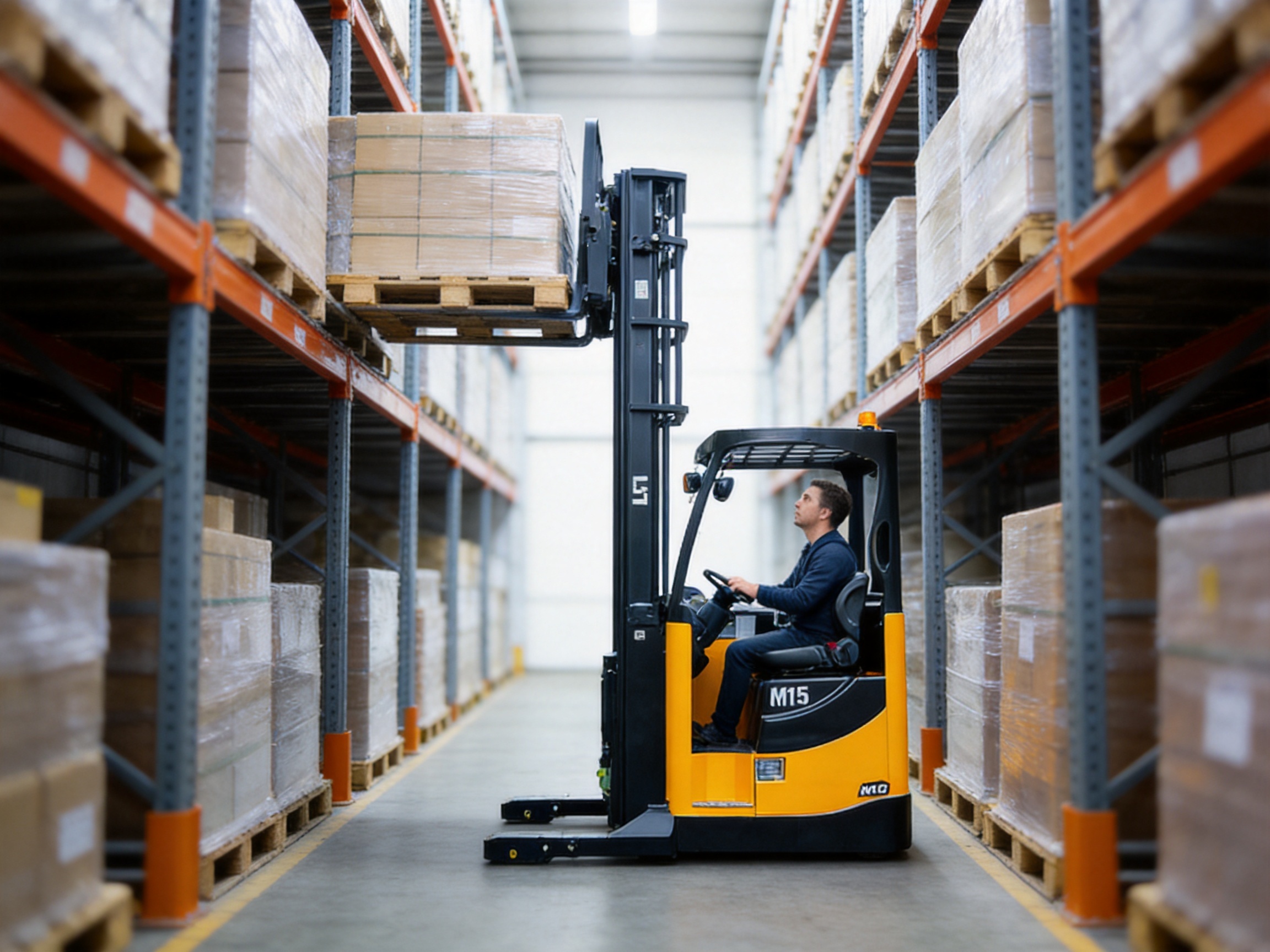
Maintenance Advantages and Service Accessibility
Maintenance cost is a major factor in the total cost of ownership of warehouse equipment. A truck may have a competitive purchase price, but frequent downtime, difficult access, and expensive replacement parts can reduce its long-term value. The design of this double deep reach truck addresses maintenance through AC motor technology, accessible rear service areas, and integrated electronic control.
The brushless AC motors do not require brush replacement during normal operation. This reduces one routine maintenance task and eliminates wear associated with brushed motor components. The maintenance-free AC motor design also releases less heat, which supports efficient operation and can reduce thermal stress on the motor system.
The rear door is designed to open easily, providing access for inspection, debugging, and maintenance of the vehicle. Service accessibility matters because technicians need to inspect electrical connections, controllers, hydraulic components, cooling areas, battery connections, and mechanical parts efficiently. Shorter inspection times can help return the truck to service more quickly.
The CAN bus communications network supports communication among electronic systems. A networked architecture can improve system coordination and make diagnostic work more structured. When a fault occurs, technicians can use the appropriate diagnostic procedures to identify the affected system rather than relying only on visual inspection or trial-and-error replacement.
Preventive maintenance should include daily checks of the forks, mast, chains, hydraulic lines, tires, brakes, steering, battery, warning devices, and safety systems. Operators should report unusual noise, vibration, leakage, slow movement, steering irregularity, or warning indications immediately. Early attention to small problems can prevent more serious failures.
Battery care is also essential. The battery should be charged in an appropriate area with suitable ventilation and according to the battery manufacturer’s instructions. Connections should be inspected, the battery should be secured correctly, and the charging schedule should match the operating plan. A well-maintained battery supports consistent travel and lift performance.
Manufacturing Strengths and Engineering Background
Zhejiang UN Forklift Co., Ltd. is described as a material-handling equipment manufacturer integrating research and development, production, sales, and service. This integrated structure is important because it connects product design with manufacturing knowledge, field requirements, spare-parts support, and customer feedback.
The company was founded in 1978 and occupies approximately 53,400 square meters, with an annual production capacity of 15,000 units. These figures indicate an established industrial base capable of supporting product development and series production rather than one-off equipment assembly.
The manufacturer offers a broad product portfolio comprising 17 varieties, 96 series, and more than 200 specifications. This range includes electric forklifts, internal combustion forklifts, reach trucks, warehouse equipment, and other material-handling products. A broad product portfolio can strengthen engineering capability because design teams gain experience across different capacities, power systems, chassis layouts, mast structures, and operating environments.
The company states that China’s first reach forklift and very narrow aisle truck were developed at UN. This historical experience is relevant to the double deep reach truck because reach technology requires specialized knowledge of stability, carriage movement, mast visibility, steering geometry, and high-level pallet handling.
The manufacturer also holds national patents related to electric forklift technologies and has participated in the formulation of Chinese electric forklift industry standards. Participation in technology development and industry standards can support a more disciplined approach to product design, testing, and specification management.
Advanced manufacturing is not limited to the use of a modern controller or motor. It also includes the ability to coordinate mechanical design, electrical systems, hydraulic components, software, operator controls, and quality inspection. The double deep reach truck demonstrates this type of system integration through its AC drive and lift controls, CAN bus network, electronic steering, hydraulic pump and valve arrangement, electromagnetic braking, and operator-presence system.
A vertically coordinated manufacturer can also manage product improvements more effectively. Feedback from field service teams may identify common wear points, operator preferences, or application challenges. Engineering teams can then evaluate those findings and incorporate improvements into subsequent designs. This continuous connection between production and service is especially valuable for warehouse equipment that operates for long hours in repetitive conditions.
The manufacturer’s worldwide sales and service network includes partners in Europe, South America, North America, Africa, and Asia. International support is important for customers operating multi-site fleets or exporting equipment across different markets. Service availability, parts communication, and technical support can influence equipment uptime as much as the original specifications.
How the Product Compares with Alternative Forklifts
Comparison with Conventional Counterbalanced Forklifts
Conventional counterbalanced forklifts are versatile and well suited to loading docks, outdoor yards, manufacturing areas, and mixed indoor-outdoor work. However, their larger counterweight and greater turning requirements can make them less suitable for high-density indoor racking. They usually require wider aisles and do not provide the same specialized reach into double-deep rack positions.
The double deep reach truck has a more focused warehouse role. Its electric power, polyurethane tires, reach carriage, electronic steering, and high-lift mast make it better suited to indoor storage aisles. It may not replace a counterbalanced forklift for every task, but it can outperform one in pallet put-away and retrieval within a properly designed double-deep racking system.
Comparison with Standard Reach Trucks
A standard reach truck can place pallets in selective rack positions and is often effective in narrow aisles. The double deep reach truck extends this capability by allowing the carriage and forks to reach farther into the rack. This creates additional storage density and makes the truck more appropriate for double-deep layouts.
The advantage is most apparent when a warehouse has sufficient pallet volume and predictable inventory organization. In exchange for deeper storage, the operator must manage pallet sequencing carefully. A standard reach truck may offer more direct access, while the double deep model offers greater density. The correct choice depends on the balance between selectivity and capacity required by the operation.
Comparison with Very Narrow Aisle Trucks
Very narrow aisle trucks can provide exceptional space utilization, but they often require specialized aisle guidance, carefully controlled rack tolerances, and dedicated operating procedures. They may also involve higher infrastructure costs and less flexibility outside the designated aisle system.
A double deep reach truck can provide a practical middle ground. It supports deeper pallet storage than a standard reach truck without requiring the full infrastructure of a very narrow aisle operation. Its sit-on configuration, turning capability, and independent operation can make it easier to integrate into an existing warehouse, provided that aisle dimensions and rack geometry are suitable.
Comparison with Automated Storage Equipment
Automated storage and retrieval systems can provide high throughput, inventory accuracy, and reduced dependence on manual driving. However, they require substantial investment in software, conveyors, racking, controls, and facility integration. They may also be less adaptable when product dimensions, pallet quality, or storage patterns change frequently.
The double deep reach truck offers a more flexible and accessible approach. It can be deployed without converting the entire warehouse to automation. Operators can make decisions at the point of handling, and the truck can be reassigned to different areas when operational requirements change. For companies seeking higher density without a complete automation project, this flexibility can be a significant competitive advantage.
Applications and Suitable Operating Environments
The product is suitable for warehouses that use double-deep pallet racking and require electric indoor handling. Typical applications include finished-goods storage, component warehouses, third-party logistics centers, retail distribution, food and beverage facilities, consumer goods storage, and manufacturing plants.
It can be used for pallet put-away after receiving, replenishment of picking areas, movement between storage zones, and retrieval of reserve inventory. The truck is particularly useful when the warehouse has a high number of pallets but does not require every pallet to be directly accessible at all times.
In manufacturing environments, the truck can move raw materials, work-in-process containers, packaging materials, and finished products. In distribution centers, it can support reserve storage and replenishment operations. In retail logistics, it can store seasonal or batch inventory in dense locations while maintaining efficient access to front positions.
Before implementation, the buyer should confirm pallet dimensions, pallet entry direction, rack beam spacing, rack depth, aisle width, floor load capacity, ceiling height, door clearance, fire protection clearance, and pedestrian routes. The listed aisle widths are reference values and should be validated against the actual pallet, rack, and operating method.
Load quality is especially important. Pallets must be structurally sound, loads should be centered and secured, and the load center must remain within the stated rating. Damaged pallets or unstable loads can create hazards regardless of truck capacity.
Warehouse Planning Considerations
A double deep reach truck should be selected as part of a complete warehouse design. The rack supplier, truck supplier, and end user should coordinate before installation. Small differences in rack depth, beam height, pallet overhang, and floor tolerance can affect the actual operating clearance.
The 2,070-millimeter turning radius and the stated aisle widths should be considered when drawing the warehouse layout. Turning areas at aisle ends must provide enough clearance for the truck and load. Aisle intersections, emergency exits, battery charging areas, fire doors, and pedestrian crossings also need to be included in the plan.
Rack protection is another important consideration. Guide rails, upright guards, end-of-aisle protection, and clearly marked travel routes can reduce the chance of accidental contact. Operators should be trained to approach racks at controlled speeds and avoid turning with an elevated or extended load unless the operating procedure specifically permits it.
Inventory management can determine whether double-deep storage delivers its full benefit. Products should be assigned to locations according to turnover, batch requirements, and retrieval frequency. High-turnover products may be placed in front positions, while reserve or slower-moving products can be stored deeper in the lane. Warehouse management software can help control the sequence of put-away and retrieval activities.
Lighting and visibility should also be reviewed. High-level storage requires sufficient illumination at rack positions. Reflective rack labels, location signage, and clear pallet identification can reduce search time and placement errors.
Operator Training and Safe Use
Only trained and authorized operators should use the double deep reach truck. Training should cover controls, steering behavior, reach operation, mast movement, capacity limits, battery charging, parking, pedestrian awareness, and emergency procedures.
Operators must understand that rated capacity changes with lift height, load center, reach extension, mast configuration, and attachments. The 1,500-kilogram rating applies to the stated conditions and should not be treated as a universal capacity for every mast position.
Before each shift, the operator should inspect the forks for cracks, bends, or excessive wear. The mast, chains, rollers, hydraulic lines, tires, battery, brakes, steering, warning devices, seat OPS function, and control indicators should also be checked. Any defect that could affect safety should be reported and corrected before operation.
Loads should be approached squarely. The forks should be inserted fully beneath the pallet where appropriate, and the load should be centered before lifting. The operator should verify that the pallet is stable and that the rack location is clear. When placing a load in a deep position, the reach function should be used smoothly and without sudden movements.
Travel should normally be conducted with the load at the recommended low travel height and with visibility maintained. Operators should slow down at intersections, turns, dock edges, ramps, and areas where pedestrians may be present. The truck should be parked with forks lowered, controls neutralized, the brake applied, and the key or access control managed according to site policy.
Service Life and Total Cost of Ownership
Total cost of ownership includes the purchase price, energy consumption, maintenance, tires, batteries, labor, downtime, training, and residual value. The product’s electric design can help reduce operating emissions and noise compared with internal combustion equipment in indoor environments. AC motors and electronic control can also contribute to lower routine maintenance requirements.
The ability to store pallets more densely can produce indirect financial benefits. A warehouse may be able to increase capacity without expanding the building, reduce the number of aisles, or postpone a costly relocation. These benefits depend on actual utilization, product mix, rack design, and the number of operating shifts.
Downtime has a direct effect on warehouse performance. Accessible service panels, CAN bus communication, established component suppliers, and a global support network can help shorten troubleshooting and repair activities. Buyers should still request a preventive maintenance schedule, spare-parts plan, warranty terms, and local service arrangements before purchase.
Battery performance should be evaluated over the expected operating cycle. A fleet may require opportunity charging, spare batteries, battery changing equipment, or a different battery capacity depending on shift demands. The standard 48-volt, 420-Ah battery provides a reference configuration, but the final energy solution should be selected using an actual duty-cycle analysis.
Polyurethane tires can provide good service life on smooth indoor floors, but their performance depends on load, travel frequency, floor condition, and turning behavior. Regular inspection helps identify flat spots, cuts, uneven wear, and other conditions that may affect steering or stability.
Quality-Oriented Manufacturing and Product Integration
Reliable warehouse equipment depends on more than individual component quality. The mast, chassis, hydraulic system, motor, controller, steering system, brake, battery, and operator interface must work together as a complete machine. Manufacturing capability is therefore measured by process coordination as well as by the specifications of individual parts.
The product information identifies advanced technology and high-quality components as key parts of the design. The ZAPI controller, brushless AC motors, Shimadzu hydraulic components, CAN bus communications, electronic steering, and electromagnetic braking system are integrated into one operating platform. This component strategy supports predictable control and simplifies the relationship between performance and service requirements.
Research and development experience in reach trucks and very narrow aisle equipment provides a foundation for designing machines that work close to racks at significant heights. Such equipment requires careful attention to mast deflection, carriage travel, load center changes, visibility, steering response, and stability. These are specialized engineering concerns that distinguish a reach truck from a general-purpose forklift.
Production capacity also supports supply continuity. A manufacturer with established facilities and an international customer base can plan materials, coordinate assembly, maintain product documentation, and support multiple markets. For fleet customers, this can be useful when standardizing equipment across different distribution centers.
The company’s development of electric, internal combustion, lithium-ion, and other energy-related forklift products reflects an approach that covers multiple application requirements. This broad experience allows customers to evaluate warehouse equipment within a wider product family rather than selecting a machine without considering the rest of the fleet.
Manufacturing strengths should always be confirmed through customer audits, technical documentation, sample inspections, service references, and application testing. A professional purchasing process should include these steps along with a review of capacity charts, spare-parts availability, operator manuals, and local regulatory requirements.
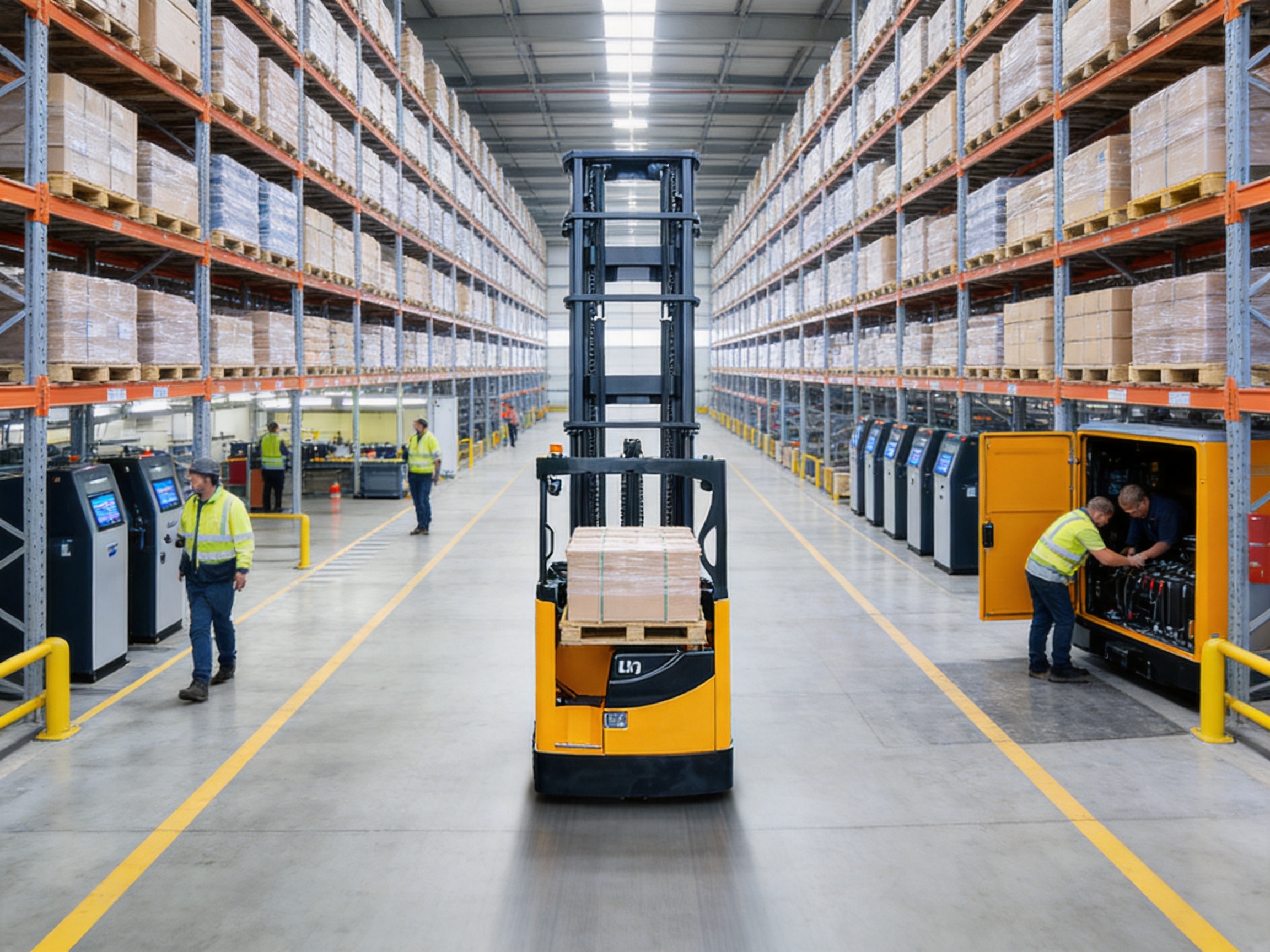
Frequently Asked Questions
What is a double deep reach truck?
A double deep reach truck is an electric warehouse forklift with a carriage that extends forward to place and retrieve pallets in the second position of a double-deep rack. It is designed to improve storage density while maintaining a manually operated and flexible handling process.
What is the rated capacity of the FBRS15-KUQZ2?
The listed rated load capacity is 1,500 kilograms at a 500-millimeter load center. Capacity may change according to mast height, reach position, attachment, load center, and other operating conditions. The capacity plate and applicable mast chart must be followed at all times.
How far can the fork carriage reach?
The maximum listed fork carriage reach distance is 920 millimeters. This reach supports pallet placement in double-deep rack systems.
What lift heights are available?
The mast range includes maximum fork heights from 4,000 millimeters to 10,000 millimeters. The available configurations include RTFM400, RTFM450, RTFM500, RTFM550, RTFM600, RTFM650, RTFM700, RTFM750, RTFM800, RTFM850, RTFM900, RTFM950, and RTFM1000.
Does capacity remain the same at every lift height?
No. The mast table shows that capacity decreases as lift height increases in the listed range. Higher lifting and reaching positions change stability and structural loading, so the applicable rated capacity must be checked for each configuration.
What type of battery does the truck use?
The standard battery is listed as 48 volts and 420 ampere-hours. The correct battery and charging plan should be selected according to shift length, operating intensity, charging facilities, and local requirements.
What are the main benefits of AC technology?
Brushless AC motors can provide efficient operation, smooth variable control, lower maintenance requirements, and reduced heat generation compared with brushed motor systems. The truck also uses AC controllers for drive and lift control.
Is the truck suitable for outdoor use?
The truck is primarily designed for indoor warehouse applications with smooth, stable floors. Polyurethane tires and its high-density rack configuration are especially appropriate for indoor operation. Outdoor use should only be considered after reviewing surface conditions, weather exposure, drainage, and the manufacturer’s application guidance.
What happens when a separated sideshifter is installed?
The supplied information states that load capacity is reduced by 100 kilograms when a separated sideshifter is used. The revised capacity must be confirmed before operation and shown on the applicable equipment documentation.
What maintenance access is provided?
The rear door is designed for easy opening, allowing inspection, debugging, and maintenance of the vehicle. The AC motors reduce routine brush-related maintenance, while the CAN bus network supports coordinated electronic diagnostics.
Which warehouses benefit most from this truck?
Warehouses with double-deep racking, high pallet volumes, predictable inventory patterns, and a need for greater storage density are the most suitable. The truck can be used in distribution, manufacturing, retail logistics, food and beverage, and general indoor storage operations.
Can it replace every other forklift in a warehouse?
No. It is optimized for high-density indoor racking and double-deep pallet handling. Counterbalanced forklifts may still be better for loading docks, outdoor yards, trailers, rough surfaces, or very large loads. Fleet selection should reflect the complete material flow.
Purchasing Checklist
Before ordering the truck, the buyer should provide the supplier with accurate information about pallet dimensions, maximum load weight, load center, rack type, rack depth, highest storage level, aisle width, floor condition, door height, ceiling clearance, operating temperature, shift pattern, and expected daily pallet movements.
The buyer should also confirm whether attachments such as sideshifters, special forks, cold-storage equipment, lighting, cameras, or additional safety devices are required. Attachments can affect capacity, visibility, dimensions, and residual capacity.
It is advisable to request a site evaluation or operating demonstration. A demonstration can confirm that the machine fits the rack, turns comfortably in the intended aisle, reaches the required pallet position, and provides acceptable visibility for the operators who will use it.
Commercial evaluation should include more than the initial quotation. Buyers should review delivery time, commissioning support, operator training, warranty coverage, service response, replacement-part lead times, battery support, maintenance tools, and documentation. A well-supported machine can deliver greater value over its operating life.
Conclusion
The double deep reach truck is a specialized solution for warehouses that need more storage density without giving up the flexibility of a manually operated electric forklift. Its 920-millimeter reach distance allows it to serve double-deep racking, while its 1,500-kilogram rated capacity, electronic steering, AC drive technology, stable hydraulic system, wide-view mast, and operator-presence safety system support productive daily handling.
Its advantage over conventional counterbalanced forklifts is its ability to work efficiently in indoor storage aisles. Its advantage over a standard reach truck is the additional carriage reach required for deeper rack positions. Compared with very narrow aisle or fully automated systems, it offers a more accessible balance between storage density, investment, flexibility, and operational control.
The product is supported by a manufacturer with a long history in forklift development, experience in reach and very narrow aisle equipment, an integrated research and production structure, a broad product range, and an international sales and service network. These strengths provide a useful foundation for customers seeking equipment that can be incorporated into a wider warehouse fleet.
Successful deployment depends on correct application planning. Rack dimensions, load characteristics, mast height, aisle width, floor quality, battery requirements, operator training, and maintenance support must all be considered. When these factors are properly matched, the double deep reach truck can help warehouses use vertical space more effectively, improve pallet-handling consistency, and build a safer and more efficient storage operation.
References
1. Product technical specification sheet for the FBRS15-KUQZ2 double deep reach truck.
2. Manufacturer-provided mast specifications and rated capacity data for RTFM series configurations.
3. Manufacturer product information concerning AC drive systems, electronic steering, CAN bus communication, hydraulic components, and operator-presence safety systems.
4. General warehouse engineering principles for double-deep pallet racking, aisle design, load-center management, and high-level forklift operation.
5. General industrial guidance concerning forklift inspection, preventive maintenance, battery care, rack protection, and operator training.
6. Manufacturer background information concerning research and development, production capacity, electric forklift technology, reach truck development, and global service support.
Product: Double Deep Reach Truck

For exclusive deals and latest offers, sign up by entering your email address below.
Stay In Touch
ADDRESS : NO.1 ROAD ONE, XINDENG NEW DISTRICT, FUYANG, HANGZHOU, ZHEJIANG, CHINA 311404.
PHONE : +86-571-8688 8355 (AMERICA)
PHONE : +86-571-8886 9363 (EUROPE)
PHONE : +86-571-8688 8377 (ASIA, AFRICA, OCEANIA)
EMAIL : [email protected]
EMAIL : [email protected](PARTS INQUIRY)

