


 中文简体
中文简体 Français
 русский
 Español
 عربى
عربى Deutsch



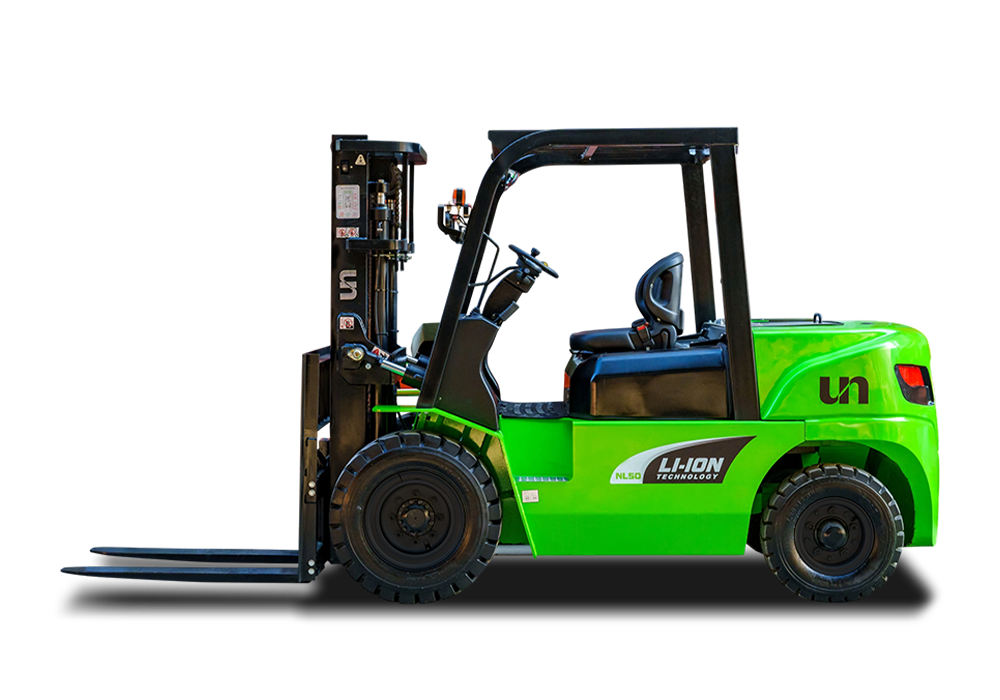
NL Series 2.0T–2.5T Lithium-Ion Battery Forklift: Efficient, Durable, and Ready for Demanding Material Handling
Admin 2026-10-03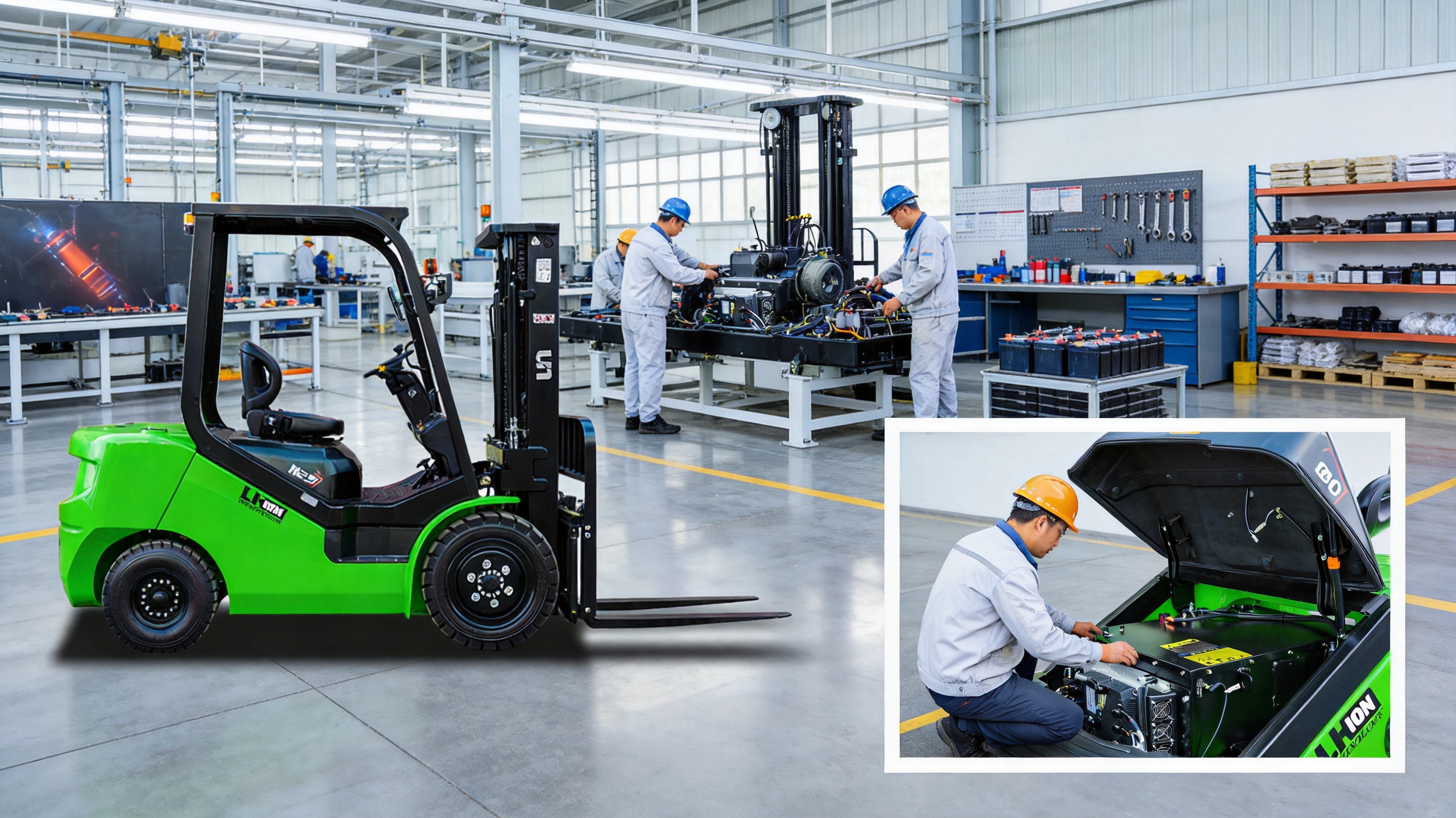
Modern warehouses, factories, logistics centers, and distribution facilities are under increasing pressure to move more goods while reducing operating costs, emissions, noise, and maintenance downtime. The forklift is central to these operations, yet traditional internal combustion equipment can create challenges in enclosed or environmentally sensitive working areas. Fuel consumption, exhaust emissions, engine maintenance, noise, vibration, and long-term operating expenses all influence the productivity of a material-handling fleet.
The NL Series 2.0T–2.5T lithium-ion battery forklift is designed to address these challenges with a practical combination of proven forklift engineering and modern electric power technology. Built around a durable internal combustion forklift structure that has been validated through decades of use, the series delivers the familiar strength and stability expected from a conventional counterbalance forklift while adding the advantages of lithium-ion energy storage.
With rated capacities of 2,000 kg and 2,500 kg, the forklift is suitable for light- to medium-duty applications that require dependable lifting, precise handling, and flexible operation. Its compact structure, relatively small turning radius, low noise level, zero tailpipe emissions, fast charging capability, and low maintenance requirements make it a strong alternative to conventional internal combustion forklifts.
The product is manufactured by Zhejiang UN Forklift Co., Ltd., a material-handling equipment producer with extensive experience in research, development, manufacturing, sales, and service. The company’s manufacturing background, broad product portfolio, engineering resources, and international service network support the development of lithium-ion forklifts that are designed for real working environments rather than for electric performance alone.
1. The Changing Requirements of Modern Forklift Operations
Forklift users today are evaluating equipment according to more than rated capacity and purchase price. Fleet managers increasingly consider total cost of ownership, energy efficiency, operator comfort, workplace safety, environmental impact, service availability, and compatibility with existing facilities.
In many applications, a forklift may operate for several hours each day, sometimes across multiple shifts. A machine that requires long refueling procedures, frequent oil changes, or regular engine-related repairs can reduce available working time. In contrast, a lithium-ion forklift can be charged during planned breaks or shift changes, allowing the equipment to return to service quickly without the need for battery watering or conventional engine maintenance.
Indoor facilities face additional requirements. Warehouses, food-processing plants, pharmaceutical facilities, workshops, retail distribution centers, and manufacturing plants often need to control exhaust emissions and noise. A battery-powered forklift produces no tailpipe emissions during operation and operates more quietly than a diesel or LPG-powered machine. This supports cleaner workplaces and can improve communication between operators and pedestrians.
Outdoor operations also require more than a quiet electric powertrain. The equipment must have adequate ground clearance, robust chassis components, dependable steering, stable handling, and sufficient resistance to water and dust. The NL Series addresses these needs by using a structure inspired by conventional internal combustion forklifts instead of relying only on a lightweight warehouse truck architecture.
2. Product Overview
The NL Series 2.0T–2.5T lithium-ion battery forklift is a counterbalance forklift intended for applications requiring a rated capacity of 2,000 kg or 2,500 kg at a 500 mm load center. The standard configuration includes an 80-volt lithium battery system, a 10 kW drive motor, and a 12 kW lift motor.
The standard rated lift height is 3,000 mm, while a broad range of mast configurations can be selected for different applications. Available mast options include wide-view masts, full-free-lift two-stage masts, and full-free-lift three-stage masts. Depending on the selected mast, customers can specify lifting heights extending from approximately 3,000 mm to 7,000 mm across the broader product family, subject to rated-capacity limitations and configuration requirements.
The forklift has a rated load center of 500 mm, which is widely used in industrial pallet handling. The standard fork dimensions for the 2.0T and 2.5T models are approximately 1,070 mm in length, 120 mm in width, and 40 mm in thickness. These specifications are suitable for common palletized loads, although the appropriate fork configuration should always be selected according to load dimensions, center of gravity, and application conditions.
| Item | NL 2.0T Model | NL 2.5T Model |
|---|---|---|
| Rated load capacity | 2,000 kg | 2,500 kg |
| Load center | 500 mm | 500 mm |
| Rated lift height | 3,000 mm | 3,000 mm |
| Free lift height | 100 mm | 100 mm |
| Fork size | 1,070 × 120 × 40 mm | 1,070 × 120 × 40 mm |
| Overall width | 1,150 mm | 1,150 mm |
| Length to fork face without forks | 2,660 mm | 2,660 mm |
| Outside turning radius | 2,365 mm | 2,365 mm |
| Wheelbase | 1,650 mm | 1,650 mm |
| Travel speed | Up to 12 km/h | Up to 12 km/h |
| Maximum gradeability at full load | 15% | 15% |
| Battery configuration | 80 V/135–350 Ah options | 80 V/175–350 Ah options |
| Drive motor | 10 kW | 10 kW |
| Lift motor | 12 kW | 12 kW |
| Approximate total weight | 3,385 kg | 3,605 kg |
Specifications may vary according to battery capacity, mast design, tire selection, attachments, and other optional equipment. Final technical parameters should be confirmed before ordering.
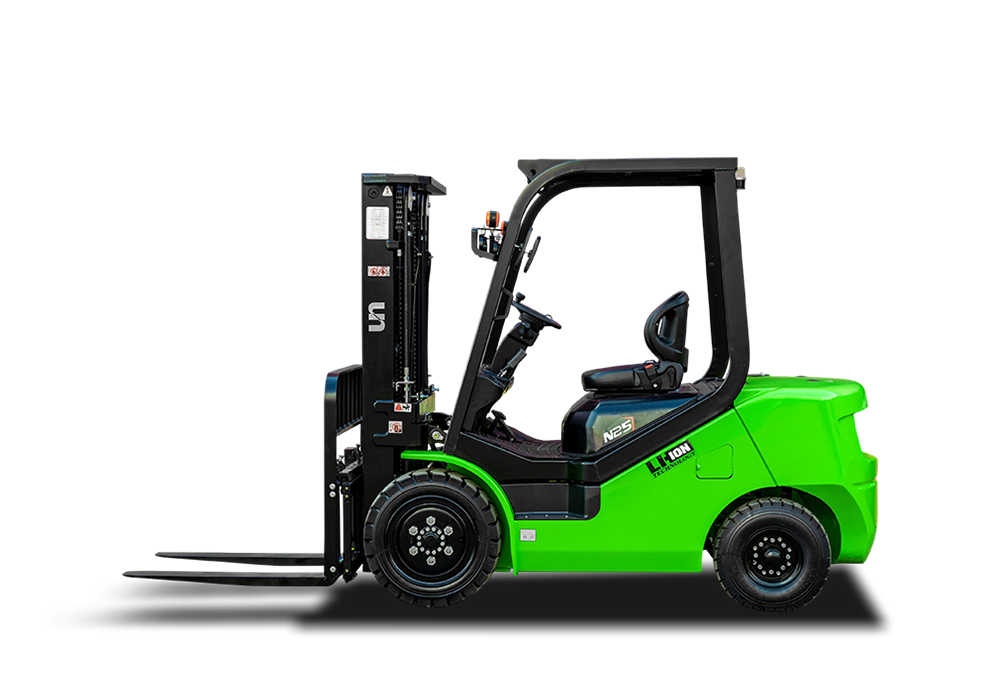
NL Series 2.0T-2.5T Li-ion Battery Forklift
3. Proven Chassis Engineering with Modern Electric Power
One of the most important advantages of the NL Series is its use of a proven forklift chassis concept. Rather than developing an electric forklift around a lightweight warehouse vehicle platform, the design retains the strength-oriented structure associated with internal combustion counterbalance forklifts.
This approach provides several practical benefits. The chassis is designed to handle the stresses generated during lifting, braking, turning, loading, and unloading. Its geometry supports a low center of gravity and stable counterbalance behavior. The chassis also allows the machine to work in more than one environment, including indoor warehouses, loading yards, production areas, and outdoor surfaces with appropriate operating conditions.
The use of established structural components also supports serviceability. Key components such as axles and mast assemblies are compatible with the architecture used in conventional internal combustion forklifts. This can simplify diagnosis, parts identification, repair procedures, and technician training for companies that already operate traditional forklifts.
For fleet owners, commonality can be a significant operational advantage. A business that already has technicians familiar with conventional forklift systems may not need to create an entirely new maintenance structure. The electric powertrain introduces new systems, including the battery management system and electronic controls, but the basic chassis, mast, axle, and hydraulic concepts remain familiar.
4. Lithium-Ion Battery Advantages
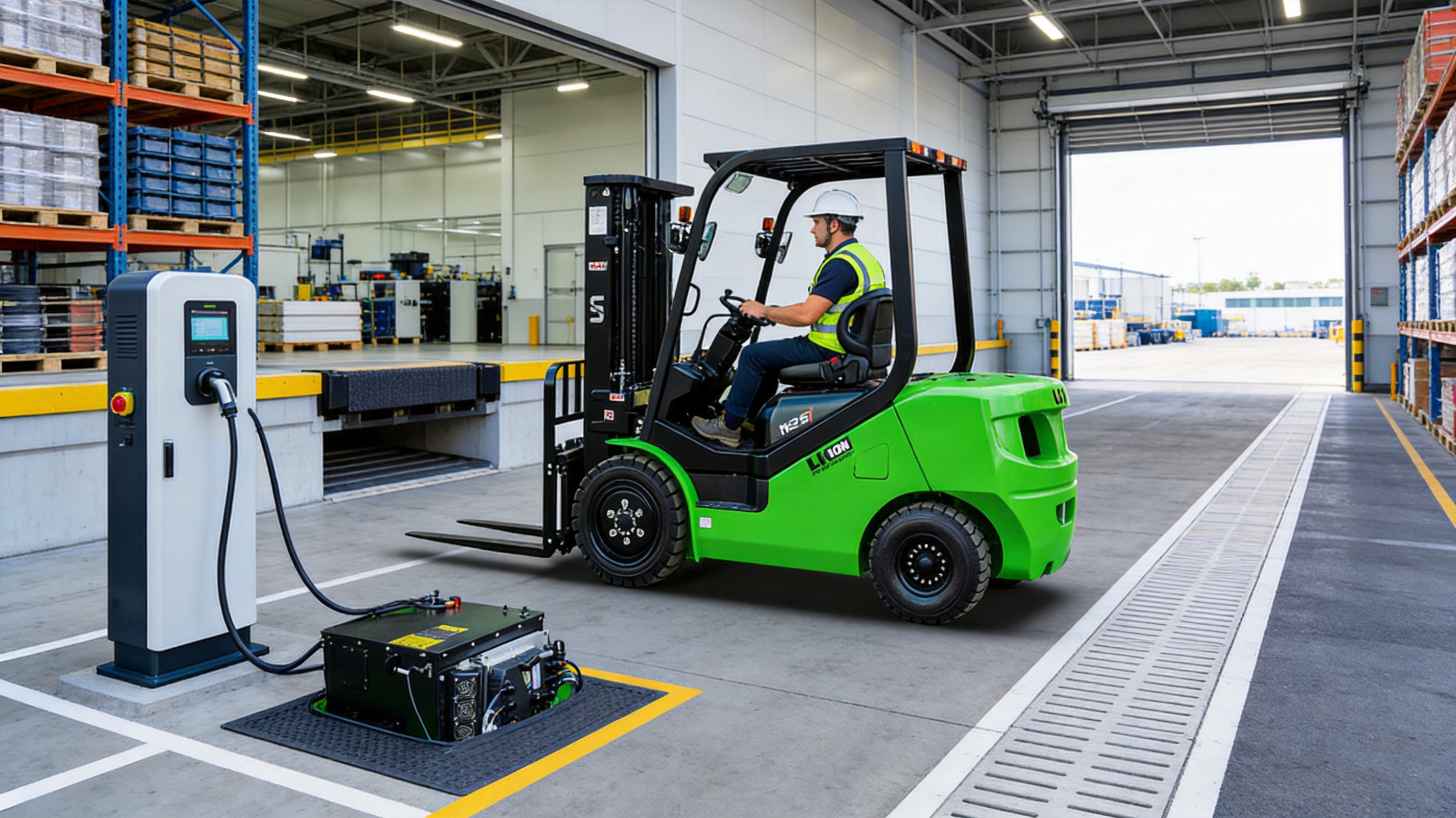
The lithium-ion battery system is the central feature of the NL Series. Compared with lead-acid batteries, lithium-ion batteries offer a more flexible charging pattern and generally require less routine maintenance. The battery can be topped up during breaks or other convenient periods instead of being reserved for long overnight charging cycles.
The product information specifies a rapid full charging time of approximately two hours under suitable charging conditions. The actual time depends on battery capacity, charger output, ambient conditions, battery state of charge, and operating requirements. Even so, the ability to recharge quickly can help support multi-shift operations and reduce the need for battery swapping.
The system is available in multiple capacities. For the 2.0T configuration, options include 80 V batteries in capacities ranging from approximately 135 Ah to 350 Ah, depending on the specific version. The 2.5T configuration offers options beginning at approximately 175 Ah and extending to higher capacities. A larger battery can provide longer operating endurance, while a smaller battery may reduce initial cost or suit lighter duty cycles.
Battery selection should be based on actual duty cycle rather than rated capacity alone. Important considerations include operating hours per shift, average load weight, travel distance, lifting frequency, ambient temperature, charging opportunities, attachment use, and the number of shifts per day. A professional application assessment can identify the most suitable capacity and charging strategy.
The lithium battery is designed for extended service life, with the product information indicating up to 4,000 charging cycles and a five-year warranty. Actual service life depends on charging practices, temperature, workload, storage conditions, and maintenance. The battery management system helps monitor operating conditions and supports protective functions intended to maintain safe and reliable performance.
Fast Charging and Opportunity Charging
Traditional lead-acid batteries often require extended charging and cooling periods. They may also require battery replacement or swapping when a vehicle must run continuously across several shifts. Lithium-ion technology makes opportunity charging more practical. An operator can connect the forklift during a scheduled break, lunch period, or shift transition, helping restore useful energy without removing the battery from the truck.
This flexibility can reduce the need for a dedicated battery room, battery-changing equipment, and multiple spare batteries. It may also release valuable warehouse space for productive use. However, charging areas should still be designed in accordance with applicable electrical, fire, ventilation, and workplace safety requirements.
Lower Maintenance Requirements
Lithium-ion batteries do not require the same routine watering procedures associated with flooded lead-acid batteries. They also eliminate many battery-room tasks related to electrolyte inspection and equalization charging. This reduces labor requirements and minimizes the risk of maintenance errors.
The electric drivetrain also eliminates engine oil, fuel filters, spark plugs, exhaust components, and many other internal combustion service items. These savings can become particularly significant in fleets with high annual operating hours.
5. Energy Efficiency and Total Cost of Ownership
A forklift’s purchase price is only one part of its financial impact. Energy, scheduled maintenance, unscheduled repairs, downtime, battery replacement, operator productivity, and resale value all contribute to the total cost of ownership.
The NL Series is designed to offer a purchase price comparable to conventional internal combustion forklifts in relevant configurations while reducing recurring expenses. Electricity is typically easier to manage and price than diesel or LPG, although actual savings depend on local energy prices and operating patterns. The absence of fuel handling and engine-related maintenance can further reduce operating costs.
Lower maintenance costs can come from several sources. The electric drivetrain contains fewer wear components than an internal combustion engine and transmission. Lithium-ion batteries require less routine intervention than lead-acid batteries. The forklift’s familiar mechanical architecture allows many service procedures to be completed using established methods and parts channels.
Energy efficiency is also influenced by the control system. The drive motor, lift motor, battery, and electronic controls must operate as a coordinated system. Smooth acceleration and deceleration can reduce wasted energy and improve operator control. Efficient hydraulic operation can reduce the energy required for lifting, especially when the forklift performs frequent pallet movements.
| Cost factor | Traditional internal combustion forklift | NL Series lithium-ion forklift |
|---|---|---|
| Primary energy source | Diesel, LPG, or other fuel | Electricity stored in a lithium-ion battery |
| Tailpipe emissions | Present during operation | Zero tailpipe emissions during operation |
| Noise and vibration | Generally higher | Generally lower |
| Engine oil and filter service | Required | Not required for the electric powertrain |
| Battery watering | May be required with lead-acid systems | Not required in the same manner |
| Charging or refueling | Fueling is rapid but requires fuel storage and handling | Fast charging and opportunity charging are available |
| Indoor suitability | Limited by ventilation and emission requirements | Well suited to indoor operations, subject to facility requirements |
| Long-term cost potential | Higher fuel and engine service expenses | Lower energy and routine maintenance expenses may be achievable |
This comparison is not a substitute for a site-specific cost analysis. Internal combustion forklifts may remain suitable for certain intensive outdoor applications, especially where charging infrastructure is not available. The advantage of the NL Series is that it brings electric benefits to a stronger counterbalance format capable of working across a wider range of environments.
6. Compact Dimensions and Maneuverability
Space utilization is a major concern in warehouses and production facilities. A forklift with a compact footprint can travel through narrower aisles, approach pallets more easily, and reduce the amount of space needed for turning.
The 2.0T and 2.5T NL models have an overall width of approximately 1,150 mm and an outside turning radius of approximately 2,365 mm in the standard configuration. The minimum pallet aisle width is approximately 4,120 mm under the listed specification. These dimensions allow the forklift to operate efficiently in many conventional pallet-handling layouts.
The compact layout also benefits loading bays, manufacturing lines, and storage areas where traffic routes may be restricted. Operators can position the forklift more accurately when entering a pallet rack or collecting loads near walls and machinery.
Maneuverability must always be considered together with stability. A very small turning radius is not useful if it compromises load handling or operator confidence. The NL Series combines compact dimensions with a counterbalance chassis, low center of gravity, and stable axle arrangement. This balance is especially valuable when turning with a load raised at a moderate height.
7. Performance for Indoor and Outdoor Applications
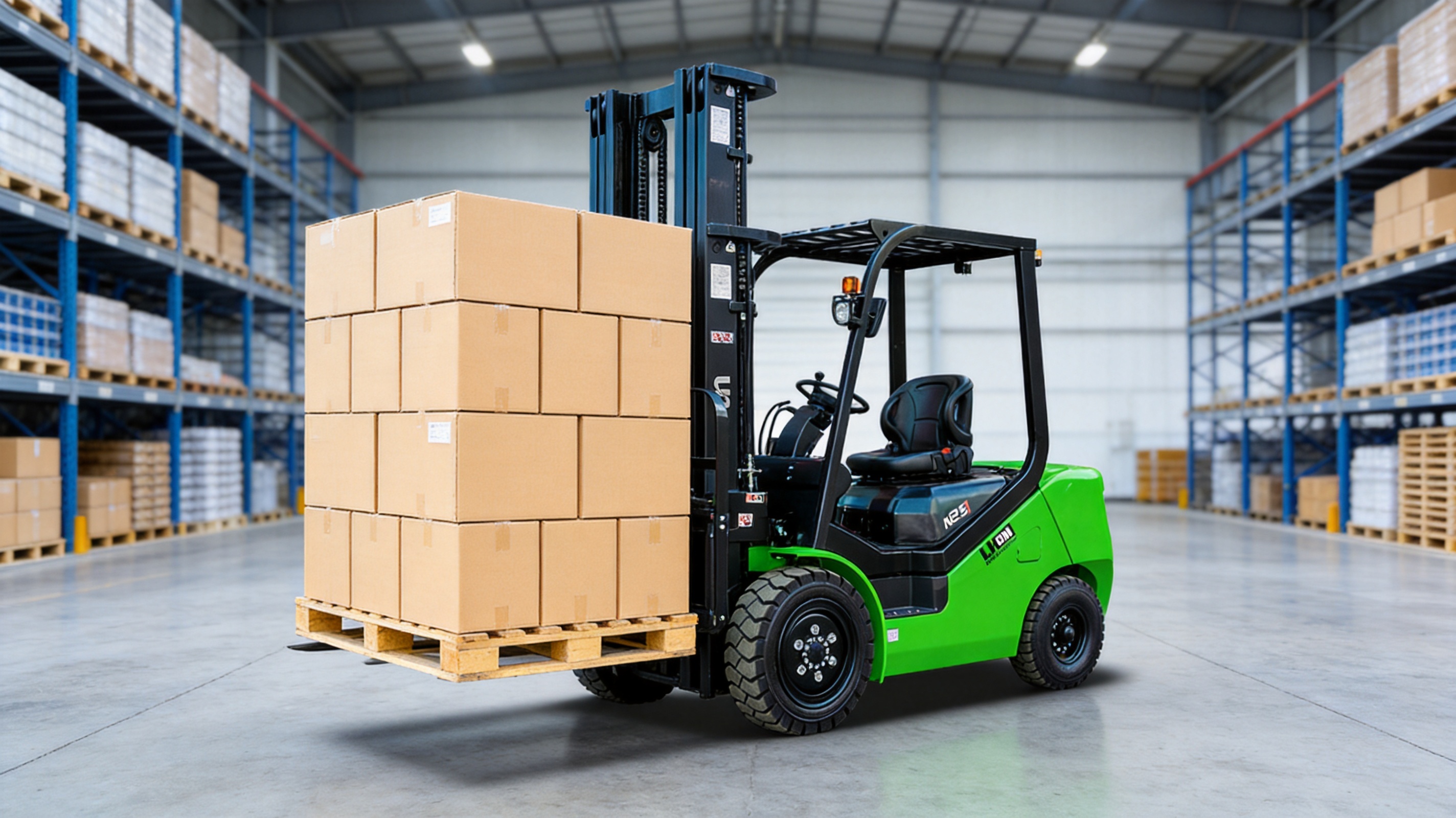
The NL Series is designed for multi-scenario use. It can support indoor warehouse operations while retaining features needed for selected outdoor conditions. The equipment is inspired by internal combustion forklift design, which gives it a stronger and more versatile character than many compact indoor electric trucks.
Travel speed is listed at up to 11 km/h under load and up to 12 km/h without load. These speeds support efficient movement between storage locations, production stations, and loading areas. The actual safe operating speed must be adapted to floor conditions, pedestrian traffic, load stability, visibility, and local safety regulations.
Maximum gradeability at full load is listed at 15 percent for the 2.0T and 2.5T models. This capability is useful when the forklift must negotiate ramps, loading dock approaches, or sloped outdoor surfaces. Gradeability depends on surface traction, battery state of charge, load position, tire condition, ambient conditions, and other factors.
The standard tires are designed for industrial use, with front and rear sizes appropriate to the capacity class. Pneumatic or cushion-tire choices should be evaluated according to the floor surface and operating environment. Outdoor yards may require tires with suitable traction and impact resistance, while indoor facilities may prioritize reduced floor marking and smooth operation.
The forklift’s water and dust resistance further supports multi-scenario capability. Nevertheless, resistance ratings and operating limits should be confirmed for the selected configuration. Electric equipment should not be exposed to conditions beyond its specified protection level, and battery charging should take place in an appropriate dry and controlled location.
8. Hydraulic and Steering Performance
Hydraulic performance directly affects load control, lifting smoothness, attachment operation, and operator confidence. The NL Series uses a specially designed hydraulic station intended to maintain smooth and reliable steering behavior, including during braking.
The listed operating pressure for attachments is 17.5 MPa. This provides a suitable hydraulic foundation for common attachments, subject to attachment flow, pressure, capacity, and compatibility requirements. Attachments such as side shifters, clamps, rotators, and specialized forks can change the center of gravity and residual capacity of the forklift, so the correct load chart must be used for each configuration.
Rated lifting speed is listed at approximately 260 mm per second under full load and 380 mm per second without load for the 2.0T and 2.5T configurations. The corresponding figures for higher-capacity versions of the broader family may vary. Lowering speed is controlled to support stable load positioning and safe operation.
Smooth hydraulic response is valuable in applications involving fragile goods, stacked pallets, production components, or precise rack placement. It can also reduce sudden load movement and help operators work more comfortably during repeated lifting cycles.
9. Safety Systems and Operator Protection
Forklift safety depends on the interaction between machine design, operator training, site procedures, load management, and maintenance. The NL Series incorporates several features intended to support safe and predictable operation.
The CAN bus and battery management system continuously monitor key operating conditions. These systems can support communication between the battery, controllers, motors, and other electronic components. Monitoring and protective functions help manage operating temperature, battery status, charging conditions, and fault information.
A stable counterbalance layout and low center of gravity support handling confidence during turns. The mast, overhead guard, load backrest, steering system, braking system, and hydraulic controls are integrated into a conventional forklift format familiar to trained operators.
The wide-view mast options improve visibility through the lifting structure. Good visibility is essential when entering pallets, stacking loads, traveling with the mast lowered, and working near pedestrians. A full-free-lift mast may be beneficial when the forklift must raise the forks inside a low-clearance area without immediately increasing the overall mast height.
The engine hood has been replaced by an electric-system access structure that opens at a wide angle. This improves access to key components and allows technicians to carry out inspections and maintenance more conveniently. Easy access can reduce the time needed for daily checks and service work.
Operators should still follow established safety practices. Loads must remain within the rated capacity and load center. The mast should be lowered during travel when appropriate, seat belts and operator restraints should be used, pedestrians should be separated from vehicle routes, and slopes should be approached according to approved procedures.
10. Comfort and Ergonomics
Operator comfort affects productivity, accuracy, and safety. A forklift used for extended shifts should reduce unnecessary fatigue and provide an intuitive control layout.
The NL Series has a low center of gravity and stable turning characteristics. This gives the operator a smoother handling experience when maneuvering around corners or positioning loads. The structure also provides more spacious legroom compared with many standard lithium forklifts, which can be valuable for operators who spend long periods seated in the machine.
Lower noise and vibration improve the working environment. Reduced noise makes it easier for operators to hear warning signals, communicate with nearby workers, and maintain concentration. Lower vibration can improve comfort during repeated travel over industrial floors.
Ergonomics also includes access for entry and exit, steering effort, pedal arrangement, control placement, visibility, and seat adjustment. These details may appear minor, but their effect becomes significant over hundreds of operating hours. A comfortable operator is more likely to maintain consistent control and accurate pallet placement throughout a shift.
11. Mast Choices and Rated Capacity Planning
Forklift mast selection should be based on required lift height, ceiling clearance, free lift requirements, load capacity at height, and the operating aisle. The NL Series can be configured with different mast types to match varied warehouse layouts.
A wide-view mast provides a practical balance between lifting height, visibility, and structural simplicity. The standard M300 configuration offers a maximum fork height of approximately 3,000 mm. Higher wide-view options are available across the product family, including configurations around 3,300 mm, 4,000 mm, 4,500 mm, 5,000 mm, 5,500 mm, and 6,000 mm.
Full-free-lift two-stage masts are useful in applications where the forks must rise substantially before the mast begins to extend. This is important when working inside containers, railcars, low-clearance production areas, or buildings with restricted overhead height.
Three-stage full-free-lift masts support higher stacking heights while maintaining free-lift capability. However, capacity decreases as lift height increases, and the actual rated capacity may also change with a backrest, attachment, double front wheels, or other configuration choices.
The product documentation identifies capacity adjustments for certain attachments. A separated side shifter may reduce load capacity by approximately 200 kg, while an integrated side shifter may reduce capacity by approximately 50 kg. These figures are configuration-specific and should be verified against the official rated-capacity chart before operation.
| Mast category | Typical advantage | Suitable application |
|---|---|---|
| Wide-view two-stage mast | Good visibility and straightforward lifting performance | General warehouse and production handling |
| Higher wide-view mast | Greater stacking height | High-bay storage where free lift is not the primary requirement |
| Full-free-lift two-stage mast | Forks can rise within restricted overhead clearance | Containers, trailers, low-ceiling areas, and dense storage |
| Full-free-lift three-stage mast | High lift height with improved free-lift capability | High-rack warehousing and vertical space utilization |
Operators and fleet managers should never estimate capacity from the nominal 2.0T or 2.5T designation alone. The actual capacity depends on lift height, load center, attachment, mast type, tire configuration, and other factors. The correct capacity plate and load chart must remain visible and must be followed at all times.
12. Manufacturing Strength and Engineering Experience
The manufacturer behind the NL Series has operated in the forklift industry since 1978. Its experience covers product research and development, production, sales, service, and international support. The company occupies a manufacturing site of approximately 53,400 square meters and has an annual production capacity of approximately 15,000 units.
This scale supports the development of multiple forklift categories, including internal combustion forklifts, electric forklifts, reach trucks, warehouse equipment, and new-energy models. The product portfolio includes numerous varieties, series, and specifications, allowing engineering knowledge to transfer across different vehicle platforms.
The company’s experience with internal combustion forklifts is especially relevant to the NL Series. Lithium-ion power is integrated into a counterbalance structure based on long-established forklift engineering rather than being treated as a separate product concept. This helps combine the benefits of electrification with the durability, ground clearance, and working flexibility associated with conventional industrial trucks.
The manufacturer has also participated in the development of electric forklift technologies and industry standards. Its engineering activity includes new-energy products such as standard lithium-ion forklifts and diesel-to-lithium conversions. This broad experience supports a more complete understanding of battery integration, motor control, hydraulic coordination, thermal management, and fleet service requirements.
Integrated Research and Development
Research and development is important because a forklift is a complete working system. Battery capacity alone does not determine productivity. The battery must be matched with the drive motor, lift motor, hydraulic pump, controller, charger, braking system, mast, and chassis.
An integrated development process helps engineers evaluate the relationship between these systems. It can improve acceleration behavior, lifting response, energy consumption, fault diagnosis, and component durability. It also allows the manufacturer to optimize the vehicle for different application requirements rather than relying on generic components without sufficient system coordination.
Production Capacity and Product Consistency
Established production capacity supports more consistent manufacturing and component control. Repeatable welding, painting, assembly, electrical installation, inspection, and testing processes are important for commercial forklifts because customers depend on predictable performance across a fleet.
Manufacturing consistency also supports spare-parts planning and after-sales service. When a product family shares proven components and design principles, distributors and service partners can often manage parts inventories more efficiently.
13. Quality Control and Manufacturing Processes
A dependable forklift requires disciplined control at every stage of production. The frame and mast must be accurately fabricated, welded, and inspected. Axles, wheels, hydraulic components, motors, controllers, and battery systems must be installed according to controlled procedures.
Structural quality begins with material selection and fabrication. Chassis components must provide adequate strength and dimensional accuracy. Welding quality affects both durability and alignment. Mast components require precise assembly because small alignment errors can influence lifting smoothness, wear, and load stability.
Surface treatment and paint processes contribute to corrosion resistance and long-term appearance. Forklifts may work in humid warehouses, loading yards, wash-down areas, or outdoor environments. Proper preparation and coating can help protect the frame and bodywork from environmental exposure.
Electrical quality control is increasingly important in lithium-ion equipment. Wiring harnesses, connectors, controllers, chargers, battery interfaces, sensors, and communication networks must be correctly installed and protected. CAN bus communication and battery management functions should be checked during vehicle commissioning and testing.
Functional testing verifies that the forklift performs as intended. Testing may include driving, braking, steering, lifting, lowering, mast tilting, attachment operation, charging, fault monitoring, and emergency functions. Load testing and capacity verification help confirm the performance of the completed machine.
A mature manufacturing process does not eliminate the need for regular field maintenance, but it reduces the likelihood of early defects and supports consistent operation throughout the service life of the equipment.
14. Serviceability and Fleet Support
Ease of maintenance is a major practical advantage of the NL Series. Maintenance-free lithium-ion batteries reduce daily service tasks, while the wide-opening access cover simplifies inspection of internal components.
The use of components compatible with internal combustion forklift platforms can make repairs more familiar to technicians. Axles, masts, and other major mechanical systems are based on established industrial forklift designs. This can shorten troubleshooting time and make it easier for service teams to maintain mixed fleets.
Preventive maintenance should still include regular inspection of tires, forks, mast rollers, chains, hydraulic hoses, steering components, brakes, fasteners, electrical connectors, and safety devices. The battery and charging system should be inspected according to the manufacturer’s instructions. Fault messages from the battery management system or vehicle controller should not be ignored.
Fleet managers can improve reliability by recording operating hours, charging events, fault codes, maintenance work, tire changes, and component replacements. Data from these records helps identify recurring issues and supports better decisions about battery capacity, operator training, and replacement cycles.
15. Environmental Benefits
The NL Series supports lower-carbon material handling by replacing fuel consumption with electric energy. During operation, the forklift produces zero tailpipe emissions. This is particularly beneficial in enclosed areas where exhaust accumulation must be controlled.
Lower noise and vibration can also contribute to a better workplace. In facilities where several forklifts work simultaneously, reducing noise can improve communication and reduce operator fatigue. Electric operation may also help businesses meet internal sustainability targets or environmental management requirements.
Environmental performance depends on the source of electricity, battery production, service life, recycling practices, and operational efficiency. A long-lasting battery and reduced maintenance requirements can improve the overall lifecycle profile. Responsible end-of-life handling and recycling should be arranged through qualified service providers.
The environmental advantage is therefore not limited to the absence of exhaust. It also includes reduced lubricant use, fewer engine consumables, lower noise, and the potential for efficient energy management across the fleet.
16. Competitive Advantages
The NL Series competes in a market that includes lead-acid electric forklifts, lithium-ion warehouse trucks, LPG forklifts, diesel forklifts, and other counterbalance electric models. Its main competitive advantage is the combination of industrial strength and lithium-ion convenience.
Compared with many lightweight electric forklifts, the NL Series offers a stronger counterbalance architecture, higher ground clearance, outdoor capability, and compatibility with proven forklift components. Compared with internal combustion forklifts, it offers quieter operation, zero tailpipe emissions, faster routine charging flexibility, and lower engine-related maintenance.
Compared with lead-acid electric forklifts, the lithium-ion battery provides easier daily operation, opportunity charging capability, and reduced battery maintenance. Compared with some compact warehouse trucks, the NL Series offers greater versatility for mixed indoor and outdoor work.
The product also provides configuration flexibility. Customers can select different battery capacities, mast types, tire arrangements, and attachments according to their operations. This allows the forklift to be configured for general warehouse handling, manufacturing, logistics, loading docks, pallet storage, and selected outdoor applications.
17. Recommended Applications
The NL Series is suitable for warehouses that require clean and quiet operation but cannot compromise on counterbalance forklift strength. It can move palletized goods between receiving, storage, picking, and dispatch areas.
Manufacturing facilities can use the forklift to transport raw materials, components, finished products, dies, packaging, and production supplies. The absence of exhaust emissions is valuable in indoor production environments, while the compact dimensions support operation near machinery and workstations.
Distribution centers may benefit from the fast charging and opportunity charging characteristics. A properly planned charging schedule can support multiple shifts without requiring battery removal or a large spare-battery fleet.
Loading bays and logistics yards can use the forklift for trailer loading, unloading, pallet transfer, and short-distance outdoor movement. Surface condition, weather exposure, and charging infrastructure should be assessed before deployment.
Retail and wholesale operations can use the forklift for back-of-house storage, pallet replenishment, and goods transfer. Lower noise can be especially useful when operations take place near customers or office areas.
18. How to Select the Correct Configuration
The first selection factor is rated capacity. Determine the heaviest load, the actual load center, the required lift height, and the attachment weight. The forklift must be selected according to the capacity at the highest required lift height, not merely the nominal capacity printed in the model name.
The second factor is energy demand. Estimate operating hours, travel distance, lifting frequency, average load, and charging opportunities. A larger battery may be suitable for intensive multi-shift use, while a smaller battery may be adequate for intermittent operation.
The third factor is mast configuration. Measure doorways, ceiling height, rack height, container openings, trailer interiors, and other overhead restrictions. Choose a full-free-lift mast when the application requires significant fork movement below a fixed overhead obstruction.
The fourth factor is tire selection. Evaluate floor quality, outdoor surfaces, debris, ramps, wet conditions, and turning requirements. Tire choice affects traction, vibration, ground clearance, and floor protection.
The fifth factor is attachment use. Side shifters, clamps, rotators, and specialized forks affect residual capacity and forward load center. The attachment should be included in the capacity calculation before the forklift is placed into service.
The sixth factor is charging infrastructure. Confirm electrical supply, charger location, ventilation, fire protection, access control, and charging schedules. A properly designed charging plan is essential for realizing the benefits of lithium-ion technology.
19. Operating and Maintenance Recommendations
Operators should complete a pre-shift inspection before using the forklift. The inspection should cover forks, mast chains, hydraulic hoses, tires, wheels, brakes, steering, lights, warning devices, seat belt, overhead guard, battery condition, charging connector, and any visible leaks or damage.
The forklift should be charged using the specified charger and approved procedures. Charging connectors should be kept clean and dry. Operators should not continue using a damaged cable, connector, battery housing, or charger.
Loads should be centered on the forks and kept within the rated capacity. The load backrest should be used where required. Operators should travel with the load low, maintain clear visibility, slow down at intersections, and keep a safe distance from pedestrians and other vehicles.
Regular service should be carried out according to operating hours and manufacturer instructions. Even though the battery and electric drivetrain reduce maintenance requirements, the mechanical systems still require inspection and lubrication where specified.
Training should cover lithium-ion charging, fault indications, emergency procedures, load handling, mast operation, pedestrian awareness, and site-specific traffic rules. A well-trained operator is essential for protecting both people and equipment.
20. Frequently Asked Questions
Q1: What is the rated capacity of the NL Series 2.0T–2.5T forklift?
The series includes models rated for 2,000 kg and 2,500 kg at a 500 mm load center. Actual capacity may be lower at greater lift heights or when using attachments, special mast configurations, or other options. The capacity plate and official load chart must be followed.
Q2: What type of battery does the forklift use?
The forklift uses an 80-volt lithium-ion battery system. Battery capacity options vary by model and configuration, with choices ranging from approximately 135 Ah to 350 Ah across the applicable versions.
Q3: How quickly can the battery be charged?
The product information indicates an approximately two-hour full-charge time under suitable conditions. Actual charging time depends on battery size, charger output, state of charge, temperature, and operating requirements. Opportunity charging can be used when appropriate.
Q4: Can the forklift work outdoors?
Yes. The forklift is designed around a counterbalance structure inspired by internal combustion forklifts and can operate in selected outdoor environments. Surface conditions, weather exposure, tire selection, water and dust limits, and charging arrangements must be considered.
Q5: Is the forklift suitable for indoor use?
Yes. Zero tailpipe emissions, low noise, low vibration, compact dimensions, and a small turning radius make it suitable for many indoor warehouses, factories, distribution centers, and production areas.
Q6: What is the standard lift height?
The standard rated lift height is approximately 3,000 mm. Other mast configurations are available for higher lift heights, including full-free-lift two-stage and three-stage options. Capacity changes with mast type and lift height.
Q7: Does the lithium battery require watering?
No. Lithium-ion batteries do not require the same watering procedures as flooded lead-acid batteries. They still require appropriate charging, inspection, temperature management, and service according to the manufacturer’s instructions.
Q8: How does the forklift reduce maintenance costs?
The electric powertrain eliminates engine oil, fuel filters, exhaust components, and many other internal combustion service items. The lithium-ion battery also reduces routine battery maintenance. Mechanical components such as axles and masts remain serviceable through familiar forklift maintenance practices.
Q9: Can attachments be installed?
Attachments can be specified when compatible with the forklift’s hydraulic system and capacity requirements. Side shifters and other attachments may reduce the residual capacity. The correct attachment load chart must be confirmed before operation.
Q10: What makes this forklift different from a typical warehouse electric truck?
The NL Series uses a stronger counterbalance forklift structure, higher industrial durability, greater outdoor flexibility, and compatibility with conventional forklift components. It combines these features with lithium-ion charging and low-maintenance advantages.
Q11: What industries can use this forklift?
Potential applications include warehousing, logistics, manufacturing, retail distribution, food and beverage handling, packaging, loading bays, construction-material supply, and general industrial material handling.
Q12: What information should be provided when requesting a quotation?
Customers should provide the required load capacity, load center, lift height, mast type, operating environment, floor conditions, daily operating hours, number of shifts, charging opportunities, tire preference, and attachment requirements. This information helps determine the correct configuration.
21. Conclusion
The NL Series 2.0T–2.5T lithium-ion battery forklift provides a balanced solution for businesses seeking to modernize material handling without sacrificing the strength and versatility of a conventional counterbalance forklift.
Its key advantages include an industrial chassis, lithium-ion power, fast charging, opportunity charging capability, zero tailpipe emissions, low noise, reduced vibration, lower maintenance requirements, compact dimensions, stable handling, and broad mast flexibility. These characteristics make it suitable for both indoor and selected outdoor operations.
The product is strengthened by the manufacturer’s long experience in forklift development and production. Decades of internal combustion forklift engineering provide a practical foundation for the electric platform, while research into lithium-ion systems and electric forklift technologies supports the transition to cleaner and more efficient equipment.
For fleet owners, the greatest value lies in the complete operating system rather than in any single specification. A correctly configured battery, suitable mast, appropriate attachment, well-planned charging infrastructure, trained operators, and regular preventive maintenance can help the forklift deliver reliable productivity over its service life.
As businesses continue to pursue lower emissions, improved workplace conditions, and more predictable operating costs, the NL Series represents a practical path toward electrification. It combines modern battery technology with proven forklift design to meet the changing requirements of warehouses, factories, logistics centers, and industrial facilities.
References
1. Manufacturer-provided NL Series 2.0T–2.5T lithium-ion battery forklift product specifications.
2. Manufacturer-provided forklift mast specifications and rated-capacity information.
3. Manufacturer-provided lithium-ion battery, chassis, safety, maintenance, and performance descriptions.
4. Manufacturer corporate information concerning research and development, production capacity, product portfolio, and international service operations.
5. General principles of industrial forklift operation, load handling, workplace safety, battery charging, and preventive maintenance.
6. General engineering practice for lithium-ion battery integration, electric drivetrain efficiency, hydraulic systems, and counterbalance forklift design.
Product: NL Series 2.0T-2.5T Li-ion Battery Forklift
For exclusive deals and latest offers, sign up by entering your email address below.
Stay In Touch
ADDRESS : NO.1 ROAD ONE, XINDENG NEW DISTRICT, FUYANG, HANGZHOU, ZHEJIANG, CHINA 311404.
PHONE : +86-571-8688 8355 (AMERICA)
PHONE : +86-571-8886 9363 (EUROPE)
PHONE : +86-571-8688 8377 (ASIA, AFRICA, OCEANIA)
EMAIL : [email protected]
EMAIL : [email protected](PARTS INQUIRY)

