


 中文简体
中文简体 Français
 русский
 Español
 عربى
عربى Deutsch



How to Choose a Heavy-Duty Diesel Forklift for Demanding Material Handling
Admin 2026-08-22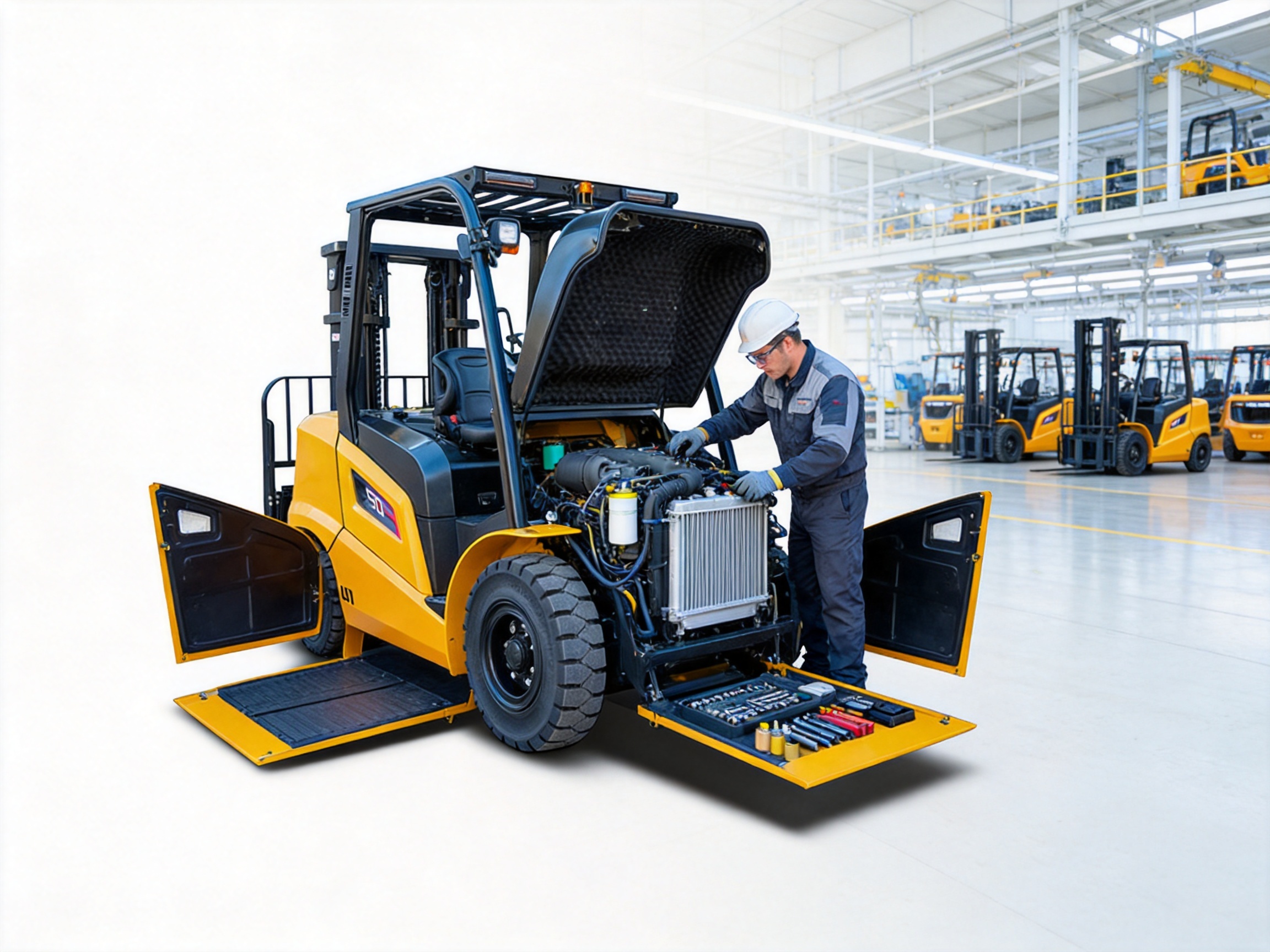
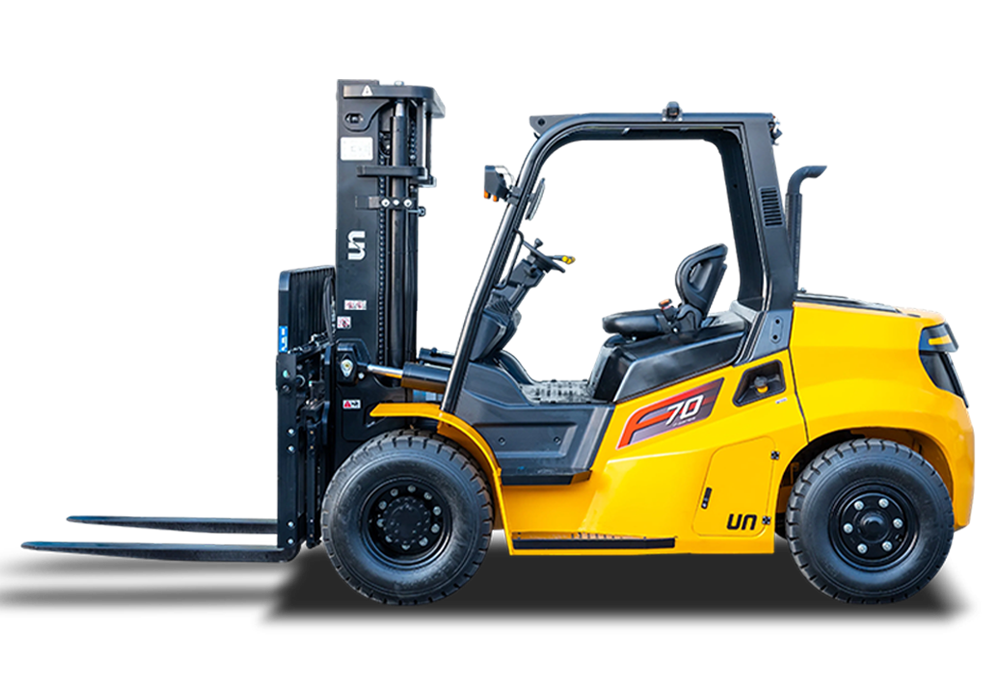
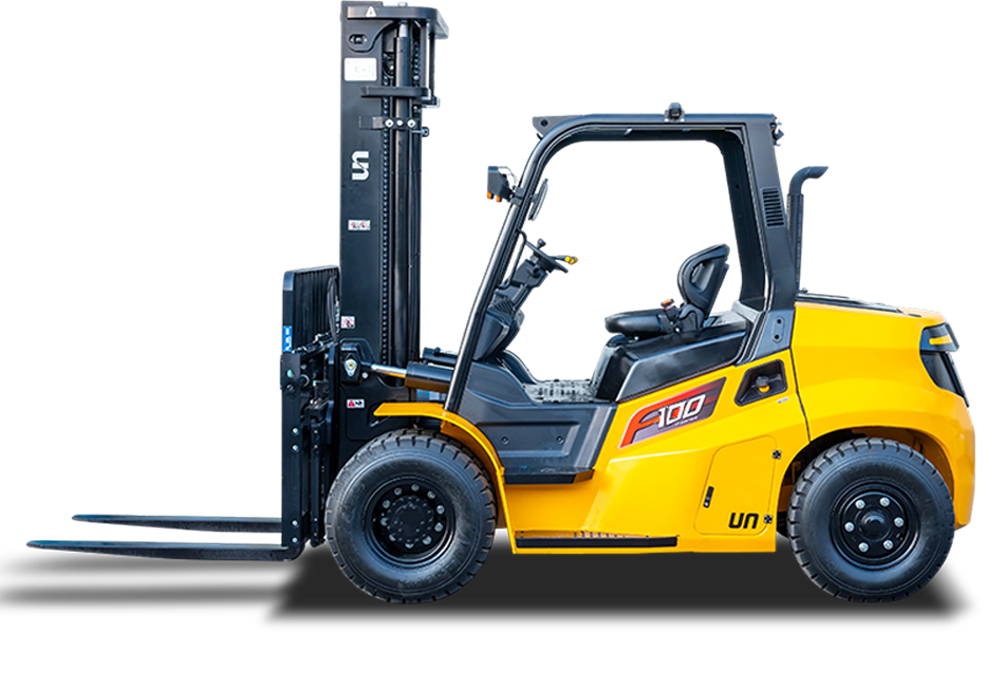
Heavy-duty material handling environments require equipment that can move substantial loads safely, consistently, and efficiently. In manufacturing plants, construction material yards, logistics centers, ports, metal-processing facilities, and large warehouses, a forklift is expected to work for long hours while maintaining stable performance under changing operating conditions. The F Series 4.0T–5.0T diesel forklift is designed for this class of application, combining high load capacity, strong traction, durable structural components, practical maintenance access, and an operator-focused cab layout.
The product family includes the FD45T, FD50T, and FD55T models, with rated capacities of 4,500 kg, 5,000 kg, and 5,500 kg respectively at a 500 mm load center. These models provide a useful range for companies that need more lifting power than a standard medium-duty forklift can provide but still require maneuverability in organized industrial spaces.
Unlike many basic heavy-duty forklifts that focus only on rated capacity, this series addresses the complete operating cycle. Its design considers acceleration, lifting speed, steering response, visibility, vibration reduction, service access, hydraulic efficiency, and protection against water-related electrical problems. The result is a balanced industrial truck intended to deliver dependable productivity over an extended service life.
Heavy-Duty Capability for Real Industrial Work
Rated capacity is one of the most important specifications when selecting a forklift, but capacity alone does not determine practical performance. The truck must also remain stable when the load is raised, provide sufficient traction on ramps and uneven surfaces, maintain control during repeated travel cycles, and allow the operator to position loads accurately. The F Series has been developed around these combined requirements.
The FD45T is rated for 4,500 kg, making it suitable for heavy pallets, machinery components, packaged raw materials, steel products, construction supplies, and other industrial loads. The FD50T increases capacity to 5,000 kg, while the FD55T offers a 5,500 kg rating for applications that require additional lifting reserve. All three models use a 500 mm load center in the supplied specifications.
A 500 mm load center is a common reference point for industrial load handling. However, operators must always verify the actual load dimensions, weight distribution, attachment configuration, and lifting height before operating. When a load extends farther forward than the rated load center, the effective lifting capacity may be reduced. Proper load assessment is therefore essential for safe and efficient use.
The heavy-duty structure is supported by a stamped overhead guard, a robust counterweight, a reinforced steering axle, and a chassis intended to withstand repeated loading and unloading cycles. These components are especially valuable in applications where the truck frequently carries dense loads or operates across long travel routes.
Model Range and Principal Specifications
The three-model range allows users to select the appropriate capacity without purchasing a truck that is unnecessarily large for the application. A correctly matched forklift can reduce fuel consumption, tire wear, maintenance costs, and aisle requirements while still providing a suitable safety margin.
| Specification | FD45T | FD50T | FD55T |
|---|---|---|---|
| Power type | Diesel | Diesel | Diesel |
| Rated load capacity | 4,500 kg | 5,000 kg | 5,500 kg |
| Load center | 500 mm | 500 mm | 500 mm |
| Length to fork face without fork | 3,265 mm | 3,265 mm | 3,315 mm |
| Overall width | 1,520 mm | 1,520 mm | 1,520 mm |
| Overhead guard height | 2,370 mm or 2,260 mm | 2,370 mm or 2,260 mm | 2,370 mm or 2,260 mm |
| Outside turning radius | 2,930 mm | 2,930 mm | 2,980 mm |
| Travel speed, loaded/unloaded | 25/26 km/h | 25/26 km/h | 25/26 km/h |
| Lifting speed, loaded/unloaded | 580/620 mm per second | 580/620 mm per second | 530/580 mm per second |
| Maximum gradeability, loaded/unloaded | 33/28 percent | 33/28 percent | 33/28 percent |
| Wheelbase | 2,100 mm | 2,100 mm | 2,100 mm |
| Total weight | 6,510 kg | 6,920 kg | 7,280 kg |
| Engine model | S6S | S6S | S6S |
The specifications show that the FD45T and FD50T share many dimensional and performance characteristics, while the FD55T provides additional capacity with a modest increase in length, turning radius, weight, and lifting load. This makes the range relatively easy to integrate into a mixed fleet because operators can move between models with familiar controls and operating principles.
Engine and Powertrain Performance
The F Series uses a Mitsubishi S6S diesel engine with six cylinders, a 4.996-liter displacement, a rated output of 52 kW at 2,300 revolutions per minute, and rated torque of 248 N·m at 1,700 revolutions per minute. This configuration is intended to provide the low-speed torque required for starting with a heavy load, climbing ramps, and maintaining movement over demanding surfaces.
Diesel power remains a practical choice for heavy-duty outdoor and semi-outdoor operations. Refueling can be completed quickly, making diesel trucks suitable for applications with long work shifts and limited opportunities for battery charging. Diesel forklifts also provide strong sustained performance when handling dense loads or working on gradients.
The engine package is complemented by a 110-liter fuel tank. The relatively large tank supports extended operating periods between refueling stops, although actual fuel consumption will depend on load, travel distance, idle time, tire pressure, surface condition, operator behavior, and maintenance quality.
The hydraulic transmission uses two forward stages and one reverse stage. This arrangement gives the operator a practical balance between maneuverability and travel performance. Low-speed control is important when approaching pallets, racks, trucks, and production lines, while the higher forward range helps reduce travel time across larger yards or facilities.
The high-speed-ratio floating transmission is designed to improve driving speed and working efficiency. A floating transmission concept can help maintain smoother contact and more consistent power delivery when the truck encounters changing surface conditions. It also supports a more comfortable driving experience during repeated travel cycles.
The maximum travel speed is listed as 25 km/h with a full load and 26 km/h without a load. These figures are appropriate for a heavy industrial forklift, but site speed limits must always take priority. Indoor facilities, pedestrian areas, ramps, loading docks, and congested yards may require substantially lower operating speeds.
Maximum gradeability is specified at 33 percent with a full load and 28 percent without a load. Gradeability is influenced by surface material, tire condition, load position, road length, weather, and traction. Operators should never treat the maximum figure as a recommended routine operating condition. A formal site risk assessment should determine safe travel routes and ramp procedures.
Hydraulic Efficiency and Work Productivity
Hydraulic performance directly affects the speed and precision of lifting, lowering, tilting, and attachment operation. The F Series incorporates a dual-pump flow-merging system intended to improve work efficiency while reducing unnecessary energy loss. By combining hydraulic flow when appropriate, the system can support faster multi-function operation and more responsive handling.
The load-sensing system is another important feature. Instead of continuously delivering maximum hydraulic flow regardless of demand, a load-sensing arrangement can adjust hydraulic assistance according to the operator’s requirements. This supports more efficient use of engine power and can help reduce energy losses during periods of partial hydraulic demand.
The specified operating pressure for attachments is 23.5 MPa. This provides a useful hydraulic foundation for approved attachments, although attachment selection must be based on the truck’s capacity, hydraulic flow, residual capacity, mounting method, and intended working height. An attachment changes the load center and may significantly affect the safe lifting capacity.
Rated lifting speed is 580 mm per second with a full load and 620 mm per second without a load for the FD45T and FD50T. The FD55T is rated at 530 mm per second with a full load and 580 mm per second without a load. These figures allow efficient pallet positioning and stacking while maintaining the lifting strength needed for heavy applications.
Lowering speed is listed within a range of 300 to 600 mm per second. Controlled lowering is essential when placing fragile or unstable loads. A fast lift can improve cycle time, but precise hydraulic control remains more important than speed when working near personnel, racking, vehicles, or sensitive products.
Structural Durability and Long-Term Reliability
Heavy-duty forklifts are exposed to shock loads, uneven surfaces, repeated mast movement, high axle loads, and frequent direction changes. Structural durability therefore has a direct effect on uptime and ownership cost. The F Series uses a reinforced design approach that addresses several areas commonly subjected to stress.
The integrated large-turning-cast steering axle is designed to increase axle strength by approximately 30 percent compared with the previous design reference provided for the series. Its geometry also helps reduce the turning radius. A stronger steering axle supports durability in demanding environments, while a more compact turning path can improve maneuverability around production equipment and storage areas.
The FD45T and FD50T have an outside turning radius of 2,930 mm, while the FD55T has a radius of 2,980 mm. For a truck in the 4.5 to 5.5-ton class, these dimensions provide useful maneuverability, particularly when compared with larger heavy-capacity units that may require wider operating zones.
The stamped overhead guard provides a durable protective structure above the operator. It is designed to withstand the normal demands of industrial work while preserving overhead visibility. The overhead guard height is listed as 2,370 mm, with a 2,260 mm alternative specification. Facility managers should verify the exact configuration before assigning the truck to areas with low doorways, sprinkler systems, mezzanines, or container entrances.
Waterproofing is applied to key connectors and joints. This is important in outdoor yards, wash-down areas, humid climates, and operations where dust and moisture are common. Waterproof connectors do not eliminate the need for inspection, cleaning, and correct electrical maintenance, but they can reduce the risk of failures caused by environmental exposure.
The truck’s weight contributes to stability and traction. Total weight is specified as 6,510 kg for the FD45T, 6,920 kg for the FD50T, and 7,280 kg for the FD55T. The counterweight and chassis must be considered when checking floor loading, dock capacity, trailer limits, and transport arrangements.
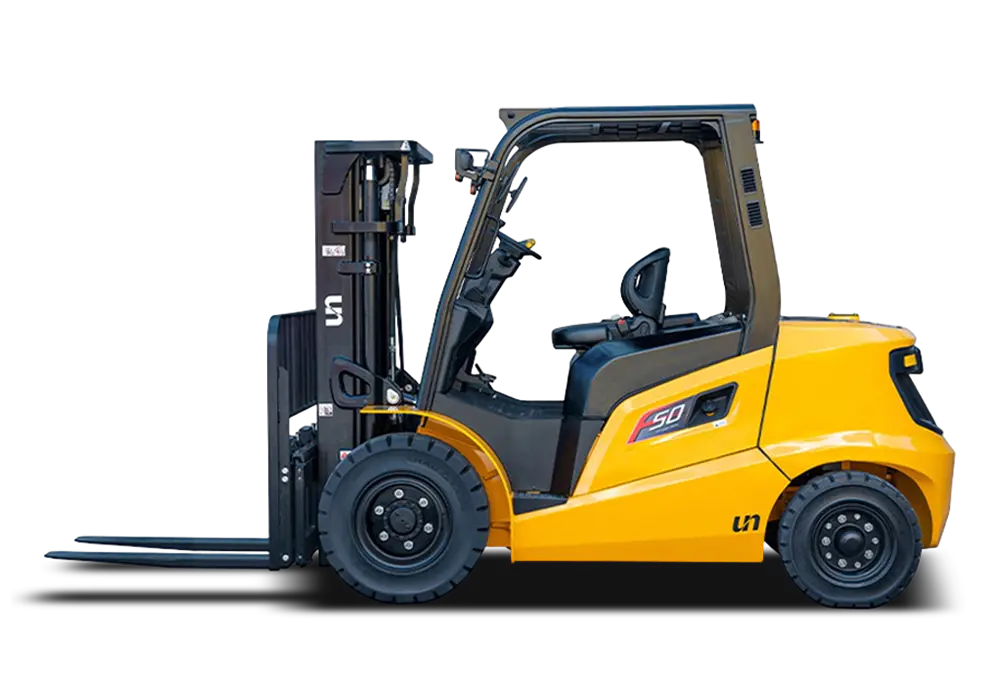
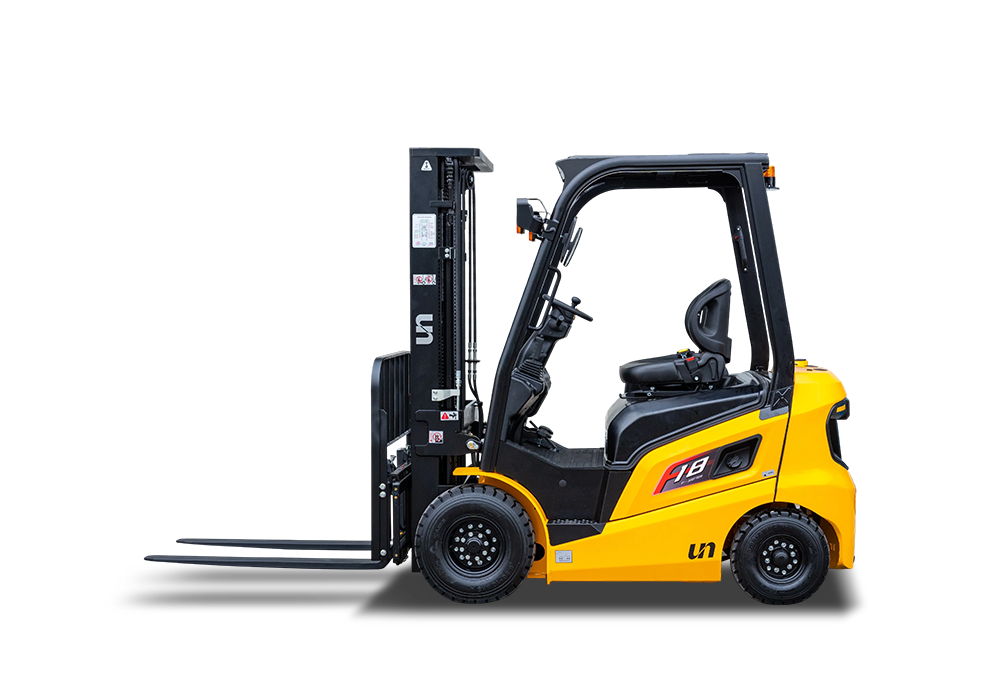
F Series 4.0T-5.0T Diesel Forklift
Operator Visibility and Ergonomic Design
Operator comfort is not simply a convenience feature. It can affect productivity, fatigue, concentration, driving precision, and the likelihood of operating errors. A forklift that is difficult to enter, uncomfortable to drive, or restrictive in visibility may reduce the benefits of its mechanical performance.
The F Series incorporates a wide-view mast designed to provide a broader forward field of vision. Better visibility helps the operator align forks with pallets, monitor load placement, identify pedestrians, and maintain awareness of nearby structures. The actual view depends on mast type, carriage, fork length, load size, lift height, and attachment, so operators must still use appropriate travel practices.
The adjustable steering column allows the driving position to be adapted to different operators. The small steering wheel is intended to reduce steering effort and support quicker hand movement during repetitive maneuvering. A properly adjusted steering position can help reduce shoulder and wrist strain during long shifts.
Rubber damping in the steering axle helps absorb impacts and improve ride smoothness. In addition, four shock-absorbing mounts are used to reduce overall vehicle vibration. These features are particularly valuable when the truck operates on rough concrete, outdoor paving, compacted gravel, or surfaces with expansion joints.
The enlarged operating space gives the operator more room to adjust posture and enter or exit the truck. A ratchet-type handbrake is designed to reduce operating force, while the suspended pedal-type braking system supports smoother braking and reduced vibration. These details contribute to easier daily operation, especially during repeated loading cycles.
Ergonomic improvements can also benefit fleet productivity indirectly. When operators experience less fatigue, they may maintain more consistent speeds, make fewer positioning corrections, and perform pre-shift checks more carefully. Management should combine ergonomic equipment with training, scheduled breaks, suitable seating adjustment, and a workplace layout that minimizes unnecessary travel.
Safety Features for Controlled Material Handling
Safety begins with correct capacity selection and proper training, but equipment design plays an important supporting role. The F Series includes several features intended to strengthen operator protection and reduce the risk of unintended operation.
The overhead guard provides a protective barrier against falling objects within the conditions defined by the equipment design and applicable safety regulations. It should not be treated as protection against every possible load failure. Loads must be stable, pallets must be suitable, and elevated loads must be handled according to site procedures.
The optional OPS system is designed to help prevent unintended forklift startup. An operator presence detection system can reduce the risk of movement when the operator is not correctly positioned. Because this feature is optional, buyers should confirm configuration, operating logic, and compatibility with local safety policies before ordering.
Water-resistant connectors and joints help improve electrical reliability in demanding environments. Electrical protection should be supported by routine inspections for damaged cables, loose terminals, corrosion, contamination, and improper modifications.
The wide-view mast, adjustable steering column, smooth braking system, and damping features all contribute to safer control. Visibility and predictable response are especially important when handling loads near people, doors, dock edges, and other vehicles.
Safe operation also requires attention to the truck’s rated capacity plate, mast height, attachment rating, load center, floor condition, ramp direction, battery or fuel condition, and overhead clearance. Operators should not exceed the rated capacity or use the forklift for towing, pushing, lifting people, or other unauthorized activities.
Maintenance Access and Service Efficiency
Maintenance design has a direct relationship with fleet availability. A truck that is technically durable but difficult to inspect may accumulate small problems that later become major failures. The F Series is designed to make routine access more practical for technicians and maintenance personnel.
The engine hood opens to approximately 80 degrees, creating a broad service opening for engine inspection and maintenance. Access to the engine compartment is important for checking oil level, coolant, belts, hoses, filters, wiring, and visible leaks. A wide opening can reduce service time and improve the quality of visual inspections.
Detachable left and right side panels allow access to components located around the engine bay and chassis. Removable panels are particularly useful for scheduled maintenance because technicians can reach service points without dismantling unnecessary surrounding components.
Pin-mounted front and rear floor plates can be removed for access to transmission, hydraulic, and control-system areas. This arrangement supports inspection of the drivetrain and underfloor components while reducing the amount of time required to open the service area.
The rear counterweight cover provides easier access to the radiator for cleaning and maintenance. Radiator cleanliness is important because dust, chaff, fibers, and other debris can restrict airflow and increase operating temperature. In dusty applications, radiator inspection and cleaning should be carried out more frequently than the standard maintenance interval.
Preventive maintenance should include engine oil and filter replacement, coolant inspection, hydraulic oil checks, transmission inspection, tire pressure monitoring, brake testing, mast lubrication, chain inspection, fork examination, steering-system checks, and electrical connector inspection. Maintenance intervals should follow the official service documentation and be adjusted when operating conditions are severe.
Manufacturing Strength and Engineering Capability
The product is manufactured by Zhejiang UN Forklift Co., Ltd., a material handling equipment producer that integrates research and development, production, sales, and service. The company was founded in 1978 and operates a facility covering approximately 53,400 square meters, with an annual production capacity of about 15,000 units.
An integrated organization can provide important advantages in industrial vehicle manufacturing. Research and development teams can work directly with production engineering, quality control, purchasing, and service departments. This supports faster feedback when a field issue is identified and helps align product design with practical manufacturing requirements.
Manufacturing scale also supports repeatability. Heavy-duty forklifts require consistent welding, machining, painting, assembly, hydraulic routing, electrical installation, and final inspection. Production capacity alone does not guarantee quality, but an established manufacturing system can provide the infrastructure required for standardized processes and controlled output.
The company offers a broad product portfolio covering internal combustion forklifts, electric forklifts, warehouse equipment, rough-terrain forklifts, and specialized material handling vehicles. Its stated range includes 17 varieties, 96 series, and more than 200 specifications. A wide product base can help the manufacturer apply lessons from different equipment categories to common areas such as steering systems, electronic controls, mast engineering, operator interfaces, and after-sales support.
The company has also contributed to the development of electric forklift technologies and participated in the formulation of Chinese electric forklift industry standards. Although the F Series is a diesel-powered product, experience with electric and new-energy equipment demonstrates a broader engineering capability that may influence future improvements in controls, efficiency, emissions performance, and fleet integration.
The manufacturer has supplied equipment to domestic and international markets and has served as an original equipment manufacturing supplier for recognized industrial companies. Such experience requires attention to specification control, delivery consistency, documentation, quality expectations, and customer-specific requirements.
Production Process Considerations
Heavy-duty forklift quality begins before final assembly. It depends on how materials are selected, how structural parts are formed, how welds are controlled, how components are protected from corrosion, and how completed trucks are tested. A robust manufacturing process should connect design requirements with measurable production controls.
Structural Fabrication
The chassis, counterweight supports, mast components, overhead guard, and axle mounting areas must be manufactured with dimensional consistency. Accurate fabrication ensures correct alignment between the mast, drive axle, steering axle, wheels, and hydraulic components. Poor alignment can increase tire wear, steering effort, vibration, and stress on structural joints.
Welding quality is especially important in a heavy-duty forklift. Weld preparation, heat control, joint design, weld sequence, and inspection methods all influence structural strength. Production teams should use controlled welding procedures and verify critical weld areas according to internal quality requirements and applicable standards.
Component Integration
The engine, transmission, hydraulic system, steering axle, braking system, electrical harnesses, and operator controls must function as a coordinated system. Component integration includes correct hose routing, protection from abrasion, appropriate connector installation, secure fasteners, and accurate adjustment of control systems.
Hydraulic cleanliness is another essential consideration. Contaminants in hydraulic oil can damage pumps, valves, cylinders, and attachment circuits. Effective manufacturing and service practices should include clean component handling, proper flushing procedures, filtered oil, and protection of open hydraulic connections.
Electrical and Environmental Protection
Key connectors and joints are designed to resist water exposure, but reliable performance also depends on correct assembly. Connectors must be fully seated, seals must be undamaged, and wiring must be routed away from heat, sharp edges, and moving parts. Environmental protection should be verified during production inspection and preserved during servicing.
Final Inspection and Testing
Before delivery, a heavy-duty forklift should undergo checks covering starting performance, engine operation, transmission response, braking, steering, mast movement, hydraulic leakage, attachment function, lighting, warning devices, parking brake holding force, tire condition, and safety labels. Load-handling tests help verify that the truck performs as intended under controlled conditions.
Final inspection is also an opportunity to verify the product configuration against the customer order. Mast height, fork size, overhead guard height, tires, attachments, optional safety systems, and regional requirements should all be confirmed before shipment.
Advantages Compared with Conventional Heavy-Duty Forklifts
Many heavy-duty forklifts offer a strong engine and large counterweight, but the F Series is differentiated by the way several performance areas are combined. Its advantages are not limited to one headline specification.
First, the model range provides capacity choices from 4,500 kg to 5,500 kg while preserving a common 2,100 mm wheelbase. This allows companies to select a higher-capacity truck without moving immediately into a much larger vehicle class.
Second, the high-speed-ratio floating transmission, 25 km/h loaded travel speed, and 33 percent loaded gradeability support efficient movement in demanding work environments. These figures are useful for applications where the forklift must travel between production zones, storage yards, and loading areas rather than perform only short indoor pallet movements.
Third, the dual-pump flow-merging and load-sensing hydraulic systems are designed to improve hydraulic productivity while reducing unnecessary energy loss. These systems can be valuable in operations that involve frequent lifting, tilting, and attachment use.
Fourth, the large-turning-cast steering axle combines increased strength with a reduced turning radius. This addresses two common heavy-duty forklift challenges: durability under high axle loading and maneuverability in restricted spaces.
Fifth, the product gives substantial attention to operator ergonomics. Wide visibility, an adjustable steering column, a small steering wheel, rubber axle damping, shock-absorbing mounts, an enlarged operating area, a low-effort handbrake, and suspended pedals can make a meaningful difference over a full working shift.
Sixth, service access is built into the design through the wide engine hood opening, detachable side panels, removable floor plates, and accessible radiator cover. Faster inspection and simpler access can reduce downtime and help maintenance teams identify problems before they interrupt production.
Finally, the manufacturing organization behind the product has long-term experience, a broad product portfolio, international market exposure, and integrated research, production, sales, and service capabilities. These factors can provide buyers with more confidence in product support, replacement parts, technical communication, and future fleet expansion.
Applications and Suitable Operating Environments
The F Series is suited to industries that require high-capacity handling and strong outdoor or semi-outdoor performance. Typical applications include steel service centers, foundries, machinery factories, building material warehouses, timber yards, paper production, logistics terminals, freight loading zones, and large-scale manufacturing plants.
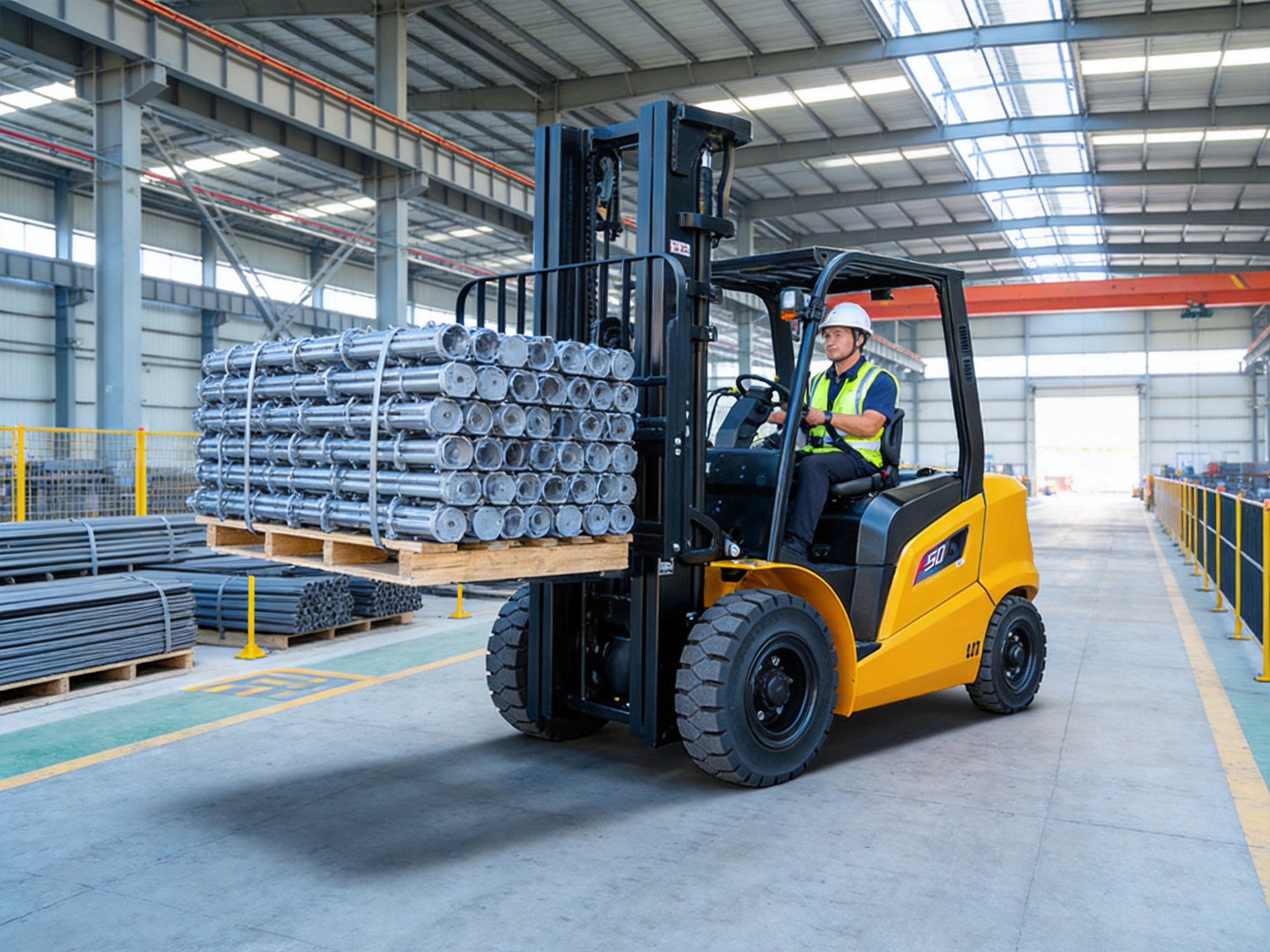
In steel-related operations, the forklift may handle coils, plates, fabricated components, molds, or heavy packages. The correct attachment, fork length, load protection, and capacity calculation are essential because steel products can have concentrated centers of gravity and sharp edges.
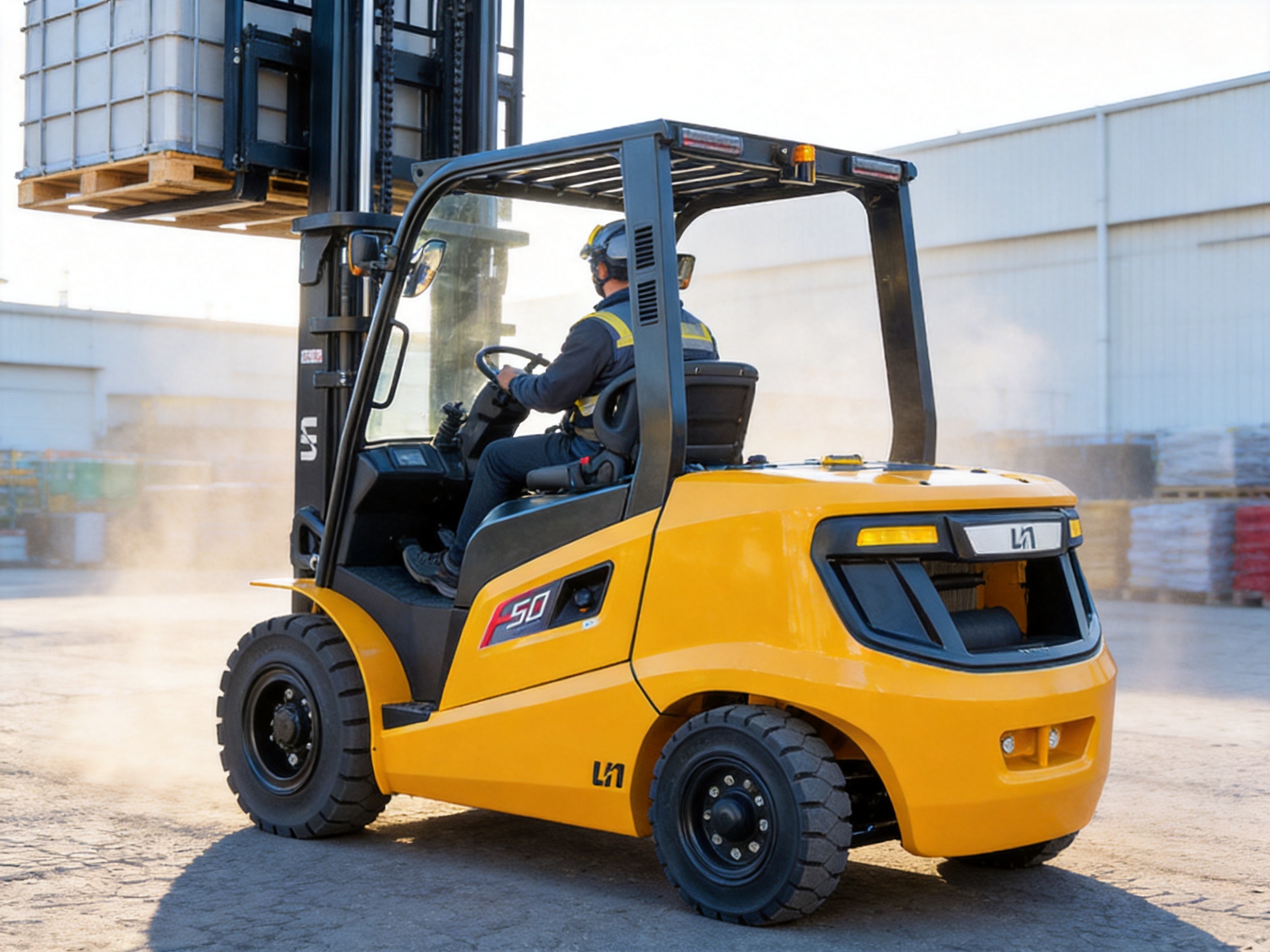
In construction material handling, the truck can be used for concrete products, bricks, stone, pipes, tiles, and packaged building supplies. Outdoor surfaces may be uneven, dusty, or wet, making traction, axle durability, visibility, and environmental protection particularly important.
In manufacturing plants, the forklift may transfer dies, machine components, raw materials, finished goods, and production fixtures. A turning radius of approximately 2,930 to 2,980 mm and an overall width of 1,520 mm should be evaluated against aisle design, doorway dimensions, work-cell layouts, and pedestrian routes.
In logistics and distribution, the truck can support loading and unloading of heavy shipments. The facility must verify dock edge protection, floor load capacity, trailer access, ramp gradients, and safe separation between forklifts and pedestrians.
Diesel power is generally most appropriate where ventilation is available and outdoor work is common. For enclosed food, pharmaceutical, or clean-room environments, an electric forklift or specialized low-emission configuration may be more suitable. The selection should reflect both the load requirement and the environmental conditions of the workplace.
Fleet Planning and Total Cost of Ownership
Purchase price is only one part of forklift economics. A fleet manager should evaluate fuel use, scheduled maintenance, unscheduled repairs, tire replacement, operator productivity, downtime, residual value, parts availability, and training requirements.
The F Series can support total cost control through its durable structure, accessible service areas, large fuel tank, efficient hydraulic design, and standardized model family. A common platform across several capacity ratings may simplify operator training and reduce the number of different spare parts and maintenance procedures required by a fleet.
Fuel efficiency depends heavily on operating behavior. Excessive idling, aggressive acceleration, unnecessary high-speed travel, incorrect tire pressure, overloaded handling, and poor route planning can increase operating costs. Load-sensing hydraulics and efficient power transmission can help, but they work best when combined with disciplined fleet management.
Maintenance records should identify operating hours, service dates, replaced parts, tire condition, hydraulic leaks, engine warnings, and recurring defects. Telematics may be considered where fleet owners need more detailed information about utilization, impact events, idle time, or service scheduling, subject to the selected configuration and available systems.
Training also affects cost. Operators who approach pallets squarely, avoid sudden braking, maintain correct fork spacing, and report defects early can reduce damage to the truck and the load. A professional operating culture is one of the strongest ways to protect equipment investment.
Selection Guidance for Buyers
Before selecting a model, buyers should define the heaviest routine load, the maximum occasional load, the actual load center, lift height, attachment requirements, travel distance, surface type, shift length, ambient temperature, and available service support.
The FD45T may be appropriate when the normal requirement is close to 4,500 kg and the buyer wants the shortest listed dimensions among the range. The FD50T provides a 5,000 kg rating with similar principal dimensions and performance. The FD55T is intended for loads up to 5,500 kg and may be preferable where additional capacity is consistently required.
Buyers should confirm whether the specified fork dimensions meet the application. The supplied data lists fork sizes of 1,070 mm by 150 mm by 50 mm and 1,070 mm by 150 mm by 55 mm, depending on configuration. Longer or thicker forks, clamps, rotators, side shifters, and other attachments may change the load center and residual capacity.
Mast selection requires equal care. Rated lift height is listed as 3,000 mm, free lift height as 150 mm, mast lowered height as 2,250 mm, and mast extended height as 4,250 or 4,405 mm depending on the configuration. Facility clearance must be checked at every point in the travel path, including doors, beams, sprinklers, trailers, and overhead services.
Buyers should also confirm regional emission requirements, safety standards, lighting packages, warning systems, optional operator-presence controls, seat configuration, tires, attachment hydraulics, and documentation. A detailed order review prevents mismatches between the truck and the operating site.
Daily Operation and Preventive Care
A pre-shift inspection should be completed before the forklift is used. The operator should check tires and wheels, forks, mast chains, hydraulic hoses, cylinders, visible fasteners, overhead guard, seat belt, steering, brakes, warning devices, lights, engine oil, coolant, fuel level, and signs of leakage.
The forks should be inspected for cracks, bending, excessive wear, and correct locking. Forks are load-bearing components and should never be repaired by unauthorized heating, welding, or modification. Any fork that does not meet the required condition should be removed from service.
The mast should be operated without a load to confirm smooth lifting, tilting, and lowering. Unusual noise, jerky motion, delayed response, or hydraulic leakage should be reported immediately. Chains and rollers require correct lubrication and adjustment according to the service schedule.
Tire pressure and condition have a major effect on stability, braking, fuel use, and ride comfort. Solid or pneumatic tires should be selected for the surface and load conditions, and damaged tires should be replaced promptly. The supplied specifications list 300-15-18PR front tires and 7.00-12-12PR rear tires, but the exact tire configuration should be confirmed for each order.
Radiator cleanliness deserves special attention in dusty environments. Restricted cooling airflow can increase engine temperature and shorten component life. Cleaning should be performed using a method that does not damage fins, electrical parts, seals, or nearby components.
At the end of a shift, operators should park on a level surface where possible, lower the forks fully, apply the parking brake, place controls in the neutral position, shut down the engine, and remove the key according to site procedures. Defects should be recorded rather than passed to the next shift without notification.
Environmental and Energy Considerations
Diesel forklifts are valued for high capacity and long operating range, but responsible operation requires attention to emissions, fuel quality, maintenance, and workplace ventilation. Regular engine servicing helps maintain combustion efficiency and reduce avoidable emissions caused by blocked filters, poor lubrication, injector problems, or incorrect adjustments.
The manufacturer has stated a commitment to energy saving, environmental protection, high efficiency, and safety. It has also developed new-energy models, including diesel-to-lithium-ion and standard lithium-ion battery forklifts. This broader technology portfolio allows customers to consider different power systems as their operating conditions and environmental policies change.
For the F Series, buyers should use suitable fuel, maintain the engine according to the service schedule, minimize unnecessary idling, and follow local emissions requirements. Facilities should provide adequate ventilation whenever diesel equipment operates indoors or in enclosed loading areas.
Where zero-emission operation is mandatory, an electric or lithium-ion forklift may be more appropriate. However, heavy outdoor work, long shifts, rough surfaces, steep ramps, and limited charging infrastructure can still make diesel equipment a practical choice. The correct decision should be based on a complete duty-cycle analysis rather than a single environmental preference.
Service Network and Customer Support
Product reliability is supported by the availability of parts, technical advice, warranty administration, operator guidance, and service response. The manufacturer maintains an international sales and service network with partners in Europe, South America, North America, Africa, and Asia.
For fleet owners, support should be evaluated before purchase. Important questions include the location of the nearest service partner, expected parts lead times, warranty coverage, technician qualifications, availability of service manuals, recommended maintenance intervals, and procedures for emergency assistance.
A strong supplier relationship can also support fleet standardization. When customers add FD45T, FD50T, or FD55T units over time, consistent controls and shared technical knowledge can simplify operator training and workshop planning. Fleet expansion should still include a review of site capacity, traffic management, and application changes.
The company provides regional contact channels for the Americas, Europe, Asia, Africa, Oceania, and parts inquiries. Buyers should use the relevant regional contact when requesting quotations, technical clarification, replacement components, or configuration confirmation.
Frequently Asked Questions
What is the rated capacity of the F Series range?
The range includes three listed models: the FD45T with a rated capacity of 4,500 kg, the FD50T with a rated capacity of 5,000 kg, and the FD55T with a rated capacity of 5,500 kg. The stated load center for all three models is 500 mm.
Are these forklifts suitable for outdoor work?
They are designed for heavy-duty diesel applications and can be used in suitable outdoor or semi-outdoor environments. Buyers should evaluate the ground condition, drainage, gradients, dust, weather exposure, lighting, and traffic separation before deployment.
What engine is used?
The supplied specifications identify the Mitsubishi S6S engine. It has six cylinders, a displacement of 4.996 liters, a rated output of 52 kW at 2,300 revolutions per minute, and rated torque of 248 N·m at 1,700 revolutions per minute.
How fast can the forklift travel?
The listed travel speed is 25 km/h with a full load and 26 km/h without a load. Actual site speed should be controlled according to local regulations, traffic conditions, pedestrian presence, load stability, and surface quality.
What is the lifting speed?
The FD45T and FD50T are listed at 580 mm per second with a full load and 620 mm per second without a load. The FD55T is listed at 530 mm per second with a full load and 580 mm per second without a load.
Does the forklift include an operator-presence system?
An OPS system is identified as optional. Customers should confirm whether it is included in the selected configuration and should verify its operating functions before placing the truck into service.
What maintenance features are included?
The product includes an engine hood opening angle of approximately 80 degrees, detachable side panels, pin-mounted front and rear floor plates, and a rear counterweight cover that provides access to the radiator. These features are intended to make routine inspection and maintenance more convenient.
Can the forklift use attachments?
The truck provides an attachment operating pressure of 23.5 MPa in the supplied specifications. Any attachment must be approved for the specific model and must be evaluated for hydraulic compatibility, mounting, weight, visibility, load center, and residual capacity.
What should be checked before ordering?
Customers should confirm capacity, load center, mast type, lift height, lowered height, fork dimensions, attachment requirements, tire type, overhead clearance, aisle width, floor loading, emissions requirements, optional safety systems, warranty terms, and local service support.
How does this range compare with larger heavy-duty forklifts?
The F Series offers a combination of 4,500 to 5,500 kg capacity, a 1,520 mm overall width, a 2,100 mm wheelbase, and an outside turning radius from 2,930 to 2,980 mm. This can provide useful maneuverability for a heavy-duty truck, although each site must compare actual dimensions and operating requirements.
Conclusion
The F Series 4.0T–5.0T diesel forklift family is designed for businesses that need dependable high-capacity material handling without moving immediately into an oversized truck category. The FD45T, FD50T, and FD55T provide a practical range of capacities, strong diesel performance, efficient hydraulic functions, durable structural components, and useful maneuverability.
Its key advantages include the six-cylinder Mitsubishi engine, high-speed-ratio floating transmission, dual-pump flow-merging system, load-sensing hydraulics, reinforced cast steering axle, waterproof key connectors, optional operator-presence protection, wide-view mast, vibration-reduction features, and service-friendly access panels.
The product is also supported by a manufacturer with decades of industry experience, integrated research and production capabilities, a broad material handling portfolio, international market coverage, and experience in both internal combustion and new-energy forklift development. These strengths can be valuable for customers seeking a long-term equipment supplier rather than a one-time machine purchase.
As with any industrial vehicle, the best results depend on correct model selection, trained operators, preventive maintenance, safe traffic planning, and accurate evaluation of the actual load center and work environment. When those requirements are properly managed, this heavy-duty diesel forklift range can provide a strong combination of capacity, productivity, comfort, durability, and serviceability.
References
1. Zhejiang UN Forklift Co., Ltd. Product information for the F Series 4.0T–5.0T diesel forklift.
2. Zhejiang UN Forklift Co., Ltd. Technical specifications for the FD45T, FD50T, and FD55T models.
3. Manufacturer-provided information on company history, production capacity, product development, and international service coverage.
4. General industrial forklift safety principles concerning load capacity, load center, operator training, workplace traffic, and preventive maintenance.
5. General engineering practices for diesel engine maintenance, hydraulic system cleanliness, tire inspection, and heavy-duty material handling equipment management.
Product: F Series 4.0T-5.0T Diesel Forklift
For exclusive deals and latest offers, sign up by entering your email address below.
Stay In Touch
ADDRESS : NO.1 ROAD ONE, XINDENG NEW DISTRICT, FUYANG, HANGZHOU, ZHEJIANG, CHINA 311404.
PHONE : +86-571-8688 8355 (AMERICA)
PHONE : +86-571-8886 9363 (EUROPE)
PHONE : +86-571-8688 8377 (ASIA, AFRICA, OCEANIA)
EMAIL : [email protected]
EMAIL : [email protected](PARTS INQUIRY)

