


 中文简体
中文简体 Français
 русский
 Español
 عربى
عربى Deutsch



N Series 3.0T–3.5T Diesel Forklift: Power, Comfort, and Reliable Material Handling
Admin 2026-08-20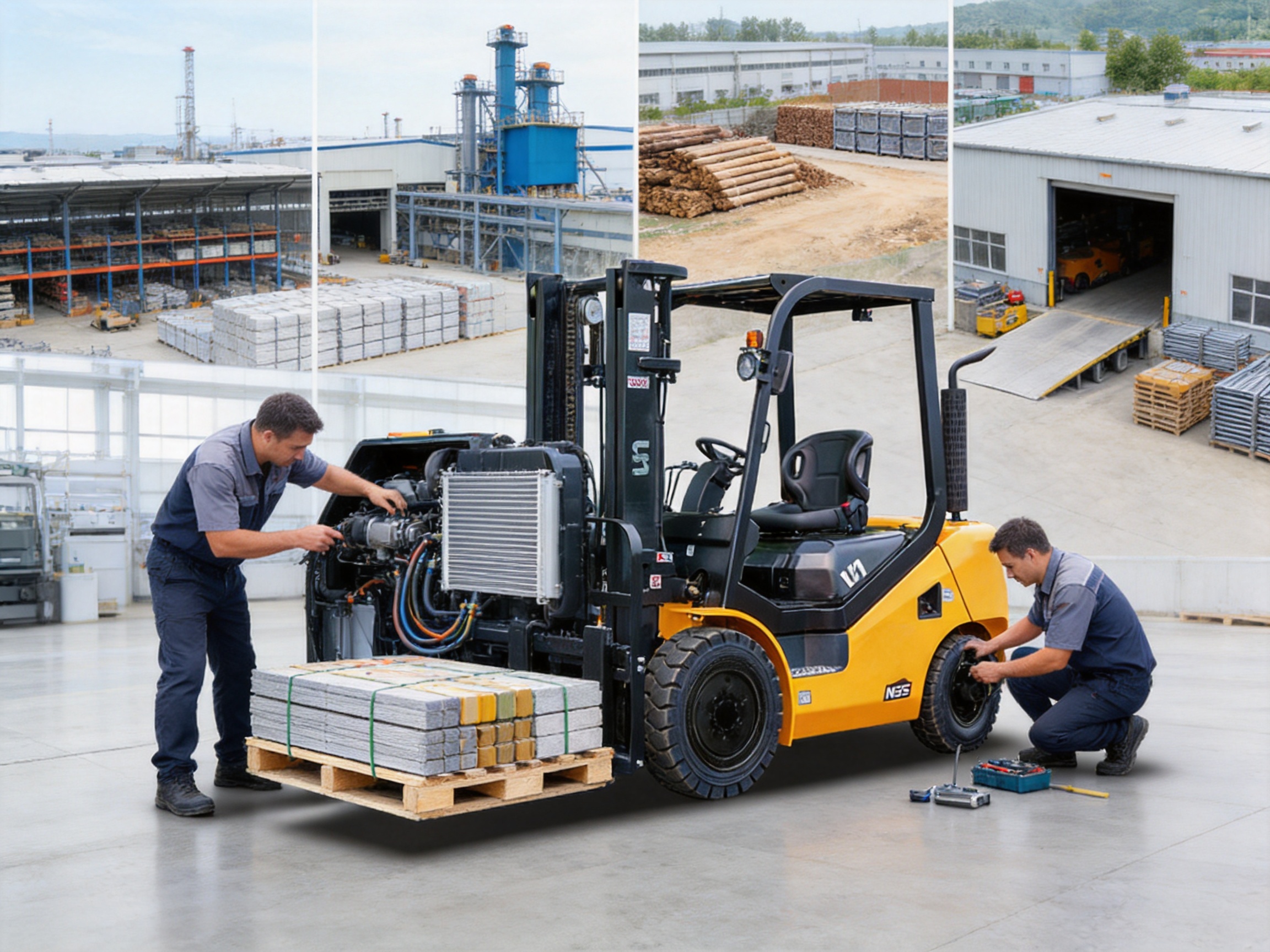
In warehouses, factories, distribution centers, construction yards, ports, and industrial production facilities, forklift performance directly affects productivity, operating costs, and workplace safety. Businesses handling medium and heavy loads need equipment that can deliver dependable lifting power throughout long working shifts while remaining easy and comfortable for operators to control. The N Series 3.0T–3.5T Diesel Forklift is designed to meet these requirements with a balanced combination of strong performance, durable construction, practical ergonomics, and efficient serviceability.
Positioned within the 1.5T–5.0T internal combustion forklift range, the N Series 3.0T–3.5T models address one of the most widely used capacity segments in industrial material handling. Their rated capacities make them suitable for palletized goods, machinery components, building materials, packaged products, metal products, timber, and many other loads that require more lifting capability than a compact warehouse truck can provide.
These forklifts are manufactured by Zhejiang UN Forklift Co., Ltd., a material handling equipment producer with decades of experience in research and development, manufacturing, sales, and after-sales service. The company’s long-term involvement in both internal combustion and electric forklift technologies provides a broad engineering foundation for developing practical industrial vehicles. Its manufacturing operations, product portfolio, international service network, and experience as an original equipment manufacturer support the reliability and adaptability expected from modern forklift equipment.
The N Series is not designed merely to move a load from one point to another. It is engineered as a complete workplace solution. Its powertrain is intended to provide stable output under load, its enlarged radiator supports thermal control during demanding operations, and its operator-focused design helps reduce fatigue during repeated driving, lifting, and reversing. Together, these features make the 3.0T–3.5T diesel forklift a versatile choice for companies that require consistent performance in challenging working environments.
Understanding the 3.0T–3.5T Capacity Class
Capacity is one of the most important factors when selecting a forklift. A machine that is too small may be unable to safely handle the required load, while an oversized machine can increase purchase, fuel, and maintenance costs without delivering a practical benefit. The 3.0T–3.5T class provides a useful middle ground for many industrial operations.
A forklift in this capacity range can support substantial loads while remaining more maneuverable and economical than a larger heavy-duty truck. It is commonly selected by manufacturers, logistics operators, construction material suppliers, agricultural businesses, packaging companies, and general warehouses that handle loads of varying shapes and weights.
The actual safe lifting capacity depends on factors such as load center, lift height, mast configuration, attachment type, tire selection, and operating conditions. Therefore, users should always consult the official capacity plate and technical documentation before handling a specific load. Nevertheless, the 3.0T–3.5T category is widely recognized as a popular tonnage for internal combustion forklifts because it provides a practical combination of lifting ability, operating flexibility, and overall cost control.
| Key Area | N Series 3.0T–3.5T Diesel Forklift Value | Operational Benefit |
|---|---|---|
| Rated capacity class | 3.0T–3.5T | Suitable for medium-duty and demanding industrial handling tasks |
| Power source | Diesel internal combustion powertrain | Strong performance for outdoor and intensive applications |
| Cooling system | Enlarged radiator design | Supports stable operation during extended or heavy-duty work |
| Operator environment | Ergonomic driving-focused layout | Improves comfort and helps reduce fatigue |
| Application range | Warehouses, factories, yards, construction, and logistics | Flexible use across different industries |
| Product support | Backed by an international sales and service network | Supports parts, maintenance, and long-term ownership |
Strong Diesel Performance for Demanding Work
The primary strength of the N Series is its diesel powertrain. Diesel engines are widely used in industrial forklifts because they can provide substantial torque, robust low-speed performance, and reliable operation during repeated acceleration, lifting, and maneuvering. These characteristics are particularly valuable when a forklift must work on uneven surfaces, travel across outdoor yards, or handle heavy goods throughout an extended shift.
In contrast with smaller warehouse vehicles designed mainly for smooth indoor floors, a diesel forklift is better suited to mixed operating conditions. The N Series can be used in facilities where the forklift regularly moves between indoor and outdoor areas, loads trucks, transfers materials across production zones, or operates on surfaces that are less uniform than a finished warehouse floor.
Stable power delivery is especially important when the forklift is carrying a high-density load. Steel products, stone, machinery, paper rolls, construction materials, and industrial components can place considerable demand on the engine and hydraulic system. The N Series is designed to maintain dependable working performance during these tasks, helping operators complete handling cycles with confidence.
The powertrain also contributes to controlled travel and lifting. A forklift must not only generate enough power to move a heavy load; it must deliver that power in a predictable manner. Smooth response helps the operator position pallets accurately, approach storage locations safely, and maintain control when working in restricted spaces. This balance between power and controllability is one of the factors that distinguishes a well-engineered industrial forklift from a basic load carrier.
Performance Compared with Smaller Forklifts
Compared with compact electric or light-duty forklifts, a 3.0T–3.5T diesel model offers greater capacity for heavy industrial loads and more flexibility in outdoor applications. Smaller machines may be efficient for light pallets and narrow indoor aisles, but they can become unsuitable when the load weight increases or when the work environment includes ramps, rougher surfaces, long travel distances, or frequent truck loading.
The N Series provides a practical alternative for businesses that need more capability without moving immediately to a much larger and more expensive forklift class. Its capacity range is large enough for demanding work while remaining suitable for general-purpose industrial operations.
Performance Compared with Larger Forklifts
Compared with larger forklifts, the N Series can offer a more balanced footprint for facilities that do not require extreme lifting capacity. A smaller turning envelope, lower operating cost, and more flexible application range can be advantageous in factories and distribution centers where space is valuable. The 3.0T–3.5T category can therefore reduce the need to use oversized equipment for routine loads.
Choosing the correct capacity class improves productivity because the machine is matched to its real operating conditions. A properly sized forklift can move the required loads without unnecessary fuel consumption, excess tire wear, or inefficient use of warehouse space.
Enhanced Thermal Management with an Enlarged Radiator
Forklifts often work under conditions that place continuous demand on the engine and cooling system. High ambient temperatures, heavy loads, long travel routes, repeated reversing, ramps, and frequent stop-and-go operation can all increase thermal stress. Effective cooling is therefore essential for maintaining dependable performance and protecting major powertrain components.
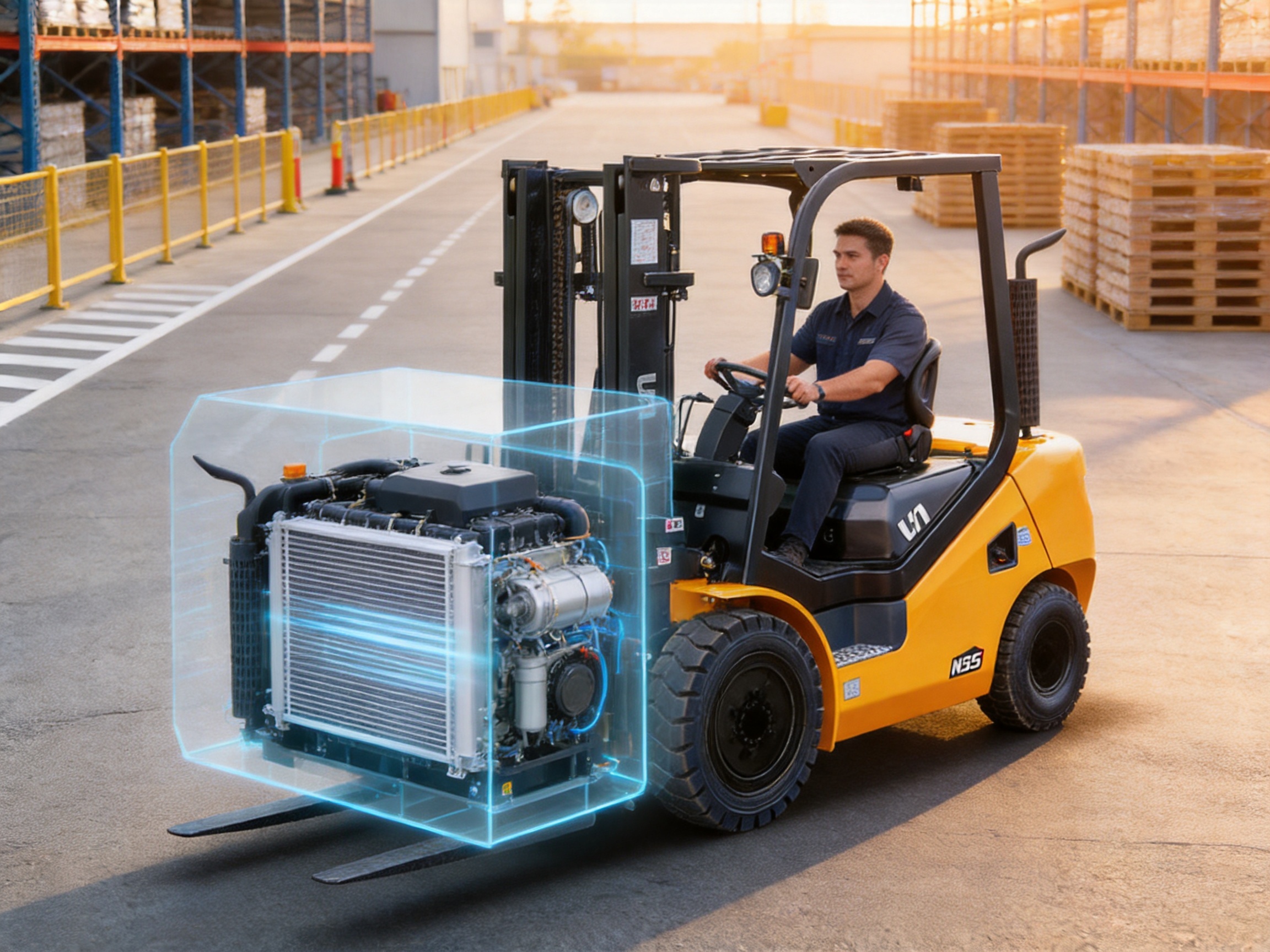
The N Series is equipped with an enlarged radiator to support heat dissipation during demanding operations. By providing a larger cooling area, the radiator helps the forklift manage engine heat more effectively. This is particularly important when the equipment is used for long shifts, in warm climates, or in applications where the engine must repeatedly operate under high load.
Improved thermal management offers several practical advantages. It can help reduce the risk of overheating-related interruptions, support more stable engine performance, and contribute to longer component life when the forklift is properly maintained. It also gives operators greater confidence when handling heavy materials over extended work periods.
Cooling performance must always be considered together with routine maintenance. Radiator fins should be kept clean, coolant levels should be checked according to the maintenance schedule, and the surrounding engine compartment should be inspected for debris or damage. The enlarged radiator provides an engineering advantage, but consistent inspection and cleaning remain essential for achieving the intended results.
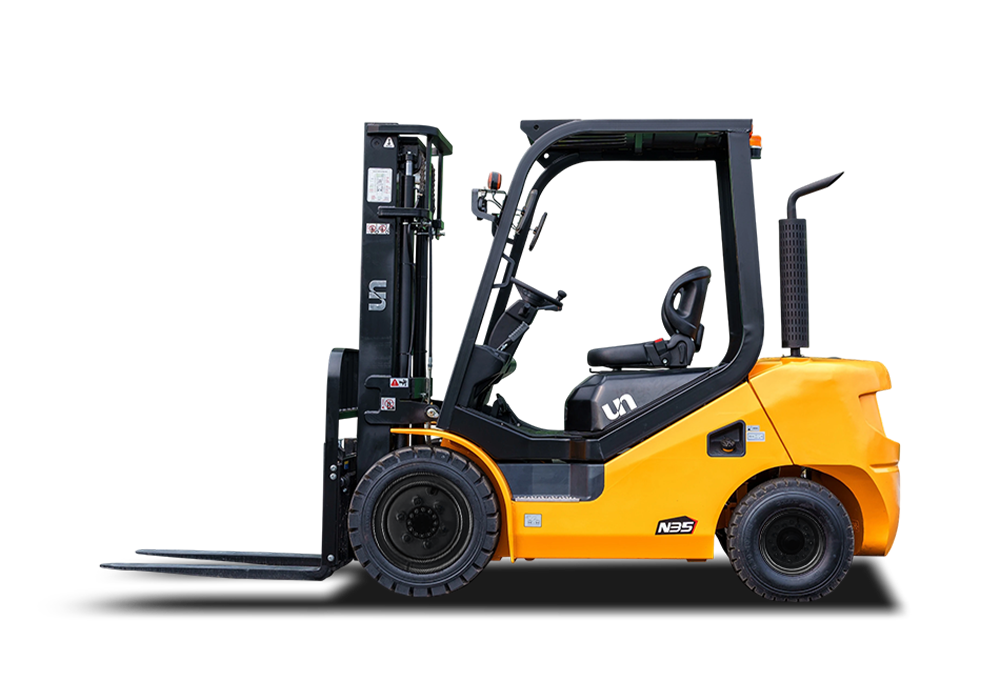
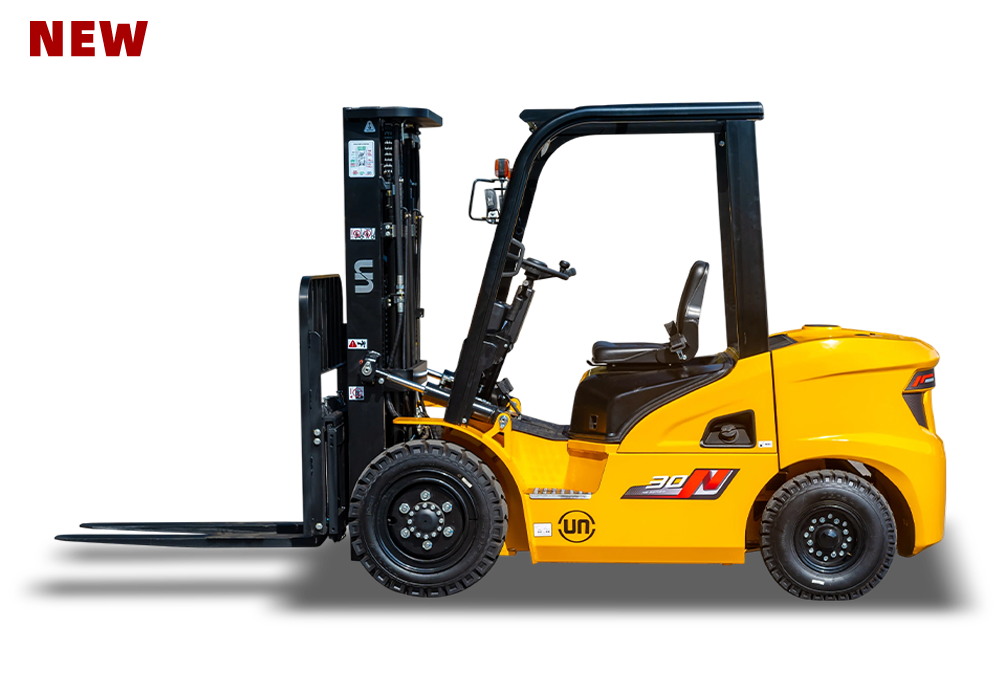
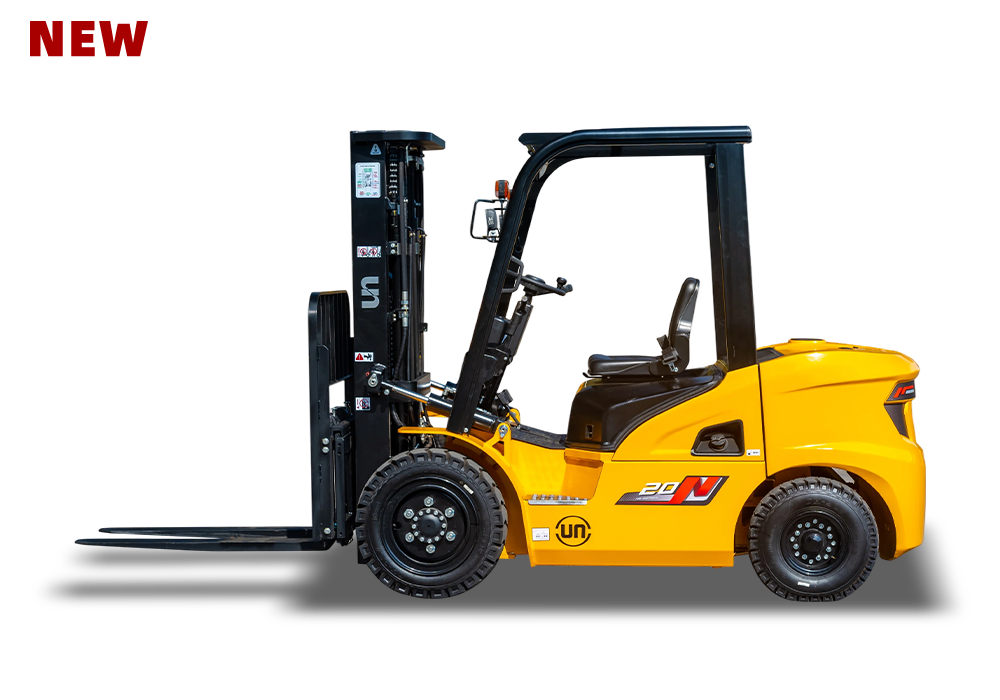
N Series 3.0T-3.5T Diesel Forklift
Operator Comfort as a Productivity Factor
Forklift operators frequently repeat the same actions for several hours: entering and leaving the vehicle, steering, accelerating, braking, reversing, lifting, lowering, checking the load, and monitoring surrounding traffic. If the operator environment is poorly designed, fatigue can develop quickly. Fatigue can affect concentration, reaction time, driving precision, and overall productivity.
The N Series incorporates an ergonomic design intended to enhance driving comfort. Ergonomics in a forklift involves more than the appearance of the seat or dashboard. It includes the relationship between the seat, steering wheel, pedals, levers, visibility areas, control positions, entry steps, and protective structures. When these elements are arranged logically, the operator can perform essential tasks with less unnecessary movement.
A comfortable operating position is especially important during pallet-intensive work. Repeated reversing and frequent changes of direction require the operator to maintain awareness of the load, pedestrians, storage racks, and other vehicles. A practical cabin layout can help the driver remain focused while carrying out these movements.
Ergonomic design also supports more consistent operation. When controls are easy to reach and the operator can maintain a stable posture, load placement can become more accurate. This can reduce handling errors, improve pallet alignment, and help protect goods and storage equipment.
Reducing Fatigue During Extended Shifts
Operator fatigue is an operational issue as well as a comfort issue. A tired driver may take longer to complete each handling cycle or may make more frequent positioning corrections. Over an entire shift, these small delays can influence output. By providing a more comfortable driving environment, the N Series is designed to support sustained productivity without relying on excessive operator effort.
Comfort should be evaluated in relation to the full working environment. Seat adjustment, steering effort, pedal arrangement, vibration control, visibility, access to controls, and ease of entry all contribute to the operator’s experience. Businesses considering a forklift should arrange a practical evaluation whenever possible, allowing operators to assess whether the machine suits the actual work cycle.
Practical Applications Across Multiple Industries
The flexibility of the N Series makes it suitable for a broad range of sectors. Its capacity and diesel configuration provide advantages in areas where loads are heavy, travel distances are significant, or operations extend beyond the limits of a conventional indoor warehouse.
Manufacturing Plants
Manufacturing facilities often need to transport raw materials, components, work-in-progress products, packaging, and finished goods. The forklift may be required to move materials between receiving areas, production lines, inspection zones, and finished-goods warehouses. A 3.0T–3.5T diesel forklift can support these internal logistics activities while also handling incoming and outgoing trucks.
In manufacturing, reliability is critical because a forklift breakdown can affect more than the material handling department. If production materials do not reach the line on time, the interruption can influence the entire manufacturing schedule. The N Series is designed to provide dependable operation for repetitive industrial duties.
Distribution and Logistics Centers
Distribution centers may handle a wide mixture of products, including consumer goods, packaged food, appliances, industrial supplies, and construction products. The N Series can be used for unloading trailers, transferring pallets, staging shipments, and loading outbound vehicles.
Its diesel power is useful in loading yards and semi-open facilities where the forklift must frequently travel between indoor and outdoor areas. The capacity range also enables one machine to handle a variety of pallet weights instead of requiring separate equipment for every task.
Construction Material Handling
Construction materials can be dense, irregularly packaged, or difficult to move manually. Bricks, tiles, cement products, steel sections, timber, glass, pipes, and mechanical equipment often require a forklift with dependable lifting power. The N Series is suitable for construction supply yards, building material warehouses, and project sites where conditions may be more demanding than those of a finished indoor floor.
Site managers should always evaluate ground conditions, gradients, overhead clearances, surface stability, and load dimensions before assigning the forklift to a construction application. Attachments and load-handling accessories must also be approved for the specific machine and load.
Metal, Timber, and Industrial Goods
Metal products and timber can place high demands on forklift capacity because their density may be significant even when the load appears compact. The N Series offers a practical solution for handling such materials when the rated capacity, load center, and attachment configuration are properly matched.
Industrial goods may also have unusual dimensions or a high center of gravity. Operators must receive suitable training, and loads must be secured and positioned correctly. The forklift’s performance is most effective when it is used within the limits established by its manufacturer.
Ports, Yards, and Outdoor Storage
Outdoor storage yards require equipment that can cope with longer travel distances, variable weather, and surfaces that may not be as smooth as indoor floors. Diesel forklifts are commonly selected for these conditions because of their robust power and suitability for outdoor work.
The N Series can support the movement of pallets, crates, machinery, and industrial materials in yards and transfer areas. Its enlarged radiator is particularly relevant to applications involving long operating periods or warm environments, provided that the cooling system is maintained properly.
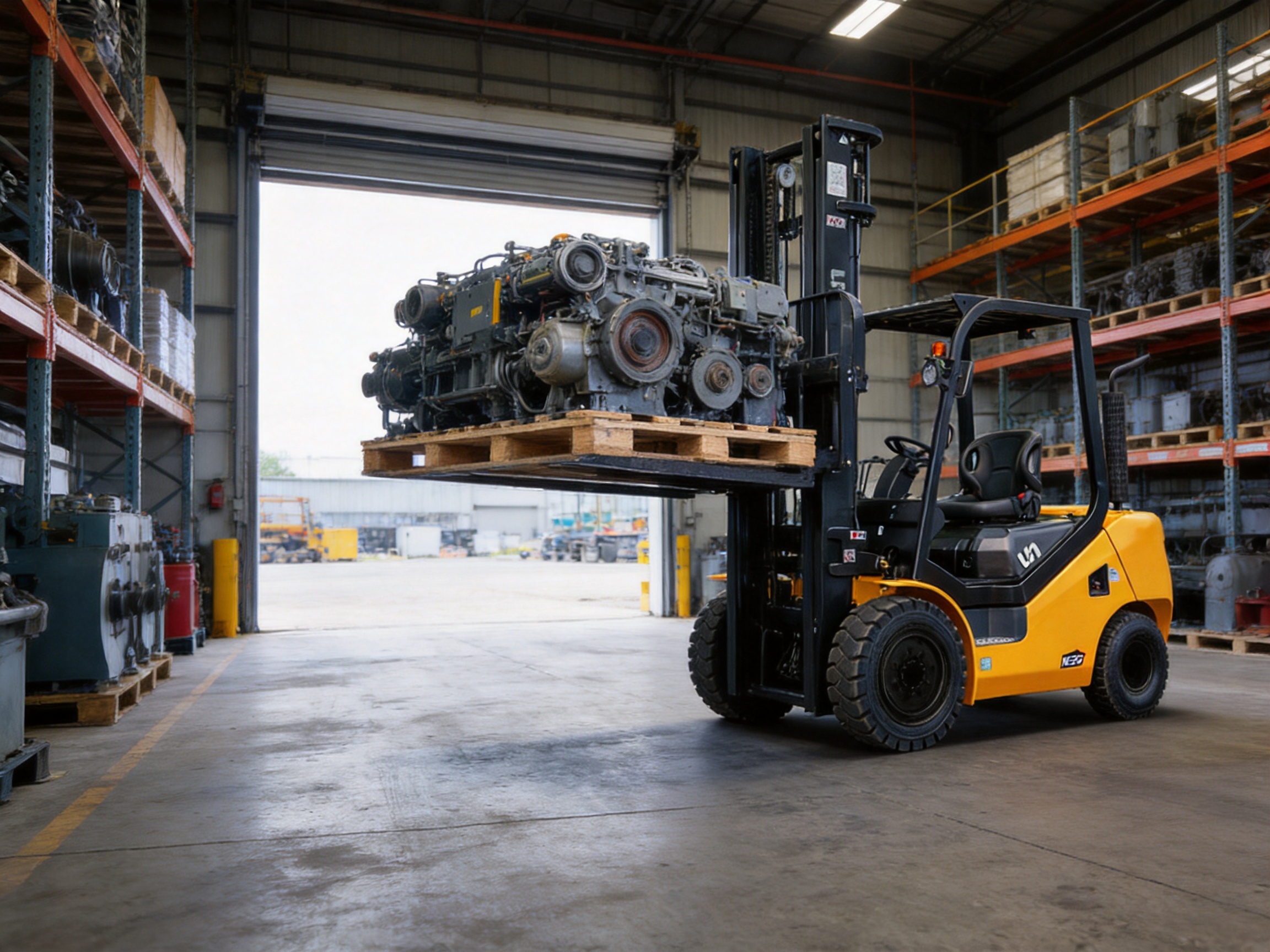
Manufacturing Strengths Behind the Product
The quality of a forklift depends on more than its visible features. Manufacturing capability, engineering experience, production control, testing procedures, component selection, and service support all influence the product’s long-term value. Zhejiang UN Forklift Co., Ltd. integrates research and development, production, sales, and service within its business structure, providing a foundation for coordinated product development and market support.
Founded in 1978, the company has developed extensive experience in material handling equipment. Its production facility occupies approximately 53,400 square meters and has an annual production capacity of approximately 15,000 units. This scale supports repeatable production processes while allowing the company to serve different market requirements and product categories.
The company offers a wide product portfolio covering 17 varieties, 96 series, and more than 200 specifications. Such a broad range requires the ability to manage different vehicle architectures, capacity classes, power systems, mast options, and application requirements. It also gives engineers experience across both internal combustion and electric forklift platforms.
Research and Development Experience
Research and development is an important part of the company’s history. The organization was involved in the development of China’s first reach forklift and very-narrow-aisle truck, demonstrating experience beyond conventional counterbalance forklifts. It also holds national patents related to electric forklift technologies and has participated in the formulation of Chinese electric forklift industry standards.
Although the N Series is a diesel forklift, experience in electric and specialized warehouse equipment can contribute to broader engineering capabilities. Vehicle stability, operator ergonomics, steering control, energy efficiency, braking, hydraulic coordination, and safety engineering are relevant across multiple forklift types. Cross-platform development can therefore support more mature product design.
Integrated Production and Quality Control
An integrated manufacturing structure allows product development teams, production personnel, quality engineers, and service specialists to share operational feedback. Information from field applications can help guide improvements in components, access points, maintenance procedures, and machine configuration.
Industrial forklift production typically includes processes such as structural fabrication, welding, surface preparation, painting, powertrain installation, hydraulic assembly, electrical integration, mast installation, and final inspection. Each stage contributes to the durability and operating performance of the finished vehicle. Consistency is especially important for frames and masts because these components must withstand repeated loading cycles.
A professional production system also supports traceability and repeatability. When processes are standardized, manufacturers can better control dimensions, welding quality, assembly sequence, component fit, and inspection results. This helps reduce variation among units and supports service teams that need to identify and replace components efficiently.
Original Equipment Manufacturing Experience
The company has served as a designated original equipment manufacturer for well-known domestic and overseas enterprises, including Hyundai Heavy Industries and Xuzhou Construction Machinery Group. Original equipment manufacturing requires the ability to meet defined technical, quality, delivery, and documentation standards. This experience can strengthen production discipline and customer-oriented engineering.
For international buyers, an established OEM background may also indicate familiarity with different market expectations. Customers in Europe, North America, South America, Africa, and Asia may have different requirements regarding emissions, safety, serviceability, operator environments, and documentation. A manufacturer with international partners is better positioned to address these variations.
Advantages Over Less Specialized Competitors
When comparing the N Series with competing forklifts, buyers should look beyond the purchase price. Initial cost is important, but the total value of a forklift is influenced by operating stability, downtime, operator productivity, maintenance access, parts availability, fuel consumption, resale potential, and suitability for the intended task.
Balanced Capacity and Versatility
The N Series occupies a capacity range that is frequently required by industrial users. It is large enough for substantial loads but does not necessarily carry the excess size or cost associated with a much heavier forklift. This balanced positioning can be advantageous for businesses that handle mixed loads or need one dependable general-purpose machine.
Designed for Intensive Use
The diesel powertrain and enlarged radiator are aligned with demanding working conditions. Some lower-cost forklifts may perform adequately during light or intermittent use but become less suitable when exposed to long shifts, high ambient temperatures, or continuous heavy loads. The N Series is designed with these industrial requirements in mind.
Operator-Centered Engineering
Equipment that ignores the operator can create hidden costs through fatigue, slower work cycles, and inconsistent handling. The N Series places emphasis on driving comfort and ergonomic operation. This is a meaningful advantage in workplaces where one machine may be operated continuously by several drivers across different shifts.
Broad Manufacturer Support
A forklift is a long-term industrial asset. Buyers need access to technical assistance, replacement parts, maintenance guidance, and service coordination after delivery. The manufacturer’s international sales and service network, together with dedicated regional contact channels, supports customers across Europe, North America, South America, Africa, Asia, and Oceania.
Parts support is also important because wear components and service items must be available when needed. A company with an established product range and international customer base is better positioned to organize parts supply and technical communication over the operating life of the machine.
Experience with Energy and Emission Requirements
Environmental regulations and customer expectations are changing across the global forklift market. The manufacturer has developed new-energy products, including diesel-to-lithium-ion forklift solutions and standard lithium-ion battery forklifts. It also provides internal combustion models designed to meet higher emission requirements in markets such as the European Union and North America.
This experience demonstrates that the company is not dependent on one technology. Customers can evaluate diesel, electric, lithium-ion, and other energy solutions according to their operating environment. For users who currently need the power and flexibility of diesel equipment, the N Series provides a practical option while the manufacturer continues to develop lower-emission alternatives.
Safety and Responsible Operation
Forklift safety depends on the machine, the operator, the load, the workplace layout, and the management system. Even a high-quality forklift must be operated according to its rated capacity and the conditions described in the operator manual.
Before using the N Series, operators should complete the required training and understand the functions of the controls, parking brake, steering system, mast, forks, and any fitted attachment. A pre-shift inspection should check tires, forks, chains, hydraulic hoses, fluid levels, warning devices, lights, brakes, steering, and visible structural components.
Load stability must be considered during every handling cycle. Operators should confirm the weight and dimensions of the load, keep the load centered where possible, avoid exceeding the rated capacity, and maintain suitable mast positioning while traveling. Loads should be carried at a safe height, and the operator should slow down when turning, approaching intersections, entering doorways, or traveling on uneven ground.
Pedestrian separation is another important factor. Clearly marked travel paths, controlled crossing points, suitable lighting, audible warnings, and site-specific traffic rules can reduce the likelihood of accidents. Managers should also review the operating area regularly because storage layouts, production equipment, and traffic patterns may change over time.
The N Series’ ergonomic design can support safer operation by helping the driver remain comfortable and attentive, but ergonomics is only one part of a complete safety program. Safe behavior, proper supervision, preventive maintenance, and a well-organized workplace remain essential.
Maintenance and Serviceability
Preventive maintenance protects productivity and helps preserve the value of a forklift. Maintenance schedules should be based on the manufacturer’s instructions, operating hours, environmental conditions, and the intensity of the application. Forklifts working in dusty yards, hot climates, or continuous multi-shift operations may require more frequent inspection and cleaning than machines used occasionally indoors.
Engine oil, coolant, hydraulic oil, transmission components, filters, tires, brakes, chains, forks, and electrical connections should be inspected and serviced at appropriate intervals. The enlarged radiator should receive particular attention because dust, fibers, leaves, and other debris can restrict airflow and reduce cooling efficiency.
Operators can contribute significantly to maintenance by reporting unusual noises, vibration, warning indicators, fluid leaks, steering changes, braking problems, or reduced lifting performance at the earliest opportunity. Early reporting may prevent a minor issue from developing into a more expensive failure.
Serviceability is also influenced by the design of access points and the availability of technical information. A forklift that can be inspected efficiently may reduce maintenance time and simplify routine service. Buyers should ask suppliers about recommended service intervals, parts availability, warranty coverage, technician training, and regional support before finalizing a purchase.
How to Select the Correct Configuration
The N Series 3.0T–3.5T diesel forklift should be configured according to the real operating conditions rather than selected only by nominal capacity. Buyers should review the following factors before ordering or deploying the machine.
Load Weight and Load Center
The maximum load weight is only one part of the capacity calculation. A load positioned farther from the fork face creates a greater moment and can reduce the safe lifting capacity. Long, irregular, or poorly packaged loads require careful evaluation of the load center and attachment arrangement.
Lift Height and Mast Type
Required lift height affects mast selection, overhead clearance, stability, and visibility. The buyer should measure rack heights, doorway clearances, ceiling obstructions, trailer openings, and other areas where the forklift will operate. The selected mast must provide the necessary height without creating conflicts in the facility.
Indoor and Outdoor Conditions
Diesel forklifts are particularly useful for outdoor and mixed-use applications, but ventilation must be considered when operating indoors. Facilities should evaluate air quality, exhaust management, local regulations, floor strength, ramps, drainage, and weather exposure. Where indoor emissions restrictions are strict, an electric or lithium-ion model may be more appropriate for certain work zones.
Attachments and Special Loads
Some applications require side shifters, clamps, rotators, fork positioners, extensions, or other approved attachments. Attachments can change the effective capacity and load center of the forklift. They should be selected in consultation with the manufacturer or authorized supplier, and the capacity plate must reflect the approved configuration.
Duty Cycle
Users should estimate operating hours per day, number of shifts, average travel distance, load weight, idle time, lift frequency, and surface conditions. A forklift used for occasional loading has different requirements from one used continuously in a high-volume distribution center. Accurate duty-cycle information helps ensure the selected equipment is neither under-specified nor unnecessarily oversized.
Total Cost of Ownership
The value of a diesel forklift should be evaluated over its entire service life. Purchase price is only the first cost. Fuel, scheduled maintenance, unplanned repairs, tires, operator training, downtime, parts, and eventual replacement all contribute to total cost of ownership.
A reliable powertrain can support productivity by reducing interruptions. Effective thermal management may help protect engine performance during demanding cycles. An ergonomic operating environment can support consistent work output. A broad service network can reduce the time required to obtain technical assistance or replacement parts. These factors may be more important to a business than a small difference in initial price.
Fuel efficiency should also be considered in relation to the work performed. Diesel forklifts are often selected because they provide strong performance for outdoor and heavy-duty applications. If the forklift is used in a high-intensity environment where electric charging infrastructure is not practical, diesel may offer greater operational flexibility. Conversely, businesses with strict indoor emission requirements or predictable charging opportunities should compare the N Series with suitable electric alternatives in the manufacturer’s portfolio.
The best choice is the one that matches the application. A forklift that is correctly configured and properly maintained can deliver greater value than a cheaper model that is not suited to the operating conditions.
Global Manufacturing and Service Capability
International customers often require more than a machine shipment. They need consistent documentation, technical communication, spare parts coordination, warranty assistance, and service support across different regions. Zhejiang UN Forklift Co., Ltd. has developed a worldwide sales and service network with partners in Europe, South America, North America, Africa, and Asia.
This international presence is relevant to businesses that operate multiple sites or purchase equipment for export markets. Regional support can help customers address local operating practices, maintenance requirements, regulatory expectations, and parts logistics. It also provides a channel for communicating product feedback from different industries and climates.
The company’s production experience and broad product portfolio allow it to serve customers with different material handling needs. While the N Series is focused on 3.0T–3.5T diesel applications, the wider range includes internal combustion forklifts, electric forklifts, reach trucks, very-narrow-aisle equipment, and other warehouse solutions. This breadth can be useful for customers seeking a coordinated equipment strategy rather than isolated purchases from multiple suppliers.
Recommended Implementation Plan for Buyers
A successful forklift purchase begins with a clear assessment of the workplace. Managers should document the heaviest and most frequent loads, the required lift heights, surface conditions, operating hours, traffic routes, and indoor or outdoor locations. They should also identify any special attachments or emission restrictions.
The next step is to compare the application data with the forklift’s rated specifications. Capacity, load center, mast height, tire type, attachment weight, and operating environment must all be considered together. A supplier should be asked to confirm the proposed configuration in writing.
After delivery, the business should establish a commissioning process. Operators should receive familiarization training, the machine should be inspected, and traffic routes should be reviewed. Maintenance personnel should be given access to service information and a schedule for inspections, lubrication, fluid checks, and component replacement.
Performance should be reviewed after the first operating period. Useful measures include fuel consumption, average handling cycle time, unscheduled downtime, maintenance requirements, operator feedback, and any safety observations. This information can help managers determine whether the machine is being used correctly and whether additional training or workplace adjustments are required.
Questions and Answers
What type of forklift is the N Series 3.0T–3.5T model?
It is a diesel-powered internal combustion forklift designed for medium-duty and demanding industrial material handling. Its capacity class makes it suitable for factories, warehouses, yards, logistics facilities, construction material operations, and other applications requiring substantial lifting performance.
Why is the 3.0T–3.5T capacity range popular?
This range offers a practical balance between lifting capability, maneuverability, and operating cost. It can handle many industrial loads that are too heavy for compact forklifts while avoiding the unnecessary size and expense of a much larger machine.
What is the advantage of the enlarged radiator?
The enlarged radiator provides greater cooling capacity to help manage heat during heavy loads, extended operating periods, high ambient temperatures, and demanding duty cycles. It supports stable performance, although regular cleaning and coolant maintenance remain necessary.
Is the N Series suitable for outdoor work?
Yes. Its diesel powertrain is well suited to outdoor and mixed indoor-outdoor applications such as loading yards, construction material storage, industrial compounds, and logistics facilities. Users should still evaluate ground conditions, weather exposure, gradients, and local operating requirements.
How does ergonomic design benefit a forklift operator?
Ergonomic design can reduce unnecessary movement and physical strain by improving the relationship between the seat, controls, steering wheel, pedals, access points, and visibility areas. Better comfort may help operators remain attentive and productive during long shifts.
Can the forklift be used with attachments?
Attachments may be available for specific handling requirements, but they must be approved for the forklift and correctly rated. Because an attachment can change the load center and effective capacity, the configuration should be confirmed with the manufacturer or authorized supplier before use.
What should be checked before purchasing the forklift?
Buyers should review load weight, load center, lift height, mast type, indoor and outdoor operating conditions, duty cycle, floor surfaces, attachments, emission requirements, maintenance support, parts availability, and operator training needs.
Does the manufacturer offer other forklift technologies?
Yes. In addition to internal combustion forklifts, the manufacturer develops electric and new-energy products, including lithium-ion battery forklifts and diesel-to-lithium-ion solutions. This allows customers to compare different energy systems according to their applications.
How important is after-sales service?
After-sales service is essential because a forklift is a long-term industrial asset. Access to technical support, replacement parts, warranty assistance, and trained service personnel can reduce downtime and help maintain safe, reliable performance.
What maintenance is especially important for a diesel forklift?
Key maintenance areas include engine oil, coolant, filters, hydraulic oil, tires, brakes, steering, forks, chains, hydraulic hoses, electrical connections, and radiator cleanliness. Maintenance should follow the manufacturer’s schedule and be adjusted when operating conditions are unusually dusty, hot, or intensive.
Conclusion
The N Series 3.0T–3.5T Diesel Forklift is designed for businesses that need strong, dependable, and versatile material handling performance. Its diesel powertrain provides the torque and operating flexibility required for demanding industrial work, while the enlarged radiator supports thermal stability during extended duty cycles. The ergonomic design adds an important productivity benefit by helping operators work more comfortably and consistently.
The forklift’s value is strengthened by the manufacturing experience behind it. Zhejiang UN Forklift Co., Ltd. combines decades of industry experience with integrated research, production, sales, and service capabilities. Its broad product portfolio, specialized engineering history, international network, OEM background, and development of electric and new-energy technologies demonstrate a substantial foundation for serving global material handling markets.
Compared with less specialized alternatives, the N Series offers a balanced capacity class, practical application range, industrial-grade performance, operator-focused design, and access to a wider support structure. Its best results will be achieved when the machine is correctly configured, operated within its rated limits, inspected before each shift, and maintained according to the recommended schedule.
For manufacturers, logistics companies, construction suppliers, warehouses, and outdoor industrial operators seeking a dependable 3.0T–3.5T diesel forklift, the N Series represents a practical combination of power, comfort, cooling performance, manufacturing expertise, and long-term service potential.
References
1. Zhejiang UN Forklift Co., Ltd. Product information for the N Series 3.0T–3.5T Diesel Forklift.
2. Zhejiang UN Forklift Co., Ltd. Corporate information concerning manufacturing capacity, product development, international service, and new-energy forklift technology.
3. International Organization for Standardization. Industrial Trucks: Safety Requirements and Verification.
4. International Organization for Standardization. Industrial Trucks: Capacity and Rated Load Principles.
5. Occupational safety guidance concerning powered industrial truck operator training and workplace practices.
6. General principles of preventive maintenance for diesel-powered industrial vehicles and material handling equipment.
Product: N Series 3.0T-3.5T Diesel Forklift
For exclusive deals and latest offers, sign up by entering your email address below.
Stay In Touch
ADDRESS : NO.1 ROAD ONE, XINDENG NEW DISTRICT, FUYANG, HANGZHOU, ZHEJIANG, CHINA 311404.
PHONE : +86-571-8688 8355 (AMERICA)
PHONE : +86-571-8886 9363 (EUROPE)
PHONE : +86-571-8688 8377 (ASIA, AFRICA, OCEANIA)
EMAIL : [email protected]
EMAIL : [email protected](PARTS INQUIRY)

