


 中文简体
中文简体 Français
 русский
 Español
 عربى
عربى Deutsch



Compact Diesel Forklifts for Confined-Space Material Handling
Admin 2026-07-15In modern material handling, the most valuable forklift is often not the largest machine in the fleet, but the one that moves confidently through narrow aisles, lifts reliably throughout long shifts, and keeps operating costs under control. The N Series 1.5T–1.8T Diesel Forklift is designed for exactly this type of daily industrial work. With rated load capacities of 1,500 kg and 1,800 kg, a 500 mm load center, a compact overall width of 1,082 mm, and a tight outside turning radius of 2,100 mm, this diesel forklift range provides a practical balance of maneuverability, stability, power, safety, and serviceability.
The product is positioned for warehouses, workshops, logistics yards, manufacturing plants, construction material depots, food and beverage distribution facilities, building supply centers, and mixed indoor-outdoor handling environments where operators need a durable internal combustion forklift that is easy to control in limited space. Its compact chassis, efficient diesel powertrain, hydraulic transmission, wide-visibility mast, ergonomic operator area, and simplified maintenance layout make it a strong choice for businesses seeking productivity without unnecessary complexity.
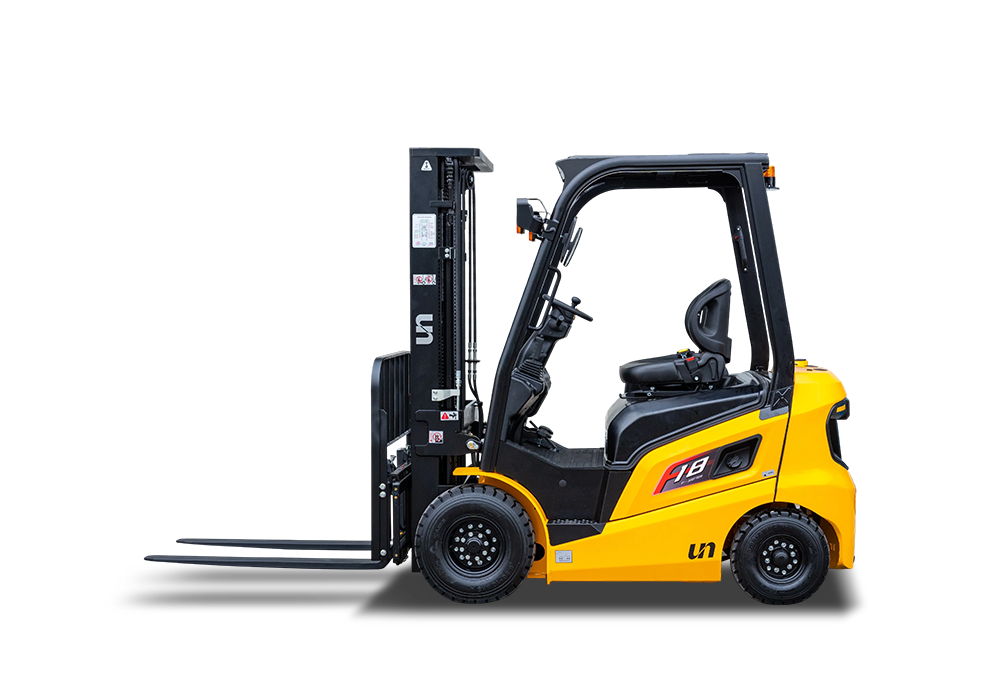
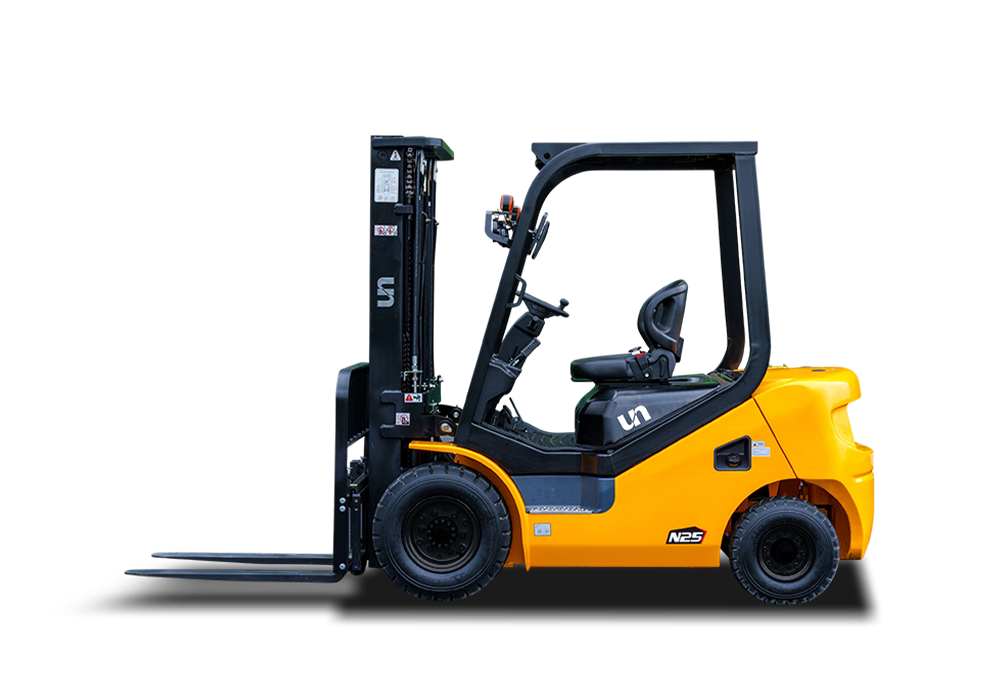
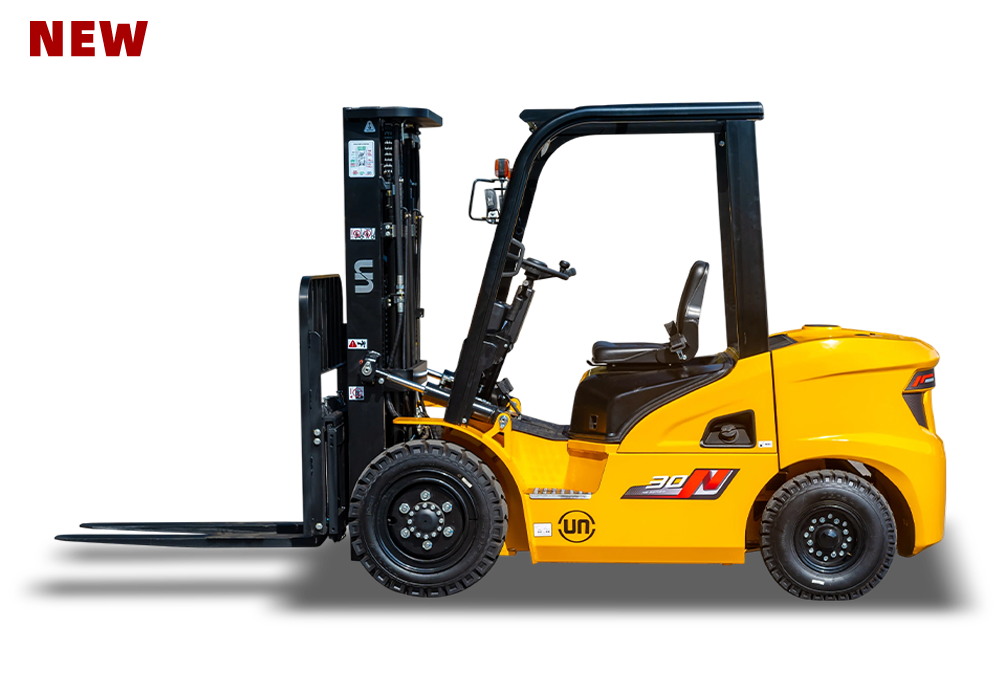
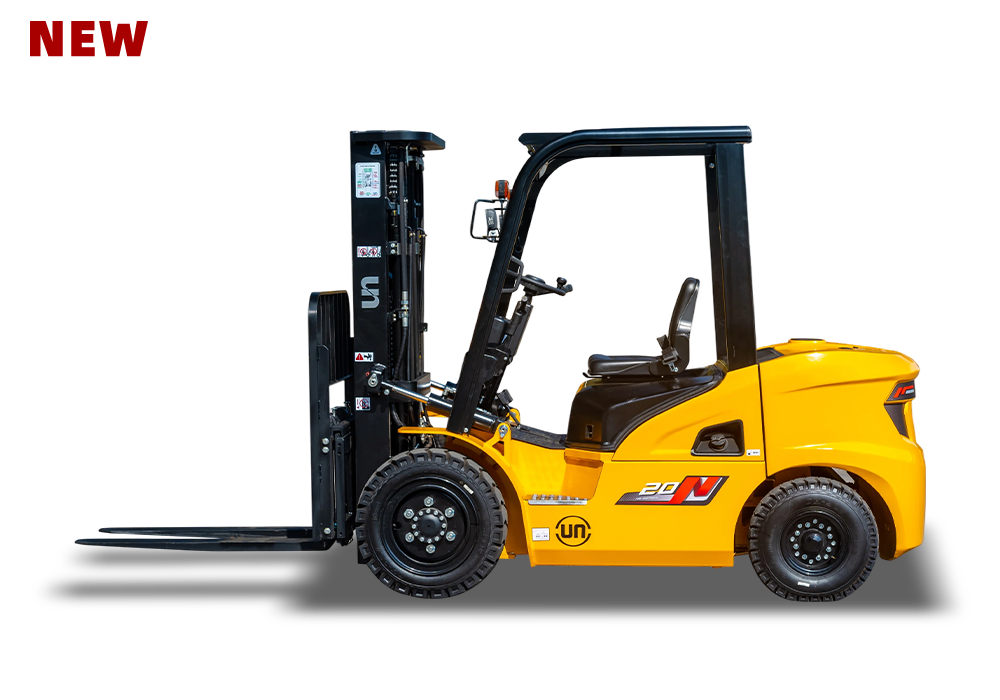
N Series 1.5T-1.8T Diesel Forklift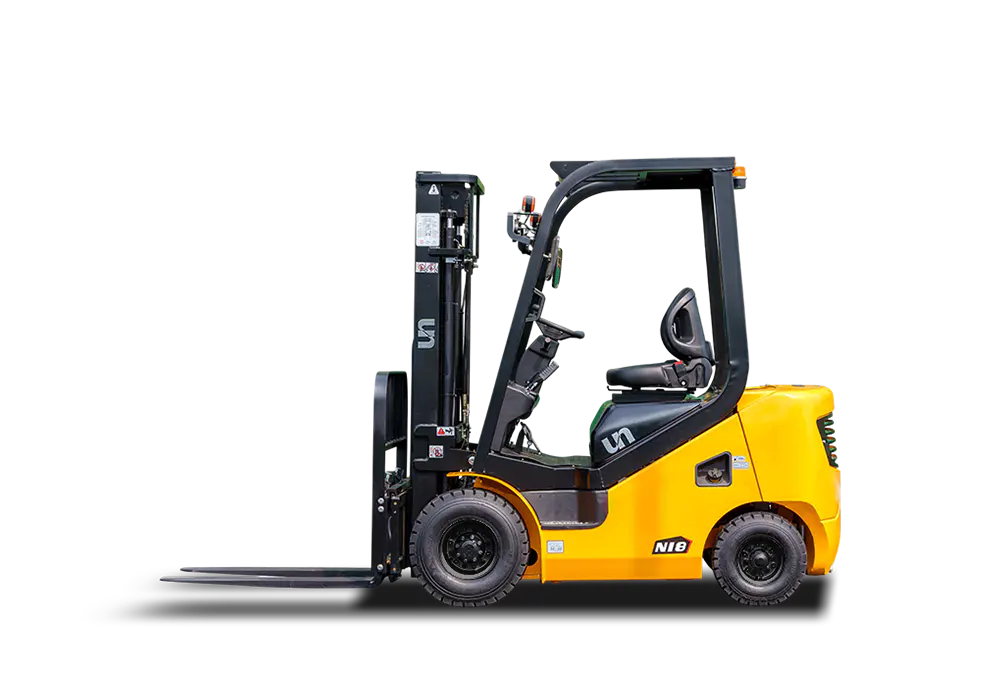
Product Overview
The N Series 1.5T–1.8T Diesel Forklift is a compact internal combustion counterbalance forklift built for efficient pallet handling, loading, unloading, stacking, short-distance transfer, and general material movement. The product covers the 1.5-ton and 1.8-ton capacity classes, two of the most widely used capacities in light and medium-duty industrial logistics. This capacity range is especially important for companies handling standard pallets, boxed goods, bagged materials, small machinery components, packaged food products, metal parts, plastic products, and building materials.
Unlike heavy, oversized forklifts that may be difficult to maneuver in narrow operating areas, this diesel forklift is designed around agility. Its 2,100 mm turning radius allows the truck to work smoothly in tight warehouse layouts and compact loading zones. Its 1,082 mm overall width supports convenient operation between racks, production lines, and dock areas. The 3,000 mm rated lift height fits common stacking and truck-loading applications, while the 500 mm load center matches typical palletized cargo requirements.
The forklift is powered by fuel-efficient diesel engines and is available with multiple engine configurations, including options from well-known engine manufacturers such as Xinchai, Isuzu, and Yanmar. This flexibility helps customers match performance, emission expectations, service availability, and budget requirements. For buyers who operate in international markets, engine choice can be a major purchasing factor, and the availability of different power packages strengthens the machine’s adaptability.
From the operator’s perspective, the forklift emphasizes visibility, comfort, and predictable control. A wide-visibility mast improves forward sight lines during loading and unloading. An ergonomic seat, adjustable steering wheel, and suspended chassis design help reduce fatigue. The OPS system and seat switch support safer operation by helping prevent unintended movement or operation when the driver is not properly seated. These features are particularly valuable in busy environments where workers, goods, shelves, and vehicles share the same space.
Why the 1.5T–1.8T Diesel Segment Matters
The 1.5T–1.8T diesel forklift class is one of the most practical categories in the global forklift market. Many facilities do not require the cost, fuel consumption, turning space, and tire wear associated with larger 3-ton to 5-ton forklifts. At the same time, manual pallet trucks or light electric walkie equipment may not provide enough lifting power, speed, or outdoor capability. A compact diesel counterbalance forklift fills this gap with a useful combination of lifting capacity, travel speed, gradeability, and durability.
Diesel forklifts remain important because they provide strong torque, fast refueling, and dependable performance in outdoor or semi-outdoor conditions. For operations with uneven yard surfaces, ramps, long working hours, or frequent loading of trucks and containers, diesel power can offer a practical advantage. Battery charging infrastructure may not always be available, and some businesses prefer the operational continuity of fuel-based equipment. The N Series 1.5T–1.8T model range is built for these real-world needs.
Compared with many competing forklifts in the same capacity class, this model range focuses on a compact body, reliable power, stable hydraulic performance, and easy maintenance. These factors directly affect the total cost of ownership. A forklift that is difficult to maintain, uncomfortable to operate, or poorly suited to tight spaces can slow down an entire logistics process. In contrast, a compact and service-friendly forklift can increase daily throughput while reducing downtime.
Core Technical Highlights
The product’s primary strengths can be summarized in five areas: compact structure, diesel performance, reliable hydraulics, operator-oriented safety, and service-friendly maintenance. Each of these elements contributes to the forklift’s suitability for confined-space material handling.
The compact chassis supports agile movement in warehouses and production areas. With an outside turning radius of 2,100 mm, the forklift helps operators align with pallets, turn at aisle ends, and reverse safely in restricted spaces. This can reduce the number of steering corrections needed during each handling cycle. Over hundreds of cycles per shift, smoother maneuvering can translate into meaningful time savings.
The diesel engine system is designed for quick acceleration and low fuel consumption. Engine options include Xinchai NC485BPG, Isuzu C240NKFC-01, and Yanmar 4TNE92 configurations, giving customers several practical choices. Rated output figures include 30 kW at 2,600 rpm, 35.4 kW at 2,500 rpm, and 31.2 kW at 2,450 rpm depending on the engine model. These engines provide the torque required for lifting, travel, and ramp operation in industrial settings.
The hydraulic system uses proven pump and valve technology designed for stable lifting and steering. Smooth hydraulic response is important because it affects load control, operator confidence, and cargo protection. An unstable hydraulic system may cause jerky lifting or poor steering feel, increasing the risk of product damage. This forklift’s hydraulic design supports controlled lifting, lowering, and attachment operation.
Safety and ergonomics are also central to the design. The OPS system and seat switch provide enhanced operational safety. The wide-visibility mast helps operators see loads and surroundings more clearly. The high-strength overhead guard protects the operator from falling objects, while the operator area gives attention to legroom, steering position, seating comfort, and reduced fatigue.
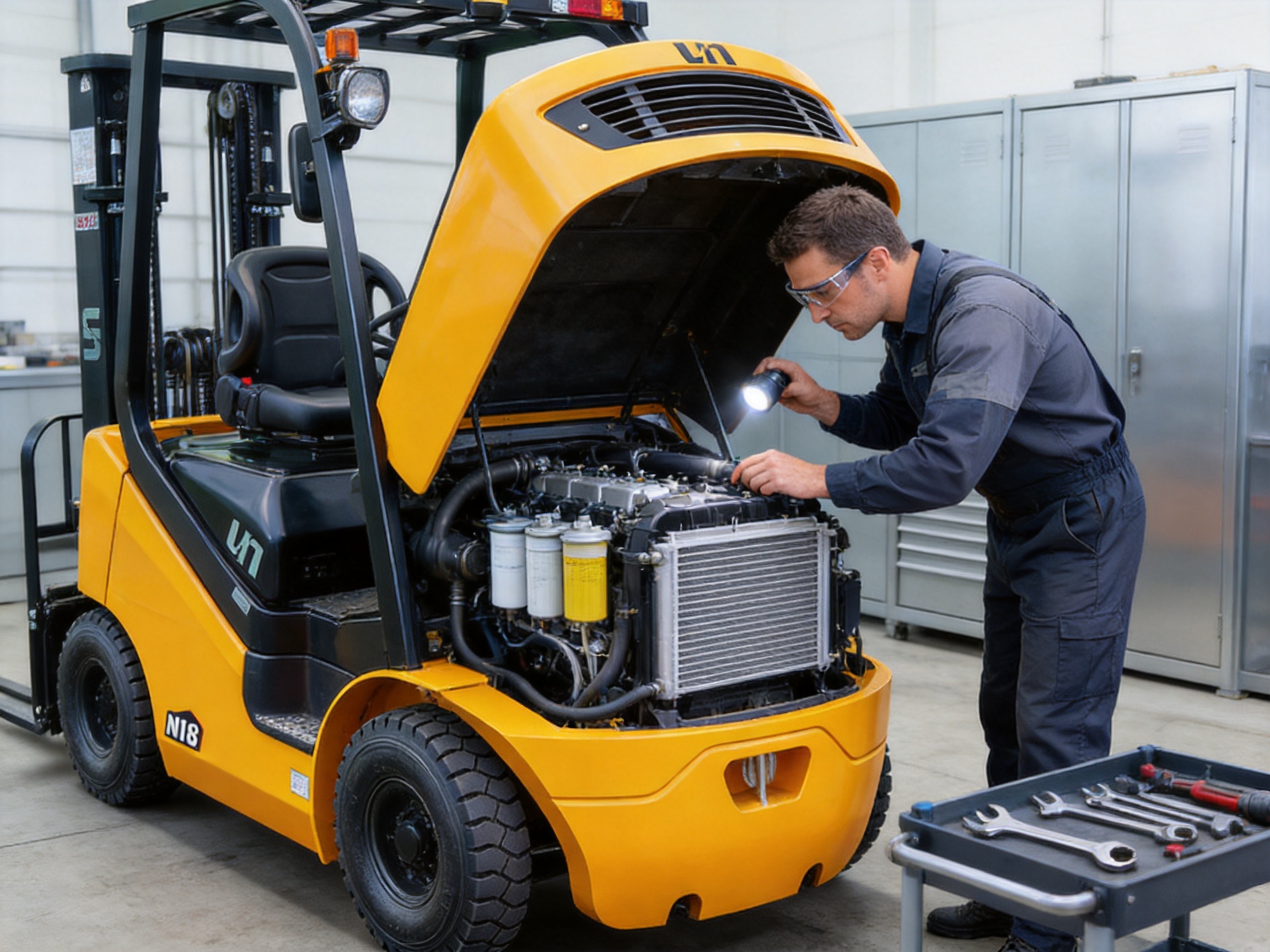
Maintenance has been simplified through a large-opening engine hood that tilts nearly 90 degrees. This allows easier access for daily inspection, filter changes, and component replacement. In practical fleet management, maintenance access is not a small detail. A forklift that can be inspected quickly is more likely to receive proper daily care, and proper care is one of the simplest ways to extend equipment service life.
Key Specifications
The following table summarizes selected specifications for the 1.5T and 1.8T configurations. Actual configuration may vary according to engine option, mast selection, regional requirements, and customer application.
| Specification | 1.5T Model | 1.8T Model |
| Rated Load Capacity | 1,500 kg | 1,800 kg |
| Load Center | 500 mm | 500 mm |
| Rated Lift Height | 3,000 mm | 3,000 mm |
| Overall Width | 1,082 mm | 1,082 mm |
| Length to Face of Fork Without Fork | 2,289 mm | 2,294 mm |
| Outside Turning Radius | 2,100 mm | 2,100 mm |
| Travel Speed Without Load | 14.5 km/h | 14.5 km/h |
| Maximum Gradeability With Full Load | 20% | 20% |
| Wheelbase | 1,410 mm | 1,410 mm |
| Total Weight | 2,860 kg | 2,990 kg |
| Battery | 12 V / 90 Ah | 12 V / 90 Ah |
| Fuel Tank Capacity | 50 L | 50 L |
| Transmission Type | Hydraulic | Hydraulic |
Compact Design for Narrow and Busy Workplaces
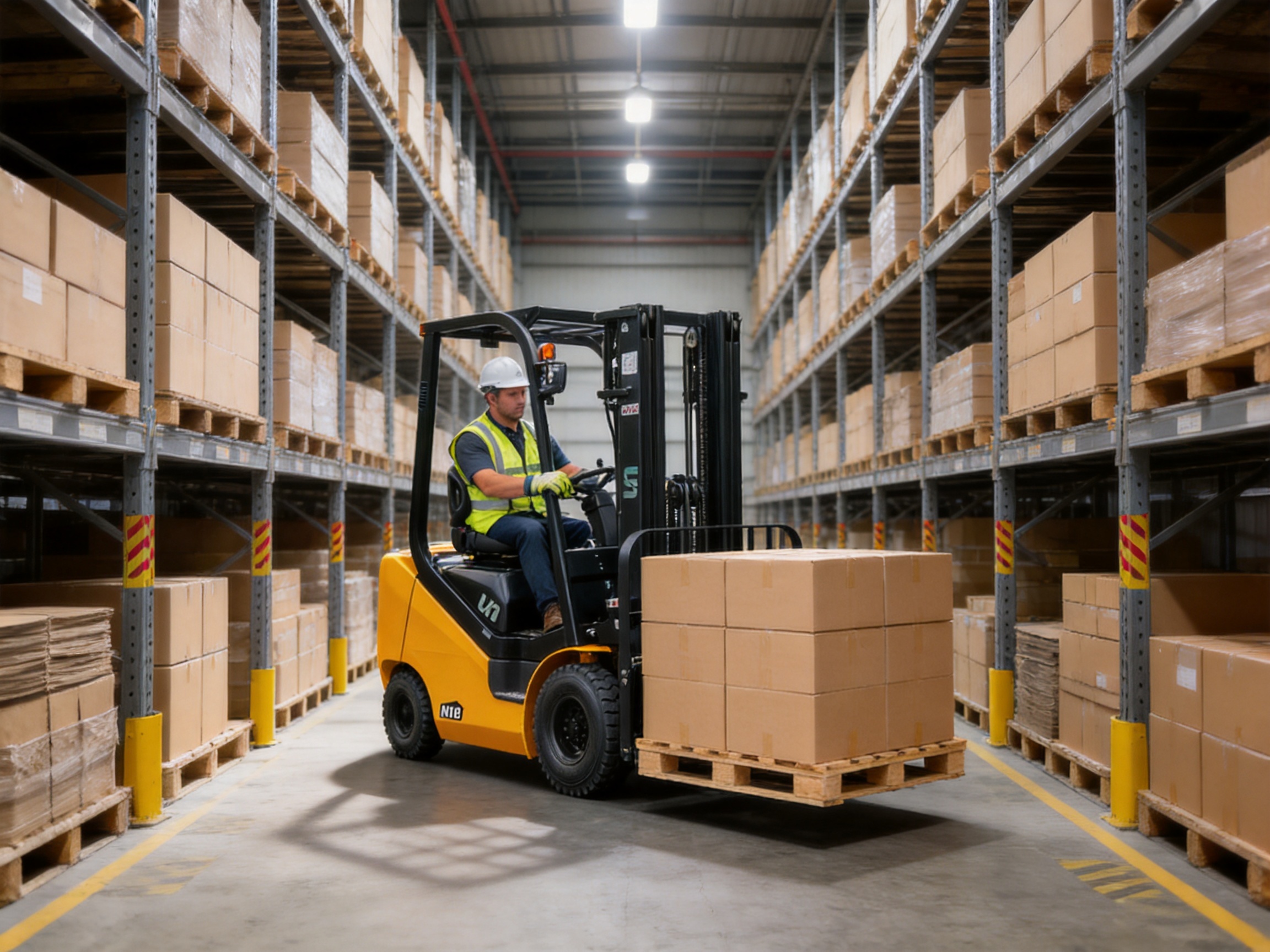
One of the strongest advantages of the N Series 1.5T–1.8T Diesel Forklift is its compact operating profile. In many facilities, forklifts do not operate in wide open spaces. They work between racks, around production equipment, near loading docks, inside containers, and along routes shared with pedestrians. In these environments, the difference between an oversized forklift and a compact forklift can affect both productivity and safety.
The 1,082 mm overall width helps the forklift move through narrow paths more easily. The 2,100 mm outside turning radius supports smoother turning at aisle ends and around obstacles. The compact length to the fork face, 2,289 mm for the 1.5T model and 2,294 mm for the 1.8T model, helps operators position the forklift accurately when approaching pallets. These dimensions make the truck especially useful in confined-space operations where precision matters.
Compared with many competitors that use heavier or bulkier chassis designs for the same load class, this product’s compact design can help reduce wasted space. Warehouse space is expensive. Every additional centimeter required for turning or aisle clearance can limit rack layout, pallet density, or route flexibility. By using a compact forklift, warehouse planners may be able to maintain more efficient storage arrangements while still using a diesel-powered counterbalance truck.
Agility also reduces operator workload. A forklift that turns easily and responds predictably allows drivers to focus on load handling rather than constant repositioning. Reduced steering correction can also help lower tire wear and improve cycle consistency. This is especially relevant in high-frequency handling operations, such as loading delivery vehicles, feeding production lines, or moving pallets between storage and dispatch areas.
Diesel Power and Engine Flexibility
Diesel engines remain valued in material handling because they offer dependable torque, quick refueling, and strong performance in demanding environments. The N Series 1.5T–1.8T Diesel Forklift is powered by fuel-efficient diesel engines that deliver quick acceleration and practical fuel economy. This helps operators maintain productivity during long shifts without the charging interruptions associated with battery equipment.
The availability of different engine options is a major advantage over competitors that offer only a narrow range of power configurations. Xinchai, Isuzu, and Yanmar engine options allow customers to choose according to their maintenance network, local emissions requirements, fuel quality, spare parts availability, and performance preference. This flexibility is valuable for importers, distributors, rental companies, fleet owners, and end users with diverse operating environments.
The Xinchai NC485BPG engine configuration provides 30 kW of rated output at 2,600 rpm and 131 N·m of rated torque at 1,800 rpm. The Isuzu C240NKFC-01 engine configuration provides 35.4 kW at 2,500 rpm and 139 N·m at 1,800 rpm. The Yanmar 4TNE92 configuration provides 31.2 kW at 2,450 rpm and 150 N·m at 1,600 rpm. These options cover different priorities, from cost-effective operation to higher torque characteristics.
Competitors often compete only on price, but forklift powertrain selection should be evaluated through the lens of lifetime value. A low-cost engine with limited parts support may become expensive if downtime increases. A strong engine with poor cooling may underperform in hot climates. A forklift engine must be matched with the transmission, cooling system, hydraulic system, and chassis. The N Series uses a scientifically engineered chassis and a reliable power system to provide balanced overall performance.
The 50 L fuel tank supports extended work periods between refueling. For multi-shift or high-cycle operations, fuel capacity helps reduce interruptions. The hydraulic transmission with a 1/1 forward and reverse stage supports straightforward operation, making the forklift easy to drive for trained operators while providing the smooth direction changes required in common handling cycles.
Hydraulic Performance and Load Control
A forklift’s hydraulic system is central to its productivity. Travel performance moves the truck, but hydraulic performance moves the load. The N Series 1.5T–1.8T Diesel Forklift uses reliable pump and valve technology designed to deliver stable lifting and steering. The hydraulic system supports efficient lifting, controlled lowering, and smooth maneuvering, helping operators handle loads confidently.
The lifting speed under full load reaches 560 mm per second in the 1.5T–1.8T configurations, supporting efficient stacking and loading cycles. The system is designed for controlled lowering performance, helping protect cargo and reduce shock to pallets, forks, mast components, and the truck structure. Attachment operating pressure is 14.5 MPa for these models, supporting common attachment functions where applicable.
Hydraulic stability can become a competitive advantage in real-world operations. Some low-cost forklifts may appear similar in rated capacity but feel less controlled during lifting, tilting, or steering. Operators may compensate by working more slowly, reducing productivity. In contrast, a stable hydraulic system allows the driver to handle loads with fewer corrections and greater confidence.
The mast tilt angle of 6 degrees forward and 12 degrees rearward provides practical load handling flexibility. Forward tilt helps place loads, while rearward tilt supports load stability during transport. The wide-visibility mast design further improves the handling experience by reducing visual obstruction. When operators can clearly see fork tips, pallet openings, and surrounding workers, they can work faster and more safely.
Safety Features Designed for Daily Use
Safety in forklift operation depends on design, training, maintenance, workplace layout, and operator discipline. The N Series supports safer work through several design elements. The OPS system and seat switch help ensure that certain operations are controlled according to operator presence. This reduces the risk of unintended operation when the driver is not properly seated.
The high-strength overhead guard helps protect the operator from falling objects. In warehouse and yard operations, falling goods can occur due to unstable pallets, damaged packaging, poor stacking, or accidental contact with shelves. A strong overhead guard is therefore an essential part of forklift safety design. It should not be treated as a secondary feature.
The wide-visibility mast is another important safety advantage. Forklift accidents often occur because visibility is limited. A mast that improves the operator’s line of sight can help reduce the risk of striking pallets, racks, goods, vehicles, or pedestrians. Improved visibility also supports faster fork alignment, reducing the time spent adjusting position near loads.
The forklift’s compact body contributes to safety by improving maneuverability. A machine that can turn cleanly and fit into the working environment is less likely to require risky multi-point maneuvers. The 2,100 mm turning radius and 1,082 mm width help operators navigate busy areas more confidently.
Ergonomics also affect safety. Fatigue can reduce attention and reaction speed. The suspended chassis design, increased legroom, adjustable steering wheel, and ergonomic seat help operators remain comfortable during long working periods. A comfortable operator is more likely to maintain careful control, observe surroundings, and follow proper handling procedures.
Operator Comfort and Productivity
Forklift productivity is not determined only by engine power or lifting speed. Operator comfort has a direct effect on performance. A fatigued operator may slow down, make more corrections, or become less attentive. The N Series operator compartment is designed to provide a practical, comfortable, and easy-to-use working environment.
The suspended chassis design increases legroom and contributes to a more comfortable driving posture. The adjustable steering wheel allows operators of different body types to find a suitable driving position. The ergonomic seat supports long-shift comfort. These features may seem simple, but they have a measurable effect in operations where the forklift is used for several hours each day.
The streamlined control interface supports efficient operation. Controls should be easy to understand and reach, reducing the mental and physical effort required during repetitive tasks. In high-cycle applications, even small improvements in control layout can improve consistency and reduce fatigue.
The wide-visibility mast also improves operator comfort because it reduces uncertainty. When an operator can clearly see the fork tips and the load, each approach becomes easier. This reduces stress when handling fragile goods, working near racks, or loading vehicles. Competitors that overlook visibility may force operators to rely on guesswork or repeated repositioning.
Cooling System for Stable Operation
Heat management is an important part of forklift reliability. Diesel forklifts often work in hot warehouses, outdoor yards, dusty environments, and stop-and-go loading cycles. A cooling system that is not properly designed can lead to reduced performance, component wear, or unplanned downtime. The N Series uses an advanced cooling system with a large-capacity radiator to help maintain stable operation even in high-temperature environments.
This cooling capacity gives the product an advantage in demanding markets. In regions with high ambient temperatures, forklifts may work under strong sunlight, inside poorly ventilated workshops, or on continuous loading schedules. A well-designed radiator and cooling layout help keep the engine and related systems within suitable temperature ranges.
Competitors sometimes reduce cost by using marginal cooling capacity, which may work during short demonstration runs but fail under sustained use. Fleet owners should evaluate forklifts based on full-day performance, not only initial appearance. A forklift that remains stable in heat can reduce downtime and improve confidence among operators and maintenance teams.
Maintenance Access and Lower Downtime
Maintenance is where many forklifts reveal their true cost. A truck may have an attractive purchase price, but if filters are hard to reach, inspection points are inconvenient, or components are difficult to replace, the lifetime cost rises. The N Series addresses this issue with an engine hood that tilts nearly 90 degrees, providing convenient access for daily checks and service.
Easy access encourages proper maintenance discipline. Operators and technicians are more likely to inspect oil levels, belts, hoses, filters, radiator areas, and general engine condition when the service layout is accessible. This helps identify small issues before they become major failures. The transmission oil filter is also designed for more convenient replacement, reducing service time.
For fleet operators, downtime is not only a repair issue. It affects labor scheduling, order fulfillment, loading schedules, and customer satisfaction. A forklift waiting for service may force a company to rent replacement equipment or delay shipments. By simplifying daily maintenance and component replacement, the N Series supports higher fleet availability.
This is a meaningful advantage over competitors that emphasize only initial specifications. Practical maintenance access is not always visible in a brochure, but it matters greatly after purchase. A service-friendly forklift protects the owner’s investment and supports stable operations.
Manufacturing Strength Behind the Product
The value of this forklift is strengthened by the manufacturing background of Zhejiang UN Forklift Co., Ltd. The company is a professional material handling equipment manufacturer integrating research and development, production, sales, and service. Founded in 1978, it has decades of experience in forklift design and production. The factory covers 53,400 square meters and has an annual production capacity of 15,000 units.
Manufacturing experience matters because forklifts are complex industrial machines. A reliable forklift depends on structural design, welding quality, machining accuracy, hydraulic integration, electrical layout, painting quality, assembly discipline, and final inspection. Companies with long production history and specialized engineering teams are better positioned to control these processes consistently.
The manufacturer has developed a complete forklift range, including many varieties, series, and specifications. This broad product portfolio supports knowledge sharing across platforms. Lessons learned from internal combustion forklifts, electric forklifts, warehouse equipment, and new energy models can be applied to product improvement. The company has also participated in the formulation of electric forklift industry standards in China and holds national patents related to electric forklift technologies.
The company’s history includes important product development milestones, including the creation of China’s first reach forklift and VNA truck. Such experience demonstrates an engineering culture that is not limited to simple assembly. It indicates capability in product design, application understanding, and technology development.
Advanced Manufacturing Processes
The manufacturing process for a diesel forklift begins with structural engineering. The chassis must support load forces, counterweight balance, mast stresses, vibration, and continuous industrial use. Scientific chassis design is essential for stability, steering accuracy, operator comfort, and long-term durability. The N Series benefits from a chassis engineered to combine compact size with dependable performance.
Steel components must be cut, formed, welded, and inspected according to controlled procedures. Good welding is critical because the forklift frame and mast components experience repeated stress. Consistent weld quality helps prevent fatigue-related failures. After structural production, components are prepared for surface treatment and painting. High-quality coating helps protect against corrosion, scratches, and environmental exposure.
Machining accuracy affects the fit of mechanical components, mast channels, axles, hydraulic connections, and transmission interfaces. Assembly teams must integrate the engine, transmission, hydraulic system, steering system, mast, overhead guard, tires, electrical components, and operator controls into a complete working machine. Each connection, hose routing, fastener, and adjustment contributes to final reliability.
Hydraulic system assembly requires cleanliness and precision. Contamination in hydraulic circuits can damage pumps, valves, cylinders, and seals. Controlled assembly processes reduce the risk of early failure. The use of reliable hydraulic pumps and valves further supports smooth operation and long service life.
Final inspection is a critical part of advanced manufacturing. A completed forklift should be checked for travel operation, braking, steering, lifting, lowering, mast tilt, leakage, electrical function, operator safety systems, noise, vibration, and visual quality. Load and performance tests help verify that the forklift meets expected operating standards before delivery.
The manufacturer’s ability to produce a wide range of forklifts also supports supply chain maturity. Engine options, transmission components, hydraulic parts, mast structures, tires, seats, guards, and electrical systems must be sourced, inspected, and integrated. A stable supply chain helps reduce delays and supports consistent product quality.
Advantages Over Competitors
The N Series 1.5T–1.8T Diesel Forklift offers several practical advantages over competing forklifts in the same class. These advantages are not limited to a single specification. They come from the combined effect of compact design, powertrain flexibility, hydraulic reliability, safety features, operator comfort, and manufacturing capability.
First, the forklift is highly maneuverable. Its compact body and 2,100 mm turning radius allow it to operate in narrow or crowded areas. Some competing forklifts in the same capacity class use larger chassis dimensions, making them less efficient in warehouses where space is limited. The N Series helps customers use floor space more effectively.
Second, the product offers engine choice. Instead of forcing customers into one power package, it provides multiple diesel engine options. This allows the truck to be adapted to different regional preferences, service networks, and operational priorities. Engine flexibility is especially valuable for international distributors and fleet owners.
Third, the forklift uses reliable hydraulic technology for efficient lifting and steering. Smooth hydraulic control protects loads and supports operator confidence. Competitors with less refined hydraulic systems may cause jerky movement, slower handling, or higher maintenance needs.
Fourth, safety and ergonomics are built into the design. The OPS system, seat switch, wide-visibility mast, high-strength overhead guard, increased legroom, adjustable steering wheel, and ergonomic seat all contribute to safer and more comfortable operation. Some lower-cost competitors may reduce or simplify these features to cut costs, but that can increase operator fatigue and risk.
Fifth, maintenance access is a clear advantage. The nearly 90-degree opening engine hood and convenient filter layout reduce service difficulty. Over the equipment’s lifetime, easier maintenance can reduce downtime, improve inspection quality, and lower ownership costs.
Sixth, the manufacturer’s production strength supports consistency. A company with decades of forklift manufacturing experience, broad product development capability, and international market participation can provide stronger engineering support than small assemblers with limited process control.
Application Scenarios
The N Series 1.5T–1.8T Diesel Forklift is suitable for a wide range of material handling applications. In warehouses, it can move palletized goods between storage, staging, and loading areas. Its compact dimensions make it especially useful where aisle space is limited. In manufacturing plants, it can feed production lines, remove finished goods, and move components between workshops.
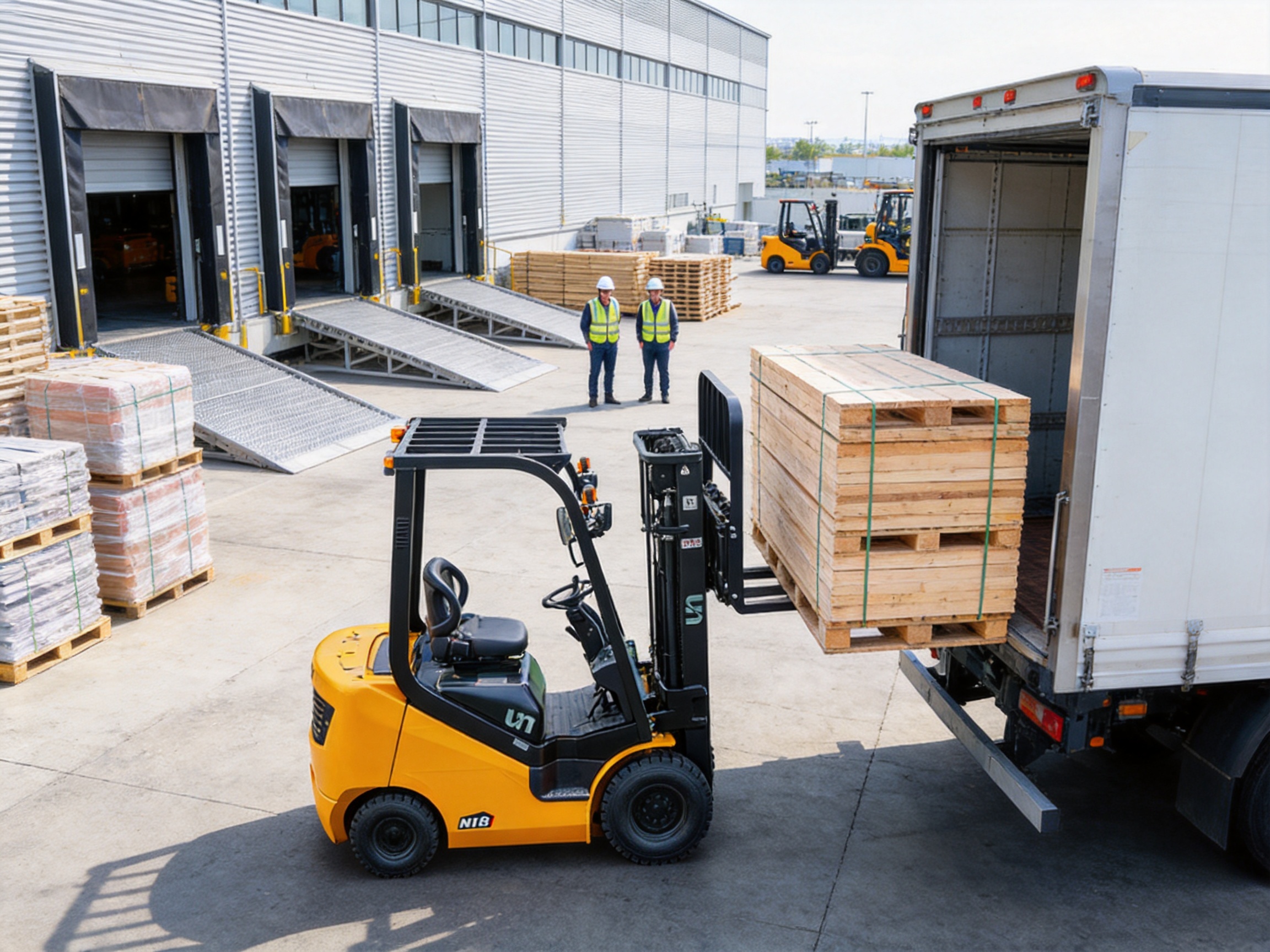
In logistics and distribution centers, the forklift can load and unload trucks, handle pallets at docks, and support short-distance transfer. The 14.5 km/h no-load travel speed helps maintain efficient movement across moderate distances. The 20% maximum gradeability under full load supports ramp operation where applicable.
In building material yards and semi-outdoor environments, diesel power provides practical durability and refueling convenience. The forklift can handle packaged cement, tiles, hardware, metal products, timber products, and other medium-weight materials within its rated capacity. In agricultural processing and food packaging operations, it can move bagged or boxed goods where diesel equipment is permitted and ventilation requirements are properly managed.
Rental companies can also benefit from this model range because compact diesel forklifts are versatile. A rental fleet needs machines that can serve many customer types. The 1.5T and 1.8T capacities are commonly requested, while the engine options and simple maintenance structure can support easier fleet management.
Total Cost of Ownership
When purchasing a forklift, the initial price is only one part of the total cost. The true cost includes fuel consumption, maintenance, downtime, parts availability, operator productivity, tire wear, service labor, resale value, and the effect on daily operations. The N Series is designed to support favorable ownership economics through practical engineering.
Fuel-efficient diesel engines help reduce operating cost during long shifts. Quick acceleration helps operators complete cycles efficiently. The compact turning radius reduces unnecessary maneuvering, saving time and reducing tire and drivetrain stress. The reliable hydraulic system reduces the risk of cargo damage and supports consistent handling speed.
Maintenance access also contributes directly to ownership value. A forklift that is easier to service can reduce labor time and encourage preventive maintenance. Preventive maintenance is usually less expensive than emergency repair. The large-opening engine hood and convenient transmission oil filter replacement are therefore important cost-control features.
Operator comfort also affects cost. A comfortable operator can work more consistently and may make fewer handling errors. Reduced fatigue can improve safety and reduce damage to goods, racks, pallets, and the forklift itself. In many operations, damage reduction is a major source of hidden savings.
Environmental and Market Considerations
Global material handling markets are increasingly focused on energy efficiency, emissions, and smarter equipment choices. While electric and lithium-ion forklifts are growing rapidly, diesel forklifts remain necessary in many applications. The key is to use diesel equipment where it provides genuine operational value and to choose models with efficient engines and reliable systems.
Zhejiang UN Forklift Co., Ltd. has actively developed new energy forklifts, including diesel-to-lithium-ion models and standard lithium-ion battery forklifts. At the same time, it continues to supply internal combustion forklifts for markets that require diesel power. This dual capability is important because different customers have different infrastructure, climate, workload, and regulatory conditions.
The company also provides models meeting high emission requirements in markets such as the European Union and North America. This demonstrates an ability to adapt products to demanding international standards. For customers, such experience can support confidence in product development, compliance awareness, and long-term supplier reliability.
Choosing the Right Configuration
Customers selecting the N Series 1.5T–1.8T Diesel Forklift should begin with the actual load profile. If typical loads are closer to 1,500 kg, the 1.5T model may provide excellent efficiency and maneuverability. If loads frequently approach 1,800 kg, the 1.8T model provides additional capacity while maintaining the same compact width and turning radius.
Engine selection should consider local service support, fuel conditions, emissions expectations, and performance preference. The Xinchai option may appeal to buyers seeking a cost-effective configuration. The Isuzu option may appeal to customers prioritizing recognized international engine reputation and output. The Yanmar option may be attractive where torque characteristics and service familiarity are important.
Mast and fork selection should match stacking height, pallet type, overhead clearance, and load dimensions. The standard rated lift height is 3,000 mm, suitable for many general applications. Fork sizes vary by configuration, with 920 mm and 1,070 mm fork length options depending on model. Customers should confirm fork length, attachment needs, and working aisle requirements before purchase.
Workplace conditions should also be reviewed. Diesel forklifts require suitable ventilation when used indoors. Floor strength, ramp angle, aisle width, door height, load stability, and operator training all affect safe use. A properly selected forklift can improve productivity, but it must be matched to the environment.
Service Network and After-Sales Support
A forklift is a long-term industrial asset, and after-sales support is essential. Zhejiang UN Forklift Co., Ltd. has developed a worldwide sales and service network with partners in Europe, South America, North America, Africa, and Asia. This network supports customers who need parts, technical guidance, and product assistance across different regions.
International support is especially important for distributors and fleet operators. Spare parts availability, service documentation, technical communication, and reliable supply are all part of the ownership experience. A forklift from a manufacturer with global market experience can be easier to integrate into professional fleet operations.
The company also serves as a designated OEM supplier for well-known domestic and overseas companies, including Hyundai Heavy Industries and Xuzhou Construction Machinery Group. OEM cooperation requires manufacturing discipline, quality control, delivery reliability, and engineering communication. This background supports confidence in the company’s ability to produce dependable industrial equipment.
Q&A Section
What is the main purpose of the N Series 1.5T–1.8T Diesel Forklift?
It is designed for compact and efficient material handling, including pallet movement, loading, unloading, stacking, and short-distance transport in warehouses, factories, logistics centers, yards, and mixed indoor-outdoor environments.
What load capacities are available?
The product range includes 1,500 kg and 1,800 kg rated load capacities, both with a 500 mm load center. These capacities are suitable for many common palletized goods and medium-duty handling tasks.
Why is this forklift suitable for confined spaces?
Its compact 1,082 mm overall width and 2,100 mm outside turning radius help it maneuver in narrow aisles, crowded loading zones, and restricted warehouse layouts. This reduces unnecessary repositioning and supports faster handling cycles.
What engine options are available?
The forklift can be configured with diesel engines such as Xinchai NC485BPG, Isuzu C240NKFC-01, and Yanmar 4TNE92. These options allow customers to match engine choice with local service networks, performance needs, and budget considerations.
How does the forklift improve operator safety?
Safety features include an OPS system, seat switch, wide-visibility mast, and high-strength overhead guard. These features help reduce operational risk, improve visibility, and provide protection in daily material handling work.
What comfort features are included?
The forklift includes a suspended chassis design, increased legroom, adjustable steering wheel, ergonomic seat, and streamlined control interface. These features help reduce fatigue during long shifts.
How does the forklift reduce maintenance difficulty?
The engine hood tilts nearly 90 degrees, allowing easy access for daily checks and component replacement. The transmission oil filter is also designed for convenient replacement, helping reduce service time and downtime.
What are the advantages over competing forklifts?
Major advantages include compact maneuverability, flexible diesel engine options, reliable hydraulic performance, strong cooling capacity, operator-focused safety, ergonomic design, easy maintenance access, and the support of an experienced forklift manufacturer with global market reach.
Is the forklift suitable for outdoor use?
Yes, diesel power makes it suitable for many outdoor and semi-outdoor tasks, including loading yards, building material handling, and logistics operations. Users should always confirm ground conditions, load requirements, and local safety rules.
What should buyers consider before selecting a configuration?
Buyers should evaluate load weight, pallet size, aisle width, lift height, engine preference, maintenance support, ventilation conditions, attachment needs, and emission requirements. Proper selection ensures better performance and lower lifetime cost.
Conclusion
The N Series 1.5T–1.8T Diesel Forklift is a practical, compact, and reliable solution for businesses that need efficient material handling in confined spaces. It combines diesel power, engine flexibility, stable hydraulics, compact dimensions, operator comfort, safety features, and service-friendly maintenance. These qualities make it suitable for warehouses, factories, logistics operations, rental fleets, building material yards, and many other industrial applications.
Its advantages over competitors come from the integration of real-world design details. The tight turning radius helps save space and time. The engine options support diverse market needs. The wide-visibility mast and ergonomic operator area improve daily usability. The cooling system supports stable operation in demanding environments. The nearly 90-degree engine hood opening simplifies maintenance. Together, these features support productivity, safety, and lower total cost of ownership.
The product is further supported by the manufacturing strength of Zhejiang UN Forklift Co., Ltd., a company with decades of experience, broad product capability, advanced production processes, international service reach, and a long history in material handling equipment development. For customers seeking a compact diesel forklift in the 1.5T–1.8T class, this model range offers a strong combination of performance, reliability, comfort, and long-term value.
References
Industrial Truck Association. General Guidance on Powered Industrial Truck Classifications and Safe Operation.
International Organization for Standardization. ISO 3691 Series, Industrial Trucks Safety Requirements and Verification.
Occupational Safety and Health Administration. Powered Industrial Trucks Operator Safety Principles.
Forklift Engineering Handbook. Principles of Counterbalance Truck Stability, Hydraulics, and Powertrain Integration.
Material Handling Industry. Warehouse Equipment Selection and Fleet Productivity Guidelines.
Diesel Engine Application Manual. Industrial Engine Performance, Cooling, and Maintenance Practices.
Product: N Series 1.5T-1.8T Diesel Forklift
For exclusive deals and latest offers, sign up by entering your email address below.
Stay In Touch
ADDRESS : NO.1 ROAD ONE, XINDENG NEW DISTRICT, FUYANG, HANGZHOU, ZHEJIANG, CHINA 311404.
PHONE : +86-571-8688 8355 (AMERICA)
PHONE : +86-571-8886 9363 (EUROPE)
PHONE : +86-571-8688 8377 (ASIA, AFRICA, OCEANIA)
EMAIL : [email protected]
EMAIL : [email protected](PARTS INQUIRY)

