


 中文简体
中文简体 Français
 русский
 Español
 عربى
عربى Deutsch



A New Standard for 2.0T–2.5T Lithium-Ion Counterbalance Forklift Performance
Admin 2026-06-27In modern material handling, the 2.0T to 2.5T forklift class is one of the most widely used capacity ranges across warehousing, logistics, manufacturing, distribution, building materials, food processing, retail supply chains, and general industrial operations. Equipment in this class must be compact enough for efficient indoor movement, strong enough for heavy palletized loads, reliable enough for multi-shift work, and clean enough to meet the increasingly strict environmental requirements of global markets. The FL Series 2.0T–2.5T Li-ion Battery Forklift is designed for exactly this operating environment: a practical, powerful, low-emission, and highly efficient counterbalance forklift that combines the driving feel of traditional forklifts with the energy advantages of lithium-ion technology.
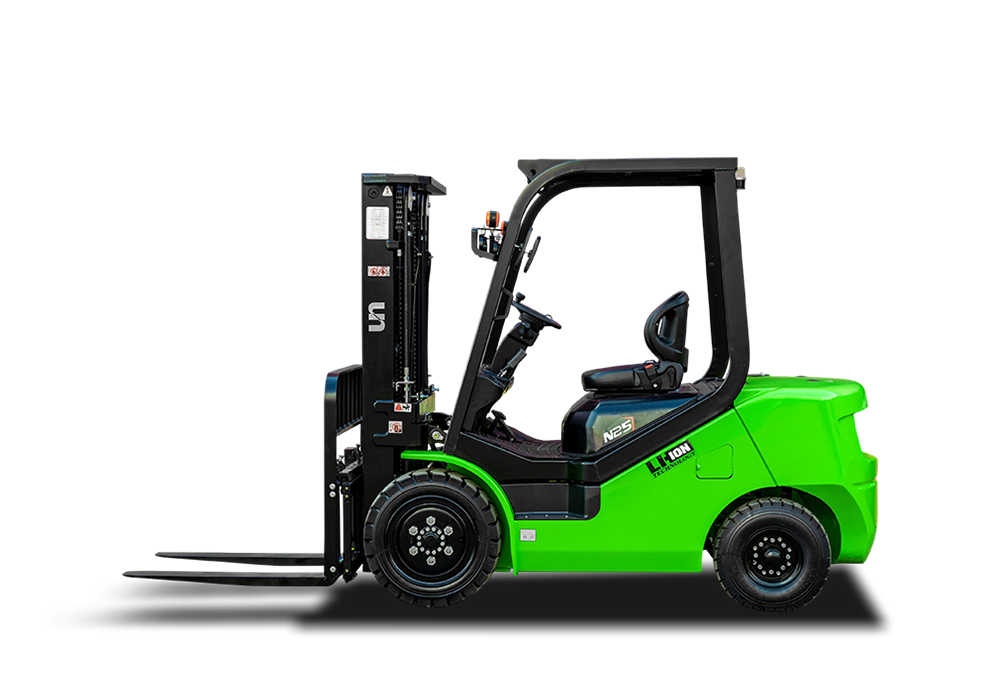
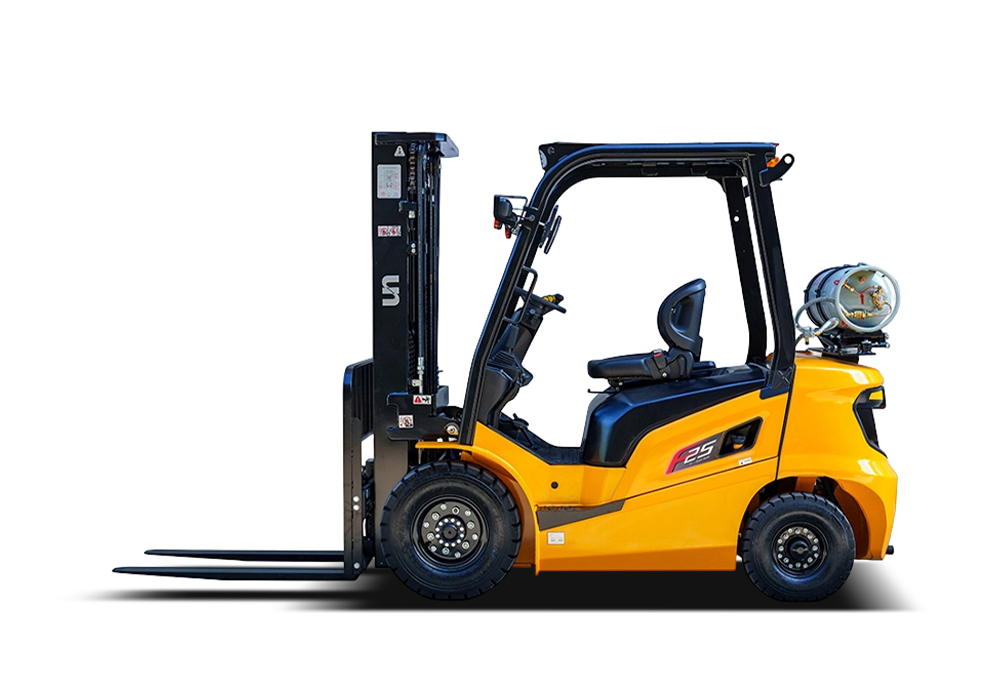
FL Series 2.0T-2.5T Li-ion Battery Forklift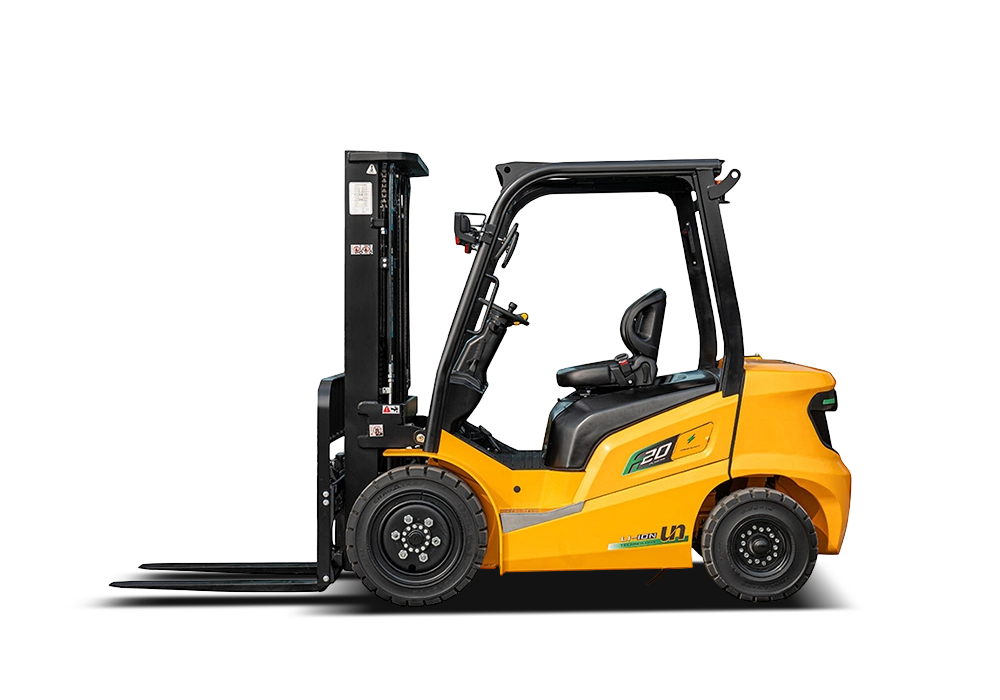
This forklift represents more than a simple battery-powered replacement for a diesel or lead-acid electric truck. It is a redesigned lithium-ion counterbalance forklift with improvements in appearance, performance, operator comfort, waterproof capability, safety, service access, and energy management. Its design philosophy is based on the needs of users who want one truck to handle a broad range of daily tasks without sacrificing productivity. For fleet managers, it offers a cleaner energy platform, reduced routine maintenance, and convenient charging. For operators, it offers improved visibility, a larger driving space, responsive controls, and a multifunctional color display. For maintenance teams, it provides easier access to inspection points through a larger hood opening angle and detachable side panels.
The product is built by Zhejiang UN Forklift Co., Ltd., a professional material handling equipment manufacturer founded in 1978. With decades of experience in forklift research, production, sales, and service, the company has developed a broad product portfolio covering electric forklifts, internal combustion forklifts, warehouse equipment, rough terrain forklifts, cushion tire forklifts, and specialized handling solutions. Its manufacturing base occupies 53,400 square meters and supports an annual production capacity of 15,000 units. This scale, combined with extensive technical know-how, allows the company to deliver forklifts that are practical for global operating conditions and competitive in international markets.
Product Positioning: A Lithium-Ion Forklift for Daily Industrial Productivity
The FL Series 2.0T–2.5T Li-ion Battery Forklift is positioned as a lithium battery counterbalance truck for customers who need dependable load handling, clean energy operation, and long-term cost efficiency. In the 2.0T and 2.5T capacity range, the forklift is suitable for loading and unloading trucks, moving palletized goods, stacking materials, feeding production lines, supporting warehouse operations, and handling goods in yards where the ground conditions are suitable for counterbalance forklift operation.
Compared with traditional internal combustion forklifts, the lithium-ion version eliminates exhaust emissions during operation. This is especially valuable in warehouses, food-related environments, enclosed production buildings, and logistics centers where air quality and worker comfort matter. Compared with conventional lead-acid battery forklifts, lithium-ion power brings faster opportunity charging, reduced battery maintenance, no regular watering, better energy efficiency, and a more convenient daily operating routine. These advantages make the truck attractive to users who are replacing older electric forklifts or moving away from diesel and LPG fleets.
The 2.0T and 2.5T models use a 500 mm load center, a standard value for many palletized applications. Their 3000 mm rated lift height supports common warehousing and industrial tasks, while the wide-view mast improves visibility during load handling. The forklift also offers a strong set of standard and optional functions, such as proportional lifting, turning deceleration, rear wheel angle indication, a load-sensing steering system, an optional large-capacity lithium battery, an optional high-speed charger, and an optional low-temperature heating system for applications down to minus 20 degrees Celsius.
Core Product Advantages Over Conventional Competitors
The first advantage of the FL Series is its combination of lithium-ion efficiency and counterbalance forklift familiarity. Many operators are accustomed to the stability, mast configuration, and driving style of traditional counterbalance forklifts. This product preserves that familiar platform while replacing older energy systems with a cleaner and more efficient lithium battery powertrain. The result is easier operator acceptance and faster integration into existing workflows.
The second advantage is its redesigned appearance and structure. The forklift uses a smooth and streamlined body with sharp counterweight lines and a contrast color design. While appearance may seem secondary in industrial equipment, it influences product perception, workplace image, and operator pride. A modern forklift also communicates that the fleet owner is investing in cleaner, newer, and safer equipment. The dynamic LED taillights enhance visibility and give the truck a technological appearance while contributing to safe operation around pedestrians and other vehicles.
The third advantage is higher suitability for mixed indoor and outdoor work. With high ground clearance, the truck is better prepared for outdoor working conditions than many low-clearance electric forklifts. It also provides IPX4 waterproof performance, which helps protect the machine during operation in environments where water splashes, damp floors, or light outdoor exposure may occur. This does not mean the forklift should be used carelessly in severe weather, but it does provide additional practical confidence compared with electric models designed only for dry indoor use.
The fourth advantage is safety-centered control. Turning deceleration is standard, and the rear wheel angle indication on the display supports better awareness during maneuvering. A casting steering axle with tapered roller bearing contributes to durability and stability, while turning reduction improves safety during cornering. Anti-sloping function, bottom-buffering function, and a standard anti-static strip further support safer operation in everyday industrial sites. These details show that the product is engineered not only to lift loads, but also to reduce avoidable risks in busy workplaces.
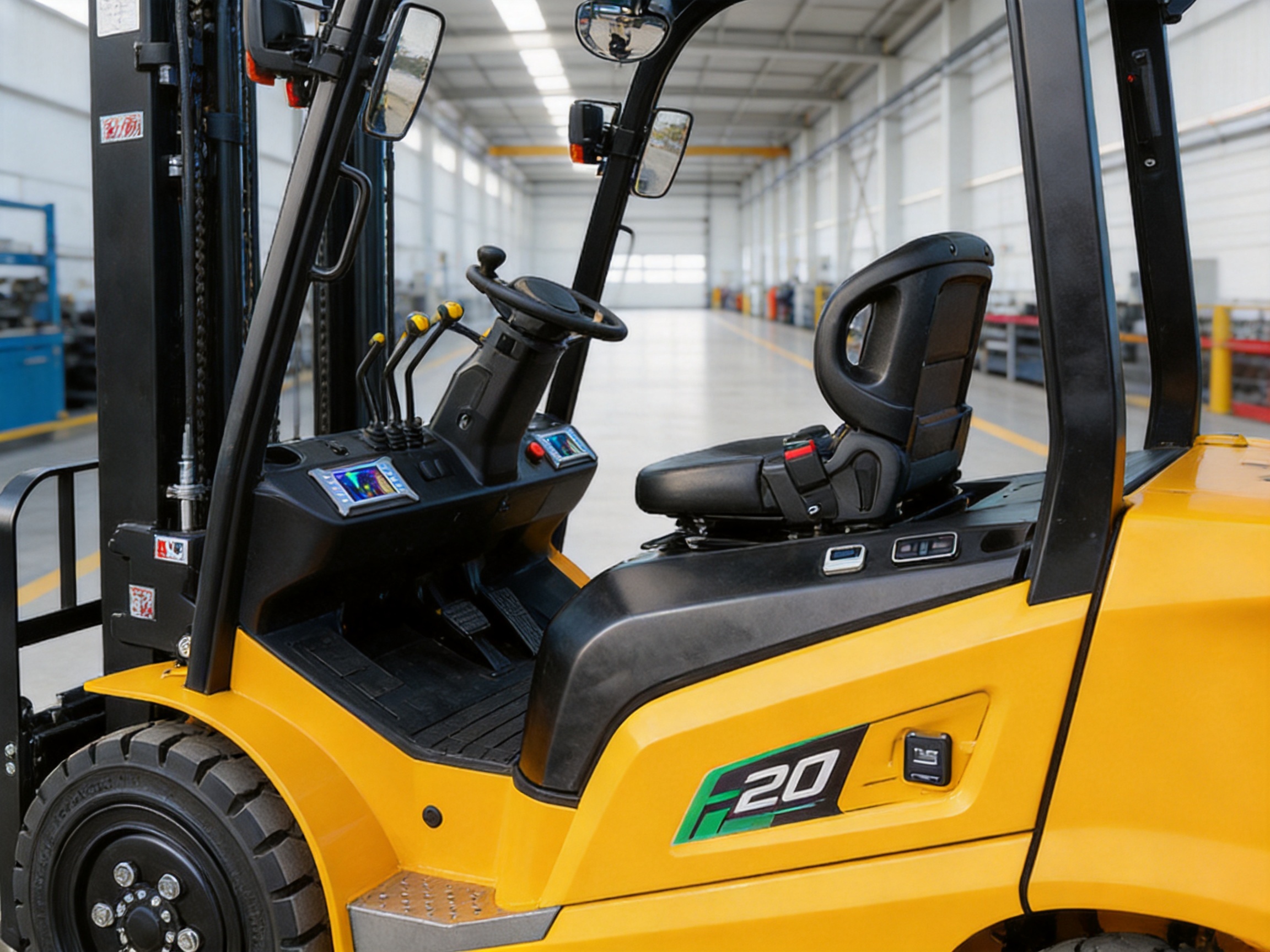
The fifth advantage is ergonomic improvement. The entire forklift adopts an ergonomic design with larger operating space and more comfort. An optimized stamped overhead guard supports better upward visibility, which is important during stacking and load placement. The multifunctional color display instrument gives operators clearer information, while the ratchet handbrake, wide-view mast, and standard USB interface for mobile devices improve the daily operating experience. In many companies, forklift operators spend long hours in the truck. Comfort and visibility therefore directly affect productivity, fatigue reduction, and safe driving habits.
Key Specifications for the 2.0T and 2.5T Models
The following table summarizes important specifications for the FB20 and FB25 models within the FL Series 2.0T–2.5T Li-ion Battery Forklift range. Actual configuration may vary according to selected battery, mast, tire, charger, market requirements, and customer application.
| Item | FB20 | FB25 |
| Power Type | Lithium Battery | Lithium Battery |
| Rated Load Capacity | 2000 kg | 2500 kg |
| Load Center | 500 mm | 500 mm |
| Rated Lift Height | 3000 mm | 3000 mm |
| Length to Face of Fork Without Fork | 2662 mm | 2662 mm |
| Overall Width | 1180 mm | 1180 mm |
| Overhead Guard Height | 2215 mm | 2215 mm |
| Turning Radius | 2365 mm | 2365 mm |
| Maximum Gradeability With Full Load | 15 percent | 15 percent |
| Wheelbase | 1650 mm | 1650 mm |
| Total Weight | 3472 kg | 3703 kg |
| Battery | 76.8 V / 175 Ah | 76.8 V / 175 Ah |
These specifications demonstrate that the truck is designed for practical maneuverability as well as load handling strength. With an overall width of about 1180 mm and a turning radius of 2365 mm for both the 2.0T and 2.5T models, the forklift is suitable for standard warehouse aisles and general logistics areas. The 15 percent full-load gradeability provides useful performance when the truck must travel on ramps or slightly inclined surfaces. The lithium battery platform supports efficient energy use, and optional capacity upgrades may be selected for applications requiring longer working time or faster charging cycles.
Lithium-Ion Power: Cleaner, Faster, and Easier to Manage
One of the strongest reasons to choose this forklift is its lithium-ion battery system. Many companies are under pressure to reduce emissions, improve energy efficiency, and create cleaner working environments. Internal combustion forklifts remain useful in certain outdoor or heavy-duty applications, but indoor use increasingly favors electric solutions. Lithium-ion technology improves the practicality of electric forklifts by addressing many weaknesses of traditional lead-acid batteries.
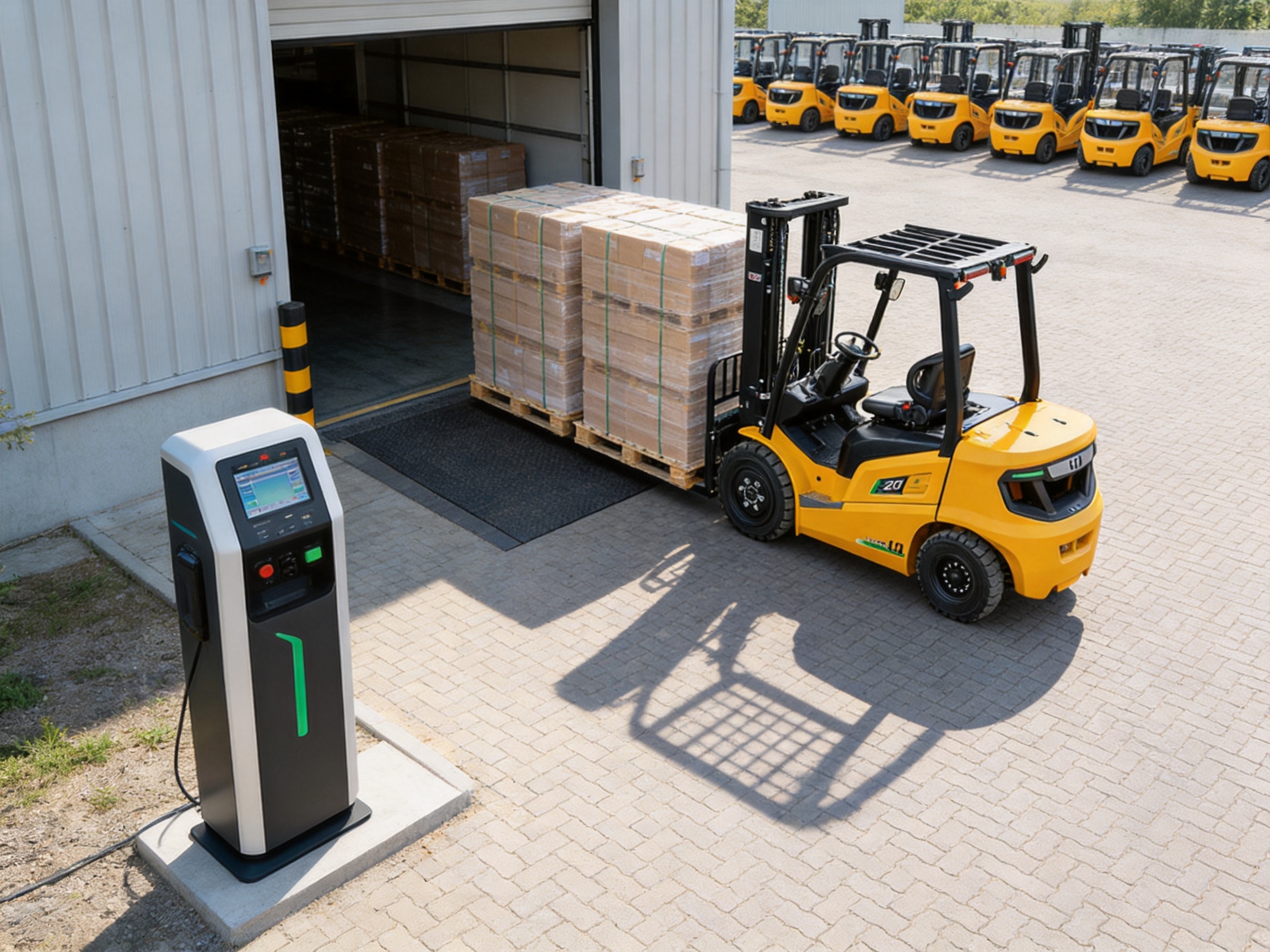
Lead-acid batteries often require long charging times, cool-down periods, regular watering, equalization charging, ventilation considerations, and dedicated battery maintenance routines. In contrast, lithium-ion batteries can support opportunity charging during breaks or shift changes, allowing the forklift to return to work quickly. This is valuable in busy operations where equipment availability is critical. A fleet that once required spare lead-acid batteries or battery changing equipment may reduce complexity by using lithium-ion trucks with high-speed charging options.
The FL Series can be optionally equipped with a large-capacity lithium battery up to 460 Ah and a 200 A high-speed charger. This configuration supports demanding applications where daily working hours are long and charging windows are short. For customers operating multiple shifts, opportunity charging may help maintain productivity without major changes to the workflow. The optional low-temperature heating system down to minus 20 degrees Celsius is also important for cold storage support areas, northern climates, winter loading zones, and other low-temperature applications where battery performance can otherwise be affected.
The lithium battery meets the latest CE standards, reflecting attention to regulatory compliance and safety expectations in international markets. For global customers, certification and standard compliance matter because they reduce purchasing risk and help equipment fit into broader safety management systems. While daily performance is important, documentation, compliance, and electrical safety design are equally important when selecting a forklift for professional industrial use.
High Performance in Real Working Conditions
Forklift performance is not measured only by a single lifting speed or travel speed figure. Real productivity depends on how well the truck accelerates, turns, lifts, lowers, stops, and responds to the operator throughout a complete work cycle. The FL Series is designed to handle these daily movements smoothly and efficiently. Standard proportional lifting helps operators control the mast with greater precision, making load placement more accurate and reducing shock during stacking.
The load-sensing steering system contributes to responsive and efficient steering. Instead of wasting unnecessary energy, load-sensing hydraulic control can provide steering support according to actual demand. This improves energy efficiency while giving the operator a natural steering feel. In applications with repeated turning, pallet positioning, and loading dock movement, steering comfort has a major effect on operator fatigue and cycle time.
Turning deceleration is a particularly valuable standard feature. Forklift accidents often occur during turns, especially when operators carry loads, move on uneven surfaces, or operate in congested areas. By reducing speed during turning, the truck encourages safer driving behavior and improves stability. Rear wheel angle indication also helps operators understand the vehicle’s steering position, which is useful when maneuvering near racks, pallets, dock edges, or production equipment.
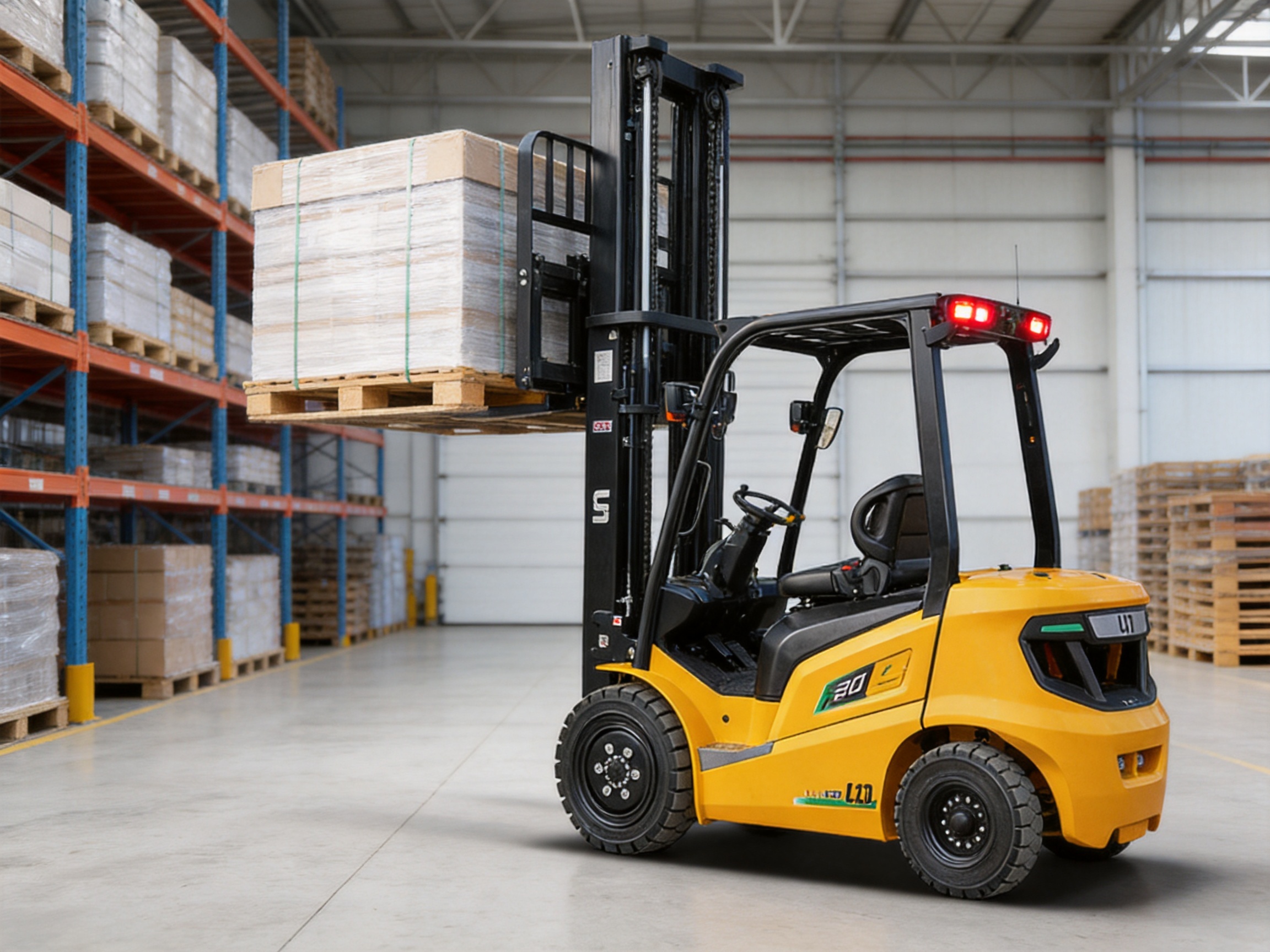
The high ground clearance expands usability beyond perfect indoor floors. In many real facilities, forklifts move between warehouse floors, loading yards, container areas, and production workshops. Floor transitions, drainage channels, small surface irregularities, and outdoor approaches can challenge low-clearance trucks. The FL Series is not a rough terrain forklift, but its ground clearance improves practicality for general outdoor working conditions compared with many electric forklifts focused only on indoor operation.
Safety and Reliability Built Into the Structure
Safety is a complete system, not a single feature. It begins with structural strength, continues through control logic, and extends to visibility, braking, stability, and operator behavior. The FL Series incorporates several features that support safe and reliable use in material handling environments. Its casting steering axle with tapered roller bearing is designed for durability and stable steering performance. Strong axle design matters because steering components experience repeated loads, impacts, and vibration throughout the forklift’s life.
The bottom-buffering function helps reduce impact at the end of lowering travel. This can protect the hydraulic system, mast components, load, and working surface from harsh shock. In daily handling, operators may lower loads repeatedly hundreds of times. Smooth lowering not only protects goods but also reduces noise and mechanical stress. The anti-sloping function adds another layer of security, supporting safer operation on inclines or when the forklift is positioned on slightly uneven surfaces.
The standard anti-static strip reflects attention to details that may be overlooked by lower-quality competitors. In certain industrial environments, static electricity control can be relevant to safety, product protection, and worker comfort. The inclusion of this feature as standard suggests that the forklift is designed with broad workplace realities in mind. Combined with CE-compliant lithium battery safety, these details support the product’s suitability for professional users who evaluate risk carefully.
Visibility is another safety factor. The wide-view mast, optimized overhead guard, and modern lighting all help the operator see the load, the environment, and nearby workers more clearly. The dynamic LED taillights provide a strong visual signal to people behind the truck. In warehouses with mixed pedestrian and forklift traffic, visual awareness can reduce risk. Good visibility also helps avoid product damage, rack impacts, and unnecessary repositioning.
Operator Ergonomics and Daily Comfort
Forklift operators are central to productivity. A powerful truck can underperform if the operator is uncomfortable, fatigued, or forced to work with poor visibility. The FL Series addresses this through a redesigned ergonomic layout. Larger operating space gives the driver more freedom of movement, which is especially important during long shifts. Comfortable entry, seating position, control reach, and visibility all influence operator satisfaction and performance.
The multifunctional color display instrument provides clear operational information. A modern display improves interaction between operator and machine by presenting important data in a readable form. Rear wheel angle indication helps with precise maneuvering, while system status information can support better daily use. Compared with basic analog or limited digital displays used by some competing forklifts, a color instrument panel makes the truck feel more modern and easier to manage.
The ratchet handbrake is another practical improvement. A handbrake must be easy to use, reliable, and familiar. In busy operations, small details such as handbrake feel can affect compliance with safe parking habits. The standard USB interface for mobile devices reflects modern operator needs, especially in logistics sites where mobile terminals, phones, or job-related devices may be used throughout the day.
The optimized stamped overhead guard improves visibility while maintaining protective function. Operators often need to look upward when placing or retrieving loads. A poorly designed overhead guard can obstruct the view, slow stacking, and increase neck strain. By improving this area, the forklift supports safer and more comfortable vertical handling. The wide-view mast also improves forward visibility when carrying loads, reducing blind spots and supporting faster, more confident operation.
Maintenance Advantages That Reduce Downtime
Maintenance access is one of the most important practical differences between a well-designed forklift and an average one. The FL Series uses an increased hood opening angle to create a more spacious inspection and maintenance area. This helps technicians reach key components more easily, perform routine checks faster, and reduce service time. In fleet operations, maintenance convenience directly affects uptime and operating cost.
The detachable side panels make maintenance and cleaning more convenient. Forklifts work in dusty, dirty, and sometimes wet environments. Easy access for cleaning helps keep components in better condition and supports early detection of wear, leakage, loose connectors, or damage. Maintenance-friendly design also encourages proper preventive maintenance because technicians can perform inspections without excessive disassembly.
Lithium-ion power itself reduces routine service requirements compared with internal combustion engines and lead-acid battery systems. There is no engine oil, fuel filter, exhaust system, or complex engine maintenance routine associated with diesel forklifts. There is also no lead-acid watering process or acid spill concern. For many users, this means lower labor requirements, cleaner battery areas, and simpler training for daily energy management.
Reduced downtime gives the FL Series an important competitive advantage. In high-volume logistics and production environments, a forklift that is out of service can disrupt a complete workflow. Easy maintenance, durable steering axle design, reliable electrical systems, and cleaner energy technology all contribute to higher availability. This is often more valuable than a slightly lower purchase price from a less refined competitor.
Manufacturing Strength Behind the Product
The strength of a forklift depends not only on design drawings but also on the manufacturer’s ability to produce consistently. Zhejiang UN Forklift Co., Ltd. has been engaged in material handling equipment since 1978 and has built long-term expertise in research and development, production, sales, and service. The company’s 53,400-square-meter production base and annual production capacity of 15,000 units provide a strong foundation for standardized manufacturing and global supply.
Advanced manufacturing begins with engineering design. The company has experience across 17 varieties, 96 series, and more than 200 specifications of forklifts and material handling equipment. This broad portfolio helps engineers understand different working conditions, customer expectations, regional regulations, and application challenges. Knowledge gained from internal combustion forklifts, electric forklifts, warehouse equipment, and specialized machines can be applied to lithium-ion counterbalance forklift development.
The company has also contributed to the development of China’s electric forklift industry standards and holds national patents for electric forklift technologies. This indicates that it is not merely assembling equipment but participating in technical advancement. The development of China’s first reach forklift and very narrow aisle truck at the company further demonstrates an engineering culture focused on innovation and application-specific solutions.
Manufacturing quality also benefits from experience as an OEM supplier for well-known domestic and overseas companies, including Hyundai Heavy Industries and Xuzhou Construction Machinery Group. OEM cooperation requires stable quality control, process discipline, documentation, delivery reliability, and the ability to meet partner requirements. This background strengthens confidence in the FL Series because it shows that the manufacturer understands international expectations and large-scale industrial standards.
Process Control and Quality Assurance
A lithium-ion forklift requires careful coordination among steel structures, mast systems, hydraulic systems, electrical systems, battery management, drive motors, steering components, braking systems, and operator interfaces. Quality cannot be inspected into the product only at the end; it must be built into each stage of production. This includes material selection, component processing, welding, painting, assembly, electrical integration, functional testing, and final inspection.
For the chassis and structural parts, consistent welding and dimensional control are essential. A counterbalance forklift must withstand repeated load cycles, turning forces, vibration, and occasional impact from real operating environments. Precision in frame assembly supports long-term durability and correct alignment of mast, axle, counterweight, and body components. Strong structural manufacturing also contributes to stability and operator confidence.
The mast and hydraulic system require careful assembly because lifting performance depends on smooth movement, accurate tolerances, reliable seals, and stable hydraulic pressure. The FL Series is standard-equipped with proportional lifting, so the relationship between operator input and hydraulic response must be controlled precisely. Manufacturing processes must ensure that valves, hoses, cylinders, and controls work together smoothly.
Electrical system integration is especially important for lithium-ion forklifts. Battery safety, controller reliability, wiring protection, waterproofing, display communication, LED lighting, and charging compatibility must be designed and assembled with attention to detail. IPX4 waterproof performance requires protection against water splashing from multiple directions, which depends on component selection, sealing design, wire routing, connector quality, and assembly discipline. A factory with mature electric forklift experience is better positioned to deliver consistent performance in this area.
Final testing should verify travel, lifting, lowering, braking, steering, display functions, safety devices, lighting, charging interface, and hydraulic performance. For global customers, stable pre-delivery inspection reduces commissioning problems and helps the forklift enter service quickly. The manufacturer’s long production history and international sales network support a quality system oriented toward repeatable performance rather than one-time sales.
Why This Forklift Competes Strongly in Global Markets
The FL Series 2.0T–2.5T Li-ion Battery Forklift competes strongly because it balances performance, affordability, energy efficiency, and practical design. Many premium international brands offer high-quality electric forklifts, but their purchase cost can be high. Some low-cost competitors offer attractive pricing, but may compromise on ergonomics, service access, safety features, or manufacturing consistency. This product aims to provide a strong middle path: modern lithium-ion capability, useful standard features, robust construction, and manufacturer experience at a competitive value level.
Its competitor advantage is especially clear in applications where users are transitioning from internal combustion forklifts. Operators who are used to diesel forklifts often worry that electric trucks may lack strength or outdoor practicality. The FL Series addresses these concerns with high ground clearance, strong gradeability, durable steering axle design, and responsive performance. At the same time, it eliminates exhaust emissions and reduces engine-related maintenance.
Compared with lead-acid electric forklifts, the product offers a simpler daily energy routine. Opportunity charging, no watering, reduced battery room complexity, and optional high-speed charging are major operational benefits. Fleet managers can reduce the hidden labor and infrastructure costs associated with lead-acid battery maintenance. Operators can charge during breaks instead of waiting for long charging cycles or battery changes.
Compared with basic lithium retrofits or converted diesel-style machines, the FL Series is presented as a redesigned lithium battery counterbalance forklift with coordinated improvements in appearance, control, ergonomics, waterproof performance, and maintenance. A true lithium-oriented design is better than a simple conversion because it can integrate the battery, control system, display, body structure, and service layout more effectively.
The global sales and service network of the manufacturer also supports competitiveness. With partners in Europe, South America, North America, Africa, and Asia, the company is positioned to support international customers with sales consultation, spare parts, and service coordination. Material handling equipment is a long-term investment, and customers need more than a machine; they need access to technical support, parts supply, and application guidance.
Application Scenarios and Customer Value
In warehousing, the FL Series can support pallet movement, loading and unloading, staging, and rack handling. Its compact width, turning radius, and 3000 mm rated lift height fit many standard storage environments. The wide-view mast and overhead guard visibility help operators work efficiently in aisles and loading zones. Lithium-ion power also supports indoor operation without local exhaust emissions.
In manufacturing plants, the forklift can move raw materials, semi-finished products, molds, packaged goods, and production supplies. The ability to charge during breaks is useful when the truck must support continuous production flow. Lower noise and cleaner operation improve the workplace environment compared with diesel forklifts. Maintenance convenience helps production teams avoid unexpected equipment interruptions.
In logistics and distribution centers, fast movement, frequent turning, and high daily utilization are common. Turning deceleration, rear wheel angle indication, responsive steering, and lithium charging flexibility support this type of work. The modern display and ergonomic layout help operators maintain productivity across long shifts. The optional large-capacity battery and high-speed charger are valuable when operating intensity is high.
In building materials or general industrial yards with suitable surfaces, the high ground clearance and IPX4 waterproof performance provide added practicality. The truck can move between indoor and outdoor areas more confidently than low-clearance electric forklifts intended only for smooth warehouse floors. Users should still select tires, mast, and battery configuration according to site conditions, but the FL Series provides a more versatile foundation than many indoor-only electric alternatives.
In food, beverage, packaging, and consumer goods operations, zero local exhaust emissions are highly valuable. Lithium-ion forklifts help reduce contamination risk associated with combustion emissions and fuel handling. The clean energy platform, lower maintenance needs, and modern appearance make the product suitable for companies that want both operational efficiency and a cleaner brand image within their facilities.
Total Cost of Ownership Benefits
Purchase price is only one part of forklift cost. Total cost of ownership includes energy consumption, maintenance labor, spare parts, downtime, battery management, operator productivity, service life, residual value, and safety-related costs. The FL Series can improve total cost performance through several channels.
Energy efficiency is a major benefit. Lithium-ion forklifts generally convert energy into work more efficiently than internal combustion forklifts and can reduce fuel-related expenses. Electricity costs are often more stable than diesel or LPG costs, and charging can be planned according to operational schedules. Opportunity charging also helps reduce the need for additional batteries or battery changing equipment.
Maintenance savings come from eliminating many internal combustion engine components and reducing battery maintenance compared with lead-acid systems. Fewer routine service tasks mean less labor time and fewer consumables. Easy-access design further reduces the time needed for inspection and repair. These savings accumulate over the life of the truck.
Productivity gains come from operator comfort, visibility, responsive controls, and reduced charging disruption. A forklift that is easier to operate can complete tasks more efficiently and with fewer errors. Better visibility can reduce rack damage, pallet damage, and product loss. Safety features such as turning deceleration may also reduce the probability of incidents that cause downtime or repair costs.
Fleet simplification is another value. Companies that standardize on lithium-ion forklifts can reduce fuel storage, engine maintenance complexity, lead-acid battery rooms, ventilation concerns, and battery watering routines. This supports cleaner facility management and easier environmental compliance. For companies with sustainability goals, switching to lithium-ion equipment may also contribute to carbon reduction strategies when paired with cleaner electricity sources.
Design Details That Matter in Daily Use
Many forklift purchase decisions focus on capacity and price, but daily satisfaction often depends on smaller details. The FL Series includes several design details that show attention to real users. The contrast color counterweight and streamlined body improve the visual identity of the truck. Dynamic LED taillights make the forklift more visible and modern. These exterior elements help create a professional fleet image.
The large hood opening angle and detachable side panels are not glamorous features, but they are extremely useful for service teams. When maintenance access is difficult, technicians spend more time disassembling covers and less time diagnosing actual issues. Good access encourages preventive checks and helps keep the truck in reliable condition.
The USB interface may seem minor, but in modern operations mobile devices are increasingly connected to work orders, warehouse systems, communication, and shift management. Providing a charging interface supports operators in practical ways. The multifunctional color display also reflects the growing importance of machine-user communication in industrial equipment.
Waterproof performance, ground clearance, low-temperature options, and high-speed charging options expand the number of applications where the truck can be used effectively. Instead of being limited to a narrow operating environment, the forklift can be configured for different customer needs. This flexibility is one reason the model is competitive in global markets with diverse climates, facility types, and operational habits.
Selection Guidance for Buyers
When choosing between the 2.0T and 2.5T versions, buyers should evaluate the heaviest regular load, load dimensions, attachment use, floor conditions, aisle width, lift height, ramp requirements, shift length, charging opportunities, and operator preferences. A 2.0T model may be suitable for lighter warehouse and production tasks, while the 2.5T model provides additional capacity for heavier pallets or more demanding industrial loads.
Battery selection should be based on working hours and charging patterns. If the forklift operates intermittently and has regular breaks, the standard lithium battery may be sufficient. If it works continuously or in multi-shift conditions, a larger-capacity battery and high-speed charger may improve productivity. Cold environments should be evaluated for the optional low-temperature heating system.
Mast selection should be matched to required lift height, doorway clearance, rack height, container loading needs, and visibility requirements. The standard 3000 mm rated lift height is suitable for many general applications, but specialized operations may require different mast configurations. Buyers should also consider attachments such as side shifters, clamps, fork positioners, or other hydraulic tools, because attachments affect load capacity, operating pressure requirements, and truck configuration.
Service support should also be part of the decision. A forklift is a working asset, and long-term value depends on parts availability, technical support, and maintenance knowledge. Zhejiang UN Forklift Co., Ltd. supports a worldwide sales and service network, with partners across major regions. This makes the product more practical for international customers who need dependable after-sales coordination.
Sustainability and the Future of Forklift Fleets
The global material handling industry is moving toward cleaner energy, smarter control systems, and lower total emissions. Lithium-ion forklifts are an important part of this transition. They reduce local emissions, lower noise, simplify energy management, and support more flexible charging. The FL Series aligns with this trend while maintaining the rugged character expected from a counterbalance forklift.
The manufacturer’s development direction also reflects this market shift. In recent years, Zhejiang UN Forklift Co., Ltd. has actively developed new energy forklifts, including diesel-to-lithium-ion models and standard lithium-ion battery forklifts. This shows that the company is not only responding to short-term demand but also adapting its product strategy to long-term global carbon reduction and efficiency requirements.
For customers, adopting lithium-ion forklifts can support corporate sustainability targets. While the forklift itself does not determine the source of electricity, electric equipment allows companies to benefit from cleaner power grids, renewable energy procurement, and facility-level energy planning. Replacing combustion forklifts in indoor and mixed-use environments can also improve air quality and employee comfort immediately.
The FL Series is therefore not just a replacement machine; it is part of a broader modernization pathway. Companies can use it to reduce fuel dependence, simplify maintenance, improve operator conditions, and present a cleaner image to employees, customers, auditors, and business partners. In competitive supply chains, these benefits increasingly matter.
Q&A Section
What type of operation is the FL Series 2.0T–2.5T Li-ion Battery Forklift best suited for?
It is best suited for warehousing, logistics, manufacturing, loading and unloading, production support, and general industrial material handling. Its lithium-ion power, compact counterbalance design, 500 mm load center, and 3000 mm rated lift height make it suitable for many standard pallet handling tasks.
How does this forklift compare with a diesel forklift?
Compared with a diesel forklift, it produces no local exhaust emissions during operation, has lower noise, requires less engine-related maintenance, and supports cleaner indoor use. It also provides practical performance features such as high ground clearance, turning deceleration, and durable steering axle design, helping it meet many tasks traditionally handled by internal combustion forklifts.
How does it compare with a lead-acid electric forklift?
Compared with lead-acid electric forklifts, the lithium-ion model offers easier energy management, opportunity charging, no routine battery watering, reduced maintenance, and potentially better uptime. Optional high-speed charging and large-capacity battery configurations further improve convenience for demanding operations.
What safety features are included?
The forklift includes standard turning deceleration, rear wheel angle indication on the display, bottom-buffering function, anti-sloping function, a casting steering axle with tapered roller bearing, an anti-static strip, dynamic LED taillights, and a lithium battery designed to meet the latest CE standards.
Is the forklift comfortable for long shifts?
Yes. The truck uses an ergonomic design with larger operating space, an optimized overhead guard for better visibility, a wide-view mast, a multifunctional color display, a new ratchet handbrake, and a standard USB interface. These features support comfort, convenience, and reduced fatigue during daily operation.
Can the forklift be used outdoors?
It can be used in suitable outdoor working conditions, especially where surfaces are reasonably firm and appropriate for a counterbalance forklift. High ground clearance and IPX4 waterproof performance improve versatility compared with many indoor-only electric forklifts. However, site conditions, weather, tire selection, and safety rules should always be evaluated before use.
What battery options are available?
The standard 2.0T and 2.5T models are listed with lithium battery configurations such as 76.8 V / 175 Ah. Optional larger-capacity lithium batteries up to 460 Ah and a 200 A high-speed charger may be selected for applications requiring longer working time or faster charging.
Why is the manufacturer’s experience important?
Forklift quality depends on engineering, production control, component integration, testing, and after-sales support. Zhejiang UN Forklift Co., Ltd. was founded in 1978, has a broad product portfolio, participates in electric forklift industry standards, holds patents for electric forklift technologies, and has served international OEM customers. This experience supports product reliability and global competitiveness.
What maintenance advantages does the forklift provide?
The forklift offers a larger hood opening angle and detachable side panels for easier inspection, cleaning, and maintenance. Lithium-ion power also reduces routine maintenance compared with internal combustion engines and lead-acid battery systems.
Who should consider purchasing this forklift?
Companies seeking a clean, efficient, modern, and reliable 2.0T to 2.5T counterbalance forklift should consider it. It is especially suitable for users replacing diesel forklifts indoors, upgrading from lead-acid electric forklifts, or building a more sustainable and lower-maintenance forklift fleet.
Conclusion
The FL Series 2.0T–2.5T Li-ion Battery Forklift brings together the essential qualities required by modern material handling operations: clean lithium-ion power, reliable lifting capacity, operator comfort, practical safety functions, strong maneuverability, easier maintenance, and a professional manufacturing background. It is designed for businesses that want to improve efficiency while reducing emissions and simplifying daily fleet management.
Its advantages over competitors are found not only in headline specifications but also in the details that matter during long-term use. Turning deceleration, rear wheel angle indication, proportional lifting, IPX4 waterproof performance, high ground clearance, dynamic LED taillights, a wide-view mast, a color display, and easy service access all contribute to a more capable and user-friendly forklift. Optional battery and charging configurations further allow customers to adapt the truck to their operating schedule.
Behind the product is a manufacturer with decades of experience, a large production base, broad technical capabilities, electric forklift patents, industry-standard participation, global partnerships, and a worldwide sales and service network. This foundation strengthens the value of the forklift because customers are not only buying a machine; they are buying engineering knowledge, production consistency, and long-term support.
For warehouses, factories, distribution centers, and industrial operations seeking a practical lithium-ion solution in the 2.0T to 2.5T class, this forklift offers a strong balance of performance, safety, comfort, sustainability, and total cost value. As material handling continues to move toward cleaner and smarter equipment, the FL Series stands as a competitive choice for companies preparing their fleets for the future.
Bibliography and Technical References
Industrial Truck Association. General principles for powered industrial truck selection, operation, and maintenance.
International Organization for Standardization. Safety requirements and verification principles for industrial trucks.
European Committee for Standardization. Safety standards and conformity guidance for industrial trucks used in European markets.
Battery University. Technical guidance on lithium-ion battery charging, maintenance, and lifecycle characteristics.
Material Handling Industry. Best practices for warehouse productivity, forklift fleet planning, and operator ergonomics.
Occupational safety guidance for powered industrial truck operation, pedestrian awareness, and workplace traffic management.
Product: FL Series 2.0T-2.5T Li-ion Battery Forklift
For exclusive deals and latest offers, sign up by entering your email address below.
Stay In Touch
ADDRESS : NO.1 ROAD ONE, XINDENG NEW DISTRICT, FUYANG, HANGZHOU, ZHEJIANG, CHINA 311404.
PHONE : +86-571-8688 8355 (AMERICA)
PHONE : +86-571-8886 9363 (EUROPE)
PHONE : +86-571-8688 8377 (ASIA, AFRICA, OCEANIA)
EMAIL : [email protected]
EMAIL : [email protected](PARTS INQUIRY)

