


 中文简体
中文简体 Français
 русский
 Español
 عربى
عربى Deutsch



1.6T-2.0T 3-Wheel Electric Forklift for Narrow-Aisle Material Handling
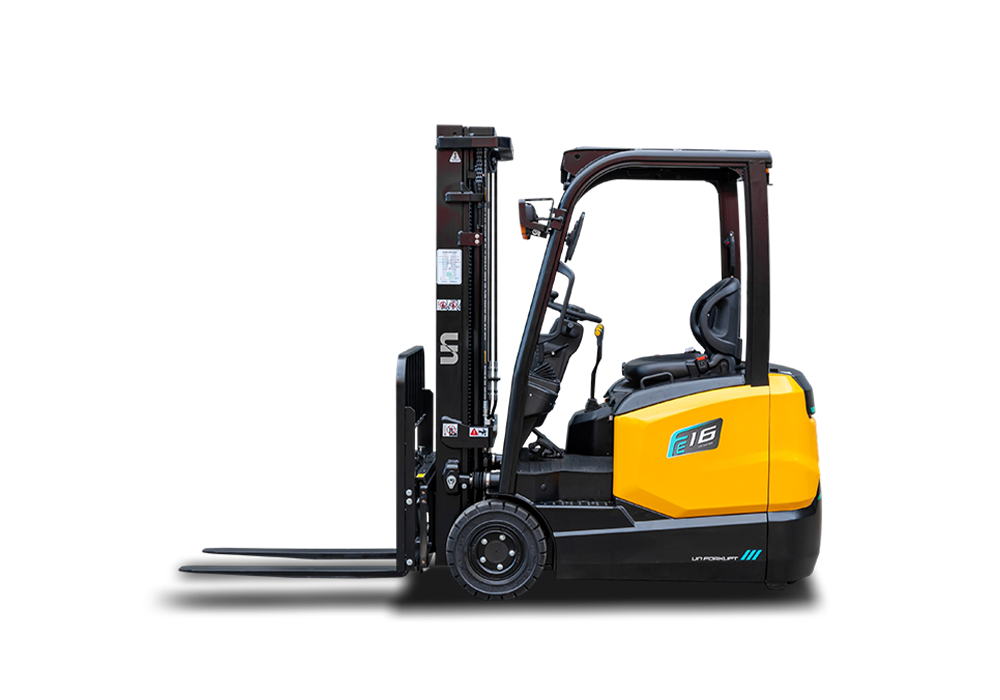
Admin 2026-07-01In modern material handling, the value of a forklift is measured not only by how much it can lift, but also by how efficiently, safely, and economically it performs in real working conditions. Warehouses, production plants, distribution centers, cold-chain facilities, logistics hubs, and retail backrooms increasingly demand compact trucks that can move quickly through restricted aisles while maintaining stable lifting performance and low operating costs. The V Series 1.6T-2.0T 3-wheel electric forklift is designed for exactly this type of environment: compact, maneuverable, energy-efficient, and practical for daily intensive use.
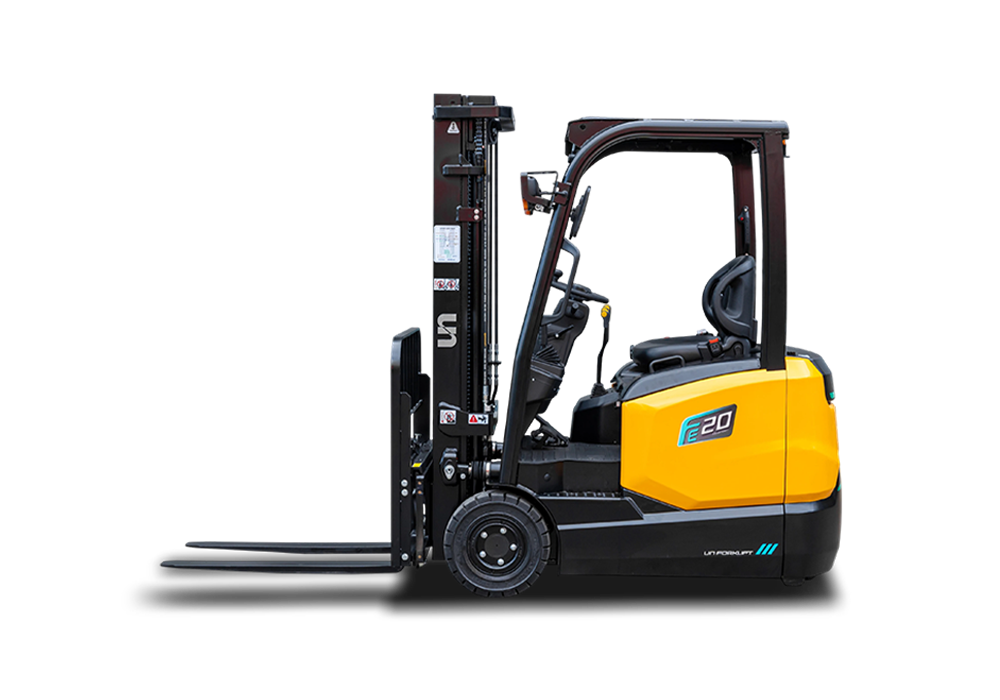
This forklift series covers 1.6-ton, 1.8-ton, and 2.0-ton rated load capacities, represented by the FBT16, FBT18, and FBT20 models. With a load center of 500 mm, a standard lift height of 3000 mm, AC drive technology, ZAPI controller integration, dual drive motors, and optional lithium-ion battery configuration, it provides a balanced solution for customers who want the productivity of a counterbalanced forklift with the turning performance needed in narrow worksites.
Unlike traditional internal combustion forklifts, this electric forklift operates with zero tailpipe emissions, lower noise, and reduced vibration. Unlike many basic electric forklifts, it is equipped with a full AC system, energy regeneration, CANbus communication, a compact body layout, and side battery extraction. These features make it suitable for companies seeking a forklift that is not only environmentally responsible but also easy to maintain and cost-effective throughout its service life.
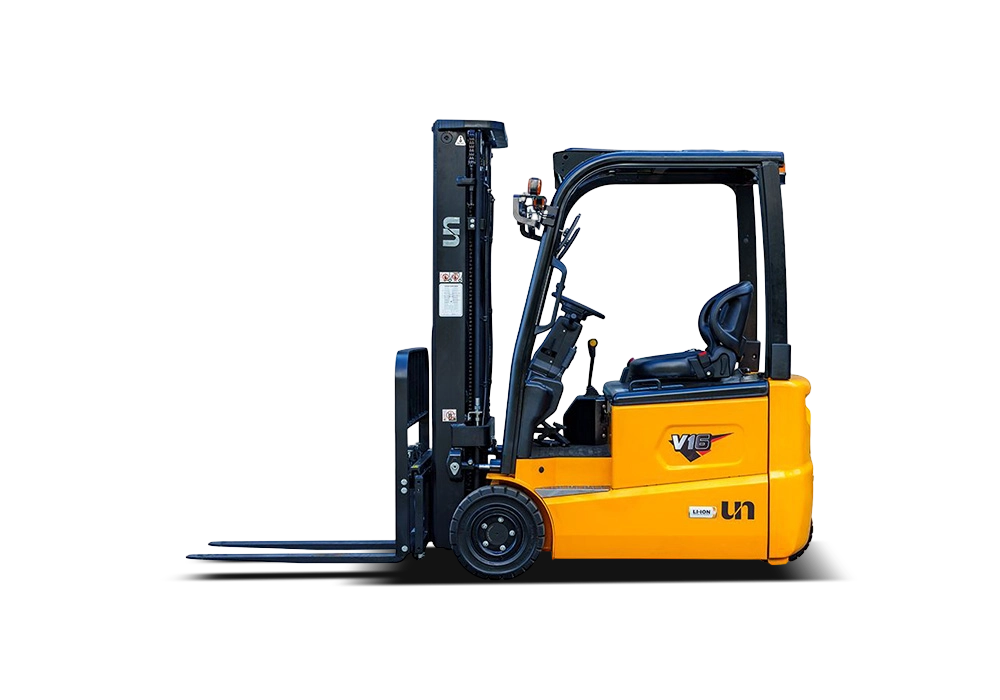
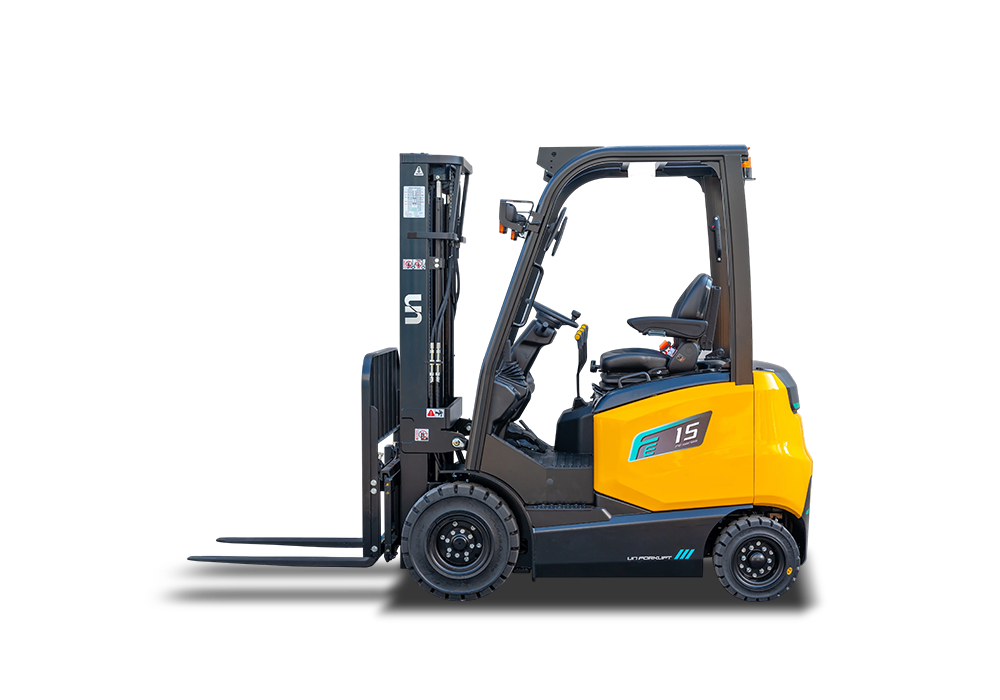
V Series 1.6T-2.0T 3-Wheel Electric Forklift
Product Positioning: A Compact Electric Forklift Built for Practical Work
The V Series 3-wheel electric forklift is positioned as a second-generation compact electric counterbalanced truck developed on the foundation of earlier electric forklift technology. Its design responds to one of the most common challenges in material handling: how to achieve strong load handling in limited space without sacrificing safety, operator comfort, or durability.
The three-wheel configuration gives the forklift a significant advantage in maneuverability. In comparison with many four-wheel counterbalanced forklifts, a three-wheel electric forklift can turn more tightly, making it easier to work inside racking aisles, between production lines, around loading docks, or in storage zones where every meter of space matters. The compact turning radius, combined with a pivot-style turning behavior supported by dual AC motors, allows operators to position loads accurately and reduce unnecessary maneuvering.
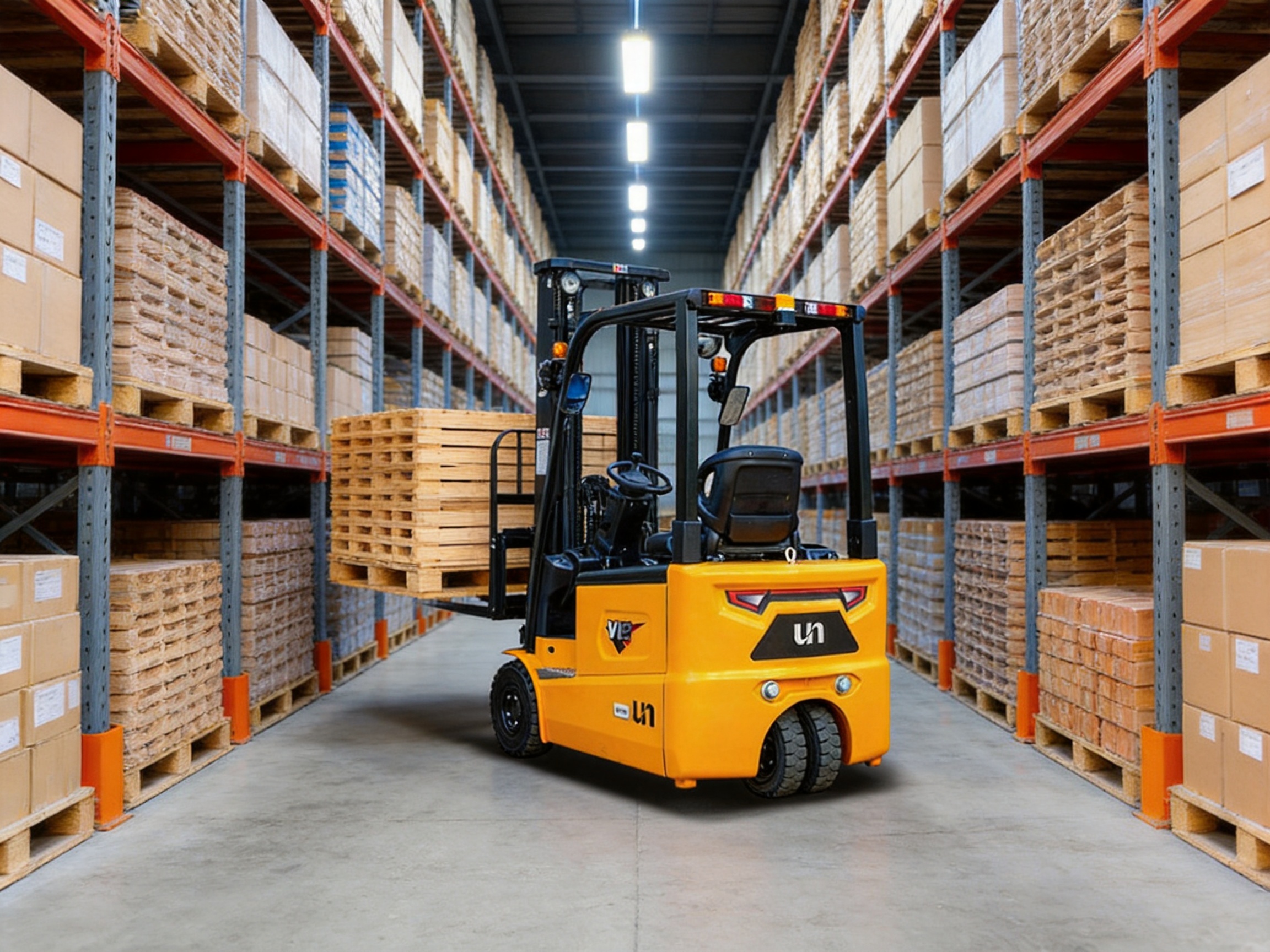
The series is especially suitable for indoor applications where low emissions are essential. Food and beverage warehouses, pharmaceutical distribution centers, electronics factories, textile plants, supermarkets, e-commerce fulfillment centers, and component assembly workshops can all benefit from a cleaner electric solution. The absence of exhaust emissions helps protect products, workers, and indoor air quality, while the lower noise level contributes to a more comfortable workplace.
At the same time, the forklift is built for real industrial work. It is not merely a lightweight warehouse vehicle. With rated capacities up to 2000 kg, it can handle common pallets, production materials, packaged goods, and warehouse inventory. Its 3000 mm standard lifting height meets the needs of many storage and loading applications, and alternative mast configurations may be available depending on operational requirements.
Key Competitive Advantages
One of the strongest advantages of this forklift is the combination of compact size and productive load capacity. Competitors often force customers to choose between maneuverability and lifting strength. Smaller warehouse vehicles may turn well but lack the capacity or counterbalanced flexibility required for pallet handling. Larger forklifts may lift more but need wider aisles and larger turning areas. The V Series 1.6T-2.0T 3-wheel electric forklift bridges this gap by offering practical load capacities with a compact operating footprint.
The turning radius demonstrates this advantage clearly. The FBT16 and FBT18 models have a turning radius of approximately 1615 mm, while the FBT20 model remains compact at approximately 1702 mm. These values help the forklift work effectively in restricted areas and reduce the space needed for pallet positioning. In facilities where storage density is valuable, tighter turning can contribute directly to better floor utilization.
Another advantage is the full AC technology platform. AC motors are widely recognized for their efficiency, responsive control, lower maintenance needs, and durability compared with traditional DC motor systems. Because AC motors do not require brushes in the same way as many DC systems, maintenance intervals can be reduced and reliability can improve. For fleet managers, fewer service interruptions mean better equipment availability and lower lifecycle cost.
The use of ZAPI control technology is also important. A high-quality controller helps coordinate travel, lifting, braking, energy regeneration, and safety functions. Smooth control improves operator confidence, especially when working with stacked pallets or moving through busy warehouses. The controller also contributes to efficient power management, helping extend operating time from each battery charge.
The dual AC drive motor design provides responsive travel control and supports pivot turning. This is particularly valuable in confined locations because the forklift can reposition more precisely. In comparison with basic single-drive arrangements, dual motor coordination can provide more agile handling and better traction behavior in low-speed turning operations.
The forklift also includes an energy regeneration function. During braking or deceleration, regenerated energy can be returned to the battery system, helping extend working hours. While actual savings depend on the duty cycle, regenerative braking is especially useful in applications with frequent stops, starts, and direction changes. Many warehouse jobs involve exactly this pattern, making energy recovery a practical advantage rather than a theoretical feature.
Full AC System for Reliability and Efficiency
The full AC system is one of the defining technical features of the forklift. In daily operation, it contributes to smoother driving, efficient power usage, and reduced maintenance. The drive motors on the models are rated at 4.8 kW x 2, while the pump motor is rated at 10 kW. This combination provides adequate power for travel and hydraulic lifting while maintaining the benefits of electric efficiency.
In comparison with forklifts that still use older control systems or mixed motor technologies, a full AC platform provides better consistency across the truck. The operator experiences responsive acceleration, controlled travel speed, and predictable lifting behavior. The maintenance team benefits from fewer wear components, less heat generation, and improved diagnostic capability through integrated electronic systems.
Electric forklifts are often selected for their lower operating cost, but that advantage depends heavily on system design. A forklift with inefficient motors, poor battery management, or outdated controls can still waste energy and require frequent service. The V Series addresses this through efficient AC motors, controller integration, energy recovery, and a clear battery service layout.
The AC controller also supports refined performance tuning. Travel speed, lift performance, braking response, and safety logic can be controlled more precisely than with basic systems. This improves the forklift’s adaptability to different operating conditions. In a warehouse with pedestrian traffic, smoother control can support safer driving. In a production facility with continuous pallet movement, reliable acceleration and lifting can support better throughput.
Compact Body Design and Narrow-Aisle Maneuverability
Space efficiency is one of the main reasons companies choose a three-wheel electric forklift. The compact body design of this series helps operators work in locations where larger forklifts may struggle. The FBT16 and FBT18 have a length to fork face of about 2036 mm, while the FBT20 is about 2136 mm. Width varies by configuration, with compact dimensions suitable for indoor warehouse operation.
The forklift’s ability to turn close to 90 degrees is an important benefit. When entering pallet positions, backing out of aisles, or turning around tight corners, reduced turning space helps the operator complete movements with fewer corrections. Over hundreds of pallet movements per shift, this can create measurable productivity gains.
Compared with many four-wheel electric or internal combustion forklifts, a compact three-wheel design can reduce aisle requirements. The working aisle width with a 1000 x 1200 mm pallet is approximately 3290 mm for the FBT16 and FBT18, and approximately 3325 mm for the FBT20. With an 800 x 1200 mm pallet, working aisle width is approximately 3410 mm for the FBT16 and FBT18, and approximately 3525 mm for the FBT20. These dimensions make the forklift suitable for warehouses that want to store more goods without compromising handling efficiency.
The compact structure also helps in congested work environments. In factories, forklifts often share space with workers, production machines, carts, and staging areas. A smaller turning envelope can reduce the risk of contact with obstacles and help operators maintain better control. When combined with speed control, ergonomic steering, and improved visibility, compact maneuverability becomes a safety advantage as well as a productivity advantage.
Safety and Operator Ergonomics
Safety is central to forklift design because material handling involves moving heavy loads near people, inventory, and infrastructure. The V Series incorporates several safety-focused features, including double rear tires, automatic turning speed control according to steering angle, OPS-related safety logic, a seat switch, a strong overhead guard, and a wide-view mast.
Double rear tires help improve stability during travel and turning. Stability is especially important in three-wheel forklifts because they are designed for maneuverability. By using a rear tire arrangement that supports balanced travel behavior, the forklift helps maintain confidence during tight turns and load positioning.
Automatic turn speed control is another important feature. When the forklift turns sharply, speed management can reduce the risk of instability and help prevent unsafe driving behavior. This is valuable for both experienced operators and newer drivers because it supports safer operation without relying entirely on manual judgment.
The OPS function and seat switch help ensure that the truck is operated only when the operator is correctly positioned. Such systems are increasingly expected in modern forklift fleets because they reduce the likelihood of unintended movement or unsafe operation. In busy warehouses, where operators may frequently mount and dismount, these protections support disciplined operation.
The overhead guard is designed to protect the operator from falling objects. In pallet storage environments, goods may shift or packaging may fail, so a strong protective structure is essential. The wide-view mast helps improve forward visibility, allowing the operator to see the load, forks, rack openings, and surrounding environment more clearly.
Ergonomics also influence safety. A comfortable operator is more alert and less fatigued. The forklift includes a small steering wheel, wide foot space, and optimized foot pedal positioning. These details help reduce strain during long shifts and repeated maneuvering. In high-frequency warehouse operations, even small ergonomic improvements can make a meaningful difference in operator satisfaction and productivity.
Battery Options and Energy Strategy
The forklift can be configured with a standard lead-acid battery or a lithium-ion battery option. The FBT16 and FBT18 lead-acid battery specification is 48 V / 460 Ah, while the FBT20 uses 48 V / 540 Ah in the standard lead-acid configuration. A 48 V / 300 Ah lithium-ion battery option is listed for the series.
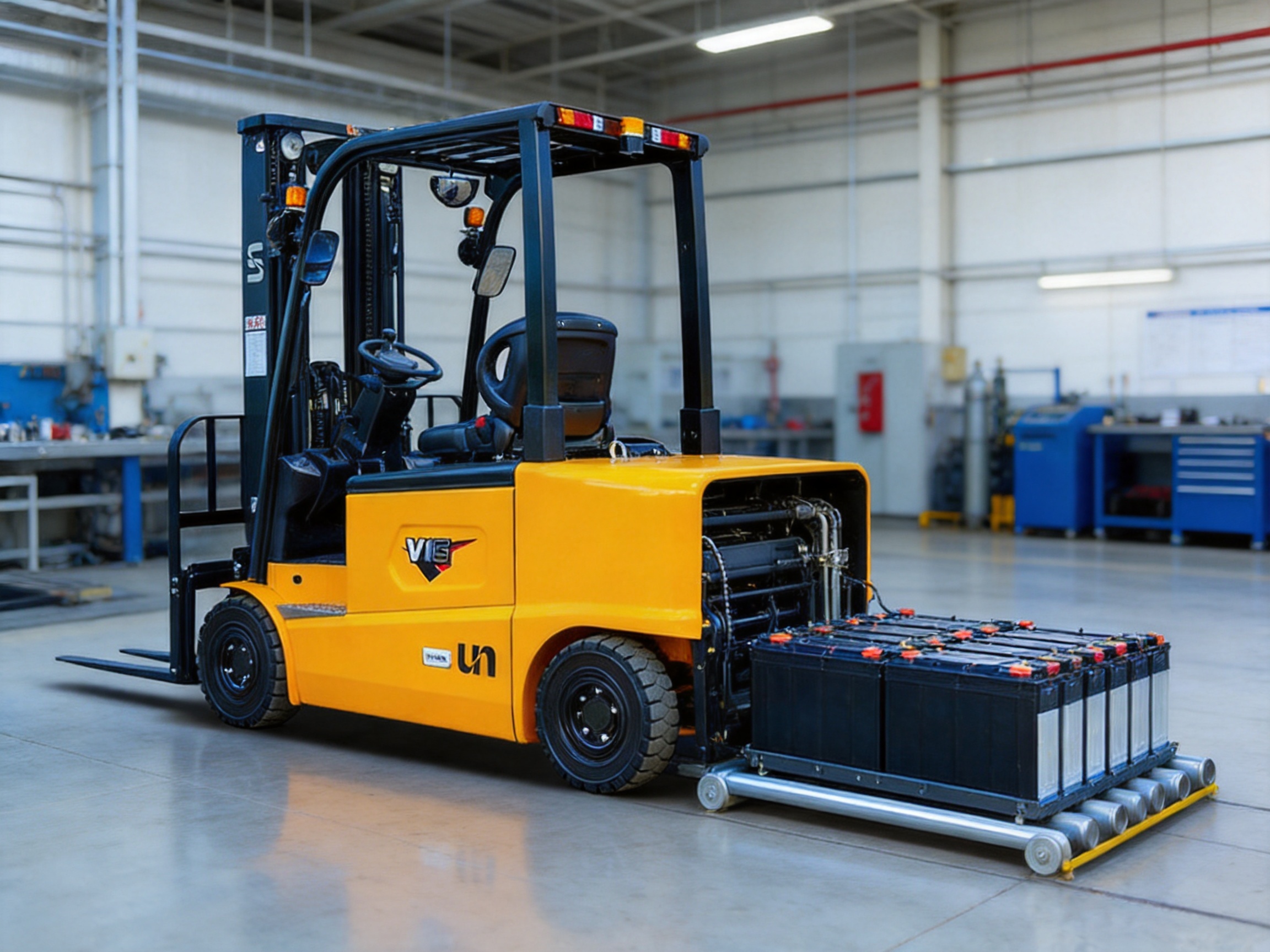
Lead-acid batteries remain popular because they are familiar, widely supported, and cost-effective for many users. For single-shift applications or operations with established battery charging areas, lead-acid batteries can provide dependable performance. The forklift’s battery hood opening and side extraction system support easier battery inspection and replacement, which is particularly useful for lead-acid battery maintenance.
Lithium-ion batteries provide a different set of advantages. They are generally associated with faster charging, opportunity charging, reduced maintenance, and more stable energy delivery. For companies running multiple shifts or looking to reduce battery room complexity, lithium-ion configurations can improve uptime and simplify fleet management. The availability of lithium-ion technology also supports the broader trend toward cleaner, more efficient material handling.
The energy regeneration function enhances the overall energy strategy. Because forklifts frequently decelerate, stop, reverse, and lower loads, regenerative systems can capture energy that would otherwise be lost. In operations with many short travel cycles, this can extend operating time and reduce charging frequency.
Compared with competitors that offer only basic battery support or limited access for maintenance, this forklift’s battery service design is practical. The nearly 90-degree battery hood opening makes checking the battery easier, while the side battery extraction system allows the battery to be pulled out manually from the right side with the assistance of rollers. This can reduce downtime and make scheduled service more efficient.
Maintenance-Friendly Design
Maintenance cost is a major part of forklift ownership. A machine that is inexpensive to purchase but difficult to service can become costly over time. The V Series is designed with several maintenance advantages, including maintenance-free AC motors, reduced heat release, a wide battery hood opening, and side battery extraction.
AC motors reduce the need for brush-related maintenance associated with many older motor systems. Less mechanical wear means fewer replacement parts and less downtime. Lower heat generation can also contribute to component longevity, especially in demanding operations where the forklift is used for extended periods.
The battery access design supports both routine inspection and battery change procedures. When service technicians can reach components easily, maintenance becomes faster and less disruptive. This is valuable for fleet owners because every hour of downtime can affect warehouse throughput, production schedules, and delivery commitments.
CANbus communication improves understanding of the forklift’s condition. Modern forklifts benefit from electronic communication between components because faults can be detected more quickly and system behavior can be monitored more accurately. For service teams, better diagnostics can reduce troubleshooting time and help prevent minor issues from becoming major failures.
Compared with older forklifts that require more manual inspection and mechanical adjustment, a modern electric forklift with CANbus communication and AC technology offers a more predictable maintenance profile. This supports professional fleet management and helps companies control total cost of ownership.
Main Technical Specifications
The following table summarizes key specifications for the FBT16, FBT18, and FBT20 models. Specifications may vary according to configuration, application, and future technical updates.
| Item | FBT16 | FBT18 | FBT20 |
| Rated Load Capacity | 1600 kg | 1800 kg | 2000 kg |
| Load Center | 500 mm | 500 mm | 500 mm |
| Standard Lift Height | 3000 mm | 3000 mm | 3000 mm |
| Fork Size | 920 x 100 x 35 mm | 920 x 100 x 35 mm | 1070 x 100 x 40 mm |
| Length to Fork Face | 2036 mm | 2036 mm | 2136 mm |
| Turning Radius | 1615 mm | 1615 mm | 1702 mm |
| Travel Speed, Full Load | 13 km/h | 13 km/h | 13 km/h |
| Travel Speed, No Load | 14 km/h | 14 km/h | 14 km/h |
| Lifting Speed, Full Load | 290 mm/s | 290 mm/s | 290 mm/s |
| Lifting Speed, No Load | 340 mm/s | 340 mm/s | 340 mm/s |
| Maximum Gradeability, Full Load | 15 percent | 15 percent | 15 percent |
| Total Weight Including Battery | 3345 kg | 3525 kg | 3675 kg |
| Drive Motor | 4.8 kW x 2 | 4.8 kW x 2 | 4.8 kW x 2 |
| Pump Motor | 10 kW | 10 kW | 10 kW |
| Lead-Acid Battery | 48 V / 460 Ah | 48 V / 460 Ah | 48 V / 540 Ah |
| Lithium-Ion Battery Option | 48 V / 300 Ah | 48 V / 300 Ah | 48 V / 300 Ah |
| Controller Type | AC | AC | AC |
| Operating Pressure | 19.5 MPa | 19.5 MPa | 19.5 MPa |
Performance in Real Warehouse Conditions
Specification numbers matter, but the true value of a forklift is revealed in daily work. The V Series is designed for repetitive pallet movement, loading and unloading, rack positioning, production line feeding, and general material transport. Its travel speed of 13 km/h under full load and 14 km/h without load provides a practical balance between efficiency and control.
The lifting speed of 290 mm/s under full load and 340 mm/s without load supports productive stacking and loading operations. In applications where forklifts perform dozens or hundreds of lift cycles per day, consistent lift speed helps maintain workflow. The 15 percent maximum gradeability under full load also provides capability for facilities with ramps, dock approaches, or uneven transition zones.
The 3000 mm lift height covers many standard warehousing and loading applications. While high-bay storage may require specialized equipment, this forklift is well suited for medium-height stacking, truck loading, indoor logistics, and production material movement. Its counterbalanced design makes it more flexible than some warehouse-only vehicles because it can handle pallets without relying on support legs.
Compared with pallet stackers or reach trucks, a compact counterbalanced forklift can operate more flexibly in mixed-use environments. It can load and unload trucks, move loads across open floor areas, handle pallets from multiple sides, and operate where rack geometry or pallet type may not suit other warehouse vehicles. The three-wheel design adds maneuverability without losing the basic flexibility of a counterbalanced forklift.
Advantages Over Internal Combustion Forklifts
Many companies still use internal combustion forklifts for material handling, especially where they are familiar and perceived as rugged. However, indoor operations increasingly favor electric forklifts because of emissions regulations, worker comfort, energy cost, and sustainability goals. The V Series offers several clear advantages over internal combustion alternatives in indoor and semi-indoor environments.
First, it produces zero tailpipe emissions during operation. This is important for warehouses, food processing facilities, pharmaceutical storage, and enclosed loading areas. Internal combustion forklifts require fuel storage, ventilation management, and exhaust control. Electric forklifts reduce these concerns and support cleaner working conditions.
Second, electric operation reduces noise and vibration. Lower noise supports communication between workers and improves workplace comfort. Reduced vibration can also reduce operator fatigue over long shifts. In contrast, internal combustion forklifts often generate engine noise, heat, and exhaust that can make indoor operation less comfortable.
Third, electric forklifts generally have fewer routine maintenance requirements related to engines, oil, filters, spark plugs, belts, and exhaust systems. The full AC system further improves this advantage by reducing motor maintenance. For companies tracking total cost of ownership, lower maintenance and energy costs can offset the initial investment over time.
Fourth, electric forklifts are better aligned with sustainability initiatives. Many companies now measure carbon emissions across their operations and supply chains. Electric material handling equipment can support those goals, especially when paired with efficient charging practices or renewable electricity.
Advantages Over Basic Electric Competitors
Not all electric forklifts are equal. Some basic electric models provide emission-free operation but lack the advanced control, serviceability, and ergonomic features needed for demanding applications. The V Series stands out through its combination of full AC technology, ZAPI controller, dual AC drive motors, CANbus communication, energy regeneration, compact design, and practical battery access.
Basic electric forklifts may use less advanced control systems that deliver rougher acceleration, less efficient power management, or limited diagnostics. The ZAPI controller and CANbus communication system in this forklift support smoother control and easier troubleshooting. This improves both operator experience and service efficiency.
Some competitors may offer compact size but limited stability. The double rear tire design and automatic turn speed control help address this challenge. Stability during turning is critical in three-wheel forklifts, and electronic speed management supports safer operation.
Battery handling is another point of comparison. Forklifts with inconvenient battery access can create delays during maintenance or battery change. The wide-opening battery hood and side extraction system with rollers provide a practical advantage for daily fleet operation.
Operator comfort also distinguishes the truck. A small steering wheel, wide foot space, optimized pedal layout, wide-view mast, and protective overhead guard contribute to a safer and more comfortable workday. In competitive comparisons, buyers should consider not only load capacity and price, but also how the forklift feels after several hours of operation.
Manufacturing Strength Behind the Product
The product is supported by the manufacturing experience of Zhejiang UN Forklift Co., Ltd., a professional material handling equipment manufacturer integrating research and development, production, sales, and service. Founded in 1978, the company has decades of accumulated knowledge in forklift design and industrial vehicle manufacturing. Its production base covers 53,400 square meters and has an annual production capacity of 15,000 units.
Long-term manufacturing experience matters because forklifts must perform reliably under demanding conditions. A forklift is not a disposable machine; it is a capital asset expected to work for years. Manufacturers with deep industry experience understand the importance of frame strength, component matching, hydraulic performance, electrical reliability, mast stability, operator ergonomics, and service accessibility.
The company offers a broad range of material handling equipment, including multiple varieties, series, and specifications. This broad product platform gives the manufacturer technical insight across different forklift types, such as electric counterbalanced trucks, internal combustion forklifts, warehouse equipment, cushion tire models, rough terrain forklifts, and compact loaders. Experience across these categories supports better design decisions because different applications reveal different durability and performance requirements.
The company has also participated in the formulation of electric forklift industry standards and holds national patents related to electric forklift technologies. This demonstrates not only manufacturing capability but also technical contribution to the broader industry. A manufacturer involved in standards and patents is more likely to understand regulatory expectations, performance benchmarks, and emerging technology trends.
Advanced manufacturing strength is also reflected in the company’s role as an OEM supplier for well-known domestic and international enterprises. OEM cooperation requires stable quality control, reliable delivery, engineering discipline, and the ability to meet customer-specific requirements. These capabilities directly benefit the product because they encourage process standardization and quality consistency.
Advanced Production Processes and Quality Control
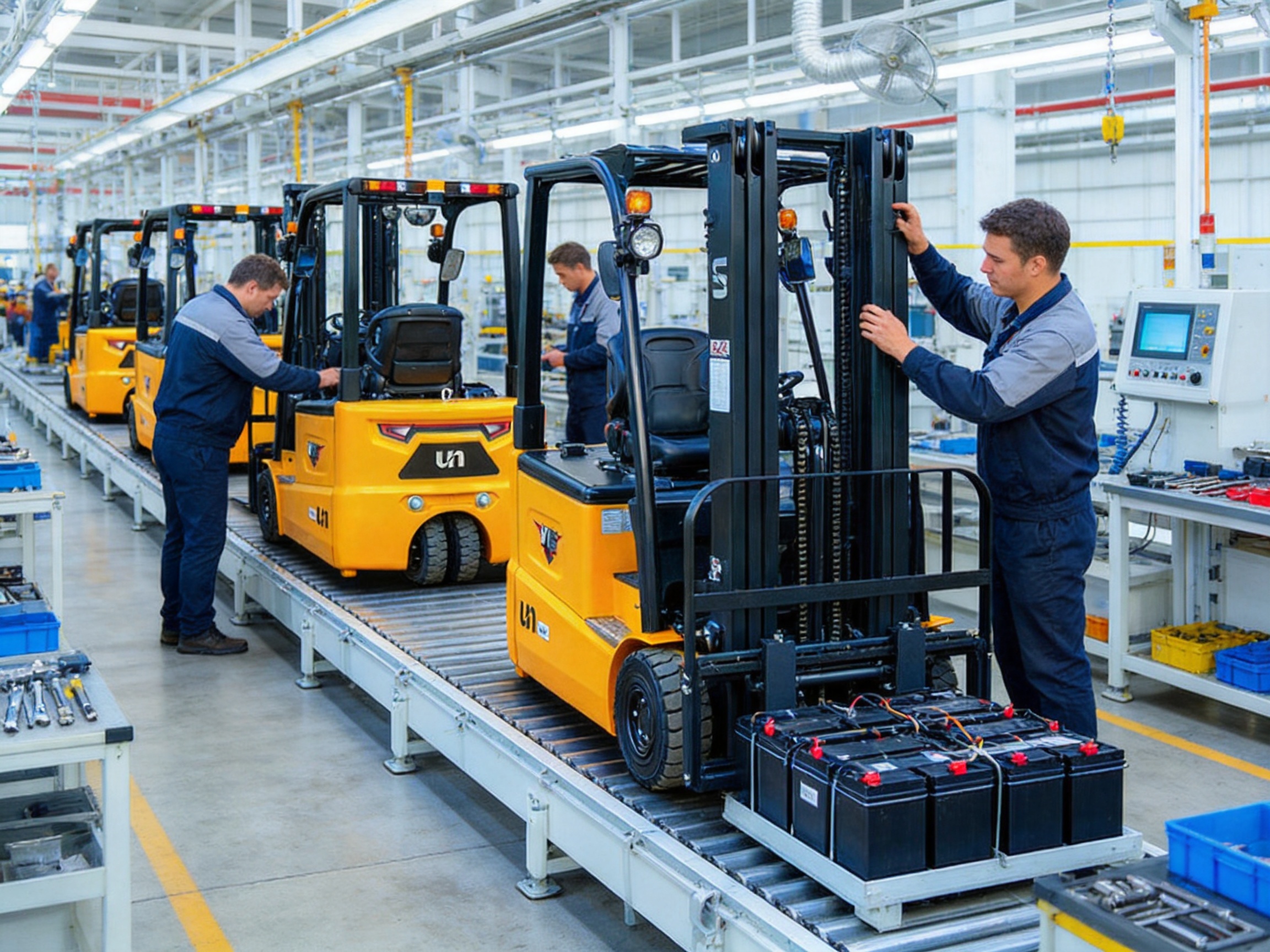
A reliable forklift begins with controlled manufacturing processes. For a compact electric forklift, key production steps include structural fabrication, mast production, welding, surface treatment, painting, electrical assembly, hydraulic system installation, drivetrain integration, battery system configuration, final testing, and quality inspection. Each stage influences the truck’s durability, safety, and operational feel.
Frame and chassis manufacturing require precision because the structure must carry load forces, counterweight forces, mast stress, drive system loads, and impact from daily operation. Good fabrication practices help ensure dimensional accuracy and long-term structural integrity. Consistent welding quality is especially important in load-bearing areas.
Mast production is another critical process. The mast must provide smooth lifting, controlled visibility, and stable load handling. Manufacturing accuracy affects mast alignment, roller performance, chain operation, and hydraulic cylinder behavior. A wide-view mast adds value only when it is manufactured with proper strength and precision.
Surface treatment and painting help protect the forklift from corrosion, scratches, and industrial wear. In warehouses and factories, forklifts may be exposed to dust, moisture, packaging debris, chemicals, and repeated contact with pallets or racks. A disciplined coating process improves appearance and durability.
Electrical assembly is particularly important for modern electric forklifts. The controller, motors, wiring harnesses, sensors, battery connections, CANbus communication system, and safety devices must be installed and tested carefully. Poor electrical assembly can lead to intermittent faults, downtime, or unsafe behavior. A manufacturer with strong electric forklift experience is better positioned to manage these systems reliably.
Hydraulic system installation affects lifting speed, responsiveness, and load control. The forklift uses an operating pressure of 19.5 MPa, and reliable hydraulic performance depends on correct component selection, clean assembly, proper sealing, and careful testing. Hydraulic leakage, contamination, or pressure instability can reduce productivity and safety, so process control is essential.
Final inspection brings these elements together. A professional forklift manufacturer typically verifies driving, braking, steering, lifting, lowering, safety interlocks, controller communication, battery operation, mast function, and visual quality before shipment. Such testing helps ensure that the customer receives equipment ready for productive service.
Research, Development, and New Energy Direction
The forklift reflects a broader shift toward energy-saving, environmentally responsible, efficient, and safe material handling. As global attention to carbon emissions increases, manufacturers must move beyond traditional fuel-powered solutions and provide practical electric alternatives. The company has actively developed new energy forklifts, including diesel-to-lithium-ion models and standard lithium-ion battery forklifts.
This direction is important because customers are not simply buying equipment for today; they are planning fleets for the next decade. Regulations may become stricter, energy prices may fluctuate, and corporate sustainability requirements may expand. A forklift platform that supports electric power, lithium-ion options, and energy regeneration helps customers prepare for these changes.
Research and development also influence product usability. Compact structure, pivot turning, electronic speed control, ergonomic pedals, wide-view mast design, and side battery extraction are all examples of engineering decisions based on real application needs. The best forklift designs are not created only in laboratories; they are refined through feedback from operators, service teams, fleet managers, and distributors.
The development history of the company includes notable achievements in specialized electric material handling equipment, including early reach forklift and very narrow aisle truck innovation in the domestic market. Such experience supports a deeper understanding of warehouse operations, especially where space efficiency is critical.
Global Service Network and Customer Support
A forklift purchase is also a service relationship. Even a well-built truck requires parts support, technical guidance, maintenance advice, and sometimes application consultation. Zhejiang UN Forklift Co., Ltd. has built a sales and service network with partners in Europe, South America, North America, Africa, and Asia. This global presence supports international customers who need dependable communication and aftermarket support.
For buyers, service capability reduces operational risk. Parts availability, trained distributors, documentation, and regional contact channels can make a significant difference when equipment needs attention. A forklift that cannot be supported efficiently may create hidden costs, even if its initial price is attractive.
The company provides different regional contact channels for the Americas, Europe, Asia, Africa, and Oceania, along with dedicated parts inquiry support. This structure suggests an understanding of global customer needs and time-zone communication. For international fleet operators, such support can simplify procurement and maintenance planning.
Application Scenarios
The V Series 1.6T-2.0T 3-wheel electric forklift is suitable for a wide range of indoor and controlled-environment applications. In warehousing, it can transport pallets from receiving docks to storage zones, retrieve goods for outbound shipping, and support inventory rotation. Its compact turning radius helps in rack aisles and staging areas.
In manufacturing, it can feed production lines with raw materials, move finished goods to storage, and support internal logistics. The low noise and zero-emission operation are valuable in plants where people work close to equipment. The compact body also helps when moving between machines or workstations.
In retail and distribution, the forklift can handle palletized goods in backrooms, wholesale centers, and regional distribution facilities. Its clean operation is useful where goods may include packaged food, consumer products, electronics, or household goods.
In cold-chain or clean storage environments, electric forklifts are often preferred over internal combustion models because emissions and heat generation are important concerns. Battery configuration should be selected according to the working temperature and duty cycle, but the electric platform provides a strong foundation for such applications.
In logistics hubs, where speed, precision, and uptime matter, the forklift’s travel performance, lifting speed, and battery options can support repeated loading and unloading tasks. Operators benefit from the compact maneuverability when trailers, pallets, dock plates, and pedestrian traffic create complex working conditions.
Choosing Between FBT16, FBT18, and FBT20
Choosing the correct model depends on load weight, pallet type, operating space, duty cycle, and future capacity needs. The FBT16 is suitable for operations where typical loads are within 1600 kg and compact maneuverability is a top priority. It offers the same compact turning radius as the FBT18 and can be an efficient choice for lighter pallet handling.
The FBT18 provides an additional capacity margin while maintaining the same listed turning radius as the FBT16. For customers whose loads commonly approach or occasionally exceed 1600 kg, the 1800 kg capacity may provide greater flexibility without a major increase in size.
The FBT20 offers the highest rated capacity in the series at 2000 kg. It has a slightly longer body and larger turning radius, but it can handle heavier loads and uses larger fork dimensions. It is appropriate for operations where load weights are closer to two tons or where future handling requirements may increase.
Customers should also consider pallet dimensions, rack layout, floor conditions, lift height requirements, battery charging strategy, and operator shift length. A forklift should be matched to the actual workflow rather than selected only by rated capacity. Consulting with the manufacturer or authorized sales representative can help determine the best configuration.
Total Cost of Ownership
The total cost of forklift ownership includes purchase price, energy cost, maintenance cost, downtime, parts, tires, operator productivity, safety risk, and residual value. The V Series supports cost efficiency through electric power, AC motors, regenerative energy recovery, reduced maintenance requirements, and practical service access.
Energy cost can be lower than fuel cost in many applications, especially when charging is managed efficiently. Electric forklifts also avoid many engine-related consumables. Maintenance-free AC motors reduce service needs, while the controller and CANbus system support diagnostics.
Downtime is one of the most expensive hidden costs in material handling. If a forklift is unavailable, goods may wait, workers may lose productivity, trucks may be delayed, and production lines may slow down. Features such as side battery extraction, accessible service areas, reliable components, and global support can reduce downtime risk.
Operator productivity also affects cost. A forklift that turns tightly, responds smoothly, and provides good visibility can complete tasks faster and with fewer errors. Over time, productivity improvements may be more valuable than small differences in initial equipment price.
Q&A Section
What load capacities are available in this forklift series?
The series includes 1600 kg, 1800 kg, and 2000 kg models, identified as FBT16, FBT18, and FBT20. All are designed around a 500 mm load center.
Why choose a 3-wheel electric forklift instead of a 4-wheel forklift?
A 3-wheel electric forklift usually provides a tighter turning radius and better maneuverability in narrow aisles. It is ideal for indoor warehouses, production plants, and storage areas where space is limited.
Is this forklift suitable for indoor use?
Yes. It is especially suitable for indoor use because it operates with zero tailpipe emissions, low noise, and low vibration. It is appropriate for warehouses, factories, distribution centers, and clean material handling environments.
What controller technology does the forklift use?
The forklift uses an AC controller system from ZAPI. This supports smooth control, efficient power management, and reliable electric performance.
Does the forklift support lithium-ion batteries?
Yes. In addition to standard lead-acid battery configurations, the series offers a lithium-ion battery option. Lithium-ion batteries can support faster charging, reduced maintenance, and improved operational flexibility.
How does the forklift improve safety during turning?
The forklift uses double rear tires and automatic turning speed control according to the steering angle. These features help improve stability and reduce risk during sharp turns.
What maintenance advantages does the forklift offer?
Maintenance advantages include AC motors with reduced service requirements, CANbus communication for better diagnostics, a wide-opening battery hood, and a side battery extraction system with rollers.
What types of businesses can benefit from this forklift?
Warehouses, logistics centers, manufacturing plants, retail distribution facilities, food and beverage operations, pharmaceutical warehouses, and e-commerce fulfillment centers can all benefit from this compact electric forklift.
How does the forklift compare with internal combustion models?
Compared with internal combustion forklifts, it offers zero tailpipe emissions, lower noise, reduced vibration, fewer engine-related maintenance items, and better suitability for indoor operations.
What makes the manufacturer reliable?
Zhejiang UN Forklift Co., Ltd. has manufacturing experience dating back to 1978, a 53,400-square-meter production base, an annual production capacity of 15,000 units, a broad product portfolio, patented electric forklift technologies, participation in industry standards, and a global sales and service network.
Conclusion
The V Series 1.6T-2.0T 3-wheel electric forklift is a strong solution for companies that need compact maneuverability, reliable lifting performance, low operating cost, and cleaner indoor operation. With three rated capacities, full AC technology, ZAPI controller integration, dual drive motors, energy regeneration, ergonomic design, and convenient maintenance access, it delivers practical advantages in modern material handling environments.
Its greatest value lies in balance. It is compact but capable, efficient but powerful, advanced but service-friendly, and environmentally responsible while remaining focused on productivity. Compared with internal combustion forklifts, it offers cleaner and quieter operation. Compared with basic electric competitors, it provides stronger technology integration, better service access, and a more complete safety and ergonomics package.
Behind the product is a manufacturer with decades of experience, broad production capability, technical development strength, and international service support. For warehouse managers, fleet buyers, logistics operators, and industrial users seeking a dependable narrow-aisle electric forklift, this series offers a compelling combination of performance, efficiency, and long-term value.
References
Zhejiang UN Forklift Co., Ltd. Product Technical Materials for V Series 1.6T-2.0T 3-Wheel Electric Forklift.
Zhejiang UN Forklift Co., Ltd. Company Profile and Manufacturing Capability Overview.
Industrial Truck Association. General Guidance on Electric Forklift Safety and Application Principles.
Material Handling Industry. Best Practices for Warehouse Forklift Selection and Fleet Productivity.
Occupational Safety and Health Administration. Powered Industrial Truck Safety Concepts and Operator Awareness Guidance.
Product: V Series 1.6T-2.0T 3-Wheel Electric Forklift
For exclusive deals and latest offers, sign up by entering your email address below.
Stay In Touch
ADDRESS : NO.1 ROAD ONE, XINDENG NEW DISTRICT, FUYANG, HANGZHOU, ZHEJIANG, CHINA 311404.
PHONE : +86-571-8688 8355 (AMERICA)
PHONE : +86-571-8886 9363 (EUROPE)
PHONE : +86-571-8688 8377 (ASIA, AFRICA, OCEANIA)
EMAIL : [email protected]
EMAIL : [email protected](PARTS INQUIRY)

